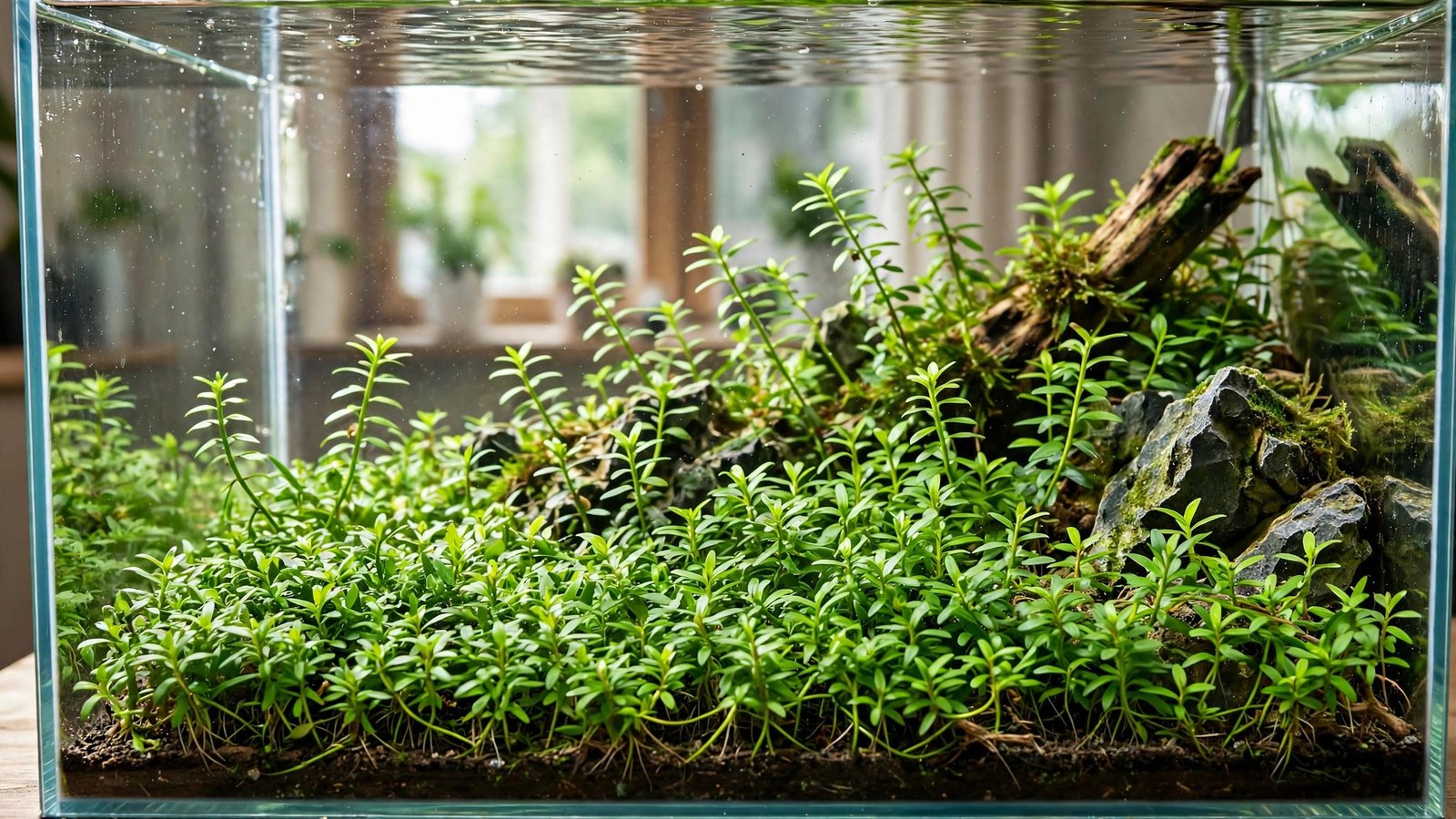
Most people who buy Staurogyne Porto Velho expecting a prettier repens end up with a leggy, reaching stem. It only carpets once light and CO2 cross a specific threshold — and this guide shows you exactly where that line is. The price of that carpet is fuel — staurogyne porto velho care only stays compact and colorful with medium-high light, CO2, and rich soil. Starve it of any one and it climbs, stretches, and stops being a carpet at all.
staurogyne porto velho care: the essentials
Porto Velho — named for the Brazilian city where it was reportedly collected — is a creeping stem plant in the Staurogyne genus. Unlike repens' upright-then-creeping habit, it throws horizontal runners and side shoots aggressively once settled, carpeting in 4–6 weeks in good conditions, versus repens' slow knit.
The catch is the light-and-CO2 threshold. Repens stays low under medium light and a lean water column; Porto Velho under the same conditions elongates, producing long internodes and small pale leaves as it reaches for more light. The moment you cross roughly 40–60 µmol of PAR at the substrate with injected CO2 (lime-green drop checker territory), the growth habit changes: short internodes, tight leaf whorls, and the purplish tops that make this plant worth choosing. If your current setup runs low light, read up on how much light aquarium plants really need — the medium-high light + CO2 for a compact carpet combination is exactly the range Porto Velho wants.
Porto Velho vs. Staurogyne repens
Since the inventory's staurogyne-repens-care guide already covers the classic, here's where the two diverge:
| Trait | Staurogyne repens | Staurogyne Porto Velho |
|---|---|---|
| Growth form | Upright, slowly creeping | Strongly creeping, bushy runners |
| Leaf size | Larger, bright green | Smaller, denser; purplish tips in strong light |
| Light demand | Low–medium | Medium–high |
| CO2 demand | Helpful, not required | Required for a true carpet |
| Speed | Slow–medium | Medium–fast once established |
| Carpet height | 5–10 cm | 3–7 cm, stays lower |
| Forgiveness | High — survives neglect | Low — goes leggy fast without enough light |
Choose repens for low-tech tanks; choose Porto Velho when you're already running CO2 and want a carpet with more texture, color, and speed.
Planting: nutrient-rich soil and the trim-and-spread technique
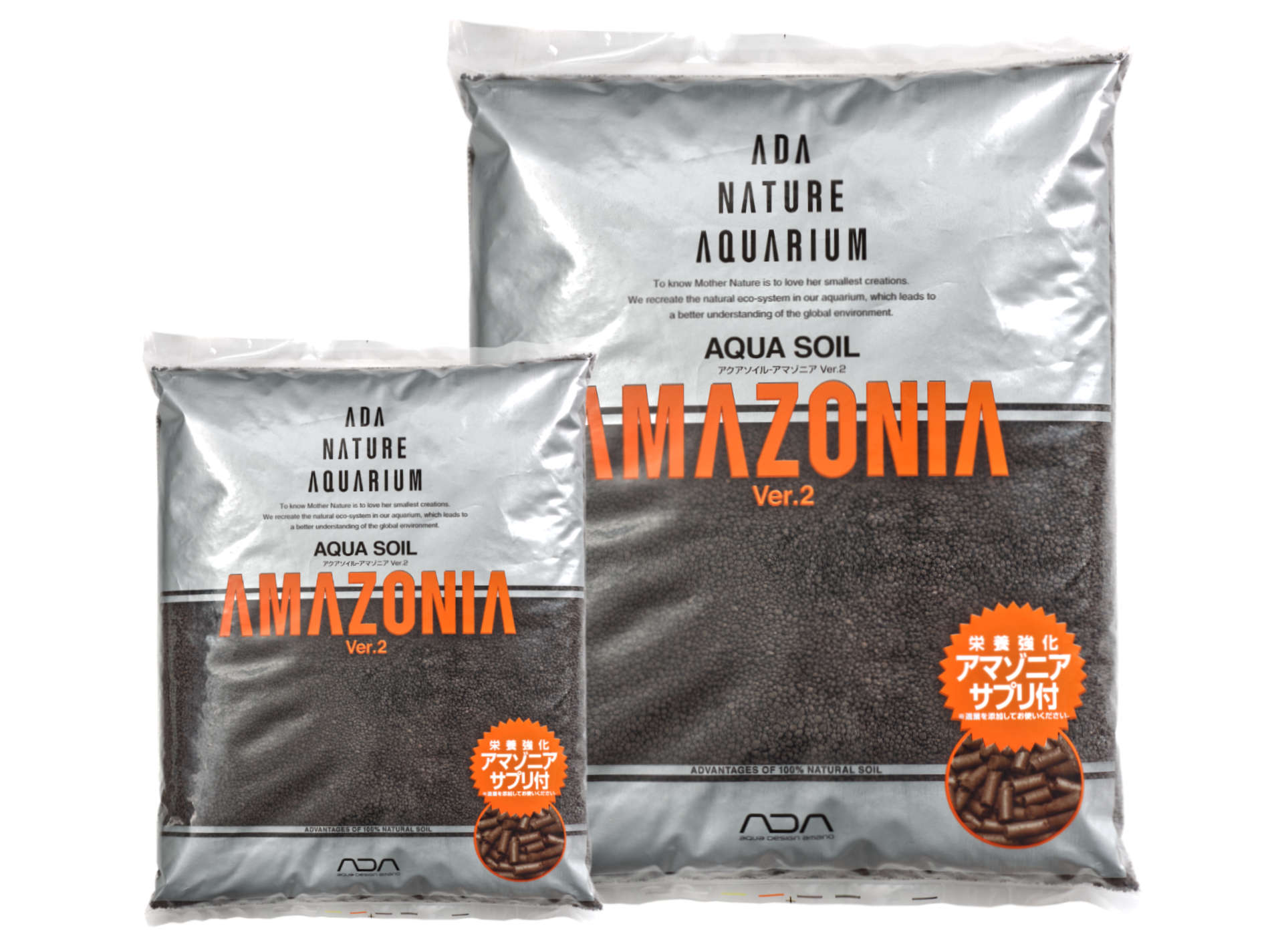
Every retailer page about this plant hammers the same #1 note: plant it in nutrient-dense soil. Porto Velho roots heavily and feeds from the substrate, so a nutrient-rich substrate for planted tanks (a true aquasoil, not decorative gravel) is the biggest lever on how quickly it roots and spreads.
A TC cup divides into 6–10 small tufts: split it by hand, trim roots to ~2 cm, and plant each tuft 2–3 cm apart with fine tweezers, just deep enough that the lowest leaves sit at soil level.
 ★4.7
ADA Aqua Soil Amazonia Ver 2
Check Price on Amazon ★4.7Light and CO2: the compactness threshold
Everything in staurogyne porto velho care funnels back to one question: is the plant staying low? If internodes stretch past ~5 mm and leaves shrink, your light is below the threshold. The fixes, in order of effectiveness: raise light intensity, push the photoperiod toward 8 hours, then confirm CO2 stays stable through the light cycle — fluctuating CO2 causes leggy growth too.
Under adequate light the payoff arrives: new leaves emerge with purplish-red tips, deepening to a two-tone carpet of olive green below and bronze-purple above. This color response is light-driven, not fertilizer-driven — fertilizer overdosing won't conjure it in a dim tank.
Emersed transition and early weeks
Porto Velho bought as a potted portion arrives emersed-grown, with thick, waxy air-grown leaves. Those leaves can't breathe underwater and melt over the first 1–2 weeks — normal, not a care failure. Leave the stems in place (the roots are fine) and the plant will push small, tender submerged leaves from the nodes.
Expect the first visible runners around week 2–3 under good conditions. If you see no horizontal spread by week 4, re-check the three fundamentals: substrate nutrition (root tabs under inert gravel if you skipped aquasoil), light intensity at the substrate, and whether CO2 is actually dissolving — a drop checker that never moves off blue is just decoration.
Maintenance and layout role
Once established, Porto Velho needs trimming more often than repens — roughly every 1–2 weeks with curved aquascaping scissors, whose bent blades let you snip horizontally across the carpet without disturbing neighbors. Every cut forces the stem to fork below the cut, so frequent light trims are literally the mechanism that keeps the carpet dense.
Treat Porto Velho as a foreground workhorse with color — the one foreground plant that can carry subtle purple — with bold stems behind it: a compact carpet in front against a fast background weed is the classic scaper's trick. If you're weighing those roles, read compact carpeting stem vs fast background weed — picking your layout role. For warm-colored contrast behind the green-purple carpet, Ludwigia Ovalis Care: Growing the Pink-Orange Stem Plant covers a stem whose pink-orange foliage sits gorgeously behind it.
Porto Velho propagates so freely from trimmings that you'll soon have spare plants — keep a tray of cuttings in a spare container and you'll never buy it twice.
Frequently Asked Questions
Can Staurogyne Porto Velho grow without CO2?
It will survive, but it won't carpet. Without injected CO2, Porto Velho grows upright and sparse with long internodes, behaving like a mediocre midground stem. For a true low carpet without CO2, choose its cousin repens, which carpets happily in low-tech tanks.
Why is my Porto Velho growing tall and leggy?
Legginess means the plant wants more light — long internodes and shrinking leaves are the classic low-light response. Raise your light intensity, keep the photoperiod around 8 hours, and verify CO2 stays stable through the day. After fixing the cause, trim the stretched tops so the lower nodes push out fresh compact growth.
How do I get the purple color on Porto Velho?
The purplish leaf tips are a strong-light response, appearing when PAR at the substrate reaches the medium-high range. It's driven by light intensity, not by iron or other fertilizers — the fix is photons: brighter light and a clear water surface. Color deepens as the plant adapts over a couple of weeks.
How long does Staurogyne Porto Velho take to carpet?
Expect a closed foreground in 4–6 weeks with CO2, good light, and aquasoil. Tissue-culture cups establish fastest; potted portions lose 2–3 weeks melting emersed leaves first. The trim-and-spread technique — replanting cuttings into gaps every couple of weeks — noticeably accelerates full coverage.
Is Porto Velho harder than Staurogyne repens?
Yes, clearly. Repens forgives low light and survives without CO2, while Porto Velho punishes weak light with leggy growth and needs injected CO2 to stay a carpet. In exchange, Porto Velho carpets faster, stays lower, and colors up purple. Pick repens for low-tech tanks, Porto Velho for CO2-injected setups.
Do I trim Staurogyne Porto Velho like a lawn?
No — trim lightly and often instead. Take a few millimetres off the top every 1–2 weeks with curved scissors. Hard flat mows expose bare woody stems that recover slowly, while light frequent trims force the stems to fork below each cut, which is exactly what builds a dense, even carpet.
For an independent second opinion, check the Flowgrow plant database entry for Staurogyne sp. "Porto Velho" and Tropica's care page for the plant — both confirm the medium–high light and CO2 appetite described here. If you're running CO2 and want a carpet with speed, texture, and a hint of purple, Porto Velho earns its place in the foreground.