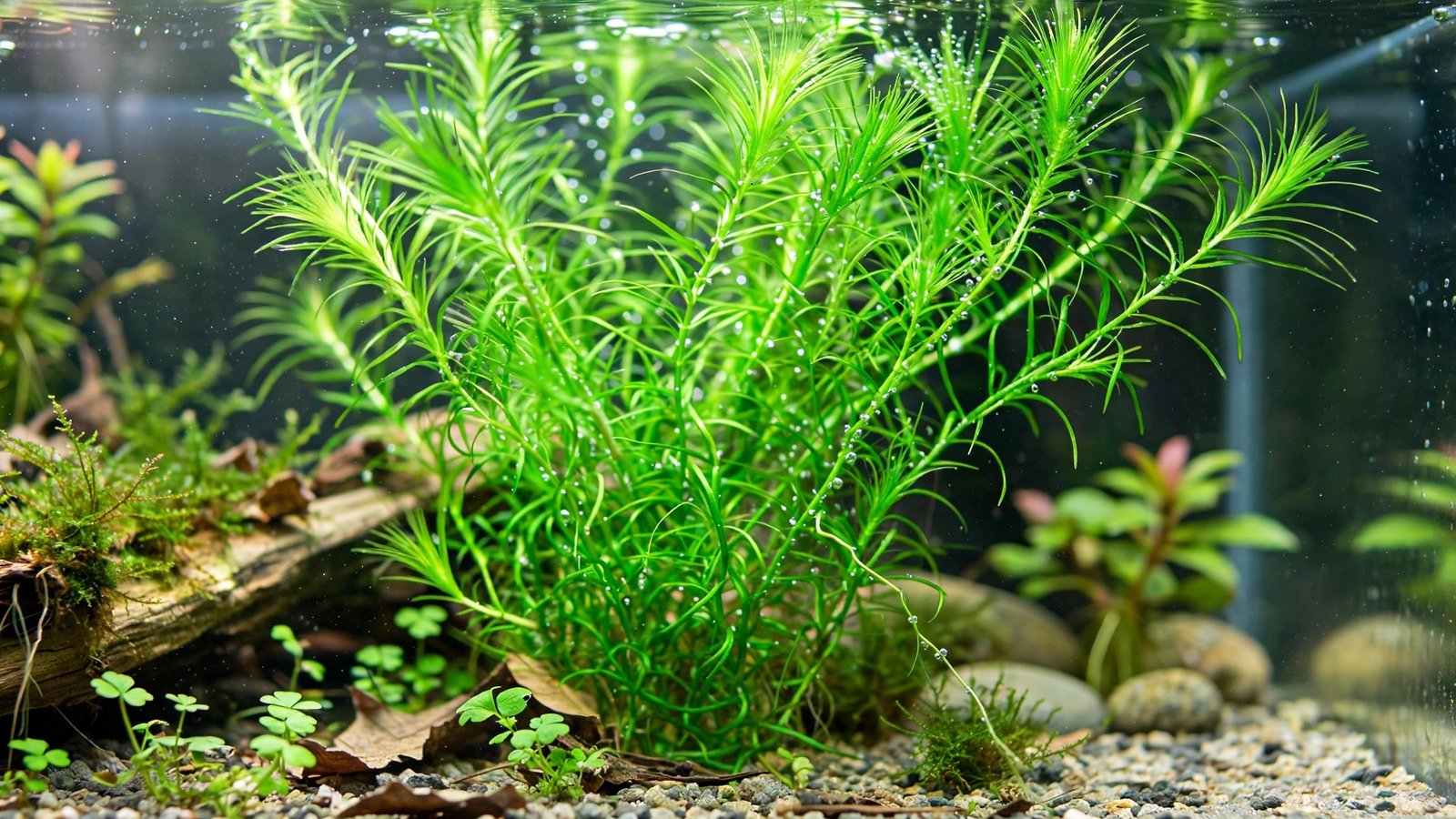
Takashi Amano turned an unassuming Madagascan weed into one of the most elegant background stems in aquascaping — fine, curled whorls of feathery leaves that drift like green mist when backlit. But the honest truth is that lagarosiphon madagascariensis care is demanding. Give it strong light, steady CO2, and a rich diet of nitrate, phosphate, and iron, and it grows so fast you will reach for the scissors every week. Short-change any one of those three, and the same stand stalls, sheds its lower leaves, and melts. Here is exactly what this Amano-legacy stem demands — with real numbers, not vague adjectives.
lagarosiphon madagascariensis care starts with light — the non-negotiable
If there is one lesson Amano's use of this plant teaches, it is that light is THE defining care trait. Lagarosiphon madagascariensis is a light-hungry stem from Madagascar's open waters, and everything about its health traces back to what lands on its whorled leaves. If you are unsure what your fixture actually delivers, start with how much light aquarium plants actually need and work out your real PAR before planting a single stem.
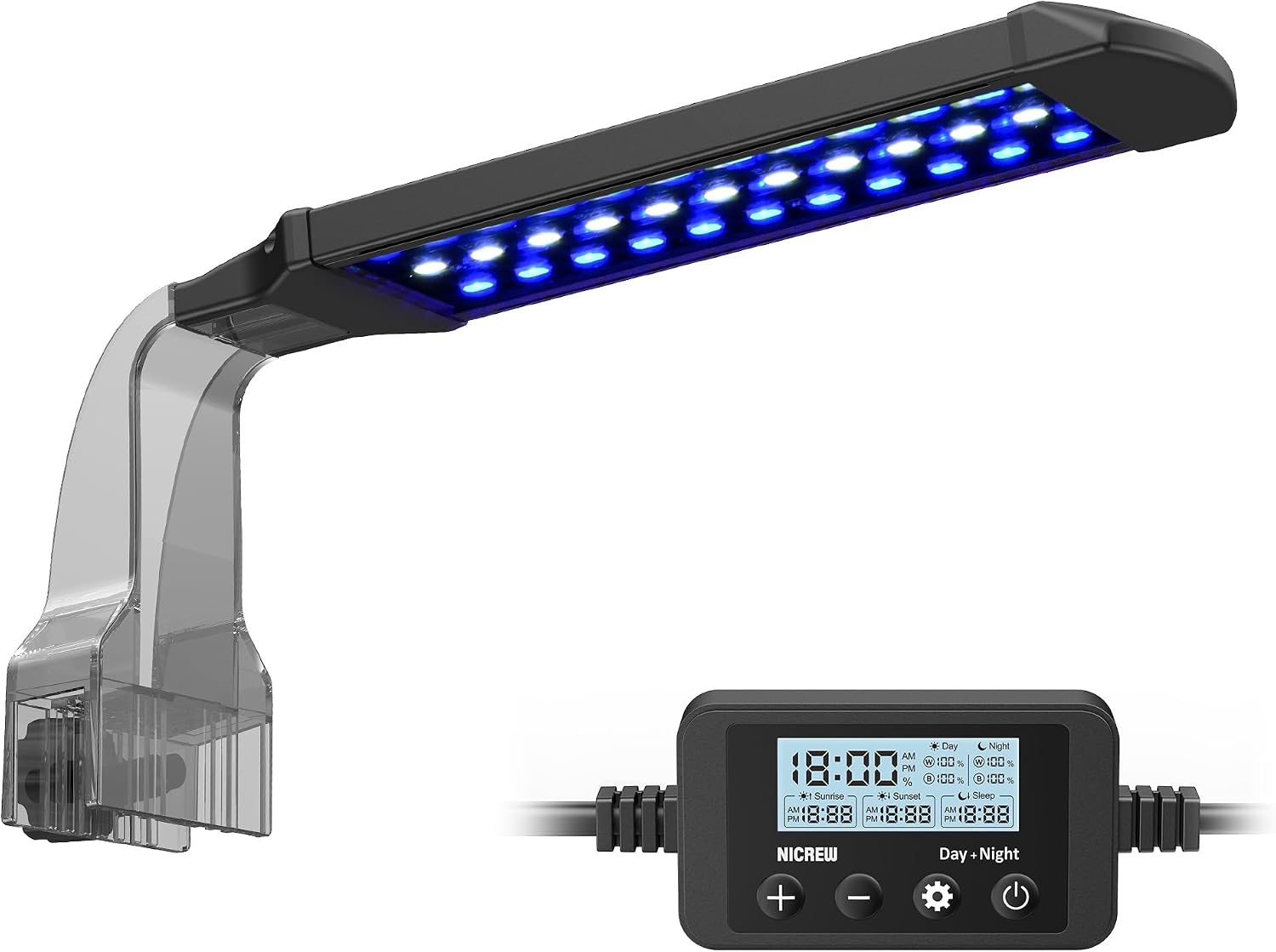
Target 100–150 PAR at the substrate. In that band, the leaves pack tightly, the whorls curl into their signature filigree, and new shoots emerge weekly. Below ~60 PAR the symptoms arrive in order: stretched internodes, a thinning canopy, algae on weakened tissue, and finally full melt. A dim or aging fixture will show up as failure here before it shows up anywhere else in your tank, so a dedicated high-light fixture is a genuine care tool for this species — not a luxury.
 ★4.6
NICREW ClassicLED Plus planted aquarium light
Check Price on Amazon ★4.6CO2: the second non-negotiable
Light without carbon is a recipe for algae, and this plant makes that tradeoff painfully visible. Hold 20–30 ppm of CO2 (lime-green drop checker) from an hour before lights-on until an hour before lights-off, and keep it stable day to day. A pressurized CO2 kit with a solenoid on the photoperiod timer is the only reliable way to get there; liquid carbon supplements simply cannot maintain the concentration a fast-growing stem like this burns through.
Watch for the tell-tales of a CO2 shortfall: top leaves curl or shrink, new growth comes in pale, and algae colonizes the tissue. Because the stand grows so quickly, it shows fluctuations fast — if your bottle runs empty over a weekend, you will see the damage within days. Stability matters as much as the number.
Feeding a hungry plant: NO3, PO4, and iron
A weed-fast stem is a nutrient sink. In a high-tech tank, budget roughly NO3 10–30 ppm, PO4 1–3 ppm, and Fe 0.5–1.0 ppm as weekly water-column totals, dosed daily or every other day in an EI-style routine. Pale new growth with green veins signals iron deficiency; old leaves yellowing from the edges inward points to potassium; pinholes and stalled tips often trace back to phosphate.
This is where a structured fertilization routine earns its keep — most growers lean on the best liquid fertilizer for aquarium plants they trust, dosing on a predictable schedule rather than guessing by eye. A fine-grained aquasoil substrate helps too, buffering the root zone while the water column does the heavy lifting. Remember: a hard trim exports a lot of nutrients at once, so keep dosing steady after cutting sessions to avoid stalling the regrowth.
The weekly trim: how to manage a fast background weed
Expect 2–5 cm of new growth per week at peak, so weekly maintenance is the care program. The technique is trim-and-replant: cut the healthiest top 10–15 cm, replant those tops, and discard the bare lower stems (or move them to a grow-out corner). This resets the stand with vigorous apices instead of letting old stems get leggy and shaded.
Use long-handled aquascaping scissors, trimming in a shallow arc so the back row stays tallest. Toss stunted or algae-dusted tops rather than replanting them; a clean top re-roots in days. Plant stems 1–2 cm apart for a dense curtain, and if you bought a tissue-culture cup, rinse every trace of gel off the roots before planting to avoid rot.
Care parameters at a glance
| Parameter | Target range |
|---|---|
| Light | 100–150 PAR at substrate |
| CO2 | 20–30 ppm, stable through the photoperiod |
| Temperature | 22–28 °C |
| pH | 6.0–7.5 |
| GH | 3–10 dGH |
| Nitrate (NO3) | 10–30 ppm weekly total |
| Phosphate (PO4) | 1–3 ppm weekly total |
| Iron (Fe) | 0.5–1.0 ppm weekly total |
| Placement | Background |
| Difficulty | Intermediate to advanced |
Picking your layout role: background weed or compact foreground
Not every stem belongs in the background, and choosing the right role is half the aquascaping battle. Lagarosiphon madagascariensis is the archetypal fast background weed — tall, feathery, and happiest where it can race upward. If your layout needs the opposite, see Staurogyne Porto Velho care: fast background weed vs compact carpeting stem — picking your layout role keeps both plants in the conditions where they thrive instead of fighting each other for light.
If you love the fine-textured look but want variety in the same background tier, two good companions share the high-light, high-CO2 appetite: Pogostemon erectus, the pine-tree stem plant brings a stiffer texture, while Ludwigia ovalis, the pink-orange stem plant adds warm color contrast. All three peak under the same light-and-CO2 regime above, so they can share a dosing and trimming schedule.
Frequently Asked Questions
Why is my Lagarosiphon madagascariensis melting?
Melt is almost always a light or CO2 shortfall. Below ~60 PAR the plant stretches and thins; under ~15 ppm CO2 new growth stalls and browns. Check your drop checker, verify fixture PAR at the substrate, and thin the stand so light reaches the lower leaves.
Can I grow Lagarosiphon madagascariensis without CO2?
Honestly, no. Without injected CO2 this plant typically stalls, sheds its whorls, and wastes away within weeks — it is a weed only when its light and carbon demands are fully met. For a no-CO2 tank, choose an easier stem with a similar feathery texture.
How often should I trim it?
In a high-tech tank, trim weekly — it pushes 2–5 cm of new growth per week. Cut the best 10–15 cm tops, replant them, and discard the bare lower stems. Skipping two or three weeks usually means a leggy stand with melt starting at the base.
Why doesn't my plant have the reddish or copper tips I see in photos?
The copper-red tips are a high-light response, not a default color. You will only see them with 100+ PAR at the growing tips, stable CO2, and adequate iron in the water column. Under moderate light the plant stays an attractive green — healthy, but without the famous coloration.
How do I dispose of trimmings safely?
Bag trimmings and put them in household trash — never down drains or into waterways. The Lagarosiphon genus has invasive relatives banned in several regions, and even a few stems can establish in warm water. Drying cuttings in the sun before binning is an extra-safe habit. The Flowgrow plant database is a solid species reference.
Tame this plant's demands and you get one of the great background stems in the hobby: a fine, luminous curtain of filigree whorls that moves with the current and glows under strong light. The price is weekly attention and honest numbers on light and CO2 — but for growers who enjoy that rhythm, it is endlessly rewarding.