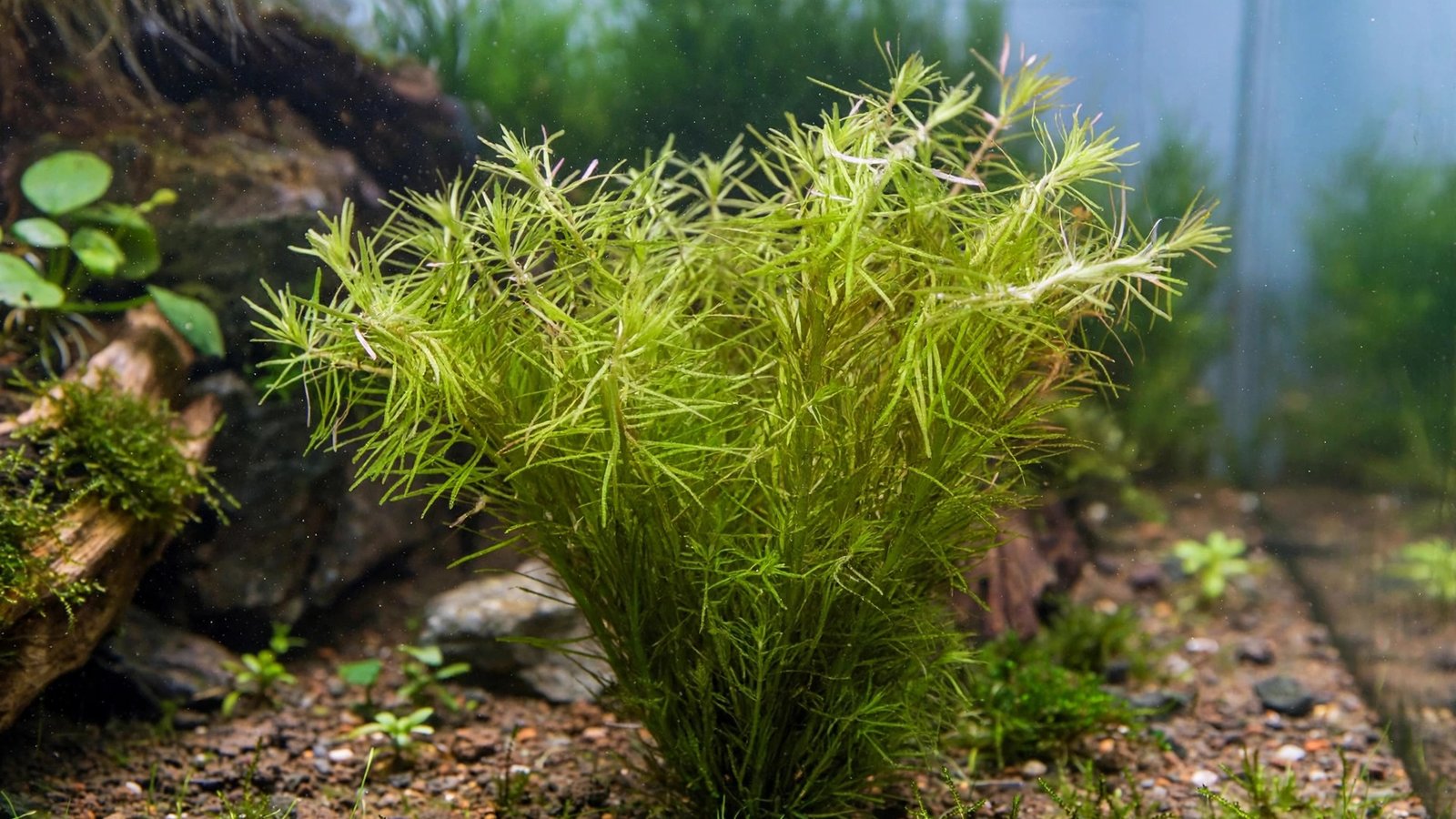
The label on the bunch you bought says Mayaca sellowiana. But in a surprising number of tanks, the plant under that label is not a Mayaca at all — it is Rotala sp. 'Nanjenshan', sold under the wrong name for years. Getting mayaca sellowiana care right starts with knowing which plant you actually brought home, because the real thing and its famous impostor ask for different setups.
The short answer: True Mayaca sellowiana wants medium–high light, 25–40 mg/L CO2, soft slightly acidic water (pH 4.5–7.0), and temperatures of 22–28 °C. Plant it in dense midground groups, trim frequently because it grows fast, and replant the cuttings. Confirm the ID first: true M. sellowiana carries narrow, alternate leaves pressed close to the stem — Rotala sp. 'Nanjenshan' has leaves in whorls and belongs to a different family entirely (Flowgrow Aquatic Plant Database).
The Nanjenshan mix-up: which plant is in your tank?
The identity confusion is so old it has its own place in the literature. The Flowgrow database states it plainly: "time and again, the name Mayaca sellowiana is cited as synonym of Rotala sp. 'Nanjenshan'. This is not correct, however, as the species Mayaca sellowiana truly exists and has nothing in common with the genus Rotala." Some retailers have acknowledged the error too — Buce Plant's own page notes the species is "frequently misidentified as Rotala sp. Nanjenshan." If your bunch came with the older trade name, do a quick leaf check before reading further; for the confused lookalike itself, see the Rotala sp. 'Nanjenshan' care profile. This is also why a reliable plant guide matters more than a bag label: the name on the packet is not always the plant in your hand.
| Feature | True Mayaca sellowiana | Rotala sp. 'Nanjenshan' |
|---|---|---|
| Family | Mayacaceae | Lythraceae |
| Leaf arrangement | Alternate, single leaves up the stem | Whorled, several leaves per node |
| Leaf position | Far closer to the stem | Spreading outward |
| Growth habit | Compact shoots, dense foliage | More open, feathery stems |
| Origin | South America (Costa Rica to Argentina) | Cultivar of Asian trade origin |
The habit is the giveaway. True sellowiana builds short, compact, densely foliaged shoots — Flowgrow notes it is even denser than its sibling Mayaca fluviatilis — while Nanjenshan grows airier and leggier. Look straight down at the bunch from above: a true Mayaca shows a star-like spiral of single leaves, each sitting close against the stem.
Mayaca Sellowiana Care: the real parameters
Here is where honesty is required, because the sources genuinely disagree. Buce Plant lists it as medium care with medium-to-high light, medium-to-high CO2, and fast growth in pH 4.5–7.0 water. Some North American retailers sell what is labeled "Mayaca Sellowiniana" as a beginner plant that handles low light "no problem" — descriptions that fit a hardy Nanjenshan-type bunch far better than a true Mayaca. Since mislabeled stock is everywhere, do not plan your tank around one retailer's copy. Plan around the plant's actual behavior: a fast-growing, fine-leaved stem plant from soft-water South American wetlands.
For verified M. sellowiana, aim for the parameter window below. Treat CO2 like all injected tanks: start low, watch the drop checker and the livestock, and raise it gradually only if the plant responds with denser, brighter growth.
| Parameter | Target range |
|---|---|
| Light | Medium–high (see how much light aquarium plants need) |
| CO2 | 25–40 mg/L, introduced gradually |
| pH | 4.5–7.0 |
| Temperature | 22–28 °C |
| Substrate | Nutrient-rich fine substrate or root tabs |
| Fertilization | Lean liquid dosing to start, increase with growth |
A nutrient-rich substrate with lean liquid dosing is the calmest way to feed it: fine leaves uptake nutrients from the water column too, and heavy dosing in a fast grower quickly invites algae. Keep nitrates in the moderate range rather than chasing numbers upward; the plant tells you what it needs.
 ★4.6
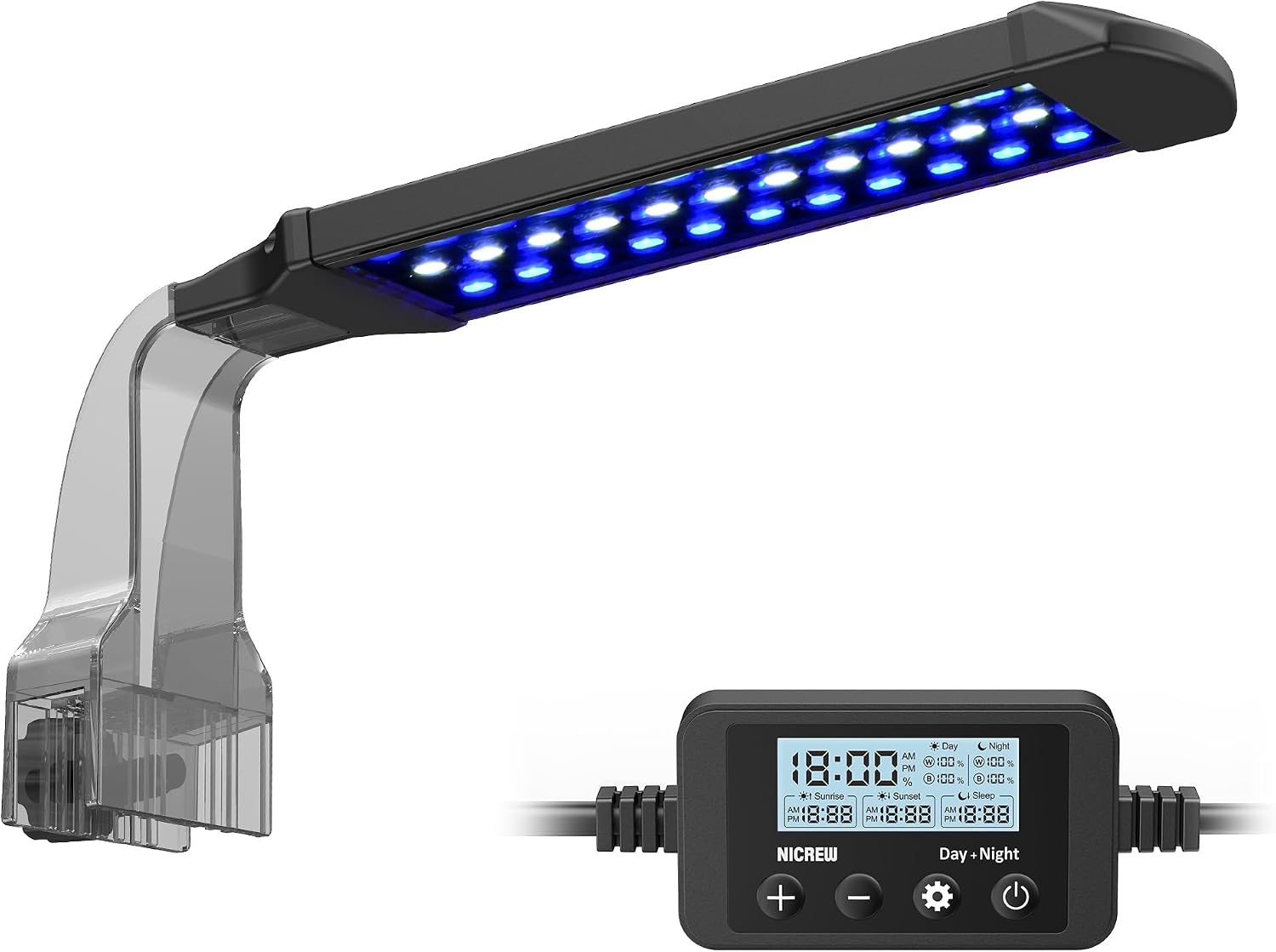
NICREW ClassicLED Plus planted aquarium light
Check Price on Amazon ★4.6Planting and placement
True sellowiana reads best as a midground texture — its compact, densely foliaged shoots give you a fluffy mound that contrasts beautifully with broader leaves like Ludwigia repens or open feathery stems like Rotala rotundifolia. Plant small groups of stems 2–3 cm apart rather than one isolated sprig; a lone stem looks sparse and shades itself. Push each stem about 2 cm into the substrate so the buried portion does not float free overnight, and give the group room in front — it fills sideways into a cushion.
Trimming and propagation
Expect to trim often — this is the price of the fast growth rate every source agrees on. When the tops reach the height you want, cut the stems and replant the healthy tops straight back into the substrate; they root quickly. The rooted lower portions will branch from the cut nodes and thicken the group, so over a few trimmings one purchase becomes a bush.
Do not let the lower foliage sit in darkness for weeks. If the bottoms turn sparse and brown while the tops look perfect, you are trimming too late, not feeding wrong: the canopy is shading itself out. Shorten the interval between trims, and consider the staggered two-drift trick so light always reaches some lower leaves.
Frequently Asked Questions
Is Mayaca sellowiana really a beginner plant?
True M. sellowiana is medium difficulty: it wants medium–high light and moderate CO2 to look its best. The "mega easy, low light" claims in retail copy usually describe mislabeled Rotala sp. 'Nanjenshan' stock. Verify the leaf arrangement first, then match your care to the plant you actually have.
How do I tell Mayaca sellowiana from Rotala sp. 'Nanjenshan'?
Check leaf arrangement: true Mayaca has single alternate leaves hugging close to the stem, while Nanjenshan carries leaves in whorls of several per node. Sellowiana also grows more compact with denser foliage than its sibling M. fluviatilis. View the bunch from above for the clearest read.
Does it need CO2 injection?
It grows best with it — the reliable range is 25–40 mg/L CO2. It may survive without injection in strong light, but growth gets leggy and sparse. If you inject, start low and raise the rate slowly while watching your drop checker and livestock.
What water does Mayaca sellowiana prefer?
Soft to moderately soft, slightly acidic water — pH 4.5–7.0 — at 22–28 °C, reflecting its South American bog and wet-meadow origins. It is fairly adaptable on hardness, but very hard alkaline water tends to produce weaker, paler growth.
How do I propagate it?
Only by stem cuttings, and it is genuinely easy: snip healthy tops and replant them directly in the substrate. They root fast, and the cut lower stems branch from the nodes, so each trimming round doubles your planting for free.
Final thought
Mayaca sellowiana deserves better than its reputation as a name on the wrong bag. If you have the true plant, give it the honest medium-care setup — good light, moderate CO2, soft water, and frequent trims — and it rewards you with one of the densest, most decorative textures in the hobby. Check the Flowgrow database entry on true Mayaca sellowiana if you want to compare your bunch against the botanical description, and enjoy the small satisfaction of keeping the right name with the right plant.