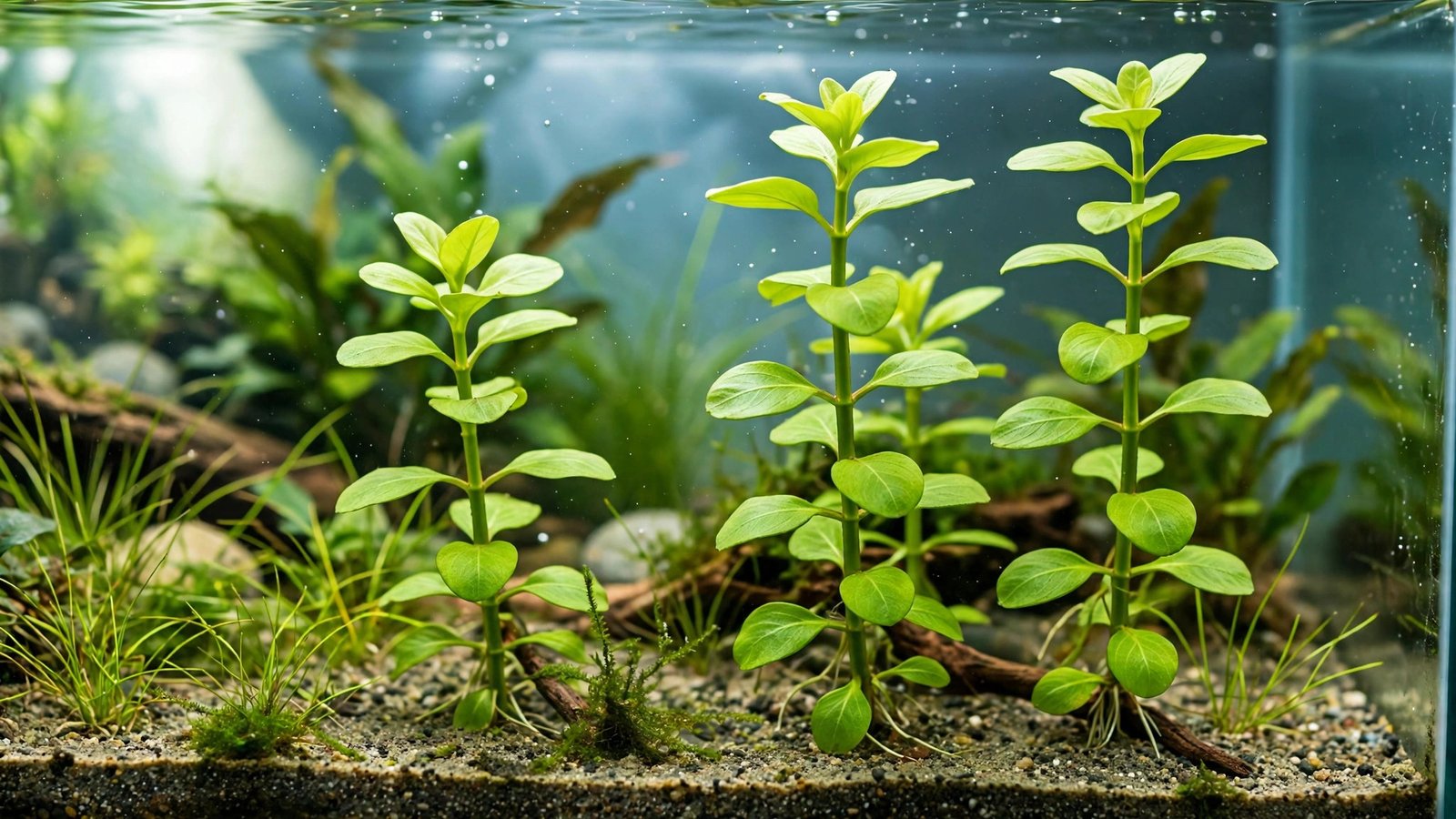
Most aquarists meet Ludwigia palustris through its famous red cousin — then buy a green pot that looks nothing like the photos. Relax: the green species form of Ludwigia palustris is one of the most forgiving stem plants you can own, and ludwigia palustris care stays simple even in a low-tech tank with no CO2.
Ludwigia palustris is a hardy cosmopolitan wetland stem plant (Latin palustris = "of the marsh") that grows submerged, floating, or creeping over mudflats, rooting freely at every stem node. The green form tolerates low light and no CO2, tops out around 10–30 cm in tanks, colors up orange-red under strong light, and cuttings root within 5–7 days — so one pot of five stems can become a background bush in roughly a month.
Ludwigia Palustris Care in a Low-Tech Tank
This is where the species form earns its reputation: it thrives in an ordinary low-tech aquarium. A common fixture in the 25–40 micromol PAR range keeps it growing green and healthy, and it tolerates pH 6–8 and temperatures of 18–28°C.
Give it more light and it gives back more: under 50+ PAR the upper leaves blush orange-red while the lower foliage stays green. Plant stems in groups of five or more, spaced 2–3 cm apart, with the bottom third buried; roots emerge from the buried nodes within days.
Substrate matters more than light for stability. A nutrient-bearing substrate feeds the heavy root system and keeps growth vigorous; in bare sand, growth slows and lower leaves drop sooner — the first sign the plant is hungry, not sick.
CO2 and Nutrients: What This Plant Actually Needs
Ludwigia palustris grows perfectly well with no injected CO2 — it was a beginner favorite long before CO2 gear was common. CO2 simply makes it faster, bushier, and more colorful, with denser side shoots at 20–30 mg/L, though it never demands it the way high-tech reds do.
Nutrients matter more than CO2 for this plant. It feeds from roots and leaves, so pair a decent substrate with a steady water-column supply. A liquid fertilizer for stem plants dosed to schedule keeps leaves full-sized and deep green. Our guide on whether aquarium plants really need added nutrients shows how to read hunger signs — chronic zero nitrates with pale new growth means starvation, not bad lighting.
Iron deserves a mention: like most red-capable plants, this one greens up in iron-poor water and colors best when iron and micronutrients stay available. Most complete fertilizers already include it — just do not let dosing lapse.
Trimming and Propagating Your Stem Bunches
Trimming is where this plant pays for itself. Stems left untrimmed eventually reach the surface and flop along it; trimmed stems respond by pushing two or three side shoots from the nodes below the cut, so the bush multiplies itself with every maintenance session.
When a stem reaches the surface, cut it halfway up the tank and replant the top portion 2–3 cm away. The bottom half keeps growing from its side shoots, and the replanted top roots at the nodes within about a week. Within three to four trim cycles, five original stems can become twenty-plus. Remove any soft or translucent stem bases while you trim — they will not recover and only decay.
This propagation method makes Ludwigia palustris one of the cheapest ways to scape a tank: it shares the same cut-and-replant multiplication as Limnophila sessiliflora and other fast stems, so one pot can eventually plant a whole aquarium. Offer the trimmings to fellow hobbyists — they root in tap water in a jar just as happily.
 ★4.6
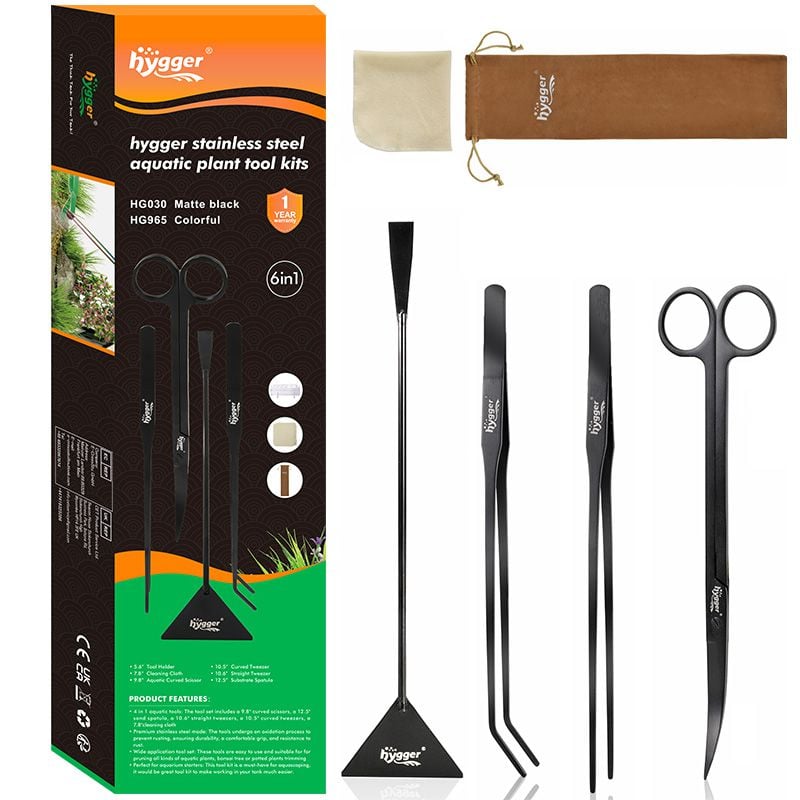
hygger 6-in-1 Aquarium Aquascaping Tool Kit
Check Price on Amazon ★4.6Emersed Growth: The Marsh Plant in Your Paludarium
Because this species evolved in marshes, it can live fully emersed on a damp bank: stems creep along wet soil, rooting at each node, with slightly larger, tougher leaves than the submerged form. In summer, emersed stems can produce tiny petal-less yellow-green flowers in the leaf axils — a surprise to aquarists who have only seen it underwater.
This suits paludariums and open-top tanks: float stems on the surface and they convert, creeping across the water within weeks. Keep humidity high during the transition — drying air is the one thing the emersed form does not tolerate well.
Green Palustris vs Super Red and Repens
The name confusion is the biggest frustration around this plant. The green species form is the wild-type Ludwigia palustris; the brilliant crimson plant in most photos is a selected cultivar — see our Ludwigia Super Red care guide, which needs strong light and CO2 to stay red. Ludwigia repens is a close cousin with larger, rounder leaves.
| Plant | What it really is | Light needs | CO2 needs | Color without tech |
|---|---|---|---|---|
| Green palustris (this article) | Wild-type species form | Low–high | Optional | Green, orange-red tops in high light |
| Super Red | Selected red cultivar | High | Recommended | Stays dull green-red |
| Ludwigia repens | Separate species | Medium–high | Optional | Green with reddish undersides |
Enjoy the green form for what it is: the easiest, cheapest, most forgiving Ludwigia of them all.
 ★4.6
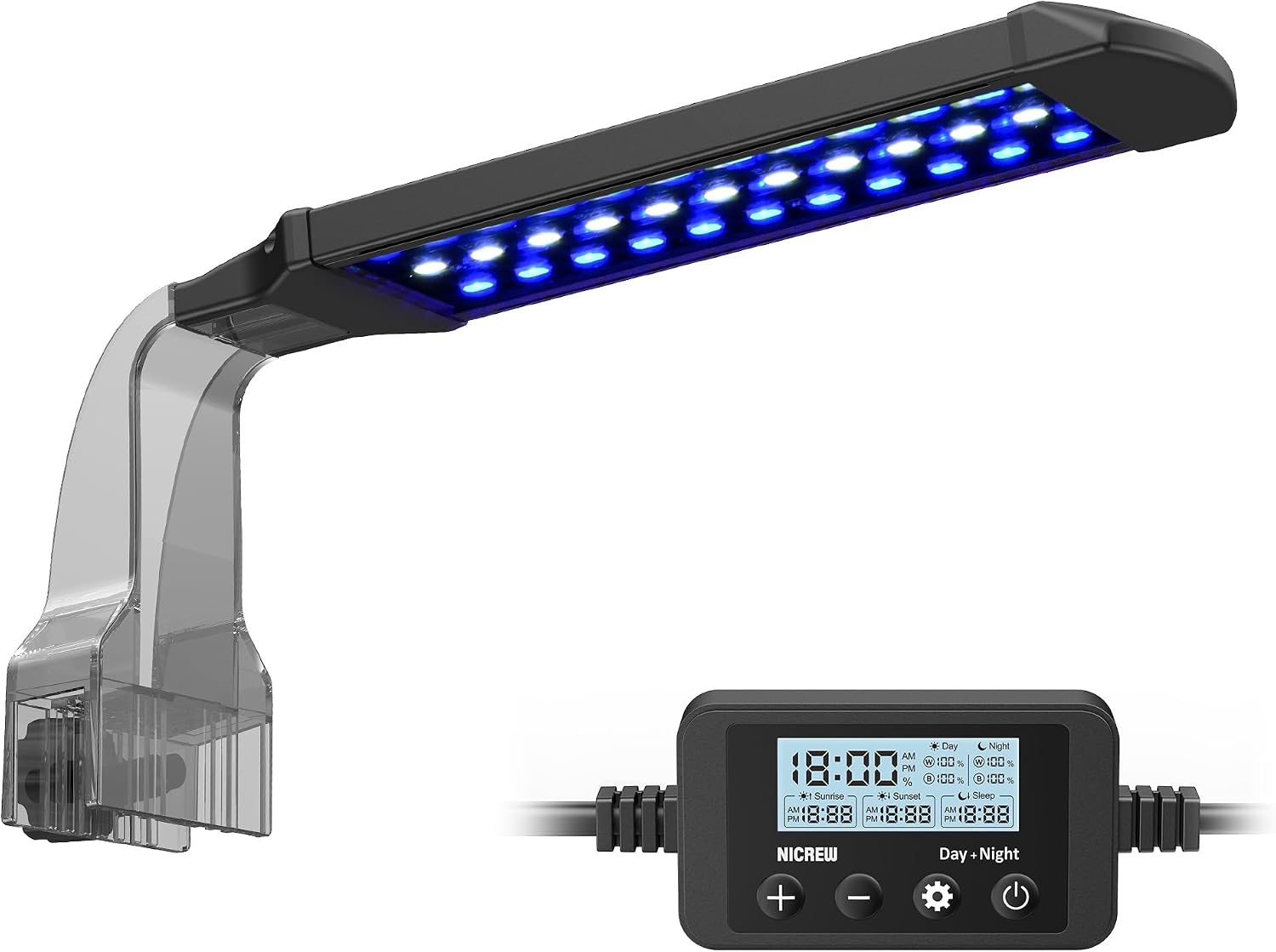
NICREW ClassicLED Plus planted aquarium light
Check Price on Amazon ★4.6Troubleshooting Melt and Stalling
Nearly every failure looks like stems melting at the base or stalling with tiny new leaves. Diagnose before changing anything.
| Symptom | Likely cause | Fix |
|---|---|---|
| Translucent stems at the base | Dim light under a dense canopy | Thin the canopy or shorten the stems |
| New leaves pale or stunted | Nutrient deficiency | Resume steady fertilization; check substrate age |
| Plant stalls after a big trim | Too many stems cut at once | Trim one-third at a time |
| Melts within days of planting | Emersed-to-submerged transition shock | Trim melted leaves; new growth follows in 1–2 weeks |
| Leggy stems, gaps between leaves | Light too weak | Increase light or move the plant brighter |
Transition melt is normal: emersed-potted plants often shed their land-grown leaves when submerged. As long as the stems stay firm, new leaves follow within 1–2 weeks, because every node can become a new plant.
Frequently Asked Questions
Is Ludwigia palustris good for beginners?
Yes — it is one of the most forgiving stem plants available. The green form tolerates low light, pH 6–8, temperatures from about 18 to 28°C, and grows fine without CO2 or special substrates. Its habit of rooting at every node means even battered cuttings usually recover.
How do I make Ludwigia palustris turn red?
Raise the light to 50+ PAR and keep nutrients steady; the upper leaves will blush orange-red. But the green form never turns the deep crimson of the Super Red cultivar — for full red, grow that cultivar with high light and CO2.
Can Ludwigia palustris grow out of water?
Yes. In marshes it creeps along wet mudflats, rooting at the nodes, and it adapts readily to paludariums or open-top tanks with humid air. Emersed stems can even flower — tiny petal-less yellow-green blooms appearing in the leaf axils each summer.
Why are my stems melting at the bottom?
Almost always dim light under a dense canopy, not disease. Thin the top growth, cut the stems shorter, and remove the soft bases. Keep the rooted bottoms in place — they recover fast and will push new side shoots within two weeks.
Why This Marsh Weed Deserves a Spot
Ludwigia palustris will never be the rarest plant in your tank — and that is the point. It fills your background while you fuss over the difficult plants, survives the months you forget to fertilize, and turns one cheap pot into a bush worth sharing. Botanical references like Tropica's Ludwigia palustris article and Virginia Tech's species profile tell the same story: a tough, adaptable marsh plant that happens to be beautiful underwater. Give it decent light, steady food, and a trim now and then — it does the rest.