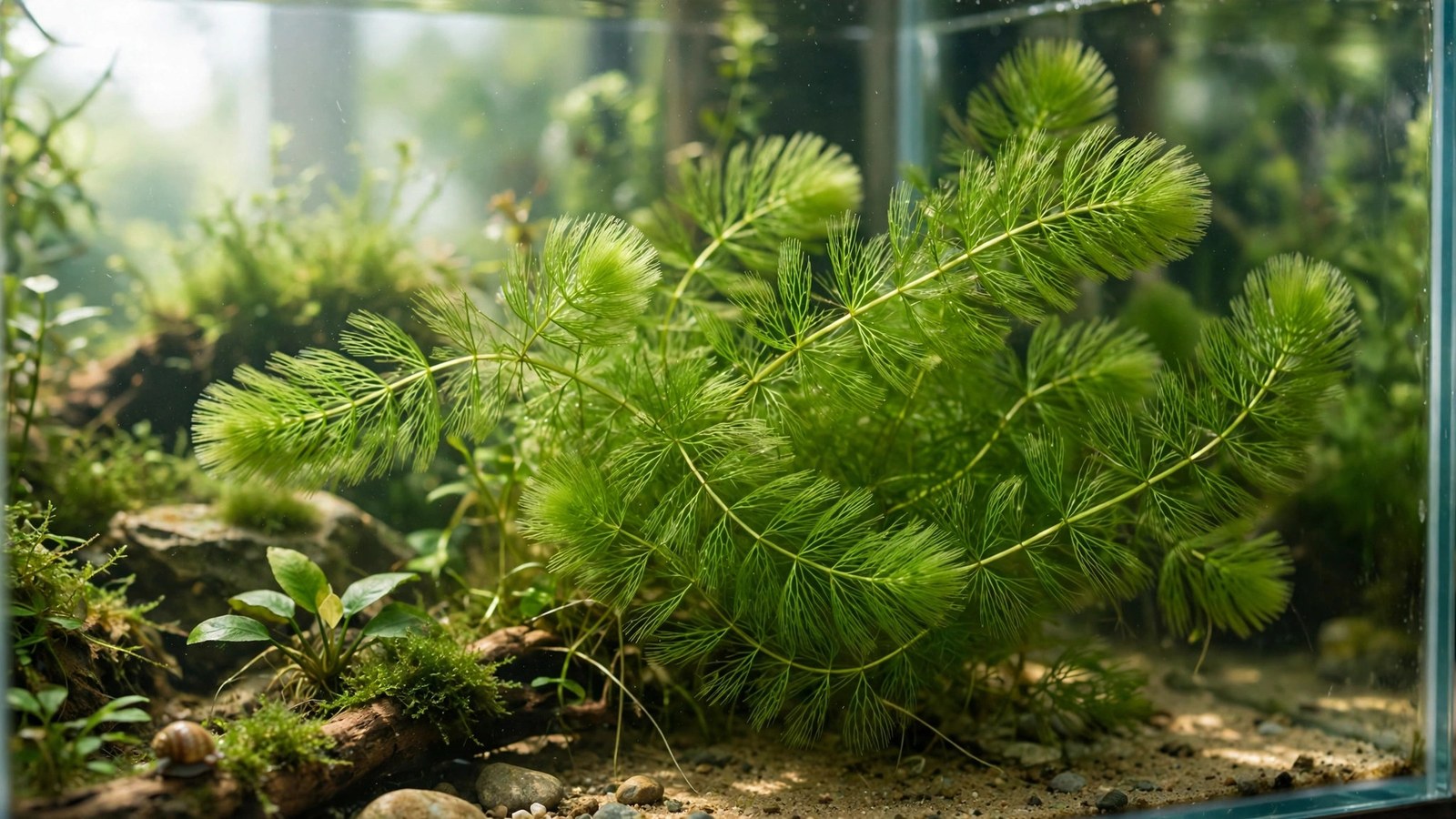
New tank, green haze on the glass, and someone in every forum thread tells you to toss in a bunch of hornwort and watch the algae vanish. It's the most repeated advice in planted-tank keeping — and it's about 70% true. So does hornwort help reduce algae? Yes, through three real mechanisms — but it has hard limits you should know before buying.
By the end you'll know exactly how hornwort starves algae, how to set it up for maximum effect, and the point where you need a different tool.
Does Hornwort Help Reduce Algae? The Short Answer
Yes — hornwort genuinely lowers algae pressure in most community tanks, and it's one of the cheapest tools in the hobby. It works not by poisoning algae but by beating it to the buffet: algae needs the same dissolved nitrate, phosphate, and potassium that hornwort yanks straight from the water column at a furious rate.
The oversell is the idea that a bunch of hornwort fixes a real outbreak. Think of it as prevention and maintenance, not rescue medication — it keeps a healthy tank clean far better than it cures a sick one. For planting and placement details, our complete hornwort care guide covers floating versus planted setups and trimming technique.
The Three Mechanisms (Ranked by Impact)
1. Nutrient competition — the big one
Algae is opportunistic: it blooms when light and dissolved nutrients sit unused. Hornwort is one of the fastest-growing aquarium plants — under decent light it adds inches per week, and every inch is built from the nitrate and phosphate that would otherwise feed a green-water bloom. (Tropica's species profile documents its fast growth and column-feeding habit.) Because it feeds from the water column rather than roots, it competes in exactly the same nutrient space algae occupies.
2. Canopy shading — helpful, not decisive
Floated hornwort forms a loose, needle-like canopy that cuts light to lower layers. Light-hungry algae like green dust and green water slow measurably under it. But hornwort's feathery needles don't block light like broad floaters such as water lettuce or salvinia — treat shading as a bonus, not the strategy.
3. Biofilm real estate — the underrated one
Every needle is a surface, and surfaces grow biofilm. Shrimp and snails constantly patrol floating hornwort for biofilm and soft algae films, so a healthy stand becomes a grazing station that sustains a larger, more effective cleanup crew.
| Mechanism | What it does | Strength |
|---|---|---|
| Nutrient uptake | Pulls nitrate/phosphate from the water column before algae can use it | High |
| Canopy shading | Cuts light to lower tank layers | Moderate |
| Biofilm surface | Feeds shrimp and snails that graze soft algae | Moderate |
| Allelopathy (claimed) | Alleged chemical inhibition of algae | Unproven |
Why Allelopathy Doesn't Deserve a Place in Your Plan
You'll read that hornwort secretes chemicals that kill algae. The claim circulates endlessly in forums, but the evidence at aquarium concentrations is thin and debated — nothing conclusive has been demonstrated. Nutrient competition and shading alone fully explain every "hornwort fixed my algae" story. Don't buy it expecting chemical warfare; buy it as a nutrient sponge and manage it like one.
Setting It Up So It Actually Works
Floating hornwort beats planted hornwort for algae control, and it's not close. Floated at the surface it gets maximum light for fastest uptake, trimming takes seconds, and there's no decaying lower section. Planted hornwort grows slower and sheds lower needles that rot and add nutrients back.
For a 20-gallon tank, two or three bunches floated loosely at the surface is a solid dose. Spread them so water moves between the strands instead of forming one thick mat — if the canopy covers more than ~70% of the surface, thin it, or the shading starts hurting your other plants too.
The Trimming Rule (Where Most People Fail)
Here's what nobody mentions: a hornwort bunch that has stopped growing is no longer a nutrient sponge. Once a plant hits steady state, its uptake drops to maintenance levels and the algae-fighting advantage evaporates.
The fix has a schedule: trim 20–30% every 1–2 weeks and remove the trimmings from the tank. Exporting the biomass is the entire trick — absorbed nutrients leave in your compost bin instead of recirculating. Never release hornwort or trimmings into local waterways — compost them or bin them. Fast growers like water wisteria and egeria densa are managed the same way: growth is the filter, trimming is the water change.
Signs It's Working vs. Signs It's Not Enough
Give it 2–3 weeks. Working: green film on the glass grows back slower between cleanings; nitrate readings trend down at unchanged feeding; morning green-water tint recedes.
Not enough: nitrate stays above 30–40 ppm despite trimming — no plant can sponge that load, and water changes plus reduced feeding are mandatory; aggressive algae like black beard or staghorn spread — these need imbalance fixes and targeted treatment, not more plants; hornwort itself stalls or melts — a plant that isn't growing isn't helping anyone.
Pairing hornwort with a second fast grower covers more of the tank's nutrient budget — guppy grass is a forgiving companion for beginners. One more ID note: like anubias, hornwort is strictly freshwater — don't try it in brackish or marine setups.
Buying Hornwort: What to Expect
Most local fish shops and online plant retailers sell hornwort as cheap weighted bunches — among the most affordable plants in the hobby. Choose bright green, needle-dense bunches with no slimy coating or brown lower sections.
Quarantine new bunches for a few days in a bucket with tank water and bright light. Transport-shocked sections shed before they reach your tank, and hitchhiking snails or duckweed reveal themselves where you can pick them out easily.
Frequently Asked Questions
Does hornwort remove nitrates from aquarium water?
Yes — actively growing hornwort absorbs significant nitrate and phosphate from the water column. Only growing plants pull nutrients, so trim and export 20–30% of the mass every 1–2 weeks. A static, untrimmed bunch quickly stops being an effective nutrient filter.
Is floating or planted hornwort better for algae control?
Floating is clearly better. At the surface it gets maximum light for fastest nutrient uptake, trimming is effortless, and the canopy shades lower layers. Planted hornwort grows slower, sheds lower needles that decay into nutrients, and is harder to thin.
Can hornwort get rid of an existing algae bloom by itself?
Rarely. Hornwort is prevention, not rescue. An established bloom — especially aggressive types like black beard or staghorn algae — needs the underlying imbalance fixed first: lighting, nutrients, and manual removal. Adding hornwort helps modestly but won't reverse an active bloom alone.
How long until hornwort starts reducing algae?
Allow 2–3 weeks. Hornwort needs about a week to settle (especially store-bought bunches), then 1–2 weeks of active growth before uptake measurably slows algae. Watch for green film returning more slowly on the glass and nitrate readings trending down.
Does hornwort release chemicals that kill algae?
Probably not in any meaningful way. Allelopathy claims are widely repeated but scientifically debated and unproven at aquarium concentrations. Nutrient competition, shading, and biofilm grazing surface fully explain its anti-algae reputation.
Hornwort earned its reputation honestly: cheap, fast-growing, and genuinely pulling nutrients out of your water every week you trim it. It won't cure an overrun tank or replace sane lighting and water changes — but as a standing member of your algae-prevention team, few plants give you more for your money. Float a few bunches, keep them growing, export the trimmings, and test nitrate monthly. That routine keeps most community tanks out of the algae danger zone. For deeper technique, see our complete hornwort care guide.