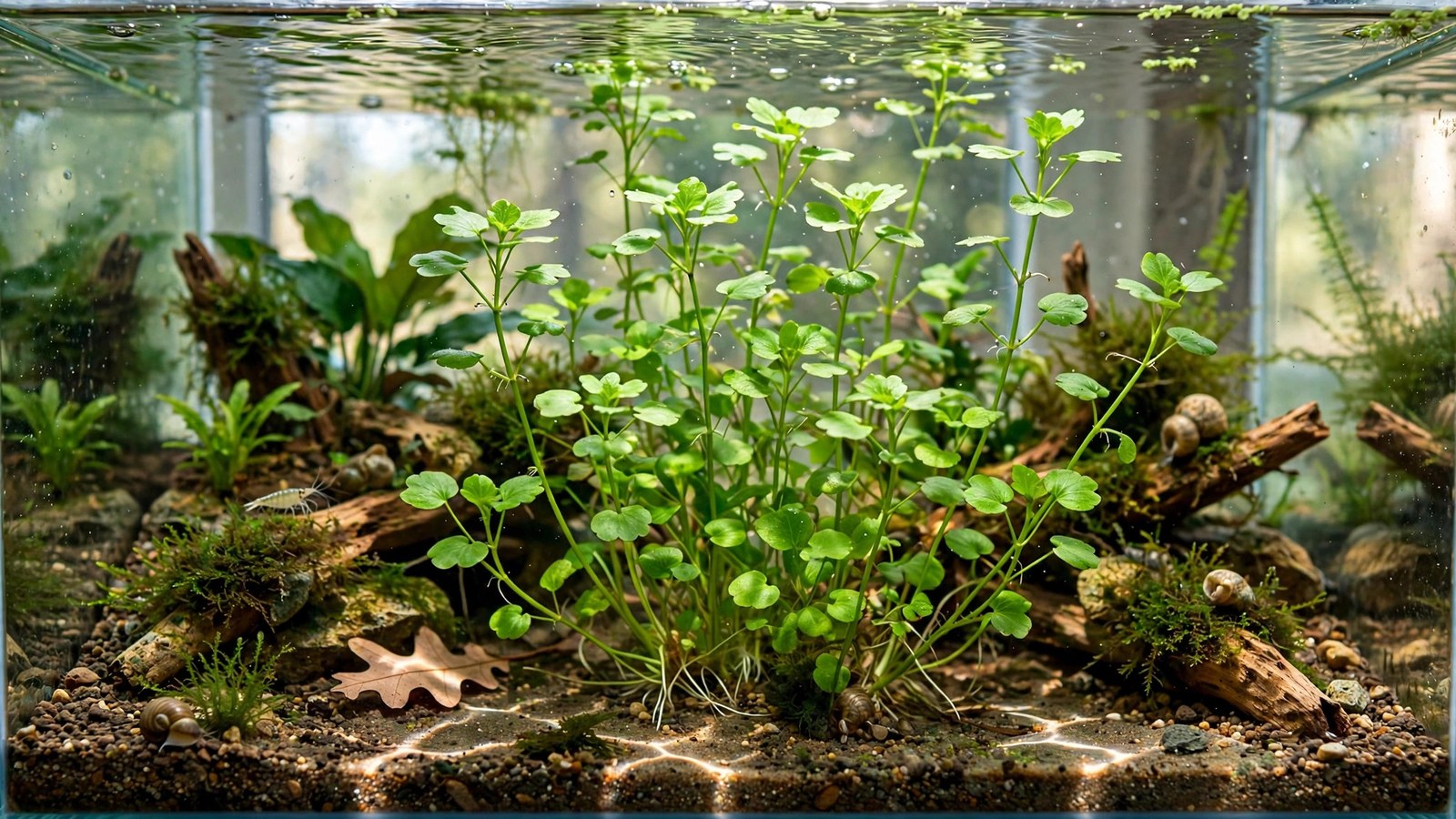
Ask for a plant that fills a bare background in three weeks, tolerates low light, and survives a first-time aquarist, and most lists point you at the same tired suspects. Cardamine lyrata — sold as Japanese cress or Chinese ivy — does all of that quietly, but solid Cardamine lyrata care advice is hard to find. By the end of this profile you'll know exactly where to plant it, how to trim it into bushy "shapeable volume," and why it's one of the best stem plants for beginners working with cooler water.
Cardamine lyrata care: what this plant actually needs
Cardamine lyrata care is straightforward: low to medium light, steady nutrients, and water on the cooler side. This is a plant from the cool streams of East Asia. It grows fastest and holds its compact, vine-like shape at 18–23°C; above 27°C the stems thin out and stretch toward the surface. If you keep an unheated tank or a temperate setup, that preference is a feature, not a limitation. CO2 is optional — the plant pulls plenty from the water column, though adding it will speed up growth you may not need.
As a nutrient hog, it appreciates either a nutrient-rich substrate or regular liquid fertilization — a comprehensive all-in-one dosed per the bottle's schedule is enough. Its roots are vigorous but shallow, so a cap of sand over aquasoil works fine. For a fellow easy stem plant with similar low demands, see our Bacopa monnieri care guide.
Why Low Light Is an Advantage Here
Most fast stem plants turn leggy and pale in weak light, but Cardamine lyrata genuinely tolerates low light — retailers that farm it in quantity rate it as a low-light plant outright. Under a modest LED it keeps its round, lyre-shaped leaves and the vine climbs at a manageable pace, making it a rare thing: a background filler that won't punish you for owning budget lighting.
Medium light is the sweet spot for density: leaves grow closer together, side shoots trigger more readily, and the plant stays compact. Crank the light too high in a low-tech tank and you mainly invite algae onto those round leaves. If you're comparing beginner stem plants that handle weak light, Hygrophila polysperma shares the "plant it and forget it" temperament but grows coarser and less vine-like.
Planting: Rooted, Tied Down, or Floating
You have three legitimate options, and all of them work:
- Rooted in substrate (the classic): push each stem 2–3 cm into the substrate, spaced a few centimeters apart. Roots form quickly from the buried nodes.
- Attached to hardscape: wedge stems into driftwood crevices or tie them to rocks with cotton thread. Stems root at the leaf axils and grip on their own — a good way to trail green over a stone.
- Floating: let it trail across the surface. It grows happily this way and the shade it casts helps suppress algae below — just thin it before it covers the whole surface.
Floating is particularly useful in shrimp tanks: the root tangle at each node becomes a grazing buffet for shrimplets. It's listed as safe for fish, shrimp, and snails across the major retailer care sheets. For another shrimp-friendly nano filler, check Murdannia keisak care.
Trimming: The "Shapeable Volume" Technique
This is where Cardamine lyrata earns its reputation. Growers call it a "shapeable volume plant" because it responds to trimming like a hedge responds to shears: cut a stem top and it pushes two or more side shoots from the nodes below. The loop is simple:
- Let stems reach 5–10 cm above your target height.
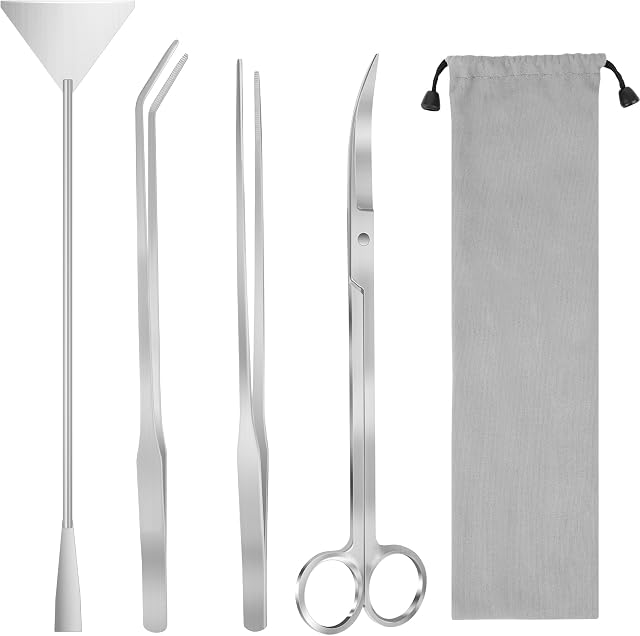
- Cut the tops with sharp aquascaping scissors — clean cuts heal faster than pinched stems.
- Replant the cuttings (they root within days) or share them.
- Strip and remove any yellowing lower leaves while you're in there — old leaves shed first under low light, and removing them keeps the base healthy.
Trim every 2–3 weeks in a healthy tank. Because it grows fast, a neglected plant will hit the waterline and flop across the surface — stay ahead of it and the plant rewards you with genuine density. Its trailing habit makes it a great backdrop behind statement midground plants, like the tall sedge in this batch's sibling profile on Cyperus helferi care.
 ★4.7
Liveek 4-in-1 Aquascaping Tool Kit
Check Price on Amazon ★4.7Cardamine Lyrata vs. Hydrocotyle (Water Pennywort)
New aquarists often confuse the two — both have round leaves and a vine habit. The practical differences:
| Trait | Cardamine lyrata | Hydrocotyle (water pennywort) |
|---|---|---|
| Temperature sweet spot | Cool water (18–23°C) | Tolerates warmer water |
| Growth style | Upright vine, trims into a bush | Trailing/creeping, spreads horizontally |
| Best use | Midground–background volume | Carpet edge, floating mats |
| Nutrient appetite | Heavy nitrate uptake | Moderate |
For bushy background volume, Cardamine wins. For horizontal ground cover or a floating mat, pennywort is the better tool.
Propagation and Algae Control in One
Propagation needs no special method: the stems root at leaf axils on their own, so every cutting you replant is a new plant, and a single bunch can fill a background in a month or two. That aggressive growth also makes it a superb algae fighter — fast plants outcompete algae for nitrates, and Cardamine lyrata is among the thirstiest nitrate drinkers in the easy-plant category, which flattens the nutrient spikes of a new tank's diatom-and-green-algae phase.
Pair it with a slower accent plant for contrast: our sibling guide to Hygrophila Araguaia care covers a compact reddish stem plant that sits well in front of Cardamine's bright-green vines. For confirmation of its low-light rating, attachment options, and cooler-water preference, see the Cardamine lyrata care notes at Canton Aquatics and the Japanese cress listing at Garnelaxia.
Frequently Asked Questions
Is Cardamine lyrata easy to grow?
Yes — it's one of the easiest stem plants in the hobby. It needs only low to medium light, no CO2, and regular nutrients, and it roots readily from cuttings. The main maintenance is trimming every 2–3 weeks so it doesn't overrun the tank. Keep it below ~27°C for best results.
Does Cardamine lyrata need CO2?
No. It grows well without injected CO2, drawing enough from the water column and ambient levels. Adding CO2 will make it grow faster, but in most low-tech tanks that extra speed just means more trimming. Nutrients (a good liquid fertilizer or rich substrate) matter more for this plant than CO2.
Why is my Cardamine lyrata getting leggy?
The two usual causes are warm water and lack of trimming. Above ~27°C the stems thin and stretch toward the surface; untrimmed vines do the same even at good temperatures. Move it to a cooler spot if possible, and cut the tops — trimming triggers bushier side growth from the nodes below the cut.
Can Cardamine lyrata grow floating or attached to wood?
Yes, both. It roots at leaf axils, so stems tied to driftwood or wedged into rocks grip and grow on their own. Floating, it forms a trailing mat that shades the tank and suppresses algae — thin it regularly before it covers the surface and blocks light to plants below.
Is Cardamine lyrata safe for shrimp and snails?
Yes, it's widely listed as safe for fish, shrimp, and snails. In shrimp and nano tanks it's especially useful: the dense vine tangle gives shrimplets grazing surface and hiding spots, and its fast nitrate uptake keeps water parameters stable between water changes.
The Bottom Line
Cardamine lyrata is the plant you reach for when a tank needs volume fast — a cool-water, low-light, shrimp-safe vine that turns into a hedge with nothing but a pair of scissors and a trim every few weeks. Plant it rooted, tie it to hardscape, or let it float; just keep the water cool and stay ahead of the shears.