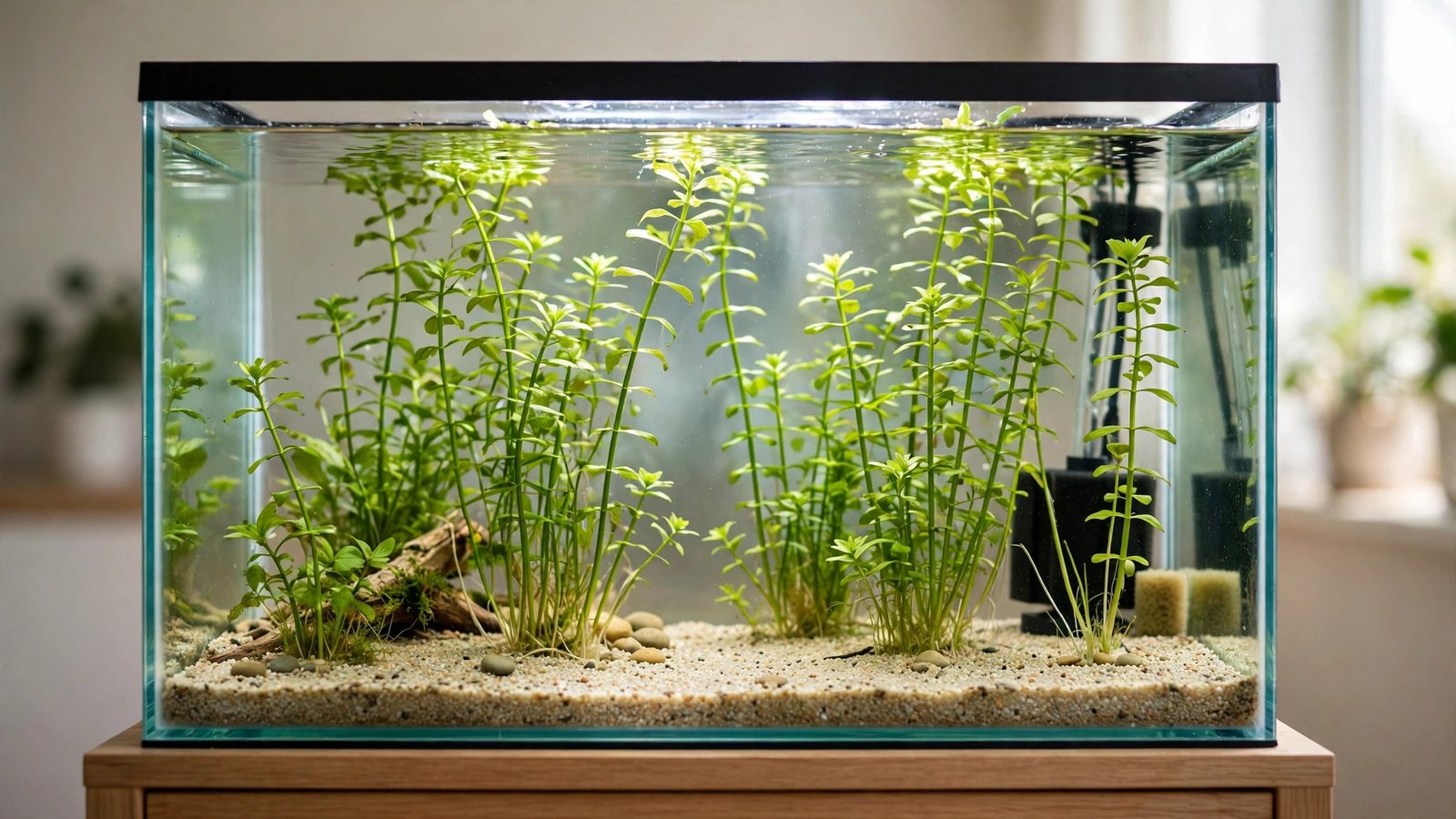
Stem plants are the backbone of most planted tanks — the fast-growing, endlessly trimmable species that fill the background, drink up excess nutrients, and forgive almost every beginner mistake. If you've just set up your first planted aquarium, a handful of easy stem plants will give you visible growth within days, a lush backdrop within weeks, and a renewable supply of free plants every time you trim. These are the 10 best stem plants for beginners, chosen for toughness, availability, and tolerance of ordinary tap water and modest light. Growth rates and difficulty ratings for every species are listed in Tropica's plant database — worth bookmarking before you shop.
Why Stem Plants Are Perfect for Beginners
Stem plants grow the way the name suggests: a vertical stem with leaves arranged along it, rooted in the substrate, growing toward the light. That simple structure gives them three beginner superpowers. First, they grow fast — many species put on an inch or more per week, so you see progress immediately instead of wondering whether your plant is alive. Second, they propagate by cutting: snip a stem, replant the top, and you have two plants. Third, their fast growth makes them nutrient sponges that starve algae — a new tank stocked with stem plants cycles more smoothly and stays cleaner than one with only slow growers.
Stem plants are also honest. When something is wrong — low light, missing nutrients, inconsistent CO2 — they show it quickly in leggy growth, small pale leaves, or melting lower foliage. Experienced hobbyists read their stem plants like a dashboard. For related fast growers that stabilize new setups, see our guide to fast-growing plants for new tanks.
How to Plant and Trim Stem Plants
Planting technique
Strip the leaves from the bottom 1–2 inches of each stem, then push that bare section into the substrate at a slight angle. Plant stems individually, spaced about an inch apart — planting them in tight bunches rots the inner stems from lack of water flow. For detailed technique, our walkthrough of planting in substrates covers depth and spacing principles that apply to stems too.
The trim-and-replant cycle
When a stem reaches the surface (or gets leggy), cut it roughly in half with sharp scissors. Replant the top portion — it roots within days — and leave the bottom stump, which will sprout two or more side shoots from the node below the cut. One stem becomes three. This is the propagation engine that turns a $5 bunch into a full background in a couple of months.
Replanting the tops
After several trim cycles, the bottom stumps get woody and ugly. When that happens, pull the old stumps entirely and replant only the fresh tops. This "reset" keeps the background looking clean and is standard practice even in high-end aquascapes — nobody's background is the original stems.
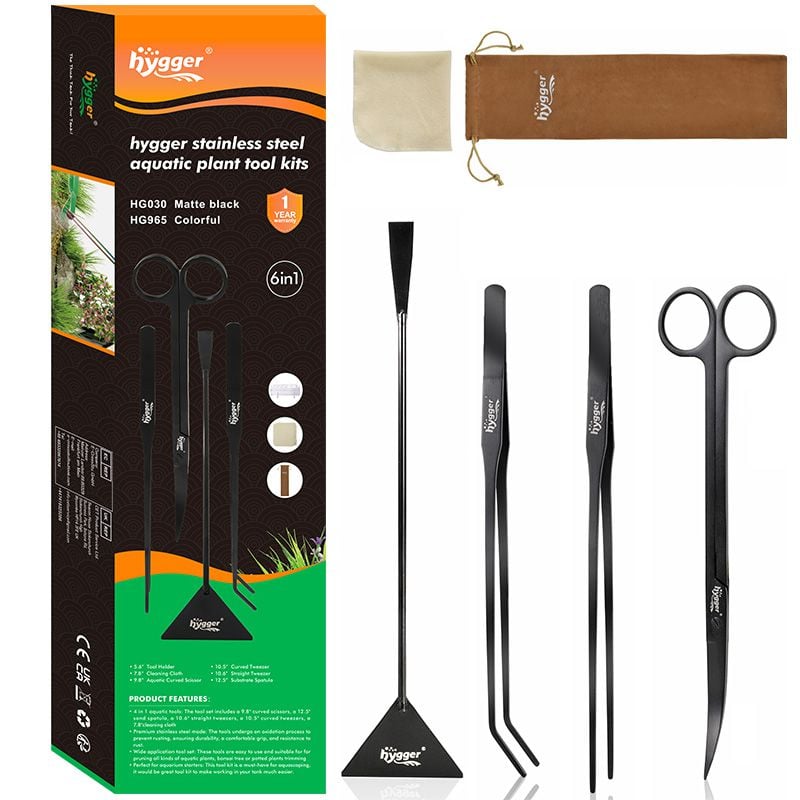
A reliable pick here is beginner aquascaping tools kit.
 ★4.6
hygger 6-in-1 Long Aquarium Aquascaping Tools Kit
Check Price on Amazon ★4.6The 10 Best Beginner Stem Plants
1. Anacharis (Elodea densa / Egeria densa)
The classic beginner plant and arguably the toughest stem plant in the hobby. Anacharis grows in anything — cold water, warm water, low light, no fertilizer — and puts on inches per week. It's such a strong nutrient sponge that it's sold as an oxygenator for ponds. In aquariums it makes an excellent background or floating mass. Note: it's invasive in many regions, so never release it into local waterways. Buy it cheap, plant it deep, and watch it explode.
2. Hornwort (Ceratophyllum demersum)
Technically a free-floating plant that can be "planted" by weighing it down — hornwort has no true roots at all. It grows absurdly fast, tolerates near-darkness, and is a legendary algae fighter because it releases compounds that suppress competing algae. It sheds needles when stressed, so expect some mess after planting; it recovers quickly. Our guide to plants that don't need substrate covers hornwort's floating lifestyle in detail.
3. Water Wisteria (Hygrophila difformis)
Water wisteria is the Swiss Army knife of beginner stems: it grows rooted, floating, or emersed; it tolerates low to high light; and its lacy leaves change shape with conditions (finer underwater, broader in air). It grows fast enough to outcompete algae in new tanks and roots enthusiastically from cuttings. One of the best first plants for anyone, full stop.
4. Bacopa caroliniana
A slower, sturdier stem with thick rounded leaves and a lemony scent when crushed. Bacopa is nearly indestructible — it survives low light, neglect, and nibbling fish better than most stems. Under strong light the leaf tips blush pink-bronze, giving beginners their first taste of color without demanding CO2. Growth is steady rather than explosive, which makes it a good midground-to-background plant in smaller tanks.
5. Rotala rotundifolia
The gateway stem to serious aquascaping. Rotala rotundifolia grows easily in low-tech tanks with green rounded leaves, but give it decent light and it develops the pink-red tips it's famous for. It bushes out beautifully when trimmed regularly — each cut doubles the stems. If you want to try red stem plants eventually, this is the forgiving species to practice on first.
6. Ludwigia repens
Another color-capable beginner stem. Ludwigia repens grows green in low light and turns orange-red under stronger light, with red undersides to the leaves even in modest setups. It's unfussy about water parameters, roots readily, and tolerates a wide temperature range. A bunch of ludwigia in the background gives a low-tech tank its warmest color accent.
7. Hygrophila corymbosa (Giant Hygro)
For big tanks and bold backgrounds, giant hygro delivers broad, dramatic leaves on thick stems. It grows fast, tolerates almost anything, and its large leaves give fish excellent cover. It can grow emersed out of the tank too, producing purple flowers — a fun bonus. Trim aggressively; left alone it will shade everything beneath it.
8. Cabomba caroliniana (Fanwort)
Cabomba's feathery fan-shaped leaves make it one of the prettiest background plants, and it's a superb oxygenator and fry shelter. It prefers moderate light and dislikes being moved (it sulks for a week after replanting), but once settled it grows steadily. Keep it away from strong filter outflow, which tangles its delicate foliage.
9. Limnophila sessiliflora (Ambulia)
Often confused with cabomba but easier: ambulia has finer, brighter-green feathery leaves and grows like a weed in almost any conditions. It's one of the fastest stems available, making it ideal for new tanks that need quick plant mass. Trim weekly once established — it can reach the surface in days under good light.
10. Moneywort (Bacopa monnieri)
Bacopa monnieri is the creeping cousin that works as a stem or a foreground creeper. Its small round succulent-like leaves grow slowly but steadily, and it tolerates low light better than almost any stem. Plant it in the midground where its tidy, bright-green texture contrasts with feathery background stems. Extremely hardy — it even grows emersed in paludariums.
Comparison Table: Beginner Stem Plants at a Glance
| Plant | Growth speed | Light needs | Max color | Best use |
|---|---|---|---|---|
| Anacharis | Very fast | Low | Green | Background, nutrient sponge |
| Hornwort | Very fast | Low | Green | Floating, algae fighter |
| Water wisteria | Fast | Low–medium | Green | Background, versatile |
| Bacopa caroliniana | Medium | Low | Pink-bronze tips | Midground, hardy |
| Rotala rotundifolia | Fast | Medium | Pink-red | Background, color |
| Ludwigia repens | Fast | Low–medium | Orange-red | Background, warm color |
| Giant hygro | Fast | Low | Green | Large tanks, bold leaves |
| Cabomba | Medium | Medium | Green | Background, fry cover |
| Ambulia | Very fast | Low–medium | Bright green | Background, quick fill |
| Moneywort | Slow–medium | Low | Green | Midground, foreground |
Setting Up Your First Stem-Plant Tank
You don't need fancy equipment. A basic LED light on a 6–8 hour timer, any substrate (stems feed mostly from the water column), and a simple all-in-one liquid fertilizer dosed weekly will grow every plant on this list. CO2 injection helps but is absolutely not required — all ten thrive without it, which is why they made this list over more demanding stems. See our roundup of the easiest plants that need no CO2 for more low-tech options beyond stems.
Plant heavily from day one. The single biggest beginner mistake is planting three stems and waiting. Buy generous bunches, fill at least half the background, and let the trim-and-replant cycle multiply your stock. Heavy initial planting is the best algae prevention there is — see how plants contribute to natural algae control once established.
A reliable pick here is API Leaf Zone.
A reliable pick here is Seachem Flourish.
Common Beginner Stem Plant Problems
Leggy growth with bare lower stems
Long gaps between leaves and leafless bottoms mean not enough light reaching the lower plant. Increase light intensity or duration slightly, trim the tops and replant them (fresh tops grow compactly), and remove the bare stumps. Dense planting also shades lower stems — thin the bunch so light penetrates.
Melting after planting
Store-bought stems are often grown emersed (in air); their leaves melt as the plant switches to submersed growth. This is normal. Remove mushy leaves, keep conditions stable, and new growth appears in 1–3 weeks. Tissue-culture stems melt the least — compare formats in our tissue culture vs potted plants guide.
Holes in leaves
Pinholes that enlarge are the classic potassium deficiency. A comprehensive liquid fertilizer fixes it within weeks — new leaves emerge clean while damaged ones stay holed (they don't heal, so judge progress by new growth).
Stems rotting at the substrate line
Usually caused by planting too deep, planting in anaerobic compacted substrate, or planting bunches too tightly. Replant shallower with bare lower stems spaced apart. If your substrate is plain gravel, stems still do fine — see plants that grow in gravel for substrate-flexible options.
Frequently Asked Questions
How many stem plants do I need for a new tank?
More than you think. For a 20-gallon tank, start with 6–10 bunches (30–50 individual stems) across the background. Heavy planting from day one absorbs the ammonia and nitrate spikes of a new tank and outcompetes algae. Stems multiply free through trimming, so this is a one-time investment that fills the tank within two months.
Do stem plants need root tabs or just liquid fertilizer?
Liquid fertilizer alone is enough for nearly all stem plants — they're water-column feeders with modest root systems. Root tabs help heavy root-feeders like swords, but stems pull most nutrients through leaves and stems. Dose a comprehensive all-in-one liquid weekly after water changes and you're covered.
Can I keep stem plants in low light?
Yes — anacharis, hornwort, bacopa, moneywort, and water wisteria all grow in genuinely low light. They'll grow slower and stay greener, but they'll grow. Species like rotala and ludwigia survive low light but lose their color and grow leggy; give them at least medium light for the best results.
Why do my stem plants grow at the top but die at the bottom?
The tops shade the bottoms — classic in dense bunches. Trim and replant the healthy tops, discard the bare stumps, and replant with more spacing so light reaches down. Increasing overall light and keeping up with weekly trimming prevents the cycle from repeating.
Can stem plants grow floating instead of planted?
Many can. Hornwort and anacharis grow beautifully floating, and most other stems survive floating temporarily — but long-term they grow leggy and pale without substrate anchoring. Floating is great for quarantine, new-tank nutrient export, or fry cover; for display growth, plant them properly.
How often should I trim stem plants?
Whenever they reach the surface or start shading neighbors — typically every 1–3 weeks for fast growers, monthly for slow ones like bacopa. Regular trimming keeps them bushy instead of stringy, and each trim doubles your plant stock. Never trim more than half the stems at once in a new tank; keep enough mass growing to hold algae back.
Start With Stems, Branch Out Later
Stem plants are the training wheels that never really come off — even advanced aquascapers keep fast stems in the background for nutrient export and easy propagation. Start with three or four species from this list, master the trim-and-replant rhythm, and you'll have a lush tank and a free plant supply within two months. From there, the whole hobby opens up: try rosette plants for bold midground focal points, or epiphytes to decorate your hardscape without planting anything at all.