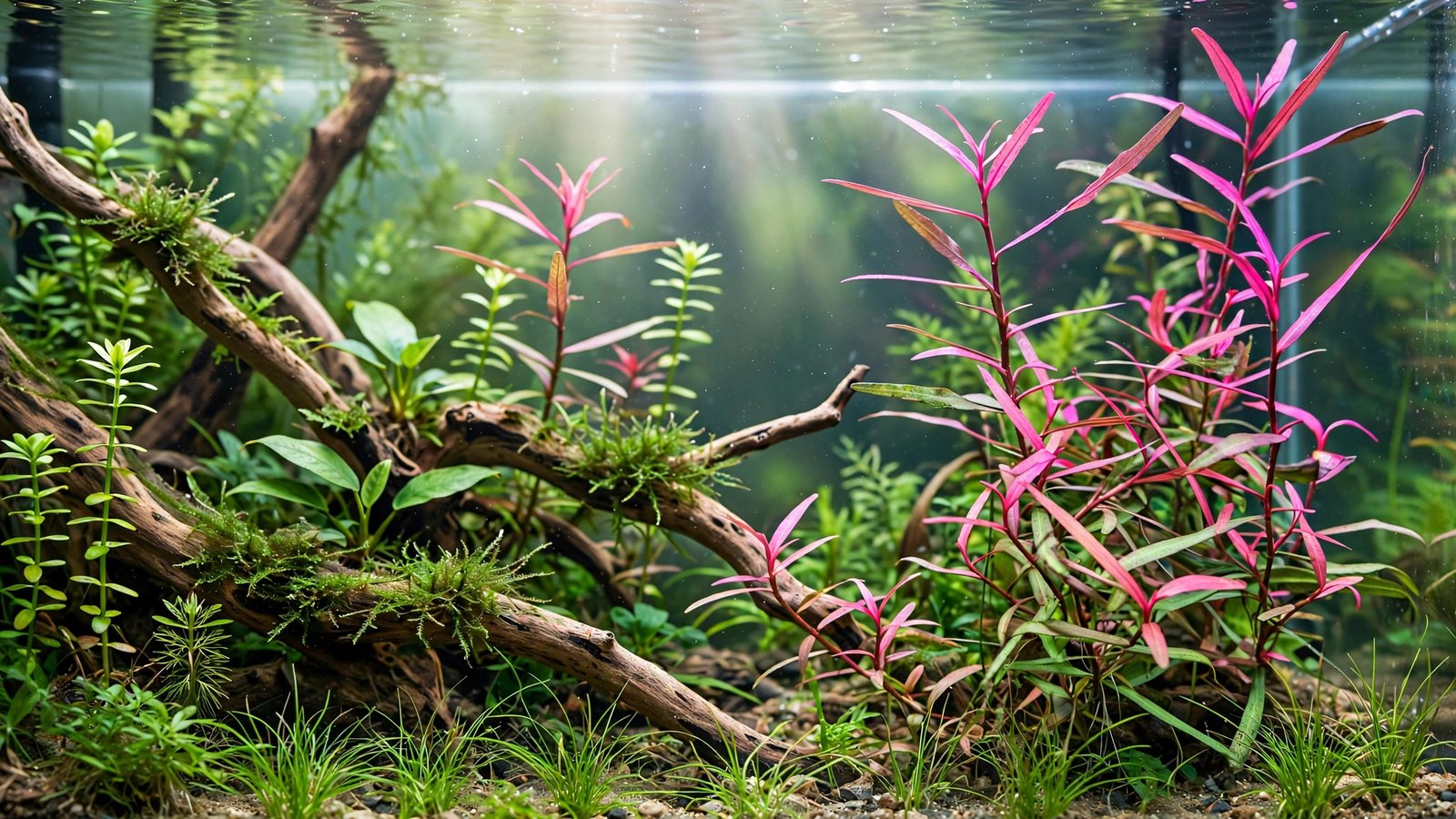
Most aquarium plants arrive looking like the plant you ordered, but Persicaria sp. 'Sao Paulo' is a famous exception: it ships as an ordinary green stem and only earns its signature magenta after converting to submersed growth under strong light, which is why beginners often assume they received the wrong plant. This persicaria sao paulo care guide covers what to expect — from that confusing green box on day one to a pink-purple bush months later — including the light, CO2, and nutrient levels that produce the magenta, how to tell 'Sao Paulo' from its common lookalike, and how to trim a stem that refuses to branch on its own.
What Persicaria 'Sao Paulo' Is
Persicaria sp. 'Sao Paulo' is an upright stem plant from the smartweed family, sold under the names Persicaria praetermissa 'Sao Paulo' and São Paulo smartweed, with Brazilian origins. Its stems grow straight and vertical with a bamboo-like structure, holding elongated leaves that shift from plain green to intense pink-purple once established underwater. Mature stems reach 30–40 cm (12–16 inches), making it a mid-background plant. It is rated intermediate — not fragile, but the famous color demands real light and CO2. Dennerle's Persicaria sp. 'Sao Paulo' plant page lists light demand as high, CO2 as needed, and placement as midground to background.
What makes 'Sao Paulo' special is the kind of color it produces. Most so-called red stem plants land between rust, wine, and brick orange. 'Sao Paulo' goes genuinely magenta — a pink-purple that reads as a different hue next to the reds in your tank, which is why it has become a favorite accent stem for aquascapers who already own every red plant on the market. Next to a true red like the one in our Ludwigia 'Super Red' care guide, 'Sao Paulo' refuses to visually blur in.
Why It Arrives Green (And Why That Is Correct)
The most common beginner complaint about this plant — "you sent me the wrong plant, mine is green" — is a misunderstanding of how it is grown. Commercial growers raise 'Sao Paulo' emersed (out of water), and in that form it is unremarkable green foliage. The magenta develops only after the plant converts to submersed growth under strong light, a transition that takes several weeks. Your first set of submersed leaves will still look greenish; judge the plant on the third set of new leaves, not the first. By that point the pink-purple will be unmistakable in a well-lit tank.
Some shedding of emersed foliage during conversion is normal. Do not panic or trim aggressively while the plant is converting — it needs leaf surface to photosynthesize through the transition. Stable parameters, good light, and patience are all it takes; the magenta arrives on schedule, not on demand.
Red coloration leans heavily on available iron: an iron supplement like Seachem Flourish Iron.
Is It Really 'Sao Paulo'? The Kawagoeanum Mix-Up
'Sao Paulo' is routinely mislabeled and confused with Persicaria sp. 'Kawagoeanum', and the confusion runs both directions at shops and online dealers. The two are genuinely similar in leaf shape, size, and growth habit — side by side in green emersed form, even experienced hobbyists struggle to separate them. The difference reveals itself once they color up underwater: 'Sao Paulo' goes pink-purple, 'Kawagoeanum' settles into orange-red. If your "Sao Paulo" colors up copper-orange no matter the light, you probably bought Kawagoeanum.
| Trait | Persicaria sp. 'Sao Paulo' | Persicaria sp. 'Kawagoeanum' |
|---|---|---|
| Mature color | Magenta, pink-purple | Orange-red, copper |
| Leaf shape | Elongated, willow-like | Very similar, slightly narrower |
| Stem habit | Vertical, bamboo-like, poor branching | Vertical, similar structure |
| Emersed form | Plain green | Plain green |
| Reliable ID | Color under high light | Color under high light |
Because dealers' emersed stock looks identical, buy from sellers who label their line clearly and can show colored-up mother plants or photos of their own stock underwater. Be wary of any "Sao Paulo" described as a red plant — true 'Sao Paulo' is magenta, not red, and a seller calling it red may not know which Persicaria they are holding. Grower notes from Aquarium Plants Factory's Persicaria 'Sao Paulo' page confirm the distinction: color is what separates it from Kawagoeanum, which is sometimes sold under the same name.
Persicaria Sao Paulo Care: Parameters at a Glance
| Parameter | Requirement |
|---|---|
| Light | Medium to high; high light is what produces the magenta |
| CO2 | Highly recommended — effectively needed for full color |
| Temperature | 68–82°F (20–28°C) |
| pH | 6.0–7.5 |
| Placement | Midground to background |
| Difficulty | Intermediate |
| Mature height | 30–40 cm (12–16 in) |
| Growth rate | Medium |
| Minimum tank size | 10 gallons |
| Propagation | Stem cuttings |
Light: The Magenta Switch
Light is the single non-negotiable input for this plant's color. Under medium light, 'Sao Paulo' grows well but stays green, or at best blushes at the growing tips — and you will wonder why you paid for a magenta plant. The pink-purple pigment ramps up under genuinely strong light that reaches the lower leaves of the tank. If your fixture is on the weaker side, keep 'Sao Paulo' in the shallowest, brightest part of the tank, or accept an attractive green filler rather than the magenta showpiece.
Photoperiod matters as much as intensity: a consistent 7–9 hour day on a timer beats a long, erratic schedule. Ramp up gradually in a new setup, since slow-converting stems under sudden strong light invite algae. Growers who have kept demanding red stems before will recognize the discipline — it mirrors the approach in our Rotala H'ra care guide.
CO2 and Nutrients
Without injected CO2, growth slows, internodes stretch, and the magenta never fully arrives. A stable 25–30 ppm through the photoperiod gives compact, colorful stems — and stability matters more than the exact number. Fluctuating CO2 causes more stunting and tip damage than slightly lower-but-steady levels.
Nutrition works on two fronts. In the substrate, 'Sao Paulo' appreciates nutrient-rich aquasoil or root tabs near the stem bases; in the water column, a complete fertilizer dosed regularly keeps new growth clean and colorful. Iron gets outsized credit for red plants online, but the honest formula is balanced NPK plus micronutrients, stable CO2, and strong light. Watch the newest leaves as your gauge — pale new growth means feed more, not less.
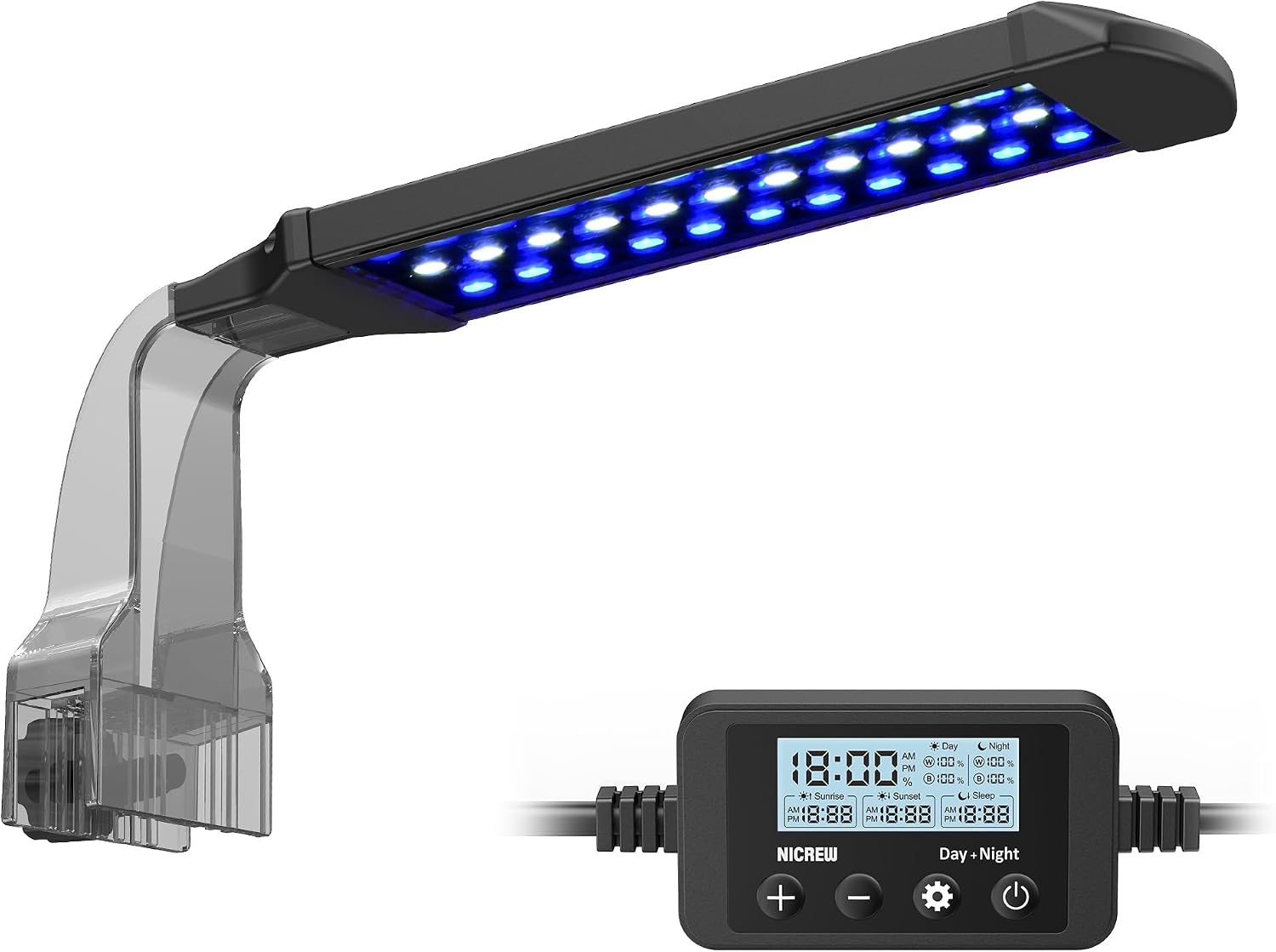
High light is the other half of the red equation: a high-output light like the NICREW ClassicLED Plus.
 ★4.6
NICREW ClassicLED Plus planted aquarium light
Check Price on Amazon ★4.6Planting and Placement
Use 'Sao Paulo' where its vertical, bamboo-like structure works hardest: midground to background, where 30–40 cm stems form a colored curtain behind lower plants. Think about its neighbors — the magenta contrasts beautifully with green midground bushes and true-red stems, while it can blur against orange plants like Kawagoeanum if planted touching.
The critical planting rule: plant a group, not a hope. 'Sao Paulo' branches poorly on its own — a single stem grows straight up and stays a single stem, looking sparse no matter how long you wait. Density comes from planting six or more stems together, spaced about an inch apart so light reaches every stem. Beginners who plant two stems and wait for a bush are the most common source of "this plant doesn't grow" complaints.
When stems arrive as fresh-cut bunches without roots — the standard way this plant ships — push each stem an inch or two into the substrate and leave it alone. Roots form at the buried nodes within a week or two. A plant weight helps in tanks with active bottom dwellers, but do not bury the growing tip or pack substrate tightly around the stems.
Trimming and Propagation
When a stem reaches the surface or turns leggy, cut the healthy top (roughly the top third to half) and replant it beside the original. The top roots at its nodes and keeps growing — this is how you multiply stock. The old base may push a weak shoot from the cut node, but rarely anything vigorous.
The classic maintenance pattern: as stems age, lower leaves drop and bases go bare while tops stay lush and colorful. This is normal, not failure. Respond with the top-and-replace method — harvest the tops, replant them in front of the old group, and pull the bare bases rather than nursing them back. Fresh tops root in days and look better immediately; leafless bases rarely recover into anything worth keeping.
Propagation is cuttings, full stop — no runners, no side-shoot harvests. Each cutting grows as one vertical stem, so a dense bush is a numbers game: trim tops, replant, repeat. In a CO2-injected tank under good light, expect harvestable cuttings every 3–4 weeks. Compare that with a naturally bushy stem like the ones in our Ludwigia repens care guide, and the group-planting rule makes sense.
Common Problems and Fixes
The Plant Stays Green
Almost always a light problem, not a nutrient problem. If the third set of submersed leaves is still plain green, your light is too weak at the plant's level or the photoperiod too short. Move the group to the brightest spot, confirm your fixture suits a mid-to-high light stem at your tank depth, and wait two weeks before judging. Low CO2 can mute color too, but light is the usual culprit.
Stunting and Deformed New Growth
Stunted, crinkled, or pale new tips point to unstable CO2 or a nutrient shortfall. Check CO2 first — the drop checker should read the same at the same point in the photoperiod daily. If CO2 is steady, review dosing: pale new growth suggests nitrogen or iron running lean; twisted tips can mean calcium or micronutrient deficiency. Fix one thing at a time: CO2 first, wait a week, then adjust fertilizer.
Bare Bases and Dropping Lower Leaves
The natural aging pattern, accelerated when light cannot reach the base of a dense group — another reason to space stems an inch apart. The fix is routine maintenance: harvest tops, replant, remove spent bases. If dropping hits young stems, suspect low light at the base or a recent parameter swing. The same aged-base cycle affects many colored stems, including Alternanthera reineckii, so the top-and-replace habit transfers well.
Melting After Planting
Some melt during the emersed-to-submersed transition is expected, and rootless shipped cuttings are doubly stressed. Plant promptly, keep parameters stable, and do not move stems around — every relocation resets the adjustment clock. Remove clearly rotted leaves so they do not fuel algae, but leave merely pale ones; stressed leaves can still photosynthesize.
Algae on the Stems
Slow-converting stems under strong light invite thread and fuzz algae on the older emersed leaves. Keep the photoperiod moderate (around 7 hours) during conversion, maintain gentle flow around the group, and spot-remove affected leaves rather than treating the whole tank. Once submersed growth takes over, the plant's own vigor becomes its best defense.
A Responsibility Note on Persicaria Species
A word of stewardship: the smartweed family contains species that behave invasively in some regions, and aquarium plants should never be released into local waterways, ponds, or storm drains. Trimmed stems and unwanted plants go in the trash or compost — never down the drain or into a backyard pond that overflows in the rain. If you live in the United States, check your state's restricted-plant list before ordering; responsible dealers will not ship regulated species to your area. The magenta in your tank is a joy; the same plant loose in a local wetland is a problem.
Frequently Asked Questions
Why is my Persicaria 'Sao Paulo' green instead of magenta?
It is either still in emersed form or not getting enough light. Dealer stock is grown out of water and ships green; magenta develops only on submersed growth under strong light, so judge the plant on its third set of new leaves, not the first. If established submersed leaves stay green, raise light intensity or move the group to a brighter spot and wait two weeks. Stable CO2 supports color, but light is the primary switch for the pink-purple pigment.
How do I tell 'Sao Paulo' apart from 'Kawagoeanum'?
You mostly cannot until they color up. The two look nearly identical as green emersed stock, with similar leaf shape and size. The difference appears under good light underwater: true 'Sao Paulo' turns pink-purple, while 'Kawagoeanum' turns orange-red. If your plant colors up copper-orange despite strong light and CO2, you were likely sold Kawagoeanum. Buy from sellers who can show photos of their own colored-up stock to reduce mislabeling risk.
Can I grow Persicaria 'Sao Paulo' without CO2?
It survives without injected CO2, but it will not be the plant you bought it for. Growth slows, stems stretch with long gaps between leaves, and the magenta never fully develops — you get a green stem that slowly sheds lower leaves. For genuine magenta coloration and compact growth, pressurized CO2 at stable levels is effectively required. Treat this as a CO2-tank plant when planning your purchase, as Dennerle's plant database also indicates CO2 is needed.
How do I make it bushy if it doesn't branch?
You don't wait for branching — you plant numbers. 'Sao Paulo' sends up single vertical stems with little lateral shooting, so density comes from planting six or more stems together and multiplying by cuttings. Trim the healthy tops, replant them beside the originals, and pull the bare bases. Repeating this cycle every few weeks builds the dense magenta cluster that one stem will never become on its own, however long you wait.
What should I do when the lower leaves fall off?
Accept it as the plant's normal aging pattern and do maintenance, not rescue. Older stems naturally drop lower leaves while tops stay lush, and dim light at the base of a dense group speeds this up. Cut the healthy tops and replant them, then remove the bare bases instead of trying to revive them. Fresh tops root within days and look better immediately, while spent bases rarely recover into anything worth keeping.
Is Persicaria 'Sao Paulo' a good beginner plant?
Honestly, no — it is better as a second or third colored stem, after succeeding with an easier one. It is rated intermediate because the magenta demands strong light, stable CO2, and regular trimming, and beginners often misread its normal behaviors — green shipping form, leaf drop, poor branching — as failure. Start with a forgiving stem like the ones in our Myriophyllum care guide, then graduate to 'Sao Paulo' once your CO2 and lighting are dialed in.
The Bottom Line
Persicaria sp. 'Sao Paulo' rewards patience and punishes impatience in equal measure. Give it strong light, stable CO2, good nutrition, and a group planting — plus the weeks it needs to shed its green emersed past — and it pays you back with one of the most distinctive colors in the hobby: a true magenta no red stem can imitate. Plant in numbers, trim the tops, compost the bare bases, and never release trimmings into the wild. Do that, and the pink-purple curtain in your mid-background will be the plant guests ask about first.