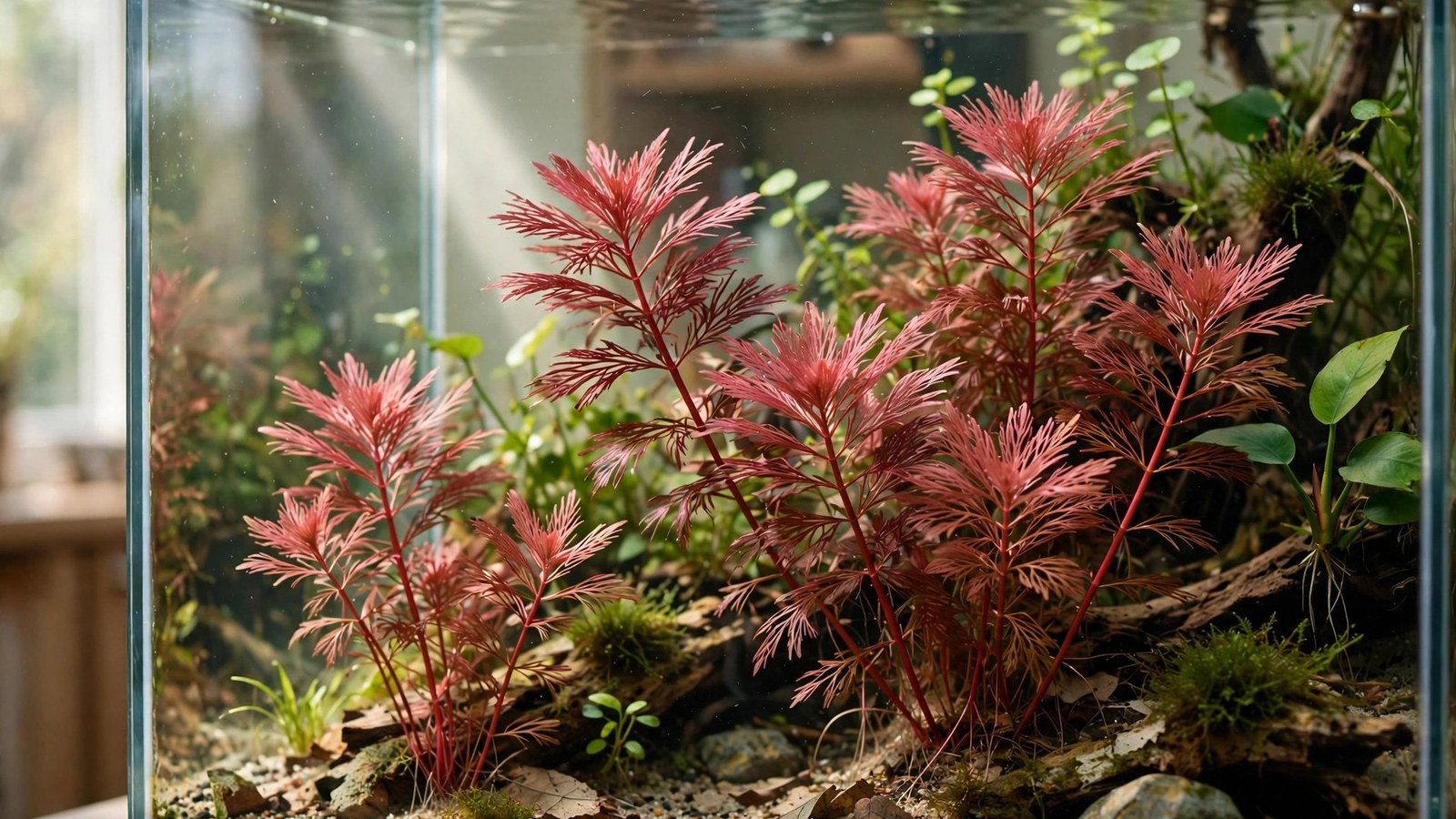
Red cabomba punishes guesswork. Its green cousin forgives neglect; Cabomba furcata arrives home glowing pink, then sheds its lower leaves and turns green if your light is weak, your CO2 soft, or your water hard.
This is the demanding red stem of the hobby: feathery reddish-pink fans that hold their color only under high light, pressurized CO2, and soft water. This guide covers exact light and CO2 numbers, a species check before you buy, a weekly trimming routine, and the legal note. If you're new to stem plants, start with our complete guide to freshwater aquarium plants first.
The short answer: Cabomba furcata keeps its red color only when three conditions are all met — 80–120 PAR of light at the substrate, pressurized CO2 near 30 ppm (a lime-green drop checker), and soft water of 3–6 dGH. Miss any one and chlorophyll wins. That makes C. furcata the only widely traded cabomba genuinely incompatible with low-tech tanks.
Keeping red cabomba red starts with buying the right species
The costliest mistake happens at checkout. Labels like "purple cabomba" or "red fanwort" are applied loosely, and the plant under them can be a different species with different needs.
| Trait | Red cabomba (C. furcata) | Green cabomba (C. caroliniana) |
|---|---|---|
| Color | Reddish-pink to bronze fans | Bright green fans |
| Light needed | High — 80–120 PAR | Low to medium |
| CO2 | Pressurized, near 30 ppm | Optional |
| Difficulty | Advanced | Beginner |
| Water | Soft, 3–6 dGH | Adaptable |
Buy from a seller who names the species, not just the color. The stems in the bag should already show reddish-purple pigmentation — if your "red cabomba" looks like green fanwort, it probably isn't furcata. See the species profile of Cabomba furcata for the taxonomy, and contrast it with our profile of the green cabomba (Cabomba caroliniana) most shops sell.
Light: The High-PAR Non-Negotiable
Light is the biggest lever on color. Aim for 80–120 PAR at the substrate — typically a quality LED fixture run near full intensity on a 40–60 cm deep tank. Weak or shaded light is the main reason furcata arrives pink and fades to olive-green within a month.
Run 8–10 hours a day and keep the stand unshaded by floating plants or overhanging hardscape — red develops as a light response, so patchy coverage shows as patchy color. If you don't know your fixture's output, read how much light aquarium plants actually need before buying the plant.
CO2: Pressurized, Measured, Stable
Liquid carbon won't do here. You need pressurized CO2 held near 30 ppm through the photoperiod — a lime-green drop checker. Switch the gas on one to two hours before lights-on so levels are stable at lights-on.
Start around one bubble per second on a 60–80 liter tank and adjust over a few days, watching livestock for surface gasping as the ceiling. Stability matters most: fluctuating CO2 melts the fine lower leaves faster than anything else. If you don't have a system yet, read our guide to setting up pressurized CO2 for a planted tank first.
Soft Water and Temperature
Furcata wants soft, slightly acidic water: pH 6.4–7.2 and 3–6 dGH. Above about 8 dGH, growth stalls and new shoots emerge pale even when light and CO2 are correct. If your tap is hard, blend with RO or rainwater and remineralize lightly.
Keep 22–27 °C (72–80 °F); most keepers settle near 24 °C. Warm water speeds growth but also speeds nutrient uptake and algae risk.
Planting and Trimming: A Weekly Rhythm
New stems usually shed leaves after shipping — that's transit stress, not failure. Plant each stem individually, 2–3 cm apart, burying only the bare lower node. Clumping stems together traps debris and suffocates the inner foliage, the classic route to a bare, algae-dusted lower half.
Once established, trim weekly: snip the healthy tops and replant them, discarding the leggy bottoms. New tops root quickly, and the stand stays dense and red from base to tip.
Feeding the Red: Iron, Nitrate, and Dosing
Cabomba feeds mostly from the water column, so a complete liquid fertilizer is the backbone of the routine. Iron is the nutrient most associated with red coloration — dose it consistently as part of a balanced mix, not as a solo hammer. Keep nitrate in the 5–20 ppm range; chronically lean nitrate causes stunted, pale growth that iron alone can't fix.
A daily or alternate-day micro dose outperforms one big weekly dump, because the fine foliage stores little. If you like the red-stem look but run gentler parameters, Ludwigia repens holds reddish tones with far less demanding equipment.
Algae and the Fine-Foliage Problem
The feathery fans that make furcata beautiful also make it an algae magnet. Hair and brush algae lodge between the leaflets where cleanup crews can't reach, and removal without damaging the plant is nearly impossible. Prevention is the whole strategy: gentle flow, weekly siphoning around the stand, and stable nutrient levels.
The moment you see algae taking hold on lower leaves, trim those stems out and replant clean tops. Salvaging infested foliage rarely works; the trim resets the stand.
The Legal Note: Check Before You Buy or Ship
The Cabomba genus has established invasive populations outside its native range — reported as invasive in Kerala, India — and some regions restrict or prohibit the whole genus. In parts of Australia, cabomba is a restricted plant, with sale prohibited in some states and the genus regulated federally; see the NSW weed management guidance on cabomba.
Rules vary by state and country and change over time, so check your local regulations before ordering, shipping, or disposing of any cabomba. Buy only from legal domestic sources, never dump trimmings or tank water into waterways, and bag trimmings for the trash.
Frequently Asked Questions
Can I grow red cabomba without CO2 injection?
Honestly, no — not in a way that stays red. Low-tech setups may keep the plant alive for a while, but the reddish-pink color needs the photosynthetic rate only pressurized CO2 near 30 ppm delivers. Without it, new growth comes in green, lower leaves melt, and the plant slowly declines over months.
Why are the lower leaves of my red cabomba melting?
Usually light starvation at the base of a dense stand — the upper fans shade everything below. Trim the healthy tops and replant them, discarding the bare bottoms. Shipping stress causes similar melt in new purchases, so allow two to three weeks before judging the plant.
Is "purple cabomba" in shops the same plant?
Not necessarily. Shop labels like purple cabomba or red fanwort are applied loosely and may mean C. furcata, a color variant of another species, or a misidentified plant. Buy only from sellers who state the scientific name Cabomba furcata, and confirm the stems already show reddish-purple pigmentation before planting.
How fast does red cabomba grow?
In a dialed-in high-tech tank — 80–120 PAR, pressurized CO2 near 30 ppm, soft water, steady dosing — it grows several centimeters per week and needs trimming every one to two weeks. In weaker conditions it barely grows and slowly declines, which is why it is rated an advanced plant.
Is red cabomba legal where I live?
It depends on your region. Some jurisdictions restrict or prohibit the entire Cabomba genus because of invasive spread; others allow it freely. Check your state or country's noxious weed and aquarium trade rules before ordering, buy only from legal domestic sources, and never release trimmings or tank water into waterways.
Red cabomba tells the truth about your tank. Give it high light, steady pressurized CO2, and soft water, and it repays you with stunning red foliage; cut any corner and it shows within weeks. If that discipline is more than your setup offers today, try limnophila sessiliflora instead — and come back to furcata when the equipment is ready.