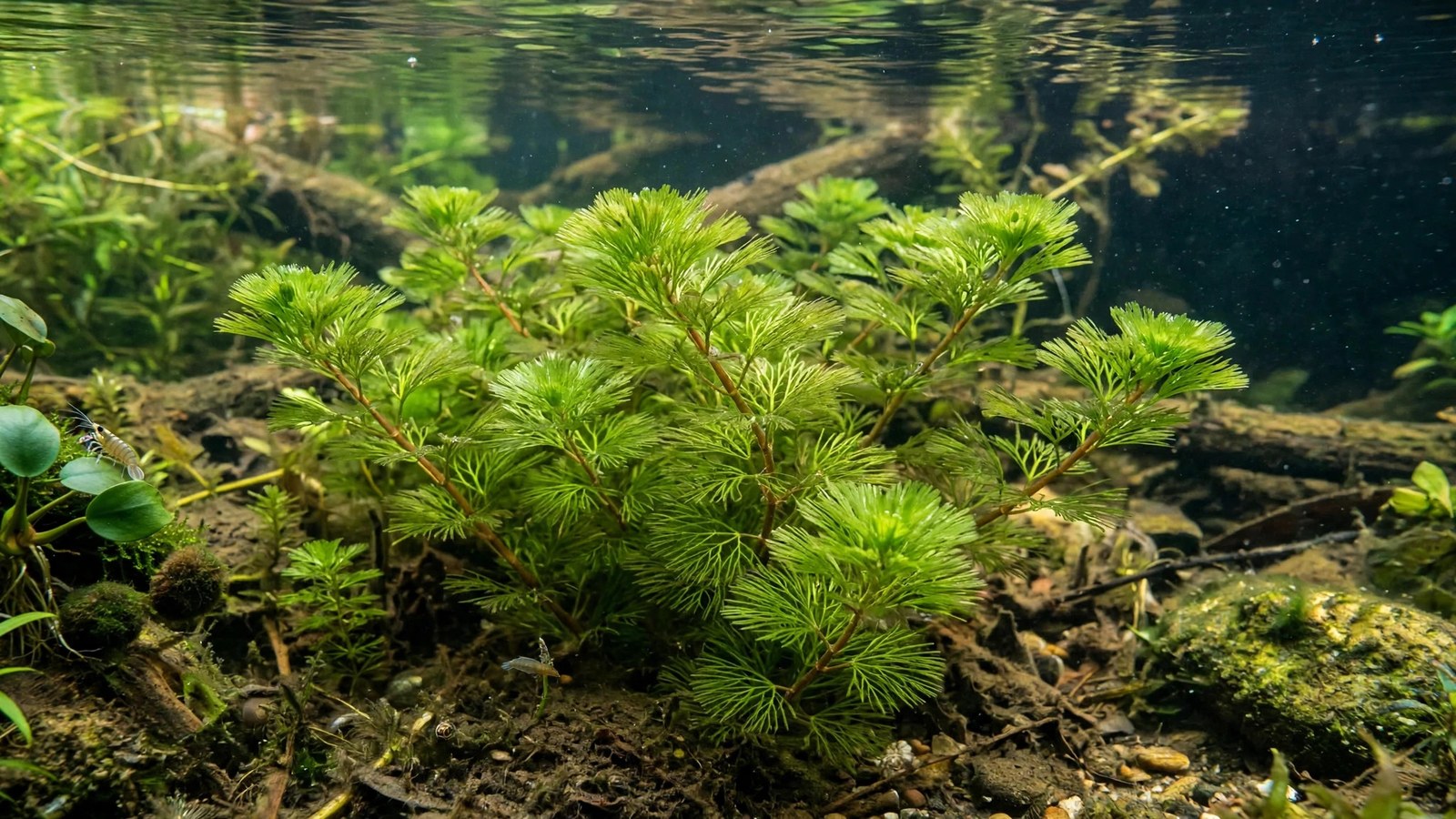
Few aquarium plants deliver as much instant lushness as Cabomba caroliniana, better known as fanwort or Carolina fanwort. A bunch of these soft, feathery stems can turn a bare back corner into a swaying underwater forest within weeks — and doubles as one of the finest living shelters for newborn fry. This guide covers cabomba caroliniana care from the ground up: lighting, planting, trimming, propagation, and the one serious responsibility that comes with this plant — keeping it out of your local waterways.
Meet Fanwort: What Cabomba Caroliniana Really Is
Cabomba caroliniana is a fully submerged freshwater plant in the family Cabombaceae, native to the southeastern United States and parts of South America, where it grows rooted in ponds, quiet streams, and ditches. Its common name comes from its underwater foliage: finely divided, fan-shaped fronds arranged in opposite pairs along the stem, each spreading about 5 centimeters across like a tiny green hand-fan.
Each frond is dissected into hair-thin segments, giving the plant its famously soft, feathery look — and making it a magnet for fry, which slip between the filaments where larger tankmates cannot follow. Aquarium plants are usually a vivid luminous green, with long, slender, notably brittle stems that branch freely and throw out wispy roots at the nodes.
One point of housekeeping before we go further: fanwort is frequently confused with parrot's feather and other milfoils, but it is a different genus entirely — not Myriophyllum. We will clear up that confusion in its own section below.
Cabomba Caroliniana Care Requirements at a Glance
| Parameter | Recommendation |
|---|---|
| Temperature | 20–28 °C (68–82 °F); happiest toward the cooler end |
| pH | 6.0–7.5 |
| Hardness | Soft to moderately hard (3–12 dGH) |
| Lighting | Medium to high; roughly 30–50+ PAR at the substrate |
| CO2 | Optional, but growth is dramatically better with it |
| Placement | Background or mid-background, in groups |
| Growth rate | Fast — several centimeters per week |
| Difficulty | Easy to moderate; forgiving except in dim light |
Fanwort is adaptable about water chemistry but picky about one thing above all else: light. Get the lighting right and almost everything else in cabomba caroliniana care becomes straightforward.
Lighting: The Single Biggest Factor
Under medium-to-strong light, fanwort grows compact and bushy, with short gaps between leaf pairs and dense, richly colored fronds. Under weak light it stretches desperately upward, internodes lengthen, and — most characteristically — the lower leaves yellow and drop while the crown keeps growing. A cabomba that is bald at the bottom and wispy at the top is telling you it needs more light, almost without exception.
A full-spectrum LED running 8–10 hours daily at medium intensity or better is the sweet spot for most tanks. Watch out for floating plants: a thick mat of floaters can starve fanwort surprisingly fast. Thin floaters regularly so bright light reaches the stems below — experienced aquarists pair cabomba with Amazon frogbit only when they stay disciplined about harvesting the floaters, since both are fast growers competing for the same light.
Signs your lighting is too weak
- Stems grow tall and spindly with long bare gaps between leaf pairs
- Lower leaves yellow or drop while the crown looks healthy
- New growth is pale or translucent instead of rich green
- The plant leans hard toward the light rather than growing upright
If you see these symptoms, raise light intensity or duration before reaching for fertilizers — nutrients rarely fix what is fundamentally a light shortage.
Lighting is the single biggest factor for fanwort: a strong light like the NICREW ClassicLED Plus.
 ★4.6
NICREW ClassicLED Plus planted aquarium light
Check Price on Amazon ★4.6Planting Cabomba the Right Way
Fanwort arrives as cut stem bunches, and planting technique matters more here than with sturdier stems because the stems crush easily. Rinse new bunches in dechlorinated water, inspect for snails or algae, and snip off any brown or mushy lower sections with sharp scissors. Then separate the bunch into groups of 4–6 stems, spacing the groups 2–3 centimeters apart — cramming every stem into one tight clump shades the inner stems and invites lower-leaf drop.
Push each group 2–3 centimeters into the substrate with planting tweezers, gripping firmly but never crushing the stem; a crushed stem rots from the wound. Fanwort feeds mostly from the water column, so it grows fine in plain sand or fine gravel, though a nutrient-rich aquasoil gives it a stronger start and a root tab near a heavy planting is cheap insurance. For a sturdier stem with similar beginner-friendly habits, see our Bacopa caroliniana care guide.
CO2, Fertilizer, and Water Flow
Injected CO2 is not mandatory — cabomba grows well in a low-tech tank with decent light. But even modest CO2 transforms it: denser fronds, deeper color, and growth fast enough to need weekly trimming. If you are on the fence about CO2, fanwort is one of the plants that rewards the investment most visibly.
Feed the water column first: a comprehensive liquid fertilizer dosed weekly covers what fanwort needs, with iron to keep the green vivid. Dose consistently rather than heavily — spikes encourage the algae that colonizes cabomba's fine leaves. Keep flow gentle to moderate too: strong current tatters the fronds and snaps brittle stems, so aim filter outflows along the surface and cover intakes.
Feathery fanwort drinks from the water column: Seachem Flourish for the water column.
Trimming and Propagation
In a healthy tank, expect to trim every one to two weeks. The standard method: when stems reach the surface, cut the top portion and replant the healthy cutting — it roots within days. The rooted base usually sprouts side shoots below the cut, so you get bushier regrowth instead of a bare pole. Trim a little at a time across the group rather than hacking every stem to one height; staggered heights look natural and keep mature foliage photosynthesizing while cuttings recover.
Two rules matter more than technique. First, never let trimmings go down the drain or into wet trash — fragments survive astonishing abuse, so dry them fully, bag them, and bin them with household waste. Second, decide early on side shoots: leave them for a dense hedge effect, or pinch them off small for clean vertical lines.
Common Cabomba Problems and How to Fix Them
Melting right after planting
Newly planted fanwort sometimes sheds leaves or turns translucent in its first week. This is transplant shock — the plant is adjusting from nursery conditions to yours. Keep parameters stable and light strong, resist the urge to rip it out, and healthy stems will push fresh growth within two weeks.
Bare lower stems
The classic complaint, and almost always a light problem: top foliage shades the bottom leaves, which give up and drop. Increase light, space stems wider so light penetrates, and trim-and-replant the tops to reset the group with fresh, fully leafed stems. Plants that grow from a basal rosette never suffer this — our Cryptocoryne care guide covers the contrast.
Algae on the feathery leaves
Fine-leaved stems are algae magnets — their huge surface area offers endless anchor points. Hair or thread algae usually signals imbalance: too much light, inconsistent CO2, or excess nutrients. Fix the imbalance first, then twirl out the remainder with a toothbrush. Shrimp and snails help with maintenance but cannot fix the cause.
Snapped stems and hungry tankmates
Fanwort stems are genuinely brittle: rough handling, boisterous fish, or a strong filter intake can snap them, so plant with tweezers and site the group away from the outflow. And some fish — goldfish, silver dollars, larger cichlids — find cabomba delicious. If your planting vanishes overnight, suspect a herbivore before a care problem; this plant belongs with community fish, small tetras, livebearers, and shrimp.
Fry Cover, Spawning Support, and Oxygenation
This is where fanwort earns its legendary status. A dense stand is one of the best natural nurseries in freshwater aquaria: newborn livebearer fry dive into the foliage, where the filament labyrinth is too tight for adults to hunt through, and egg-scatterers like tetras and danios spawn readily through the fronds. The leaf surfaces host infusoria, giving fry their first natural food exactly where they hide. Breeders often pair a cabomba corner with Christmas moss for variety.
Fanwort is also a genuine oxygenator. Fast photosynthesis releases substantial oxygen while the plant pulls nitrates and phosphates from the water — a living nutrient sponge competing directly with algae, so well-planted tanks run visibly cleaner chemistry between water changes. For another classic fast-growing oxygenator with a very different look, see our Egeria densa care guide.
Cabomba vs Myriophyllum: Clearing Up the Confusion
Fish shops sometimes use "fanwort" and "parrot's feather" almost interchangeably — they should not. They are different genera in different families: cabomba's submerged leaves grow in opposite pairs, each a single fan-shaped frond, while Myriophyllum's leaves grow in whorls — rings of four or more circling the stem at each node. Basic care overlaps heavily (see our Myriophyllum care guide), but the plants differ in brittleness and, in some regions, legal status — so knowing which plant you own is the first step to keeping it responsibly.
Invasiveness and Legal Restrictions: Read This Before You Buy
Now the serious part. The traits that make fanwort wonderful in aquaria — explosive growth, broad tolerance, regrowth from tiny fragments — make it a dangerous invasive in the wild. Cabomba caroliniana has escaped cultivation and formed damaging populations in parts of Australia (listed as a Weed of National Significance), New Zealand, Japan, India, Malaysia, and several European countries, where dense mats choke waterways, crowd out native plants, and disrupt whole ecosystems.
It is therefore restricted or banned in a number of jurisdictions — including several EU member states and parts of Australia — and listed as invasive in places like Connecticut. Regulations change, so check your local noxious-weed or prohibited-species list before buying; that list is the authority that matters. A retailer who cannot tell you the legal status in your area is a red flag about the retailer, not a green light for the purchase.
Wherever you keep it, follow strict containment habits: never release plants, fragments, or tank water into any outdoor water body or drain; dry and bag all trimmings for household waste; rinse nets and tools after use and check for clinging fragments. For authoritative background, see the University of Florida's Center for Aquatic and Invasive Plants species overview and the U.S. Fish and Wildlife Service's Ecological Risk Screening Summary for Carolina fanwort. Every escape makes future restrictions more likely for the whole hobby.
Is Fanwort Right for Your Tank?
Cabomba is an excellent choice for beginners wanting fast, dramatic results, for breeders needing premium fry cover, and for anyone who loves a soft, swaying background forest. It repays decent light and regular trimming with oxygenation, nutrient uptake, and a living nursery in one plant — a bold Amazon sword beside it makes a classic, balanced aquascape. It is a poor fit for dim tanks, tanks with plant-eating fish, and regions where it is restricted. In those cases, admire it in other people's tanks and choose a legal alternative instead.
Frequently Asked Questions
Is Cabomba caroliniana difficult to keep?
It is an easy-to-moderate plant with one non-negotiable: adequate light. With medium-to-strong lighting, stable parameters, and weekly liquid fertilizer, fanwort grows vigorously with minimal fuss. Most failures come down to dim light or rough handling of the brittle stems, not exotic requirements — it is more forgiving than most red stem plants, though less bombproof than true weeds.
Why are the lower leaves on my cabomba falling off?
Bare lower stems signal that light is not reaching the bottom of the plant — the upper foliage shades the lower leaves, which yellow and drop. Raise light intensity or photoperiod, space stems wider so light penetrates, and trim the healthy tops to replant them, resetting the group with fully leafed stems. Trimming every couple of weeks prevents recurrence.
Can cabomba grow without injected CO2?
Yes. With decent light and a comprehensive liquid fertilizer, fanwort thrives low-tech — growth is simply slower and foliage slightly less dense than in CO2-injected tanks. It remains one of the more rewarding low-tech stems. If you add CO2 later, expect a dramatic jump in speed and fullness, plus a correspondingly busier trimming schedule.
Is cabomba the same thing as parrot's feather?
No. Cabomba and parrot's feather (a Myriophyllum species) are different genera in different families: cabomba has opposite, fan-shaped submerged leaves, while Myriophyllum bears whorled, feathery leaves in rings around the stem. Care overlaps broadly, but they are distinct plants — and in some regions face different legal restrictions, so correct identification matters.
How do I stop cabomba from taking over my tank?
Trim early and often — every one to two weeks in a thriving tank. Cut stems reaching the surface, replant only the healthiest tops, and remove the excess. Stagger cuts for a natural layered look, and if a stand gets out of hand, thin whole stems at the base rather than just topping them, opening light and flow for the rest of the tank.
Is it legal to own Cabomba caroliniana?
It depends on where you live. Fanwort is banned or restricted in several countries and regions — including parts of the EU and Australia — because of its severe invasive history, while remaining legal in many others. Check your local noxious-weed or prohibited-species regulations before buying, and never release plants, fragments, or tank water into the wild.
A Classic Worth Growing — Responsibly
Cabomba caroliniana has been an aquarium staple for generations: few plants combine this much beauty, speed, and breeding-tank usefulness in one feathery package. Give it good light, trim it without mercy, feed it consistently, and contain every fragment — and this classic stays exactly where it belongs: thriving in your tank, and nowhere else.