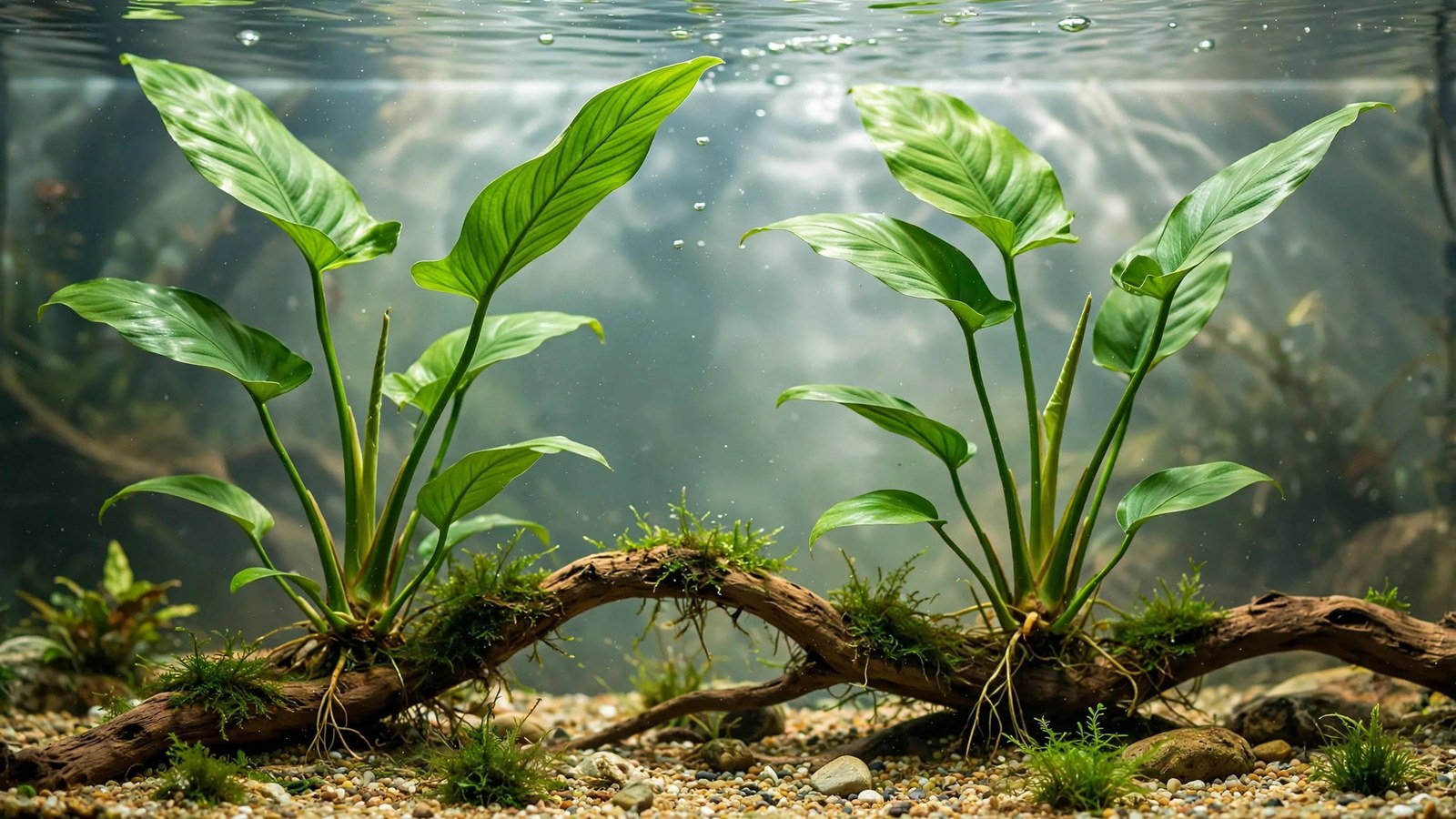
Most anubias hug the foreground. Anubias hastifolia does the opposite — this West African giant unfurls arrowhead-shaped leaves up to 40 cm tall from a creeping rhizome, turning one chunk of driftwood into a sculptural centerpiece. If you want the legendary toughness of classic anubias at a scale that fills a 200-litre tank, learning anubias hastifolia care is worth the effort. This guide covers attachment, lighting, realistic growth expectations, and leaf-safe tankmates. If you are new to the genus, start with our Anubias Care Guide for Beginners for the universal rules that apply to every variety.
What Makes Hastifolia Different From Other Anubias
Every anubias shares the same core biology: a rhizome that feeds through the water column, leaves built for shade, and a stubborn refusal to be planted in substrate. Hastifolia keeps all of that and scales it up. Its hastate (spear-shaped) leaves sit on petioles noticeably longer than other anubias, giving a mature plant an open, airy canopy. That size changes the care emphasis: sturdier hardscape, more space, and stricter light discipline, because broad leaves that grow slowly are algae magnets under strong light.
The contrast with the nano end of the genus is striking. Where Anubias nana petite disappears into a 30-litre foreground, hastifolia can dominate the background of a tank ten times that size.
| Care factor | Hastifolia | Typical small anubias |
|---|---|---|
| Mature height | 15–40 cm | 5–10 cm |
| Placement | Background of medium to large tanks | Foreground of any tank size |
| Hardscape | Large, stable driftwood or boulders | Small stones and twigs |
| Algae risk | Higher — broad, slow leaves collect algae in strong light | Lower, but still possible |
| Light tolerance | Low to medium only | Low to medium |
Anubias Hastifolia Care: Light, Water, and CO2
Give hastifolia the same gentle conditions as any anubias and it will reward you for years. Aim for low to medium light — a dim LED fixture, a 6–8 hour photoperiod, and shade from floating plants if your light runs strong. High light does not make it grow much faster; it mostly grows algae on leaves that take weeks to replace.
Water parameters are forgiving: 20–28°C, pH 6.0–7.5, with moderate hardness tolerated well. CO2 injection is genuinely optional — it yields slightly denser, darker foliage but never turns this plant into a fast grower. What makes a real difference is a weekly dose of all-in-one liquid fertilizer, since those big leaves pull all their nutrients from the water column. Gentle circulation across the leaf surfaces also helps, washing away detritus before algae spores settle.
How to Attach Anubias Hastifolia to Driftwood and Rock
Attachment is the single most important skill in this whole guide, and it is simple. Because a mature plant is heavy, choose a substantial piece of driftwood or a stable rock — small twigs will topple once the plant fills out. Never push the rhizome into the substrate; the thick horizontal stem must stay fully exposed to the water.
- Choose the mounting spot and angle the plant so the leaves fan upward and outward.
- Secure the rhizome with cotton thread, fishing line, or a pea-sized dab of cyanoacrylate gel super glue. If gluing, press the rhizome against a dry patch of the hardscape for 30 seconds.
- Tuck the roots — but never the rhizome — against the wood or rock. Roots will grip the surface on their own over the following weeks.
- Remove the thread after a month or two, once the plant has anchored itself.
This mounting method is identical for the hobby's other rhizome plants — Bolbitis heudelotii mounts the same way, and the two look superb sharing one large piece of wood.
Growth Expectations and Propagation
Set your expectations by the calendar, not the week. Hastifolia pushes out roughly one new leaf every few weeks — sometimes slower in dim light — and a newly attached plant can spend a month just settling in. That is not failure; it is the plant's nature. In exchange you get longevity: individual leaves persist for many months, and a well-placed specimen keeps improving for years.
Maintenance is light. Snip yellowing or algae-coated leaves at the rhizome with sharp scissors rather than tearing them, and shorten the photoperiod before reaching for chemicals if algae appears. Propagation is the classic anubias division: cut the rhizome with a clean blade so each section keeps several leaves and a tuft of roots, then mount each as a new plant. Our anubias propagation guide walks through the cut in detail.
Best Tankmates and Placement
Hastifolia belongs in the background of tanks around 100 litres and up, where its scale reads as intentional rather than overwhelming. A single plant tied to a tall piece of driftwood can anchor an entire aquascape. Its leathery leaves resist most nibblers — suppliers report it stands up to plant-eating fish like cichlids and goldfish — making it one of the few statement plants you can trust with boisterous tankmates.
Ideal companions are small peaceful schooling fish, bettas, shrimp, and snails; the plant is completely safe for invertebrates. It fits comfortably in a low-tech community setup and ranks among the easiest aquarium plants for a beginner community tank once you respect the rhizome rule.
Frequently Asked Questions
Is Anubias hastifolia good for beginners?
Yes — it is one of the most forgiving large aquarium plants. It needs low to medium light, tolerates a wide range of water parameters, and requires no CO2 or special substrate. The only real beginner mistake is burying the rhizome, which rots. Attach it to driftwood or rock, keep the light modest, and it will grow steadily for years.
Can I plant Anubias hastifolia in the substrate?
No. Like all anubias, hastifolia is an epiphyte: its rhizome feeds from the water column and rots when buried. Always attach it to driftwood or rock with thread, fishing line, or aquarium-safe super glue gel. The roots can touch the substrate or wedge into crevices, but the thick horizontal rhizome must stay fully exposed to the water.
How fast does Anubias hastifolia grow?
Very slowly — expect roughly one new leaf every few weeks, sometimes less in dim light. CO2 injection and liquid fertilizer can speed things up slightly, but they will never make it a fast grower. Buy a decent-sized specimen, place it well, and treat it as a long-term architectural plant that improves your aquascape over months and years.
Does Anubias hastifolia need CO2 or fertilizer?
Neither is required. It thrives in low-tech tanks with no CO2 injection, and plain tap water with fish waste can sustain it. A weekly dose of all-in-one liquid fertilizer still visibly improves leaf size and color, since the plant absorbs everything from the water. CO2 is a bonus, not a necessity — invest in stable, clean water first.
Will goldfish or cichlids eat Anubias hastifolia?
Usually not. Its thick, leathery leaves resist plant-eating fish including cichlids and goldfish far better than soft-leaved plants, and it is completely safe for shrimp and snails. No plant is truly bite-proof against a determined large cichlid, but hastifolia is one of the safest large statement plants for tanks with boisterous residents.
A Giant Worth the Wait
Anubias hastifolia asks for almost nothing — a sturdy piece of wood, modest light, clean water — and returns a bold, sculptural plant that most aquascapes never outgrow. Mount the rhizome correctly on day one, be patient for the first few months, and you will own one of the most commanding background plants in the hobby. Specs: Buce Plant's hastifolia listing and Aquarium Gardens' care details.