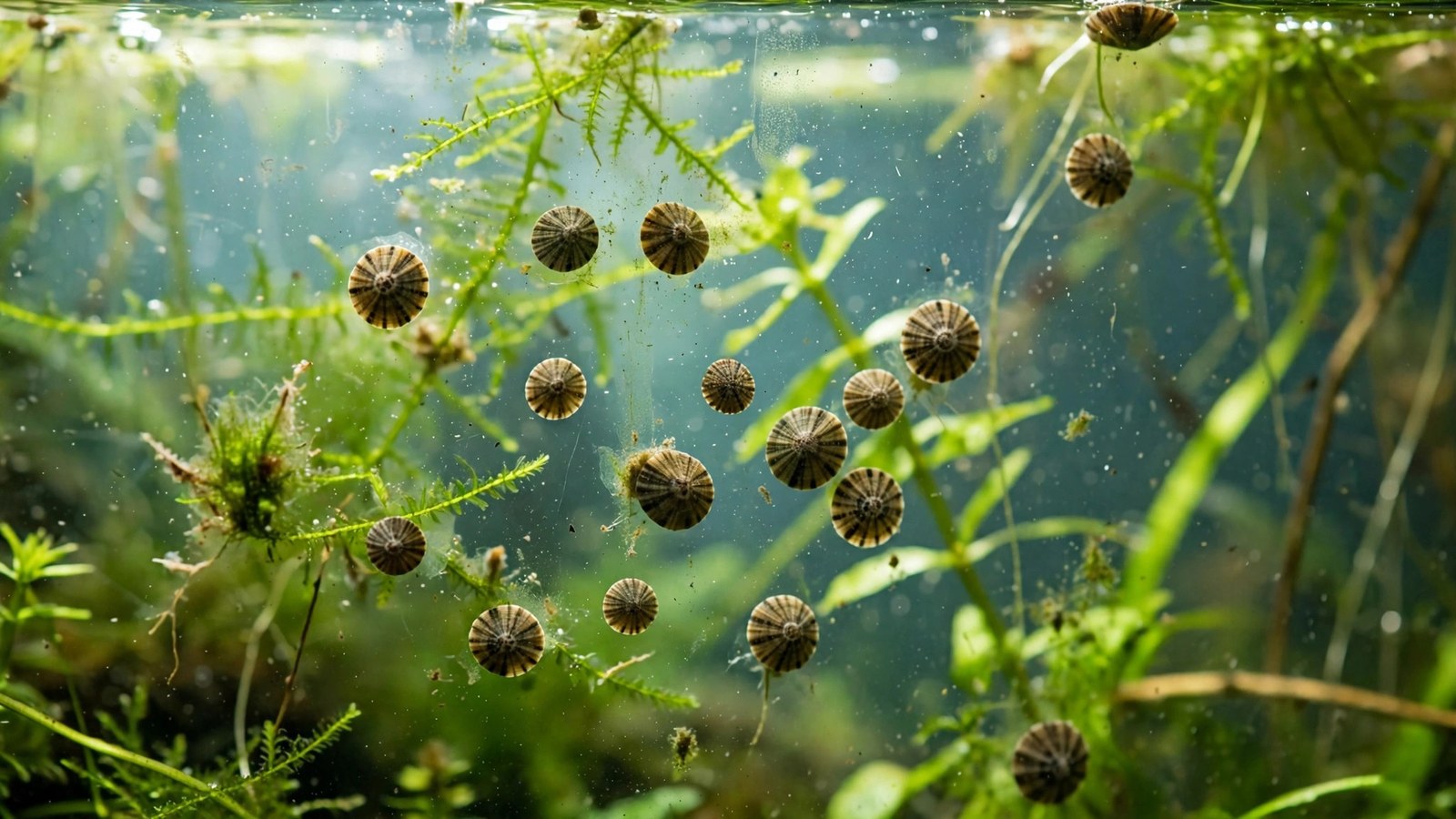
You're wiping the front glass and you notice them: dozens of tiny gray dots that weren't there last week. You tap the glass. They don't move. Lean closer and each dot is a miniature cone — a tiny hat glued flat to the glass. You've just discovered freshwater limpets in aquariums: harmless algae-grazers that hitchhike in on live plants. In a rich tank they can go from a curiosity to a wall of dots in about three weeks. Here's how to identify them, when to act, and how to clear them out.
Limpets are the most common hitchhiker on new plants — our complete guide to freshwater aquarium plants shows how to inspect, dip, and quarantine arrivals before they reach your glass.
What are freshwater limpets in aquariums?
Freshwater limpets are tiny aquatic gastropods in the family Acroloxidae — the species most often found in tanks is Acroloxus lacustris, the lake limpet. Unlike pest snails, they have no coiled shell and no visible body: just a 2–4 mm yellowish-gray cone pressed flat against glass, broad leaves like Anubias, or hardscape. The species profile of Acroloxus lacustris confirms the whorl-less, cap-like shell that sets them apart from every other aquarium snail.
They get into tanks the same way almost every hitchhiker does: riding in on live plants. Eggs and juveniles cling to stems and leaves and settle in once planted. If you've added plants in the last month and limpets just appeared, that's your source — almost guaranteed. If your setup is new, our guide to the easiest aquarium plants for a beginner community tank covers plants that stay manageable while you learn to spot stowaways.
Freshwater limpets vs look-alikes: how to tell
Limpets get misidentified constantly, because "tiny dot on the glass" describes several tank inhabitants. Identify before you act — the fix for moving dots is completely different.
| What you see | Moves? | Shape | What it is |
|---|---|---|---|
| Gray-brown cones, flat on the glass | No | Conical cap, no spiral | Freshwater limpet — harmless grazer |
| White ovals in neat rows on glass or driftwood | No | Tiny sesame-seed ovals | Nerite eggs — harmless, can't hatch in freshwater |
| Dots that crawl or glide | Yes | Spiral or slug-like | Young pest snails or planaria |
| Specks that dart when the light hits | Yes, fast | Comma or teardrop | Copepods/seed shrimp — see our guide to tiny white bugs in a planted tank |
The decisive test: tap the glass near one. A limpet doesn't react. If it darts, it's a copepod; if it has a spiral, it's a baby snail. Scuds — another small biofilm-grazing hitchhiker — also move visibly; our scuds in a planted tank guide explains how they differ from limpets.
Why limpet populations explode
Limpets don't multiply because your tank is dirty — they multiply because it's productive. A boom means the tank grows more algae and biofilm than your livestock consumes. Three drivers:
- Overfeeding. Uneaten food decays into nutrients that fuel algae and biofilm. Tanks where food sits on the substrate for more than two minutes after feeding grow limpets fastest.
- Excess light. Lights running 10–12 hours a day, or a tank catching direct daylight, grows the green film limpets graze on. Most planted tanks do fine on 6–8 hours.
- New tanks and new plants. Fresh setups have unstable biofilms and fresh leaves. Limpets often appear 1–3 weeks after new plants go in, then level off as the tank matures.
Cut the food supply and reproduction slows within days — most populations peak, then thin out on their own over 2–4 weeks.
Are freshwater limpets harmful to fish, shrimp, or plants?
No. Freshwater limpets are not parasites, don't eat healthy plant tissue, and don't harass shrimp or fry. They rasp soft algae and biofilm off surfaces — in small numbers they're a genuine cleanup crew, and many aquascapers leave them on back and side glass permanently.
The "problem" is almost entirely aesthetic, but act at 50 or more on the front glass, when leaves are coated in layers (shading slows photosynthesis), or when they're on every surface including the filter intake — that signals overfeeding worth fixing anyway.
How to get rid of freshwater limpets (what actually works)
Control has two levers: starve them and remove them. 1. Cut the food supply (the real fix). Feed only what fish finish in 60–90 seconds. Siphon uneaten food during your weekly water change. Cut light to 6–8 hours — this alone collapses most populations within 2–3 weeks. 2. Manual removal (fast and free). Scrape with an old credit card or algae scraper (razor for glass, plastic for acrylic) right before a water change, and siphon out what you dislodge. Repeat weekly for three weeks.
3. Biological control — with honest limits. Pea puffers eat some limpets but many ignore them: the flat shell offers no easy grip. Assassin snails work far too slowly to dent an outbreak. Our pest snails in aquarium plants guide covers which predators genuinely earn their keep. Never buy one solely for limpets.
 ★4.6
Pawfly 4" Aquarium Shrimp Net
Check Price on Amazon ★4.6Preventing the next limpet hitchhike
Since limpets arrive on plants, prevention lives in your plant routine: quarantine new plants for 7–14 days and inspect leaves under bright light. Dip before planting: an alum dip (1 tablespoon per gallon, 2–3 hours) or brief potassium permanganate dip kills clinging eggs and juveniles — rinse in dechlorinated water first. Buy tissue-culture plants for high-value scapes — they arrive sterile. And quarantine "free" trimmings from other tanks: plant swaps are the number-one limpet vector in the hobby.
One honest note: a single missed egg restarts the cycle — but with food waste under control, the next arrival stays a handful of harmless dots instead of a boom.
Frequently Asked Questions
Will freshwater limpets hurt my shrimp or baby fish?
No. They are strict algae and biofilm grazers — they don't hunt, bite, or parasitize anything. Shrimp, fry, and snails coexist with them without issue; competition for the same algae film is rarely a problem.
How did limpets get into my tank if I never bought any?
They hitchhiked in on live plants as eggs or juveniles clinging to leaves and stems. Secondhand hardscape, driftwood, or filter media can also carry them.
Will a pea puffer or assassin snail eat freshwater limpets?
Unreliably. Pea puffers crack some small limpets but many ignore them — the flat, sealed shell gives no easy grip. Assassin snails work far too slowly to dent an outbreak. Never buy either solely for limpets; food reduction and scraping work better.
Can I just leave the limpets alone?
In most tanks, yes. Below about 50 individuals on the front glass, limpets are a free algae-cleaning crew that harms nothing. Many aquascapers leave them on back and side glass permanently and only scrape the front panel.
How long does it take to clear a limpet outbreak?
With food gone in 60–90 seconds, a 6–8 hour photoperiod, and weekly scraping before water changes, most tanks see the population collapse in 2–3 weeks and near-zero within a month. If numbers aren't falling after a month, you're still overfeeding or over-lighting.
The bottom line on freshwater limpets
Freshwater limpets are the hobby's most misunderstood non-problem: harmless algae grazers that only look alarming in numbers. Treat a bloom as a message from your tank — too much food, too much light — fix that, scrape the glass for a few weeks, and they settle into a quiet cleanup crew. Dip and quarantine your next plant order, and you'll rarely see them in force again.