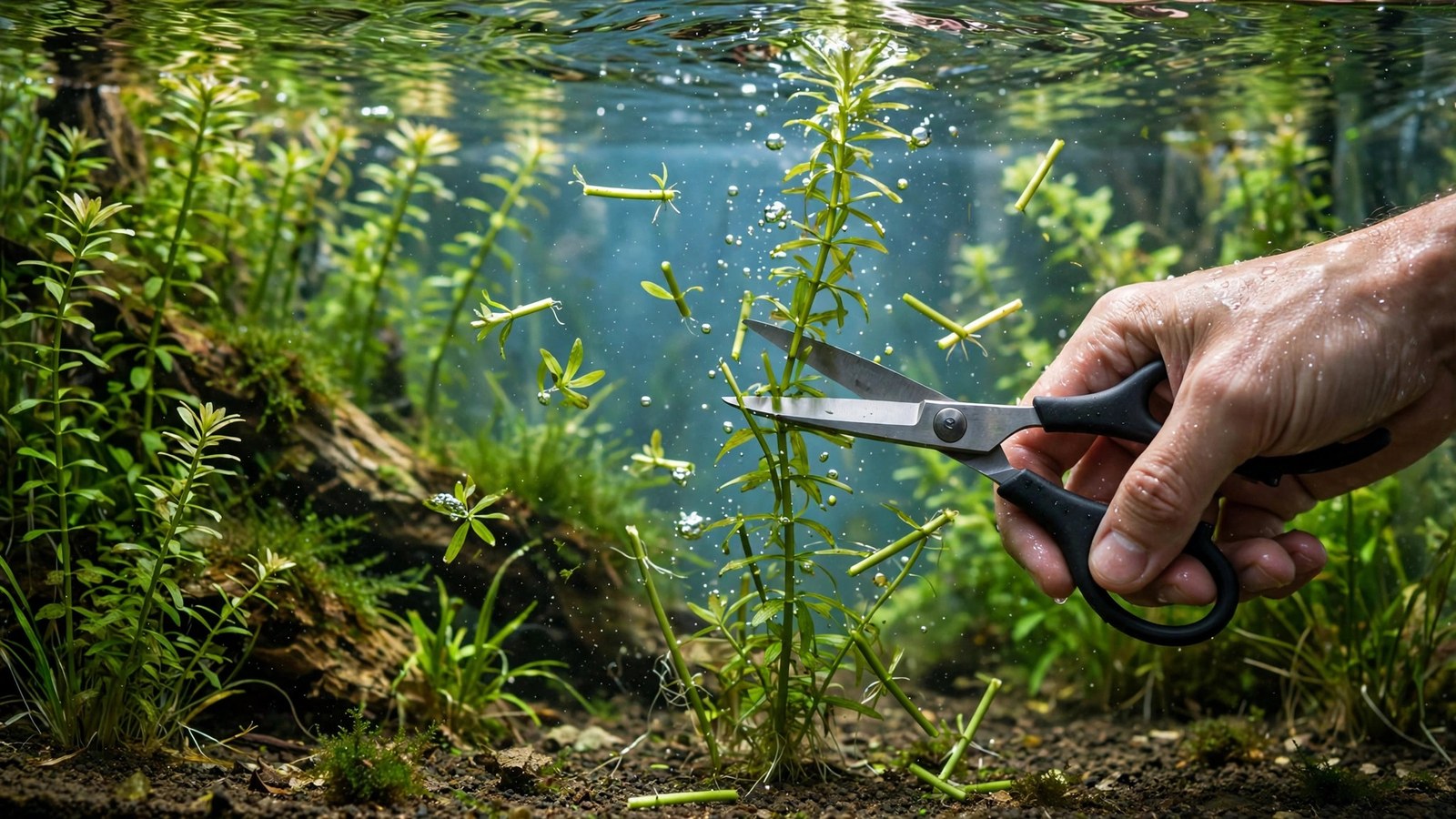
Knowing how often to trim aquarium plants is what separates a tank that always looks freshly scaped from one that slowly becomes an underwater jungle. Most beginners trim everything on the same day once a month, which stresses slow growers and lets fast stems run wild. A plant-type-based pruning calendar works better: each growth form has its own rhythm, and once you match your schedule to it, pruning becomes a quick, predictable habit instead of a dreaded chore. This guide gives you a week-by-week rhythm for stem plants, rosettes, rhizome plants, carpets, and floaters — plus how much to cut, which tools to use, and what to do with the cuttings.
Why a Schedule Beats "Trim When It Looks Bad"
Aquarium plants don't wait until you're ready. In a high-light, CO2-injected tank, a stem plant can add two inches in a week; left alone, it hits the water surface, shades everything below, and melts at the base. Trimming on a schedule keeps every plant in its growth sweet spot — compact, bushy, and photosynthesizing efficiently — instead of oscillating between overgrown and freshly hacked. It also spreads the work out: five minutes weekly beats an hour-long emergency trim monthly. Regular, light pruning is less stressful for plants than infrequent heavy cuts, and it keeps detritus from accumulating in dense overgrowth where algae takes hold. If you follow the standard how to trim aquarium plants techniques but want the timing to go with them, this calendar is the missing half.
How Often to Trim Aquarium Plants: The Master Pruning Calendar
Below is the rhythm for a typical planted tank. Adjust toward the faster end for high-tech setups (strong light + CO2 + lean dosing) and toward the slower end for low-tech tanks, where growth is roughly half as fast.
| Plant type | Trim frequency | How much to remove | Best day of week |
|---|---|---|---|
| Stem plants | Every 1–2 weeks | Top third to half of each stem | Day before water change |
| Carpeting plants | Every 2–3 weeks | Mow to ~1 inch height | Day before water change |
| Floating plants | Weekly | Thin to cover ≤1/3 of surface | Any day |
| Rosette plants | Every 4–6 weeks | Only dead/old outer leaves | During water change |
| Rhizome plants | Every 6–8 weeks (or never) | Rhizome division only | During water change |
The "best day" column is deliberate: trimming the day before or during your water change means floating debris and stirred-up detritus get siphoned out immediately instead of settling into the substrate and feeding algae.
Stem Plants: Trim Every 1–2 Weeks
Stem plants — Rotala, Ludwigia, Hygrophila, Bacopa, Limnophila — are the fastest growers in most tanks and the most dramatic shape-shifters. They demand the most frequent attention.
When to trim
In high-tech tanks, check stems weekly; in low-tech, every two weeks is usually enough. The visual trigger is simple: trim when the tops reach about 70% of their target height. If stems are touching the surface or laying flat against it, you're overdue. Overdue stems shade their lower leaves, which melt and rot — that mushy base is the classic sign of a neglected stem bush. For species-specific cutting patterns, see the stem plant trimming guide.
How much to cut
Remove the top third to half of each stem, cutting just above a leaf node. Cutting above a node forces the plant to branch into two shoots from that node, which is how you build the dense, bushy look instead of a single lanky stalk. If the lower half of the stem is bare and algae-coated, cut lower and replant only the healthy tops — the bottoms won't recover. And if you're working with colorful species, pruning red plants for bushier growth covers how to keep their form tight.
What to do with cuttings
Healthy stem tops are free plants. Replant the best cuttings behind the parent bush to thicken it, start a new group elsewhere, or trade them — local club members and hobbyists are always happy to take trimmed stems. Discard anything with algae, melted tips, or hair-thin stems; planting weak cuttings just spreads problems. Learn the full routine for turning trimmings into new plants in what to do with aquarium plant trimmings.
Carpeting Plants: Mow Every 2–3 Weeks
Dwarf hairgrass, Monte Carlo, Cuba, and Glossostigma carpets need regular mowing to stay low and dense. Skip it and the carpet grows upward instead of outward, the lower layer gets shaded, and the whole thing lifts off the substrate in mats — the dreaded carpet peel.
When and how
Every 2–3 weeks, trim the carpet down to about an inch tall using curved aquascaping scissors, cutting across the top like mowing a lawn. Cut lower in the front of the tank and slightly taller at the back for a sense of depth. The full technique is covered in how to trim carpeting plants. After mowing, use a fine net or siphon to remove every floating blade — decomposing clippings on the carpet invite algae exactly where you can't reach it.
Floating Plants: Thin Weekly
Water lettuce, frogbit, duckweed, and red root floaters double their coverage in days under good light. A tank that was 20% covered on Sunday can be 60% covered by the next weekend, starving submerged plants of light and gas exchange.
The one-third rule
Every week, thin floaters so they cover no more than a third of the surface. Remove entire plants rather than tearing leaves — torn leaves rot fast. Toss yellowed or waterlogged leaves and any duckweed hitchhiking into your filter intake. Keep a "corral" of airline tubing or a floating ring around your feeding spot so floaters stay clear of it. Managing their spread is half the battle; managing floating plants has the complete containment playbook.
Rosette Plants: Check Every 4–6 Weeks
Cryptocorynes, swords (Echinodorus), Vallisneria, and Sagittaria grow from a central crown and almost never need shaping — their schedule is about cleanup, not reduction.
What to remove
Every 4–6 weeks, inspect the crown and outer leaves. Pinch or snip off yellowed, algae-covered, or melting outer leaves at the very base, as close to the crown as possible — never cut a leaf halfway and leave a stub, which rots. Leave the inner new growth untouched. Vallisneria and Sagittaria send runners; if they're overrunning the scape, uproot the runners monthly and replant or discard them. After trimming, check the crown isn't buried — substrate creeping over it causes melt. New plants are most vulnerable right after planting, so pair this routine with proper acclimation for new aquarium plants.
Rhizome Plants: Divide Every 6–8 Weeks (or Never)
Anubias, Java fern, and Bucephalandra are the slowest, most forgiving plants in the hobby — many tanks go months without touching them. Their schedule is really a division and cleanup schedule.
What to do
Every 6–8 weeks, remove brown or algae-eaten leaves by cutting the leaf stem right at the rhizome, and brush soft algae off broad leaves with a toothbrush. If the rhizome has grown long with healthy roots along it, you can divide it: cut the rhizome into sections, each with at least 4–5 leaves, and attach the pieces to new rocks or wood. Never bury the rhizome — that's the fastest way to kill these plants. When moving divisions, trim damaged roots first.
Tools Worth Owning
You don't need a professional kit, but the right tools make every session faster and cleaner:
- Curved aquascaping scissors — the one essential. Cuts carpet edges, stem tops, and tight spots without mangling plants.
- Long straight tweezers — for planting cuttings and pulling clippings from between stems.
- A fine-mesh net — scoops floating clippings in seconds after a trim.
- A sharp razor or scalpel — for clean rhizome divisions; ragged cuts rot.
Rinse tools in tank water (never soap) after each use and dry them. Rusty or sticky blades tear plant tissue instead of cutting it, and torn tissue invites infection.
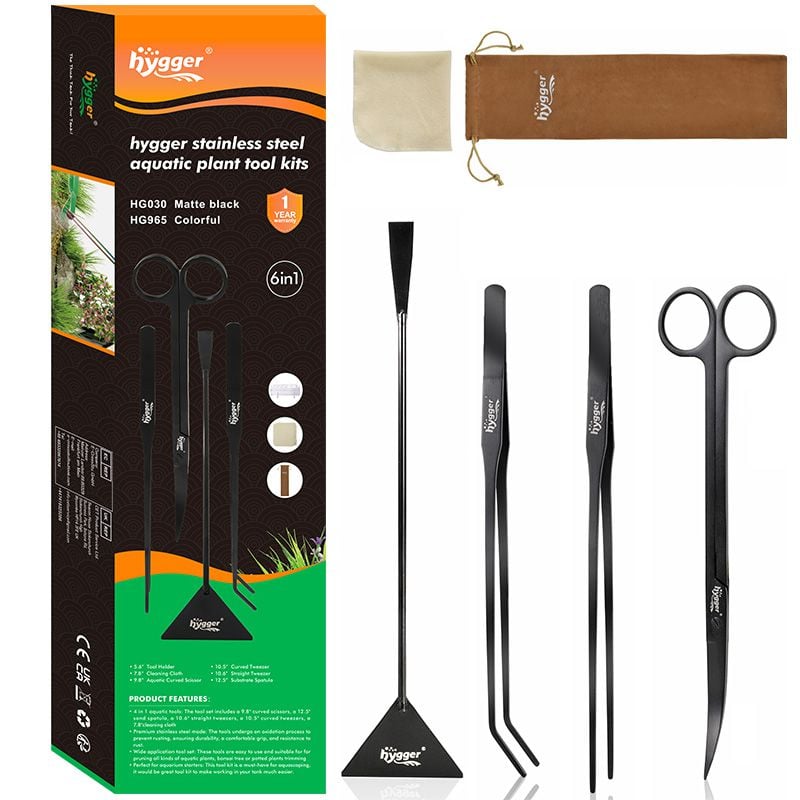
One good kit covers every cut on the calendar: a quality aquascaping tool kit like hygger's 6-in-1.
 ★4.6
hygger 6-in-1 Long Aquarium Aquascaping Tools Kit
Check Price on Amazon ★4.6Fertilizer Timing: Feed After You Cut
Trimming removes biomass the tank was "expecting" — the nutrient uptake that went into those leaves. For the first few days after a big trim, plants shift energy to healing and branching, and dosing your full routine immediately can feed algae instead. A simple rule: after a heavy pruning session, dose at half strength for 2–3 days, then resume your normal fertilizer schedule. If you trim lightly every week, no adjustment is needed — the change is too small to matter. Also watch for deficiency signs in the week after trimming: fresh cuts expose fast regrowth that burns through iron and potassium quickly, so check new leaves for yellowing or pinholes.
Pruning day is dosing day for fast growers: an all-in-one fertilizer like NilocG Thrive.
Sample Weekly Routine (High-Tech Tank)
Here's how the calendar looks in practice for a CO2 tank with stems, a Monte Carlo carpet, and floaters:
- Monday: thin floaters to one-third coverage (5 min).
- Wednesday: trim stem tops that passed the 70% height mark; replant the best cuttings (15 min).
- Saturday (water-change day): mow the carpet if it's week 2 or 3, siphon clippings and detritus, dose half-strength fertilizer, resume full dosing Sunday (20 min).
- Monthly (first Saturday): inspect rosette crowns, remove old outer leaves, pull excess runners; check rhizome plants for algae and dead leaves.
Total time: about 20 minutes a week plus one 20-minute monthly session. During the first 90 days of a planted tank, trim less aggressively — plants are still establishing roots, and heavy cutting early can stall them.
Frequently Asked Questions
How often should I trim aquarium plants in a low-tech tank?
About half as often as high-tech: stems every 3–4 weeks, carpets every 4–6, floaters still weekly since they grow fast regardless. Low-tech plants forgive a missed week easily, so use the same visual triggers — 70% of target height for stems, one-third surface coverage for floaters — rather than a strict calendar.
Can I trim all my plants on the same day?
You can, but it's not ideal. A full-tank trim removes a large chunk of your biofilter's support system at once and creates a nutrient-algae imbalance for a few days. Staggering by plant type — floaters Monday, stems Wednesday, carpet on water-change day — keeps the tank stable and turns pruning into quick habit-sized sessions.
Should I trim right after planting new plants?
No — give new plants 2–3 weeks to root and acclimate first. Freshly planted stems are stressed from shipping and replanting; cutting them immediately compounds the shock. The one exception is removing leaves that were already melting on arrival, which rot if left in place.
Why do my stem plants melt at the base after trimming?
Base melt almost always means the tops were allowed to grow so tall they shaded the lower leaves for too long. Trim earlier — when tops hit 70% of target height — so the lower portions keep receiving light. If the bottoms are already bare, replant healthy tops and discard the bare stems rather than hoping they'll recover.
Do I need to trim red plants differently?
The timing is the same, but red plants (Rotala, Ludwigia, Alternanthera) benefit from being trimmed slightly more aggressively — cutting back to two or three leaf nodes encourages the dense, bushy branching that shows off their color. Strong light and consistent iron dosing after trimming help new growth come in red rather than green.
Is it safe to trim right before going on vacation?
Actually, a light trim a few days before you leave is smart: it resets fast growers so they're less likely to hit the surface and shade the tank while you're gone. Avoid heavy restructuring — you want plants stable, not recovering. Thin floaters generously too, since no one will be there to stop them doubling.
Make It a Habit, Not a Project
The best pruning schedule is the one you'll actually follow. Tape the calendar above inside your tank cabinet, set a weekly phone reminder for the floater check, and keep your curved scissors within reach of the tank — friction is what kills maintenance routines. Within two months of following this rhythm, your plants will grow more predictably, your algae will recede, and the tank will look "just scaped" on any random Tuesday. That consistency is the entire secret: small cuts, on schedule, forever. For external reference, Tropica's plant database lists growth rates per species so you can fine-tune these frequencies to your exact plant list.