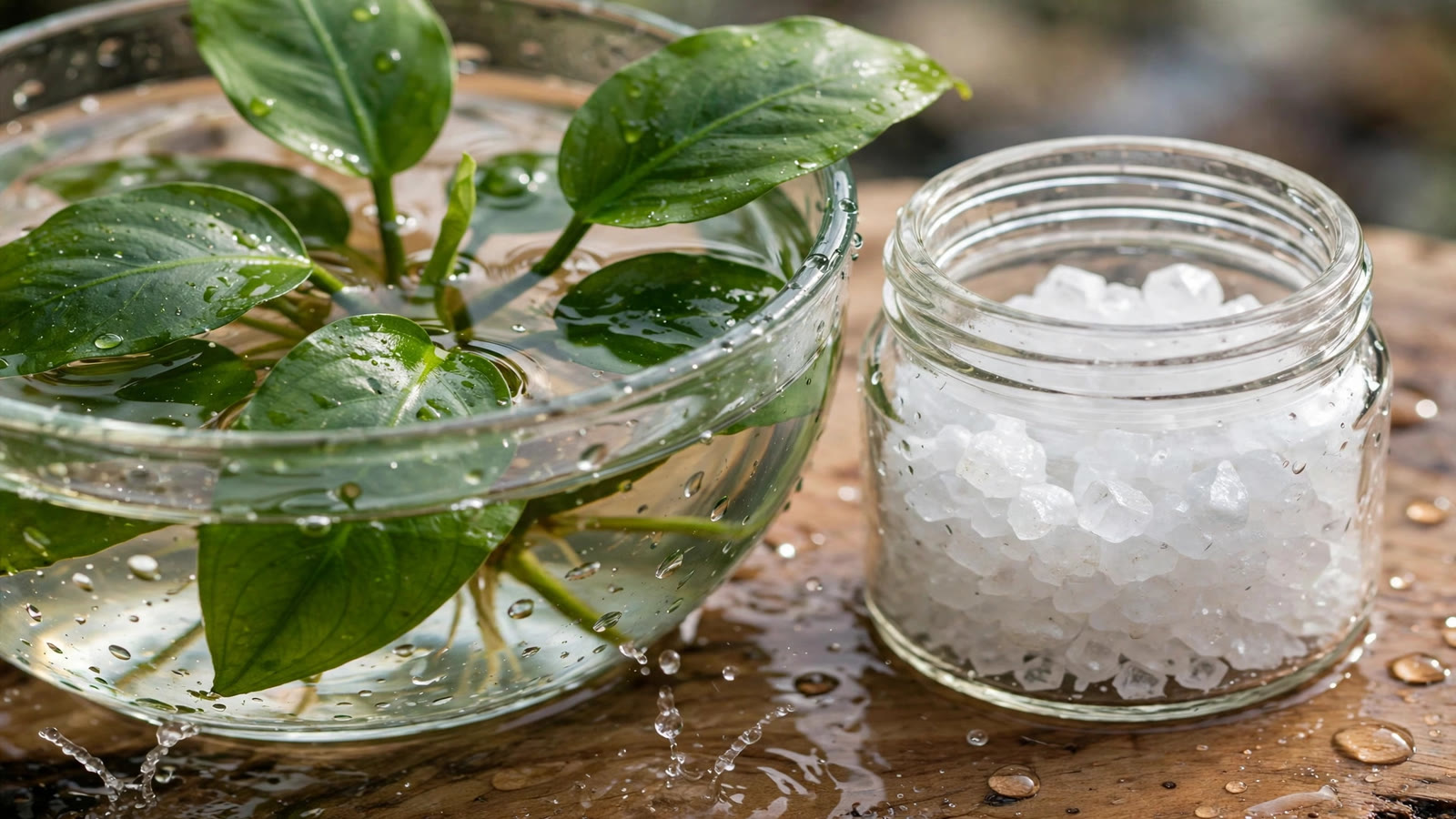
Every new plant that enters your aquarium carries a hidden passenger list: bladder snails, ramshorns, and the nearly invisible eggs they hitch onto leaves and rhizomes. An alum dip for aquarium plants is the hobby's gentlest, most targeted solution — a soak in food-grade aluminum potassium sulfate that kills snails and their eggs without the harshness of bleach. This guide covers safe dosage, timing for delicate and hardy plants, the rinsing protocol, and how alum stacks up against bleach and hydrogen peroxide.
What Is an Alum Dip?
Alum is shorthand for aluminum potassium sulfate, a crystalline mineral salt sold in grocery store spice aisles as pickling alum. It is food-grade, inexpensive, and has been used for generations to crisp pickles and purify water — long before aquarists adopted it as a plant dip. When dissolved in water, it creates a mildly acidic, astringent solution that small invertebrates simply cannot tolerate.
The alum dip method arrived in the aquarium hobby through planted-tank forums in the early 2000s, passed along as folk wisdom from aquarists who noticed it cleared snail eggs off new plants without the leaf damage bleach could cause. It has since become a staple recommendation in quarantine routines, especially for hobbyists who buy from other hobbyists, where plants arrive pest-laden more often than from tissue-culture labs.
How Alum Kills Pests
Alum works in two ways. First, the dissolved salt creates an environment with high mineral content that draws water out of soft-bodied invertebrates by osmosis — snails, worm-like pests, and gelatinous egg masses dehydrate and collapse. Second, the mild acidity of the solution disrupts the mucous and protective coatings these organisms rely on. Plant leaves, by contrast, have a waxy cuticle and structured cell walls that shrug off the same exposure for the duration of a normal dip. The result is a wide safety margin between "lethal to snail eggs" and "harmful to plants" — wider than bleach offers, which is exactly why alum is considered the gentlest dip in the hobby.
Buying the Right Alum
Look for food-grade pickling alum in the canning section of a supermarket — the label should list a single ingredient: aluminum potassium sulfate. A small jar lasts for years. Avoid industrial "alum powder" blends with other additives. Store it sealed and dry; it keeps essentially forever.
What an Alum Dip Kills — and What It Doesn't
Alum is a snail specialist, and that specificity is both its strength and its limitation. Before mixing a bath, it helps to know exactly which hitchhikers you are targeting.
Pests Alum Handles Well
- Adult pest snails — bladder snails, pond snails, ramshorns, and Malaysian trumpet snails are all killed or driven off the plant during a proper soak.
- Snail eggs — the gelatinous clusters stuck to leaf undersides and rhizomes are alum's signature target. The soak penetrates the egg jelly far more reliably than a quick rinse ever could.
- Leeches and planaria — small worm-like hitchhikers that occasionally arrive on plants are highly sensitive to the astringent bath.
- Hydra — the tiny tentacled predators that sometimes colonize new plants succumb to the osmotic stress of the dip.
Things Alum Will Not Fix
- Algae — alum has only modest effect on algae. If a plant arrives coated in hair algae or black beard algae, a hydrogen peroxide dip is the better tool, followed by the guidance in our guide to cleaning algae off plant leaves without damage.
- Plant diseases and deficiencies — a dip cannot cure a melting plant or a nutrient deficiency. If your new arrival is struggling after planting, see how to revive dying aquarium plants.
- Eggs hidden deep in root crowns — alum penetrates well, but eggs wedged deep inside dense root masses can occasionally survive. A visual inspection after the dip is still wise.
- Everything inside the plant's tissue — internal parasites are not something a surface dip addresses, but they are also vanishingly rare on aquarium plants.
Alum Dip Aquarium Plants: The Step-by-Step Method
The classic alum protocol trades speed for gentleness: where bleach works in minutes, alum works over hours or even days. That slowness is a feature, not a bug — it is what lets you kill eggs without burning leaves. Follow these steps and the plants will come out clean and unstressed.
Step 1 — Prepare the Bath
Fill a clean bucket or container with dechlorinated water at room temperature — roughly the temperature of the tank the plants are destined for. Avoid hot or cold water, which stresses plants on its own. A gallon (about 4 liters) is a convenient batch size for a typical plant order.
Step 2 — Mix the Alum Solution
The widely used hobby dosage is 1 tablespoon of alum per gallon of water (roughly 15 ml per 4 liters). Dissolve the crystals completely, stirring until the water runs clear — undissolved granules settling on leaves can cause localized spotting. If you are dipping especially delicate plants for the first time, you may start at half strength (1½ teaspoons per gallon) for your first attempt and only go full strength once you have seen how your plants respond.
Precision is not critical here — a slightly heaped or scant spoon will not make or break the dip. What matters is full dissolution and respecting the timing guidance below.
Step 3 — Submerge the Plants
Remove rockwool, pots, and any rubber bands or weights first — pests hide in the crevices of rockwool, and the wool itself absorbs the solution unevenly. Submerge the plants fully, leaves and roots alike, and gently swish the bath a few times at the start to dislodge air bubbles clinging to leaves. Those bubbles act like tiny umbrellas, shielding the leaf surface beneath them from the solution.
Timing depends on plant sensitivity (see the table below): hardy plants soak for 2 to 3 days, which is what reliably penetrates snail egg clusters, while delicate stem plants soak for 2 to 3 hours as a compromise between egg-killing power and leaf safety. Keep the container in a room-temperature spot out of direct sunlight.
Step 4 — Check During the Soak
For multi-day soaks, give the plants a visual check once a day. Healthy leaves stay firm and green. If you see significant translucent patches, mushiness, or heavy leaf shedding beyond a leaf or two, end the soak early and move to rinsing — that plant has told you its limit. A few shed leaves on very delicate stems is acceptable; widespread melting is not.
Step 5 — Rinse Thoroughly
This step is non-negotiable. Lift the plants out and rinse them under running dechlorinated water for several minutes, turning them to wash every surface. Then place them in a second bucket of clean dechlorinated water for a 30-minute soak, which draws residual alum out of the tissues. Finally, rinse once more briefly. Alum is not highly toxic to fish at trace levels, but residues left on roots can irritate sensitive invertebrates like shrimp, so err on the side of thorough.
Dip Timing by Plant Sensitivity
Not all plants tolerate the same soak. Use this table as your starting point, and when in doubt about an unfamiliar species, treat it as delicate — you can always dip a second time, but you cannot un-melt a leaf.
| Plant group | Examples | Recommended soak | Notes |
|---|---|---|---|
| Very hardy | Anubias, Java fern, Bucephalandra, mosses | 2–3 days at full strength | Thick rhizomes and tough leaves tolerate the longest soaks; ideal for thorough egg removal. |
| Hardy | Cryptocoryne, sword plants, Vallisneria | 1–2 days at full strength | Crypts may melt a few leaves from the handling itself; new growth follows once planted. |
| Moderate | Hygrophila, Ludwigia, Bacopa, Rotala (tougher species) | 6–12 hours at full strength | Good middle ground: long enough to hit most eggs, short enough to protect softer stems. |
| Delicate | Cabomba, Myriophyllum, fine-leafed Rotala, floating plants | 2–3 hours at full or half strength | Feathery leaves are easily damaged; inspect closely and rinse early if leaves go translucent. |
| Very delicate | Tissue-culture plants, Utricularia, newly sprouted carpeting plants | Skip the dip or 1 hour at half strength | Tissue cultures are lab-sterile and need no dip at all — just rinse and plant. |
Alum vs Bleach vs Hydrogen Peroxide: Choosing Your Dip
The site already covers the other two common dips in depth — our bleach dip protocol and our guide to hydrogen peroxide — so this section is a decision aid, not a repeat of their recipes. Each dip has a job it does best.
| Factor | Alum | Bleach | Hydrogen peroxide |
|---|---|---|---|
| Best at | Snails and snail eggs | Broad sterilization: algae, bacteria, most pests | Algae removal with minimal plant stress |
| Gentleness on plants | Gentlest of the three | Harshest — narrow timing window | Moderate — brief exposure |
| Typical contact time | Hours to days | 1–3 minutes | A few minutes |
| Egg penetration | Excellent (long soak) | Good | Fair |
| Margin for error | Wide | Narrow — overexposure melts plants | Moderate |
| Residue risk | Low, but rinse thoroughly for shrimp tanks | Requires dechlorinator neutralization | Breaks down to water and oxygen |
Choose alum when your main fear is snails and eggs — which, for most new plant orders, it is. Choose bleach when a plant arrives visibly diseased or algae-choked and you need the nuclear option. Choose hydrogen peroxide when algae is the specific problem and the plant is too delicate for bleach. Many experienced aquarists keep all three on hand and reach for alum most often, precisely because it is the one you can use without holding your breath.
Rinsing and Aftercare: After the Dip
A dip is only the first half of quarantine. What you do after the rinse determines whether the effort pays off.
Inspect Before Planting
After the final rinse, examine each plant under good light — a magnifying glass helps. Check leaf undersides, the crown where leaves meet roots, and rhizome crevices. Pick off anything suspicious with tweezers; surviving egg clusters look like tiny clear jelly dots, and a dead-looking cluster occasionally is not dead.
Consider a Quarantine Hold
For maximum security, hold dipped plants in a separate container or plant quarantine tank for a week or two before adding them to your display tank.
Plant Gently
Dipped plants have been handled more than usual, so acclimate them to your tank before planting and expect a short adjustment period. A few shed leaves in the first days are normal, especially for crypts and fine stems. Resume your normal new-plant routine and the plants will settle in.
Common Mistakes to Avoid
- Dipping tissue-culture plants. Lab-grown cups are sterile — dipping them only adds stress for zero benefit. Rinse off the gel and plant.
- Skipping the rinse. The dip kills pests; the rinse protects your livestock. Residual alum is especially unwelcome in shrimp and snail-inhabited tanks (yes, the ornamental snails you actually want).
- Using hot water. Dissolving alum in warm water is fine for mixing, but let the bath cool to room temperature before the plants go in.
- One soak for a mixed order. Do not give delicate stems the 3-day soak meant for Anubias. Sort your order by sensitivity and run two batches if needed.
- Treating the dip as a substitute for quarantine. Alum is excellent, but no dip is 100%. A short observation period catches what the dip missed.
- Reusing the bath indefinitely. One bath per plant order. A reused solution is weaker, dirtier, and can transfer problems between batches.
Frequently Asked Questions
Is alum safe for all aquarium plants?
Alum is the gentlest common plant dip, but "gentle" is not "harmless." Hardy plants like Anubias, Java fern, and mosses tolerate multi-day soaks easily. Delicate fine-leafed stems such as Cabomba and Myriophyllum should get only a few hours, and tissue-culture plants need no dip at all. When trying an unfamiliar species, start with a shorter soak at half strength and watch for translucent or mushy leaves, which signal you should rinse early.
Will an alum dip kill snail eggs, or just adult snails?
This is alum's standout strength: the long soak penetrates the gelatinous coating of snail egg clusters far more reliably than quick bleach or peroxide dips. A 2 to 3 day soak at full strength on hardy plants is the gold standard for egg destruction. For delicate plants that can only handle a few hours, some eggs may survive — which is why a visual inspection after the dip and a short quarantine hold are smart follow-ups.
Is alum safe for shrimp, fish, and beneficial bacteria?
Alum itself is only mildly toxic to aquatic life at trace levels, and a thorough rinse plus a clean-water soak removes virtually all residue before plants enter your tank. The dip is done in a separate bucket, never in the aquarium, so your filter bacteria and livestock are never exposed. Rinse extra carefully if you keep sensitive shrimp or ornamental snails, since invertebrates are the most affected by any leftover residue.
Can I use alum on plants that already have algae on them?
You can, but alum is not an algae treatment — it will do little against hair algae or black beard algae. If algae is the problem, a hydrogen peroxide dip is the better tool, followed by manual cleaning. Many aquarists do a peroxide dip for algae first, rinse, then run an alum soak for snails and eggs when a plant arrives with both problems. Tackle each hitchhiker with the dip designed for it.
How do I know the alum dip actually worked?
After rinsing, inspect leaf undersides and rhizome crevices with a magnifying glass for clear jelly-like egg clusters and remove anything suspicious with tweezers. The real proof comes in the following 2 to 3 weeks: hold the plants in a quarantine container and watch for hatchling snails. If none appear, the dip did its job. Finding a straggler or two is normal and not a failure — just remove them and extend the hold.
A Gentle Habit for a Pest-Free Tank
Snail infestations are one of those aquarium problems that are trivial to prevent and miserable to fix. A jar of pickling alum, a bucket, and a little patience give you the gentlest pest-killing protocol in the hobby — one that treats your plants kindly while being ruthless toward eggs and hitchhikers. Make the alum dip part of your routine for every new plant order, pair it with a short quarantine hold, and pest snails will stay a story other people tell. For more on keeping new arrivals healthy, see our guide to planting tissue culture cups.