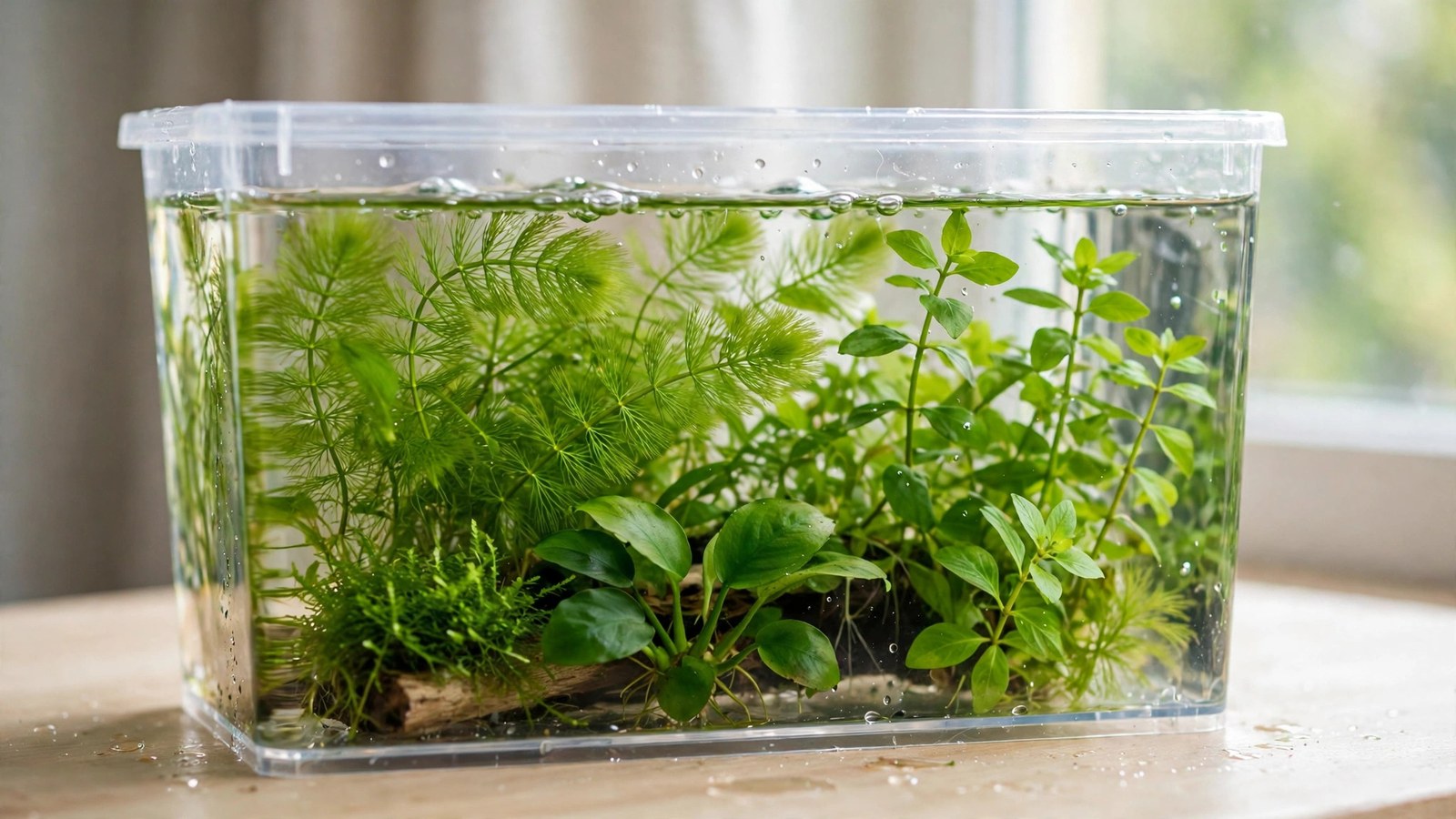
Bleach dipping is the nuclear option of plant treatment: a brief bath in diluted household bleach that kills algae, snail eggs, parasites, and pathogens that gentler methods merely annoy. It's the most effective dip in the hobby — and the easiest to get wrong. Too strong or too long and you melt the plant along with the pests; too weak and you've stressed the plant for nothing. This guide gives you the exact safe protocol: ratios, timing by plant type, the critical neutralization step, and when to choose bleach over hydrogen peroxide.
What Bleach Kills (and Why It's Worth the Risk)
Sodium hypochlorite — plain unscented household bleach — is a broad-spectrum oxidizer and disinfectant. A proper dip eliminates:
- All common algae including black brush algae (BBA), which survives peroxide dips
- Snail eggs and tiny pest snails — the gelatinous egg clutches that peroxide can't penetrate
- Parasites and pathogens — including many organisms responsible for introducing disease
- Hitchhiking insect larvae (damselfly nymphs, etc.) that arrive on pond-grown plants
The trade-off is real: bleach doesn't distinguish between pest cells and plant cells. The entire protocol — concentration, duration, neutralization — exists to exploit the fact that pests die faster than plants do. Get the timing right and the plant shrugs it off; get it wrong and you've chemically burned the foliage. Respect the numbers below and you'll be fine — thousands of hobbyists bleach-dip routinely.
The Safe Protocol: Step by Step
What you need
- Plain, unscented household bleach (sodium hypochlorite, typically 5–8% concentration). No splashless, no scented, no "bleach with fabric softener" — additives kill plants and livestock. Check the label: the only active ingredient should be sodium hypochlorite.
- A container for the dip (a bucket or large bowl)
- A second container with clean, dechlorinated water for rinsing
- Dechlorinator (sodium thiosulfate-based, e.g., Seachem Prime) — double or triple dose for the neutralizing soak
- Gloves (bleach irritates skin) and ventilation
The procedure
- Mix the dip: 1 part bleach to 20 parts water (e.g., 50 ml bleach in 1 liter of water). For very delicate plants, 1:30. Never stronger than 1:20 — stronger doesn't kill pests "better," it just kills plants faster.
- Submerge the plant fully for 90 seconds to 2 minutes — no longer. Swish gently. Set a timer; "about two minutes" by feel becomes four minutes, and four minutes melts things.
- Rinse immediately and thoroughly in clean water — 60 seconds of swishing rinse.
- Neutralizing soak (CRITICAL): place the plant in clean water dosed with 2–3x the normal dechlorinator amount for 5–10 minutes. Dechlorinator neutralizes residual chlorine/chloramine. Skipping this step is how bleach gets into your tank — don't skip it.
- Final rinse in clean water, then plant or quarantine as normal.
Total plant exposure to active bleach: under 2 minutes. Total process: about 15 minutes. The neutralization soak is not optional and not "extra credit" — it's half the protocol.
Timing by Plant Type
| Plant type | Ratio | Duration | Notes |
|---|---|---|---|
| Tough (anubias, java fern, swords) | 1:20 | 2 minutes | Ideal candidates; tolerate the full protocol well |
| Medium (most stems, bacopa, hygro) | 1:20 | 90 seconds | Watch for leaf curling after; usually temporary |
| Delicate (fine stems, mosses) | 1:30 | 60–90 seconds | Test a small piece first; consider peroxide instead |
| Vallisneria | 1:30 | 60 seconds max | Vals are bleach-sensitive; expect some melt regardless |
| Crypts | 1:20 | 90 seconds | May trigger crypt melt — usually recovers from roots |
Never bleach-dip: plants you can't afford to lose with no backup, extremely rare/expensive specimens on their first outing (test the protocol on a cheap plant first), or plants already stressed and melting — bleach on a weakened plant finishes the job.
Bleach vs. Other Dips: Choosing Your Weapon
- Hydrogen peroxide dip: Gentler, great for routine algae, no neutralization needed. Default choice for algae-only problems. Won't reliably kill snail eggs.
- Bleach dip: Stronger, kills snail eggs and pathogens, handles BBA. Default choice for pest elimination and severe infestations. Requires the neutralization protocol.
- Alum dip (1 tbsp/gallon, 24-hour soak): Excellent snail-egg killer, very gentle on plants, but slow and does little for algae. Good when snails are the only concern and you have a day to spare.
- Quarantine (no dip): Observation over 2–4 weeks catches what dips miss and stresses plants least. The gold standard when combined with a dip — dip first, quarantine after.
For new plants from unknown sources, the professional sequence is: bleach dip → neutralizing soak → quarantine tank for 2 weeks → main tank. Belt, suspenders, and a backup belt.
After the Dip: Recovery and What to Expect
- Mild stress is normal: slight translucency at leaf edges or minor curling for 1–3 days. The plant was chemically assaulted; brief sulking is expected.
- Some melt is possible: crypts may melt (they do that anyway), delicate stems may shed a few leaves. Remove mushy material, keep conditions stable — recovery from roots/crown is the norm, not the exception.
- Algae turns white/pink and dies over 24–72 hours. Dead BBA often stays attached as gray fuzz — trim the worst leaves rather than waiting for it to vanish.
- Don't fertilize extra "to help recovery." Stable, normal conditions heal plants; a fertilizer spike just feeds any surviving algae. Keep your regular schedule.
- Quarantine after dipping if the source was questionable — the dip kills what's on the plant, but eggs in crevices or pathogens in an early stage can occasionally survive. Two weeks of observation in a quarantine tank closes the loop.
Safety: For You and Your Tank
- Yourself: Wear gloves. Don't inhale fumes directly — mix in a ventilated area. If bleach contacts eyes, rinse immediately. Keep the working bleach solution away from children and pets during the process.
- Your tank: The neutralizing soak is the firewall. After proper neutralization and rinsing, no active chlorine reaches your tank — dechlorinator chemistry on this is well established. If you're nervous, quarantine the dipped plant for 24 hours in a bucket of clean water before adding to the main tank; any residual issue shows up there, not in your display.
- Never pour dip water into the tank or down a drain connected to septic with a biofilter — dump it on soil outside or down a municipal drain with plenty of flushing water.
- Never mix bleach with other chemicals — especially ammonia-based cleaners or acids (vinegar included). Chloramine/chlorine gas is dangerous. The dip uses bleach + water only, period.
Note that a dechlorinator bath neutralizes residual bleach after rinsing before plants go back in the tank: Seachem Prime dechlorinator.
Common Bleach Dip Mistakes
- Eyeballing the ratio. "A glug of bleach in a bucket" is how plants die. Measure: 1:20 means measure. A kitchen measuring cup is fine.
- Leaving plants in "just a bit longer." The difference between 2 minutes (safe) and 5 minutes (melted) is smaller than it feels. Use a timer, every time.
- Skipping the neutralizing soak. Rinsing alone doesn't reliably remove all chlorine from plant crevices. The dechlorinator soak is the actual safety step — rinsing is just the prelude.
- Using scented/splashless bleach. The surfactants and fragrances in "splashless" or scented bleach are plant killers and tank poisons. Plain unscented only — read the label.
- Dipping an already-dying plant. Bleach is for healthy plants with pest/algae problems, not rescue therapy for failing plants. It will not save a melting plant; it will accelerate it.
- Treating the dip as quarantine. A dip kills what's exposed on the surface right now. It doesn't replace observation time for things that hatch, emerge, or develop later. Dip + quarantine, not dip instead of quarantine.
Frequently Asked Questions
Will bleach dipping kill my plant?
Not at the correct ratio and duration — healthy plants tolerate 1:20 for 90–120 seconds with only transient stress. What kills plants is stronger ratios, longer soaks, or dipping already-weakened plants. Follow the protocol exactly (especially the timer and the neutralizing soak) and the risk is minimal. When trying it the first time, practice on an inexpensive plant.
Can I bleach-dip plants that are already in my tank?
You'd have to remove them first — never add bleach to the tank itself. For established rooted plants, uprooting for a dip is disruptive; in-tank peroxide spot treatment is usually the better choice for plants you don't want to disturb. Reserve bleach dips for new arrivals and plants you're already moving.
How do I know the bleach is fully neutralized?
The dechlorinator soak at 2–3x dose for 5–10 minutes is chemically sufficient — sodium thiosulfate neutralizes chlorine rapidly and completely. For extra confidence, smell the plant after the soak: any chlorine smell means soak longer. A chlorine test strip on the soak water reading zero is definitive. In practice, the standard soak has an enormous safety margin.
Does bleach dipping kill algae spores too?
It kills exposed algae and most surface organisms effectively. Truly dormant spores in microscopic crevices can occasionally survive any dip — which is why the dip-then-quarantine sequence exists. No dip is 100% sterilization; bleach is simply the closest the hobby gets. Manage expectations: "extremely thorough," not "magical."
Is there anything gentler that still kills snail eggs?
An alum dip (aluminum sulfate, 1 tablespoon per gallon, 12–24 hour soak) is the gentlest reliable snail-egg killer — very easy on plants, but slow and weak against algae. If snails are your only concern and you're not in a hurry, alum is excellent. If you also need algae and pathogen control, or you need it done today, bleach is the answer.
Respect the Protocol, Reap the Clean Plants
Bleach dipping has a scary reputation it doesn't deserve — the fear comes from people free-pouring and over-soaking, not from the protocol itself. Measured 1:20, timed to 90–120 seconds, neutralized with dechlorinator, it's a routine, repeatable, safe procedure that delivers genuinely pest-free plants. Add it to your new-plant workflow alongside quarantine, and the words "where did these snails come from" leave your vocabulary for good.