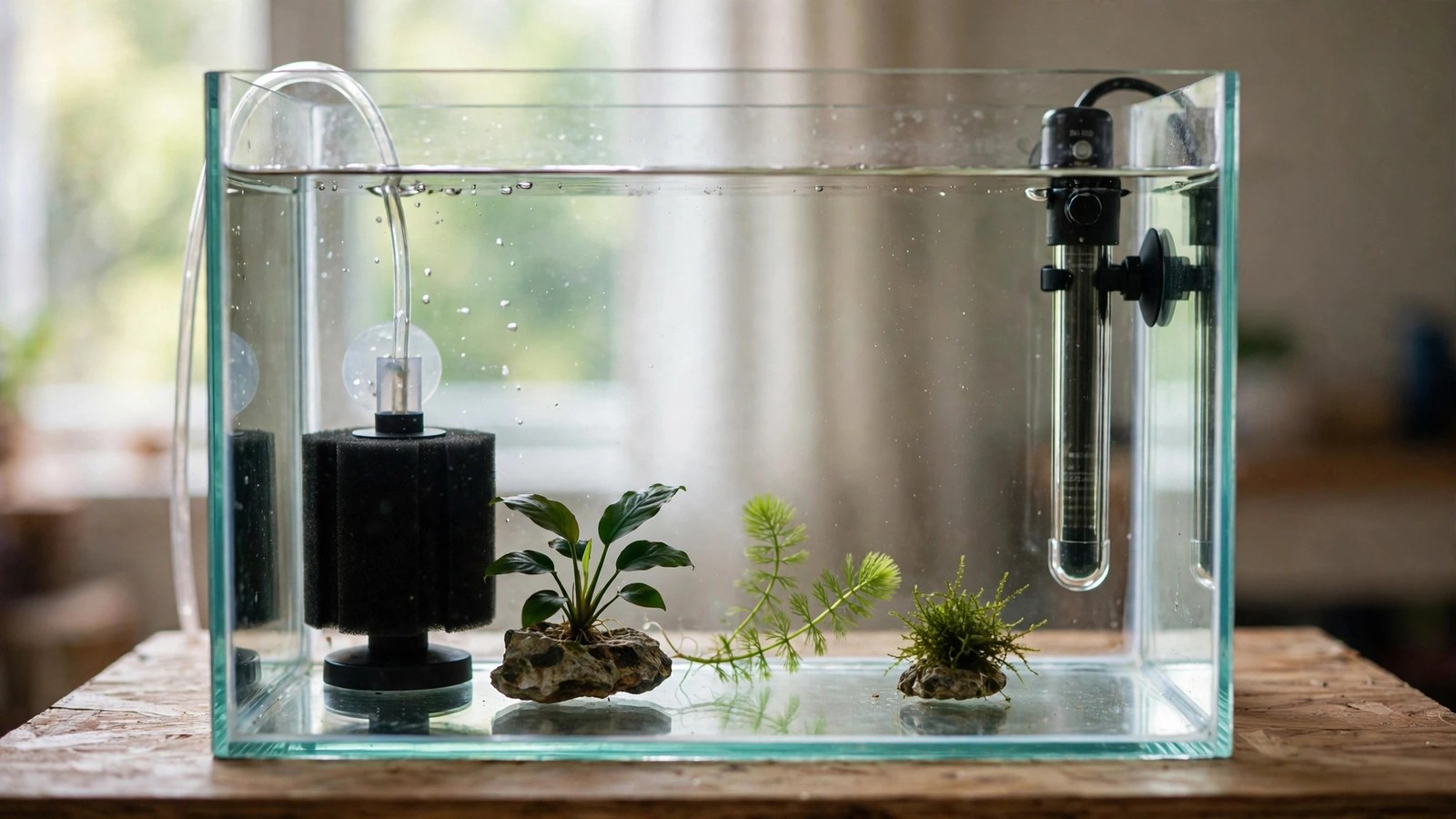
Every experienced hobbyist has a story about the "free" plant that cost them months: the snail infestation, the hydra outbreak, the algae species they'd never seen before. Quarantining new plants — holding them in a separate tank for observation before they join your display — is how you stop paying that tuition. A plant quarantine tank doesn't need to be fancy; it needs to be separate, observable, and inhospitable to whatever might be hitching a ride. Here's how to set one up and run it.
Why Quarantine When Dips Exist?
Dips (peroxide, bleach) kill what's exposed on the plant's surface right now. Quarantine catches everything else:
- Eggs that hatch later — snail eggs surviving a dip hatch in days; in quarantine, you see the babies before they reach your display.
- Pests in egg or dormant stages — hydra, planaria, damselfly nymphs, and parasites with life cycles longer than a 2-minute dip.
- Algae spores that germinate later — a plant that looks clean on arrival can sprout thread algae a week later in quarantine, where it's a 30-second fix instead of a display-tank infestation.
- Plant health assessment — is this plant actually healthy, or was it dying at the shop? Two weeks of observation answers definitively.
- Transition melt in isolation — emersed-grown plants melt on arrival; in quarantine, the mess happens where it doesn't matter. See our acclimation guide for the melt timeline.
The professional standard is dip + quarantine: dip kills the obvious, quarantine catches the rest. Either alone is good; together they're as close to guaranteed clean as the hobby gets. Our quarantine protocol guide covers the procedure; this article is about the tank itself.
The Setup: Simple and Functional
Tank
A 5–10 gallon tank (or even a clean plastic storage tote) is plenty. It doesn't need to be pretty — it needs to hold water and let you see everything. Bare-bottom or a thin layer of sand: bare-bottom makes pests and eggs maximally visible; sand is kinder to rooted plants during longer quarantines. Avoid aquasoil — its ammonia leach complicates observation, and you don't need its nutrients for a temporary holding tank.
Filtration
A sponge filter driven by a small air pump is ideal: gentle flow (won't batter delicate new plants), no intake to trap leaves, biological filtration, and cheap enough to dedicate permanently to quarantine. Keep a spare cycled sponge in your main tank's filter — when you need the quarantine tank, move the seeded sponge over and it's instantly cycled. This trick eliminates the "quarantine tank isn't cycled" problem entirely.
Light
A basic LED on a timer, 6–7 hours daily at moderate intensity. The goal is keeping plants alive and growing (so you can observe them), not showcasing them. Too much light grows algae that obscures observation; too little melts the plants you're trying to assess. A cheap clip-on plant light is perfect.
Heater
A small adjustable heater holding 74–76°F — warm enough for tropical plants and for pest eggs to hatch (cold water slows hatching, which defeats the purpose of observation). In a warm room, you may not need one; verify with a thermometer rather than assuming.
Everything else
- Lid or cover: prevents jumpers (if you hold anything mobile) and reduces evaporation. A simple glass lid or even plastic wrap works.
- Thermometer: the stick-on kind is fine.
- Dedicated tools: a net, tweezers, and siphon hose that never touch the main tank. Cross-contamination via shared tools is a classic quarantine failure — label them.
- No substrate fertilizers needed; dose a little all-in-one liquid weekly so plants don't starve during observation. That's it — this isn't a display tank.
Total cost: $30–60 using basic equipment, much of which you may already own. The seeded-sponge trick means it can sit dry in a closet between uses and be running in 20 minutes when new plants arrive.
Essential for conditioning the small spare-tank water before plants go in: Seachem Prime.
Running Quarantine: The 2–4 Week Protocol
Day 0: Intake
- Dip new plants first (bleach for unknown sources, peroxide for trusted ones), neutralize, rinse.
- Place in the quarantine tank. Floaters float; stems can float or be loosely planted in the sand; rhizome plants rest on the bottom.
- Note the date and source on a piece of tape on the tank. You'll thank yourself later.
Days 1–7: Watch for the obvious
Daily 60-second inspections: snail babies on the glass (tiny moving dots), hydra (small white tentacled polyps on glass), planaria (arrow-headed worms, usually nocturnal — check with a flashlight after lights-out), algae sprouting on leaves, unexpected melt beyond normal transition melt. Remove anything suspicious immediately — tweezers, siphon, or targeted peroxide spot treatment.
Days 8–14: Watch for the delayed
Snail eggs hatch in 1–3 weeks depending on temperature and species — week two is prime hatching time. Keep inspecting. This is also when latent algae appears and when you'll know whether the plant is genuinely healthy or was dying slowly at the shop.
Days 14–28: Extended hold (for high-risk sources)
Plants from ponds, wild collection, or tanks with known pest issues deserve the full month. Most parasites and pest life cycles complete within 3–4 weeks at tropical temperatures — a clean month is strong evidence of clean plants. For reputable nursery or tissue-culture plants, two weeks is plenty (tissue culture can often skip quarantine entirely — it's sterile by production).
Graduation day
Plants graduate when: no pests observed for the full hold period, no unexplained algae, and the plant shows healthy new growth (proof it's viable, not just surviving). Move to the display tank and acclimate normally. Drain quarantine water (don't pour it into the display — it held the suspects), and either keep the tank running (if more plants are coming) or break it down.
Quarantine Tank Maintenance
It's a simple tank, but not a no-maintenance tank:
- Weekly 30–50% water change — small volume + rotting melt material = fast water quality decline. This is the main chore.
- Remove dead leaves promptly — quarantine melt is expected; remove the mush so it doesn't foul the small volume.
- Light weekly fertilizer dose — half-strength all-in-one keeps plants fed without fueling algae in the simple setup.
- Between uses: break down completely, bleach the tank and equipment (1:20 solution, rinse well), dry thoroughly. Drying kills almost everything — a bone-dry tank stored for a week is a reset. Re-seed with the spare sponge from the main tank on next use.
Small glass tanks get dirty fast; a floating magnetic cleaner keeps viewing panels clear without a full teardown: Mag-Float algae cleaner.
What Quarantine Can't Do (Honest Limits)
- It can't detect everything. Some pathogens and parasites have dormant stages lasting months. Quarantine dramatically reduces risk; it doesn't eliminate it to zero. Nothing does.
- It doesn't replace dips. A pest visible on day 1 could have been killed by a dip on day 0. Use both.
- It's only as good as your observation. A quarantine tank you never look at is just a second tank growing pests. The daily 60-second check is the actual mechanism — the tank is just the venue.
- Tissue-culture plants don't need quarantine (sterile production), and quarantining them just adds pointless transition stress. Dip not needed either — rinse the gel and plant.
Frequently Asked Questions
Do I really need a separate tank? Can't I quarantine in a bucket?
A bucket works for short holds (a few days) but fails for real quarantine: no filtration (ammonia builds), no light control (plants suffer), poor visibility (can't observe properly). For the 2–4 week protocol, a filtered, lit tank is meaningfully better. That said, a bucket with daily water changes beats no quarantine at all — don't let perfect be the enemy of good.
Can I quarantine fish and plants together?
Not ideally. Fish quarantine often involves medications that harm plants, and plant quarantine conditions (bright observation light, frequent disturbance) stress fish. Worse, combining them lets fish parasites meet plants that then carry them to the display. Run separate quarantines — the plant tank described here, and a separate simple tank for fish. The spare-sponge trick works for both.
How do I know how long to quarantine?
Two weeks minimum for reputable sources; four weeks for ponds, wild plants, or unknown-source tanks. The deciding factor is pest life cycles at your temperature: most hatch/emerge within 2–3 weeks at 74–76°F. When in doubt, go longer — the cost of an extra two weeks is trivial compared to a display-tank infestation. Tissue culture: zero days.
What should I do if I find pests in quarantine?
Congratulations — the system worked. Identify the pest, treat in the quarantine tank (where aggressive treatment is safe): manual removal + targeted treatment for snails/hydra, extended observation for algae, bleach re-dip for severe cases. Only graduate the plants after a full clean observation period following the treatment. Never "treat in the display tank and hope" — that's how you got into this hobby's horror stories.
Is quarantine overkill for plants from a trusted local shop?
Less necessary, but not overkill. Even good shops receive plants from wholesalers, hold them in shared systems, and can't inspect every leaf. Snail eggs are the great equalizer — they arrive on plants from the best shops in the world. A two-week hold for shop plants is cheap insurance; reserve the full month for riskier sources.
The Cheapest Insurance in the Hobby
A $40 quarantine setup, a seeded sponge, and two weeks of 60-second daily glances — that's the entire price of never introducing snails, hydra, or mystery algae to your display tank again. Every keeper who quarantines has a story about the pest they caught in quarantine; every keeper who doesn't has a story about the pest they caught too late. Set up the tank before you need it, and make dip-plus-quarantine the unskippable ritual for every new plant that enters your home.