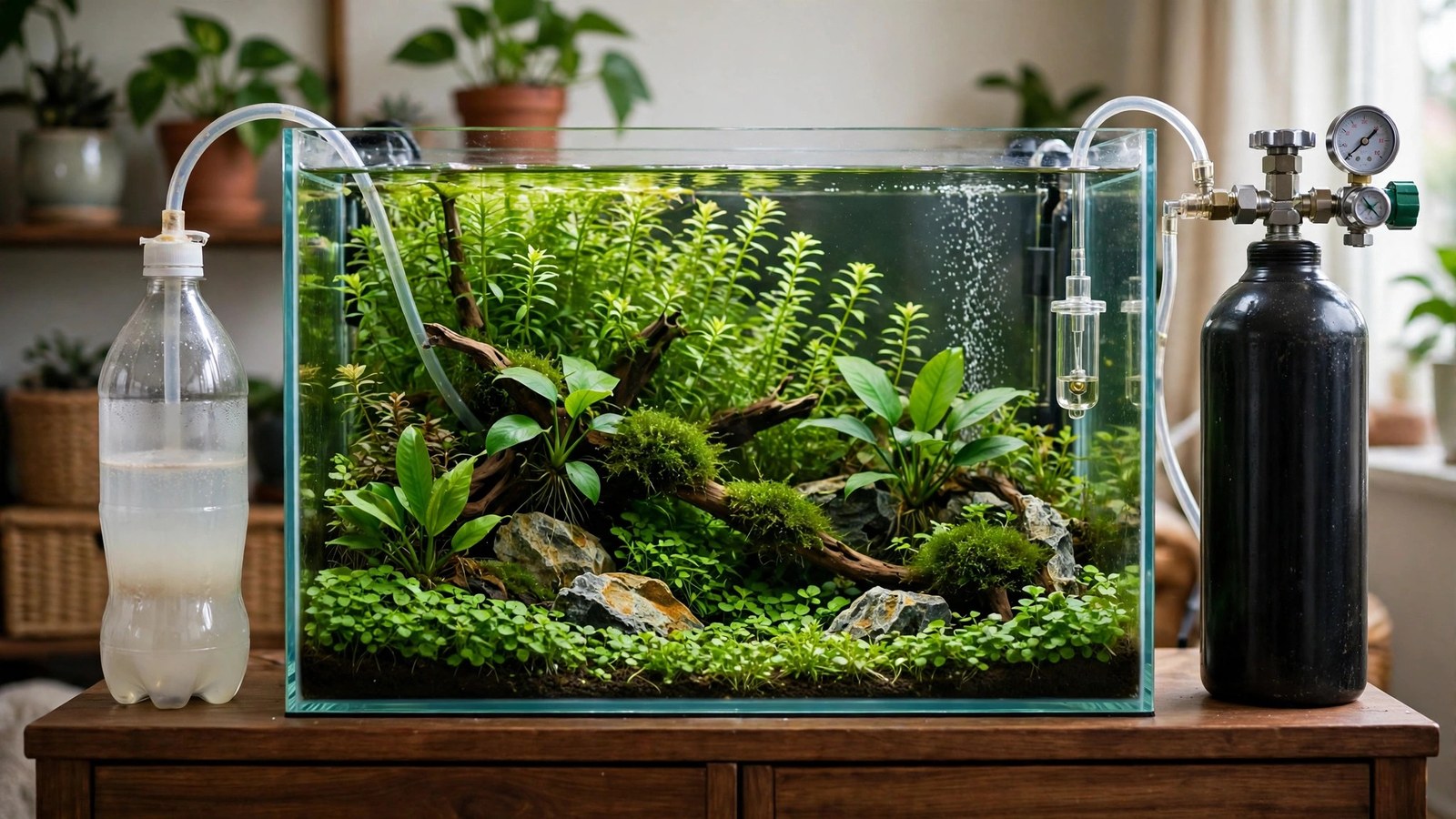
The most expensive CO2 mistake in this hobby isn't buying the wrong system — it's a $70 single-stage regulator dumping a dying cylinder's last gas into your tank overnight while you sleep. It has wiped out entire shrimp colonies. The DIY CO2 vs pressurized CO2 debate exists because both paths can fail you: homemade rigs fade mid-cycle and feed algae, while pressurized setups punish sloppy component choices. Match the system to your tank and light level, and you only buy once.
Below: honest numbers — real startup and yearly costs, refill schedules, and the tank-size thresholds where each system wins. If you've never built a homemade generator, start with DIY CO2 for Aquarium Plants: Yeast & Citric Methods for the full step-by-step on both build types.
DIY CO2 vs Pressurized CO2 at a Glance
The whole decision on one screen — for most people, the consistency and tank-size rows settle it.
| DIY CO2 (yeast or citric acid) | Pressurized CO2 (cylinder + regulator) | |
|---|---|---|
| Upfront cost | $15–30 (yeast bottle build) · $45–80 (citric-acid kit with gauge) | $200–350 (cylinder + regulator with solenoid + diffuser) |
| Yearly running cost | ~$10–20 (sugar, yeast, citric acid, baking soda) | ~$50–90 (cylinder refills) |
| CO2 consistency | Rises, peaks, then fades over 2–6 weeks per batch — swings invite algae | Rock-steady: the needle valve holds an exact bubble rate for months |
| Control (on/off, tuning) | Runs 24/7 on yeast; citric kits can add a solenoid and needle valve | Solenoid shuts gas off at night on a timer — saves gas, prevents pH crashes |
| Tank-size suitability | Up to ~10–15 gallons, low to medium light | 10 gallons and up — the only practical choice for 20+ gallons and high light |
| Maintenance effort | Mix a fresh batch every 2–4 weeks | Refill the cylinder every 3–6 months; glance at the bubble count weekly |
| Safety notes | Low pressure, but a clogged line can over-pressurize a bottle — always include a check valve | Secure the cylinder upright; a dual-stage regulator prevents end-of-tank dump |
DIY CO2: The Budget Path
DIY CO2 comes in two recipes. The classic yeast build — a 2-liter soda bottle, sugar, and baker's yeast — costs $15–30 in parts and pennies per batch. It peaks around day 4–5, then fades; expect to remix every 2–3 weeks. The citric-acid method reacts citric acid with baking soda in a dual-bottle kit ($45–80 with gauge); it holds steadier pressure, runs 4–6 weeks per charge, and costs roughly $15–20 a year in dry chemicals.
The real trade-off is consistency. Output follows your recipe's life cycle, so CO2 swings week to week — and swinging CO2 is a top trigger for hair algae. That is why DIY shines in small, low-light tanks, where demand is modest and stable-ish gas is plenty. Our yeast vs citric acid DIY CO2 comparison picks the right build, and how long DIY CO2 lasts per batch helps you plan refill day. On a hard budget, the 5 cheap CO2 systems for planted tanks roundup ranks the low-cost options that actually work.
Pressurized CO2: The Set-and-Forget Path
Pressurized CO2 is a refillable cylinder feeding gas through a regulator, solenoid valve, bubble counter, and diffuser. A 5 lb cylinder ($60–120), a quality dual-stage regulator with solenoid ($90–160), and diffuser plus tubing ($20–40) put you at $200–350 all-in. A $20–30 refill lasts 3–6 months on a 40–75 gallon tank — roughly $50–90 a year.
What you pay for is control. The needle valve holds an exact bubble rate for months, and the solenoid cuts gas when the lights go out — plants only use CO2 in light, so nighttime injection just drops pH and wastes gas. Stable, timer-synced CO2 is the difference between a tank that pearls and a tank that grows algae.
Two buying notes. First, get a dual-stage regulator — our best CO2 regulators for planted tanks roundup explains why — because a single-stage unit can dump a dying cylinder's gas overnight. Second, size the cylinder to your tank: our CO2 cylinder sizes guide shows how long each lasts, and the CO2 setup walkthrough for beginners covers leak-checking your first assembly.
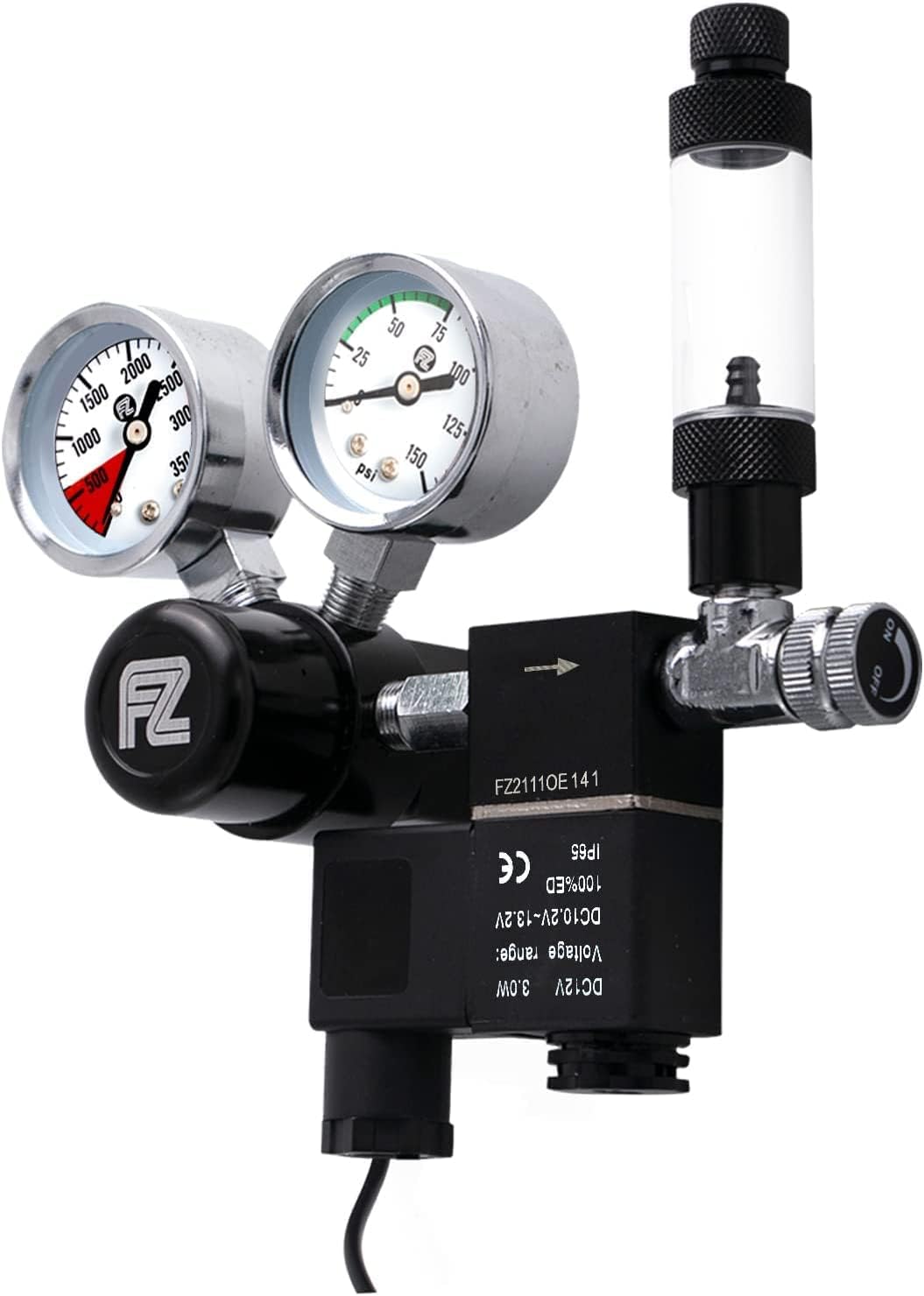 ★4.2
Fzone Pro Series Dual Stage CO2 Regulator
Check Price on Amazon ★4.2The Honest Math: When DIY Stops Being Cheap
Run the two-year numbers on a 40-gallon tank. Pressurized: ~$280 upfront plus ~$60 a year in refills — roughly $400 over two years. Citric-acid DIY: ~$60 upfront plus ~$20 a year in chemicals — roughly $100. On pure cash, DIY wins by a mile.
But cost isn't just dollars. A yeast build needs remixing ~17 times a year — each a 20-minute chore. Over two years that's roughly 11 hours of maintenance versus two cylinder swaps. On 20+ gallon tanks, pressurized pulls even on time alone — and decisively ahead on stability. DIY's sweet spot is where the refill grind is trivially small: nano tanks that sip gas.
The Verdict: Which System for Your Tank
- 10 gallons or less, low to medium light (betta tanks, shrimp cubes, desktop nanos): DIY is genuinely the smart money. A yeast bottle or small citric kit supplies plenty.
- 10–20 gallons, medium light: either works. A citric-acid kit holds its own here; entry-level pressurized buys you solenoid convenience and a higher growth ceiling.
- 20+ gallons, high light, or carpeting and red plants: pressurized, full stop. Gas demand is too high and too constant for bottle chemistry — holding the 15–30 mg/L demanding plants need (Tropica's CO2 and fertiliser guide) is nearly impossible with a fading DIY batch.
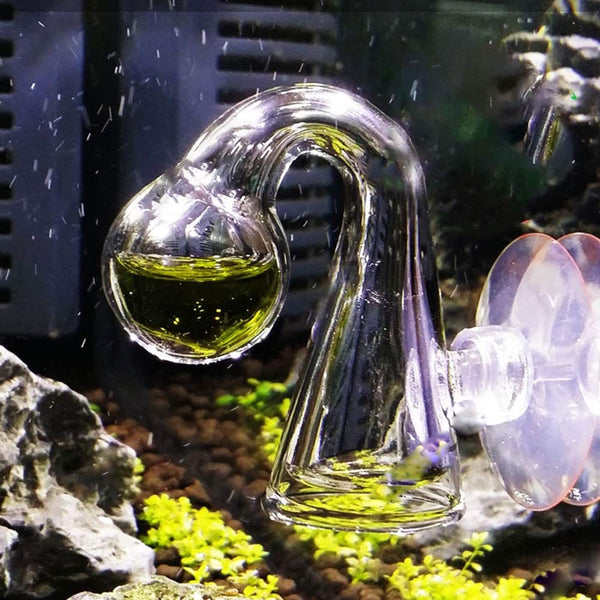 ★4.6
FZONE Glass CO2 Drop Checker Kit
Check Price on Amazon ★4.6Frequently Asked Questions
Can I run DIY CO2 on a 55-gallon tank?
You can, but you shouldn't. A 55-gallon tank needs several 2-liter yeast bottles or a large citric rig in parallel, and output still swings. Remixing multiple bottles every 2–3 weeks gets old fast, and inconsistent CO2 invites algae. A 5 lb pressurized cylinder is steadier, cheaper in effort, and the sane choice at this size.
How many bubbles per second should I start with?
There is no universal number — bubble size varies by counter. A safe start is ~1 bubble per second on a 30–40 gallon tank, half that on a nano. Wait 48 hours, check your drop checker (aim for green), and watch livestock: gasping at the surface means dial it back. Increase only when plants show they want more and animals stay calm.
Is it safe to leave DIY CO2 running overnight?
Mostly yes on small tanks, since DIY output is low — but it still adds CO2 while plants aren't using it, which can dip pH by morning. Run an airstone on a timer at night to off-gas the excess, or use a citric-acid kit with a solenoid that shuts off with your lights. Keep some surface agitation so oxygen stays up overnight.
Yeast or citric acid — which DIY method is better?
Citric acid wins on steadiness: it holds pressure longer, runs 4–6 weeks per charge, and pairs with a needle valve and solenoid. Yeast wins on startup cost — a soda bottle and pantry sugar get you going for under $20. Pick yeast for a first nano experiment; pick citric if you want a DIY system you'll actually keep running long-term.
Do I really need a solenoid on a pressurized system?
Not strictly — tanks do run CO2 around the clock — but a solenoid is the best $25–40 you will spend. It shuts gas off at night when plants can't use it, stretching refills and preventing morning pH crashes. Wire it to your light timer, with CO2 starting about an hour before lights-on.
Choose the system your tank actually needs, not the one the forums hype. A $25 yeast bottle on a 5-gallon betta tank grows lush plants for years; a $300 pressurized rig there is theater. Flip the sizes and the reverse is true. Start low, watch your livestock, and buy CO2 gear only once.