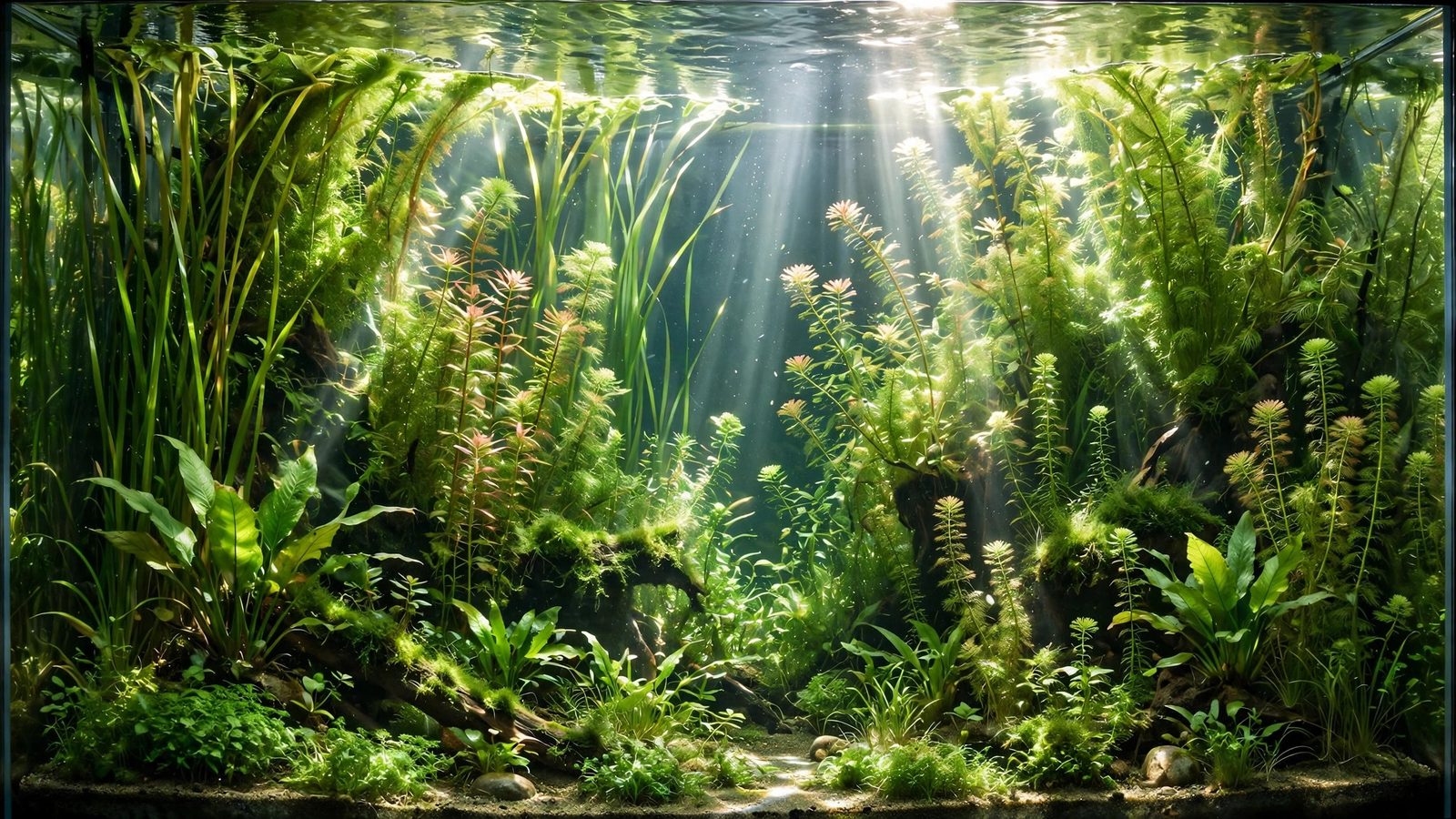
A 26-inch column of water is a lie detector for aquarium lights. The bar that looked blinding over your old 12-inch cube now leaves the carpet in shadow and your red stems stretching like they are reaching for a window. Choosing the best light for deep planted tank setups is not about buying the brightest fixture — it is about buying the one that still delivers usable light at the substrate. This guide is the deep-tank companion to our best aquarium lighting for planted tanks roundup — everything here is filtered through one lens: PAR at depth.
Why Depth Punishes Weak Fixtures
Water eats light. Every inch absorbs and scatters photons, so a fixture that floods the surface can still leave the foreground carpet starved at 24 inches. Headline wattage and lumen counts say nothing about where the energy lands.
Two fixtures with the same wattage can behave completely differently here. A wide, even spread lights the surface beautifully and the substrate poorly; a concentrated beam with tight optics punches through. Shop for a deep tank by asking one question first: how much of this fixture's output survives the trip down.
The Best Light for Deep Planted Tank Use: Four Buying Criteria
1. Optics and beam angle
The beam angle is the most important deep-tank spec, and the one manufacturers mention least. A narrow beam (90° or tighter) keeps photons travelling downward in a column; a wide beam (120°+) sprays them sideways, lighting the glass instead of the substrate. If the spec sheet hides the optic angle, treat the fixture as wide-beam by default and demand more output headroom.
2. Mounting position
Distance is the enemy. Every inch between the LEDs and the water stretches the beam cone and thins the light before it even enters the water. A fixture at the waterline delivers more substrate PAR than the same fixture hung a foot above — Fluval recommends mounting the Plant 3.0 directly above the surface for exactly this reason. Hanging kits give adjustability and a cleaner look, but if penetration is the priority, lower beats higher. Details on positioning live in our hanging light height guide.
3. Output headroom you can actually dim
You need more raw output than a shallow tank — aimed output. Look for 1% dimming steps or app control, because the right deep-tank light is usually a strong light run at 60–80%, not a weak light at 100%. That headroom lets you tune intensity to your plants and CO2 level instead of being stuck at a single brightness.
4. Spread vs. spot architecture
Long bars spread light evenly — great coverage, weaker penetration per inch. Compact spot-style fixtures or dense multi-row bars concentrate output and punch deeper, but cover less area, so a wide tank may need two. For 24 inches and up, favour concentrated architecture and budget for the second unit up front rather than discovering dark corners six months in.
Four Fixtures Compared for Deep Tanks
These are the four fixtures planted-tank keepers shortlist most, judged strictly on depth-relevant traits — no scores, no invented figures, just how each behaves in a tall tank. Spectrum questions are covered in our light spectrum for aquarium plants guide.
| Fixture | Mounting | Spread character | Deep-tank verdict |
|---|---|---|---|
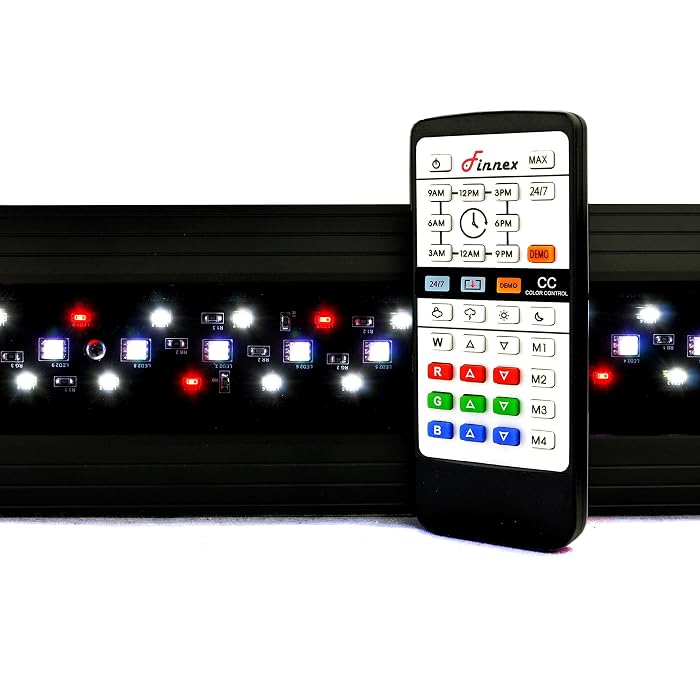
| Finnex Planted+ | Rim-mount bar | Wide, even, linear | Honest budget pick for low-to-medium light plants; high-demand carpets and red stems at 24+ in want more headroom or a second unit. |
| Fluval Plant Spectrum 3.0 | Rim-mount bar | 120° per-LED dispersion (per Fluval's spec), full app control | Mounts flush at the waterline — where penetration gains are biggest. Compensate for its wide dispersion with close mounting, not wattage. See Fluval's official Plant 3.0 spec page. |
| Chihiros WRGB II | Rim-mount rail | Dense multi-row array, concentrated centre, per-channel tuning | The penetration favourite: dense diodes and strong reds hold colour and intensity at the substrate. Full line covered in our Chihiros aquarium light guide. |
| Twinstar S series | Rim-mount bar | Punchy output, wide coverage | Excellent in shallow-to-mid tanks; in deep tanks it needs close mounting to match concentrated fixtures at the substrate. More in our Twinstar LED lights for planted tanks guide. |
 ★4.5
Finnex Planted+ 24/7 HLC LED Light
Check Price on Amazon ★4.5How to Measure PAR at Your Substrate
Guessing is how deep-tank keepers buy a second fixture they never needed. Ten minutes with a sensor tells you the truth:
- Rent or borrow a PAR meter. Hold the sensor flat at substrate level with the water and fixture at their normal positions. Three points — front, centre, back — tells the whole story.
- Use a phone sensor app as a rough guide. Apps like Photone with a diffuser are not lab-grade, but they are consistent enough for before-and-after comparisons: measure at surface, mid-water, and substrate, and compare the ratio.
- Compare against your plants' needs. The light-need mapping for species lives in our guide to how much light aquarium plants actually need. Your measurement says where you stand; that guide says where you need to be.
Frequently Asked Questions
Can a single LED fixture light a 26-inch deep planted tank?
Yes, if it is a concentrated-output fixture mounted close to the waterline, and your plant choices match what actually reaches the substrate. Low-to-medium light plants are realistic; high-demand carpets and red stems at full density usually want a premium fixture or two units. The answer comes from a PAR reading at substrate level.
Are hanging fixtures always better for deep tanks?
No. For pure penetration, mounting close to the water surface usually beats hanging high, because extra air distance stretches the beam cone before light enters the water. Hanging kits win on adjustability, heat, and looks — the right call when the rim cannot take a fixture. If penetration is the priority, hang low or sit it on the rim.
Does spectrum matter more at depth?
Somewhat. Water absorbs red wavelengths faster than blue, so strong, tunable red channels keep reds and pinks looking right at the bottom. Full-spectrum WRGB fixtures with per-channel control let you compensate for what the column absorbs — but spectrum never saves poor optics. Penetration first, spectrum second.
How do I know if my current light reaches the substrate?
Measure it. Borrow a PAR meter from a club or use a phone sensor app with a diffuser, and take readings flat at substrate level in three spots: front, centre, back. Compare against your plants' light needs. It takes ten minutes and tells you whether you need a new fixture, a lower mounting position, or nothing at all.
Should I buy two fixtures instead of one strong one?
For tanks wider than about 24 inches, often yes: two modest fixtures overlapped give even substrate coverage and independent zone tuning. One strong fixture can leave dim wedges at the tank's ends. The exception is a tall, narrow tank like a cube, where one concentrated fixture with tight optics is the cleaner solution.
Penetration Before Wattage
Buy the fixture whose photons reach the carpet, and the tall tank that humbled everyone else's light becomes the best-looking tank in the room.