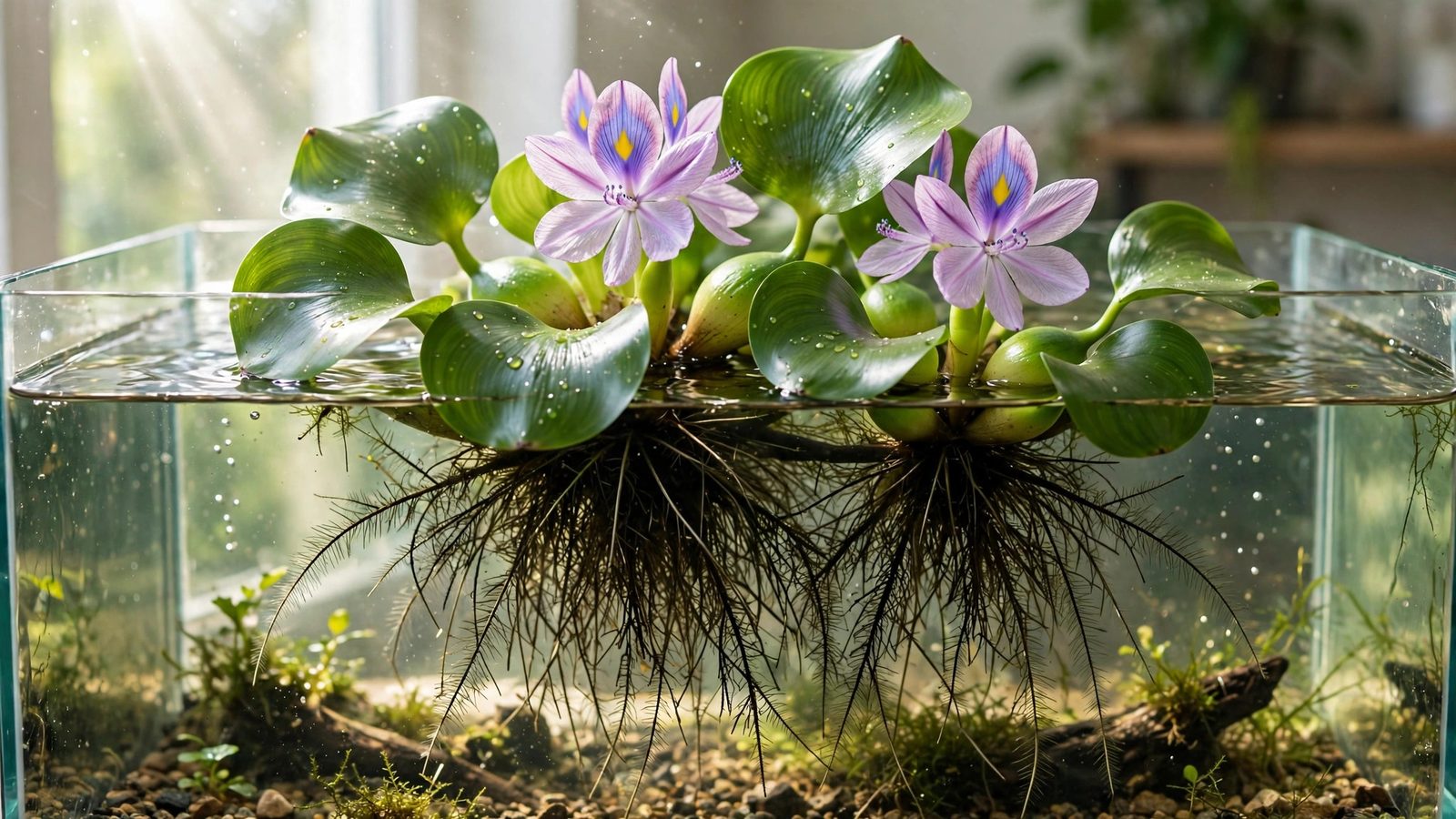
It is sold right next to the duckweed and frogbit, with a picture of those huge lavender blooms. If you are wondering whether a water hyacinth aquarium can work in your living room, you are asking exactly the right question — what thrives on a sunlit pond usually starves under a glass lid. This guide covers whether your tank can keep water hyacinth (Eichhornia crassipes) alive, and why the legal fine print matters more than the care sheet.
Why It Tempts You: Lavender Flowers, Fry Shelter, and Pond Prestige
Water hyacinth is the celebrity of the water garden world. Its waxy leaves sit on spongy, air-filled stalks that keep the whole plant buoyant, and in summer it throws up spikes of orchid-like lavender flowers. Underwater, its dense, feathery root mass forms a floating forest that fry, shrimp, and skittish fish treat as a nursery. No wonder sellers list it beside genuine floating plants for beginners.
And some of that is true — on a pond. In full sun it multiplies by daughter plants so quickly that pond keepers scoop out handfuls weekly. That vigor is the entire problem indoors. Everything that makes it spectacular on a pond — enormous size, ravenous appetite for light, explosive reproduction — fights the physics of a glass box with a lid.
Why a Water Hyacinth Aquarium Rarely Works Indoors
Start with light. This tropical plant evolved in open South American waterways under blazing sun. Aquarium hoods, even decent LEDs, deliver a fraction of that intensity, and lids cut it further. Under typical indoor lighting it stretches, then leaves yellow, shrink, and rot — most indoor attempts fail within four to six weeks.
Then there is size. In full sun it stands up to 3 feet tall, with rosettes the size of a dinner plate and roots trailing two feet down. A 20-gallon tall tank physically cannot hold a mature plant; even a 55-gallon gives one rosette little headroom. Indoors you would be fighting the plant's nature every week — not a care routine, a wrestling match.
Water conditions are the easy part. It prefers 66–80°F and tolerates pH from about 5.8 to 7.5, overlapping most tropical community tanks. It is a heavy feeder, pulling nitrates and phosphates straight from the water (see whether floating plants actually need fertilizer). But perfect water cannot compensate for dim light and cramped quarters.
 ★4.6
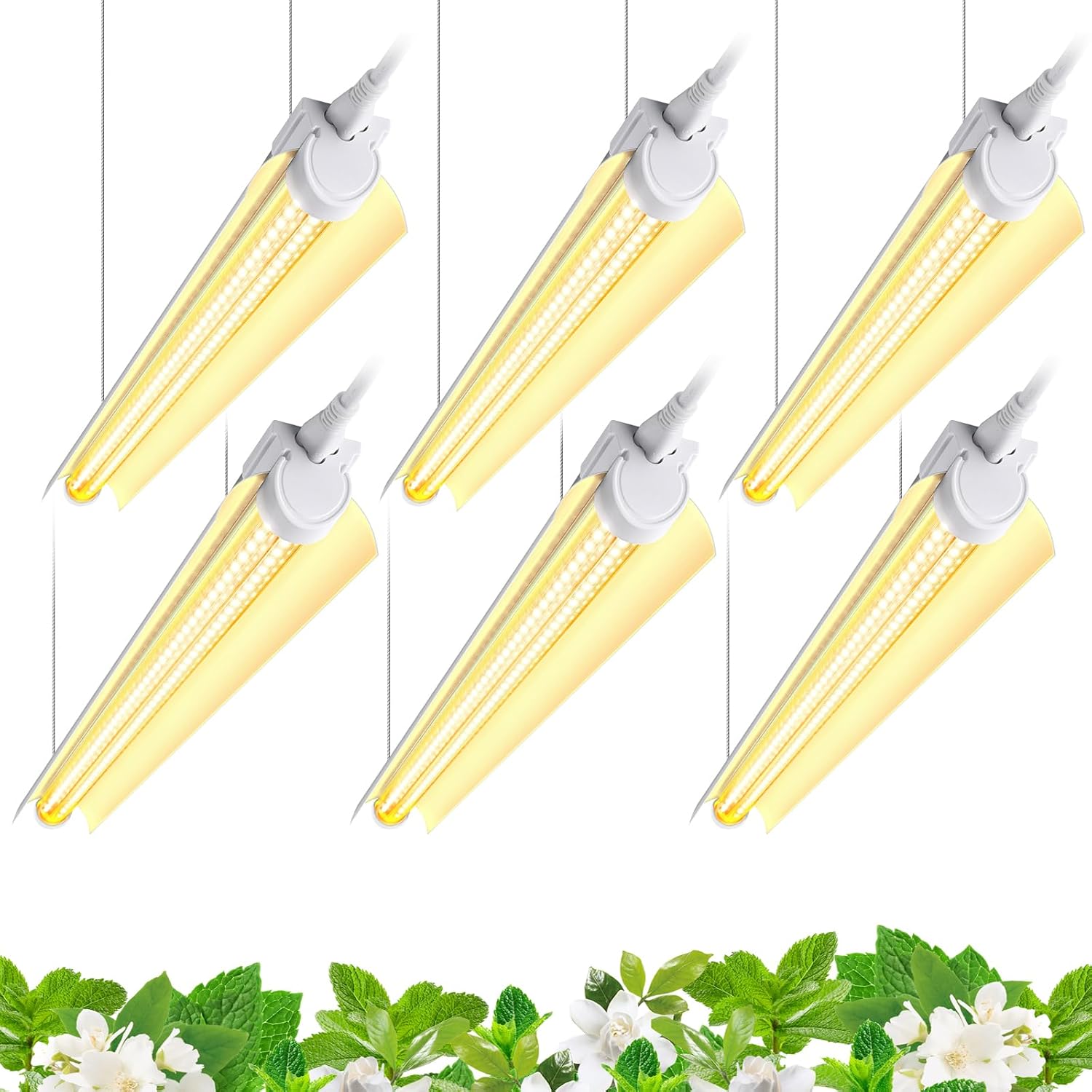
Barrina T8 LED Grow Light
Check Price on Amazon ★4.6Indoor Practicalities: Corral Rings, Thinning, and Heat
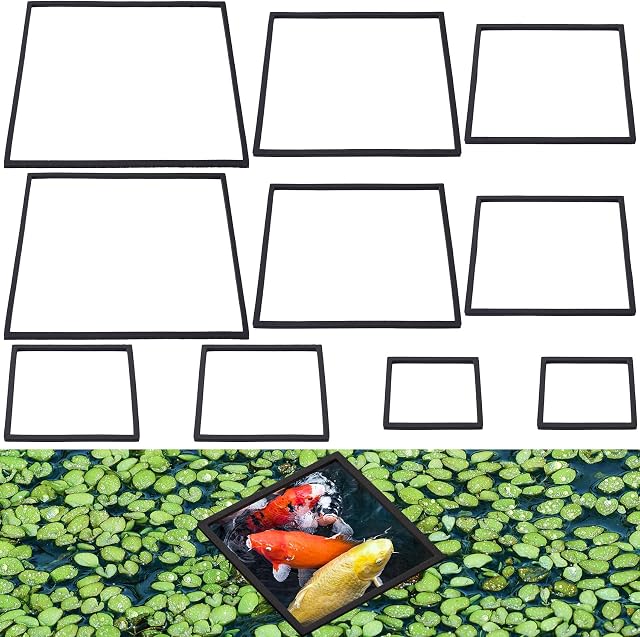
Suppose your tank is large enough. Containment is the next problem. Free-floating hyacinth drifts into filter intakes and piles against the glass. The standard fix is a floating corral ring — airline tubing joined into a circle, or a purpose-made plant ring — keeping the rosette under strong light while water moves around it.
Thinning is not optional. Each plant throws off daughter plants at its base, and a crowded mat shades its own lower leaves, which rot and foul the water. Remove extras weekly: compost them, bag them for the trash, or gift them to another pond keeper. Never dump them in a storm drain, ditch, or local pond. It sulks below the mid-60s°F, so it works in a heated tropical tank but stalls in an unheated room over winter.
 ★3.9
PAGOW Floating Plant Corral Rings
Check Price on Amazon ★3.9The Legal and Invasive-Species Warning You Cannot Skip
This is the section most listings skip, and it matters more than any care parameter. Water hyacinth is one of the world's most aggressive invasive aquatic weeds. Outside its native South America it has choked waterways on every continent — blocking boats, depleting oxygen, crowding out native plants. It spreads vegetatively and by seed, and fragments hitchhike on boats, nets, and equipment.
Because of that, it is illegal to possess, transport, or sell in several US states, including Texas, South Carolina, Alabama, Arizona, Arkansas, California, Florida, and Louisiana. Michigan prohibited it in 2026; parts of Australia restrict it too. South Carolina's environmental agency states it plainly: never purchase, propagate, possess, distribute, or sell this plant — it is against the law there. Check your state's noxious-weed list before buying.
Even where it is legal, the rule is simple: never release it into the wild, including "just one plant" into a neighborhood pond. Bag unwanted plants for the trash or compost them well away from water, and clean nets and equipment so fragments do not travel. For the official invasive-species profile, the South Carolina Department of Environmental Services water hyacinth page is a reliable, authoritative starting point.
Honest Alternatives That Give You the Same Look
If you want the floating-root jungle and fast nitrate uptake without the legal risk and 3-foot ambitions, the trade is easy. Water lettuce offers the same velvety rosette and trailing roots at a fraction of the size. Frogbit and red root floater cover standard tanks, and the azolla guide covers the mosquito fern for open-top setups. All pair with the easiest aquarium plants for a beginner community tank, and like hyacinth they help with algae control through shading and nutrient uptake — no pond required.
Frequently Asked Questions
Can you put water hyacinth in a fish tank?
Technically yes, but realistically only in very large, open-top tanks with intense overhead lighting. In ordinary lidded aquariums it starves for light within weeks. Outdoors in a pond it is spectacular; indoors it is one of the most commonly failed "aquarium plants" sold. Check your state laws — possession is illegal in several US states.
How big does water hyacinth get?
In full sun outdoors it reaches up to 3 feet tall, with dinner-plate rosettes and roots trailing up to 2 feet deep. Store-bought plants are juveniles — there is no dwarf variety. Indoors, cramped and dim conditions keep it stunted, but that stunting is the plant slowly failing, not a stable small size.
What water conditions does water hyacinth need?
Warm water from 66–80°F, pH roughly 5.8–7.5, and very strong light — near-direct-sun intensity. It is a heavy feeder that pulls nitrates and phosphates from the water, so it benefits from liquid fertilizer in a bare tank. Temperatures below the mid-60s°F stall its growth.
Is water hyacinth illegal to own?
In several US states, yes — including Texas, South Carolina, Alabama, Arizona, Arkansas, California, Florida, and Louisiana, where possession, transport, or sale can be against the law. Other states and countries restrict it too, and lists change. Always check your state's current prohibited-species list before buying or transporting it.
How do you dispose of unwanted water hyacinth safely?
Never release it into any waterway, pond, ditch, or storm drain. Bag it for the household trash, or compost it well away from water. Clean nets and equipment so fragments do not travel. A single fragment can start an infestation, so treat every piece as a risk.
What are the best alternatives to water hyacinth for aquariums?
Water lettuce gives the same rosette-and-roots look at a manageable size; frogbit and red root floater cover standard tanks; duckweed is the fastest nutrient sponge if contained. All give the shading, fry shelter, and algae-fighting benefits without the size, light demands, or legal baggage.
The Honest Verdict
Water hyacinth is a magnificent pond plant wearing an aquarium-plant costume. In a sunlit pond it is nearly unbeatable: fast, flowering, free fry cover. In a glass tank it is usually a slow-motion failure — too big, too light-hungry, too legally risky. With a large open-top tank, a strong grow light, and legal clearance it can be a fun short-term project. Otherwise, the floaters bred for aquarium life will make you happier — and your local waterways will thank you.