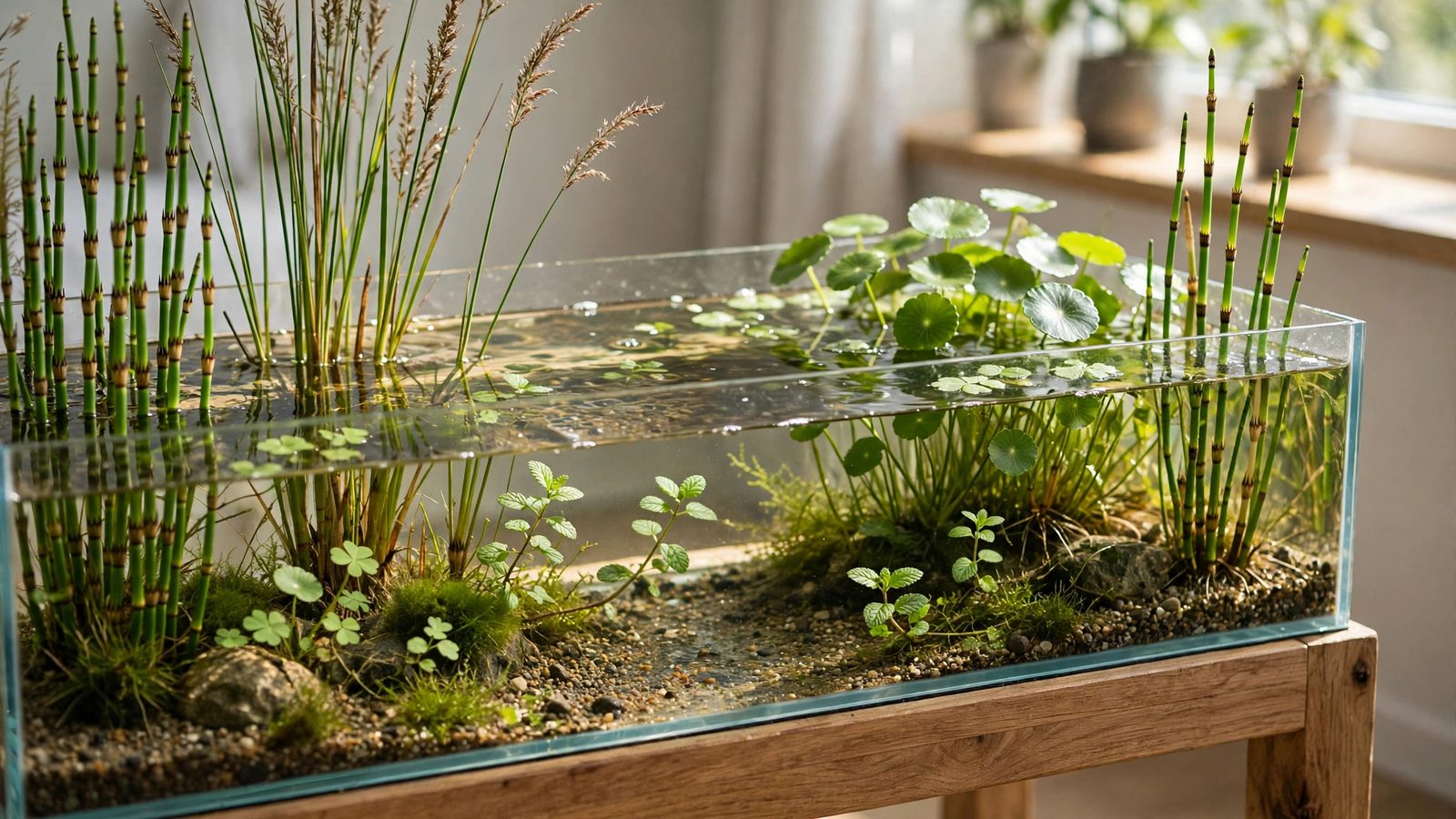
That $6 umbrella palm wilting on the garden-center clearance rack is a better aquarium plant than half the tissue-culture cups in the fish aisle. Pond margin plants aquarium keepers walk past every spring — umbrella sedge, sweet flag, pickerelweed, rushes — are built for wet roots, making them some of the toughest emergent plants you can grow. Most fail indoors for one reason: people plant them fully submerged, when nearly all want their crown in the air.
Why pond-margin species fit aquariums
Margin plants live with roots in flooded mud and leaves in air — exactly what a riparium or raised planter reproduces. They never pull CO2 from water, so they shrug off low-tech tanks, and because they breathe air most grow faster emersed than any submerged plant you own: a divided clump of sweet flag can fill a planter in eight weeks.
Open-top tanks look empty above the waterline without vertical green, and a clump of corkscrew rush or a pickerelweed spike gives height a closed lid can't offer. Our complete guide to freshwater aquarium plants shows where emergent species fit among the rest.
Pond Margin Plants Aquarium: Six Species That Thrive Indoors
These are garden-center staples, not rare imports — each has a cultivar or handling trick that works in a glass box. (Houseplants like pothos belong in a different article; this is about plants sold for the pond shelf.)
| Plant | Indoor size | Care level | Best use |
|---|---|---|---|
| Umbrella palm (Cyperus alternifolius) | 24–36 in | Easy; trims like grass | Open-top tanks 40+ gal |
| Japanese sweet flag (Acorus gramineus 'Ogon') | 10–12 in | Easy; slow, tidy spread | Foreground baskets |
| Pickerelweed (Pontederia cordata) | 24–48 in | Easy; hungry feeder | Large tanks |
| Corkscrew rush (Juncus effusus 'Spiralis') | 12–18 in | Easy; keep crown wet | Midground planters |
| Lizard's tail (Saururus cernuus) | 18–30 in | Easy; shade tolerant | Dim corners |
| Duck potato (Sagittaria latifolia) | 12–36 in | Easy; tuberous, seasonal | Wildlife-style setups |
Umbrella palm and sweet flag: read the label
Cyperus alternifolius is the clearance-rack champion: confined to a basket it rarely passes 30 inches, cuts at the base like grass, and drinks nitrates aggressively. Give it strong light or the tops go leggy.
Sweet flag is where the label matters: Acorus gramineus cultivars like 'Ogon' stay at 10–12 inches in neat fans, while Acorus calamus reaches 4–6 feet and spreads from any broken root fragment. Check the tag; buy gramineus.
Pickerelweed, rushes, lizard's tail, duck potato
Pontederia cordata is a native marginal with violet-blue spikes that bloom under strong indoor light — but confirm the species, because tropical pickerelweed (P. rotundifolia) is a noxious weed in Florida and several other states. Corkscrew rush wants its crown constantly damp; keep its planter base in water or the tips crisp. Duck potato grows from starchy tubers, dies back in winter, and resprouts — treat it like a bulb, not a failure.
Three ways to plant them
The single rule: the crown — where roots meet stems — must sit at or just above the surface, never inches underwater. Submerged crowns rot within two weeks.
- Potted on a shelf. Pot in a slotted pond basket of heavy aquatic soil, cap with gravel, and set it on an inverted pot or egg-crate risers so the crown clears the water by 1–2 inches. About $8 per planting.
- Hang-on riparium planter. A suction-cup or rim-hook planter holds a 3–4 inch pot with the crown well above the surface.
- Built-in shelf. In paludariums, plant directly into a land section of aquatic soil. The plant sets its own crown height — this method almost never fails.
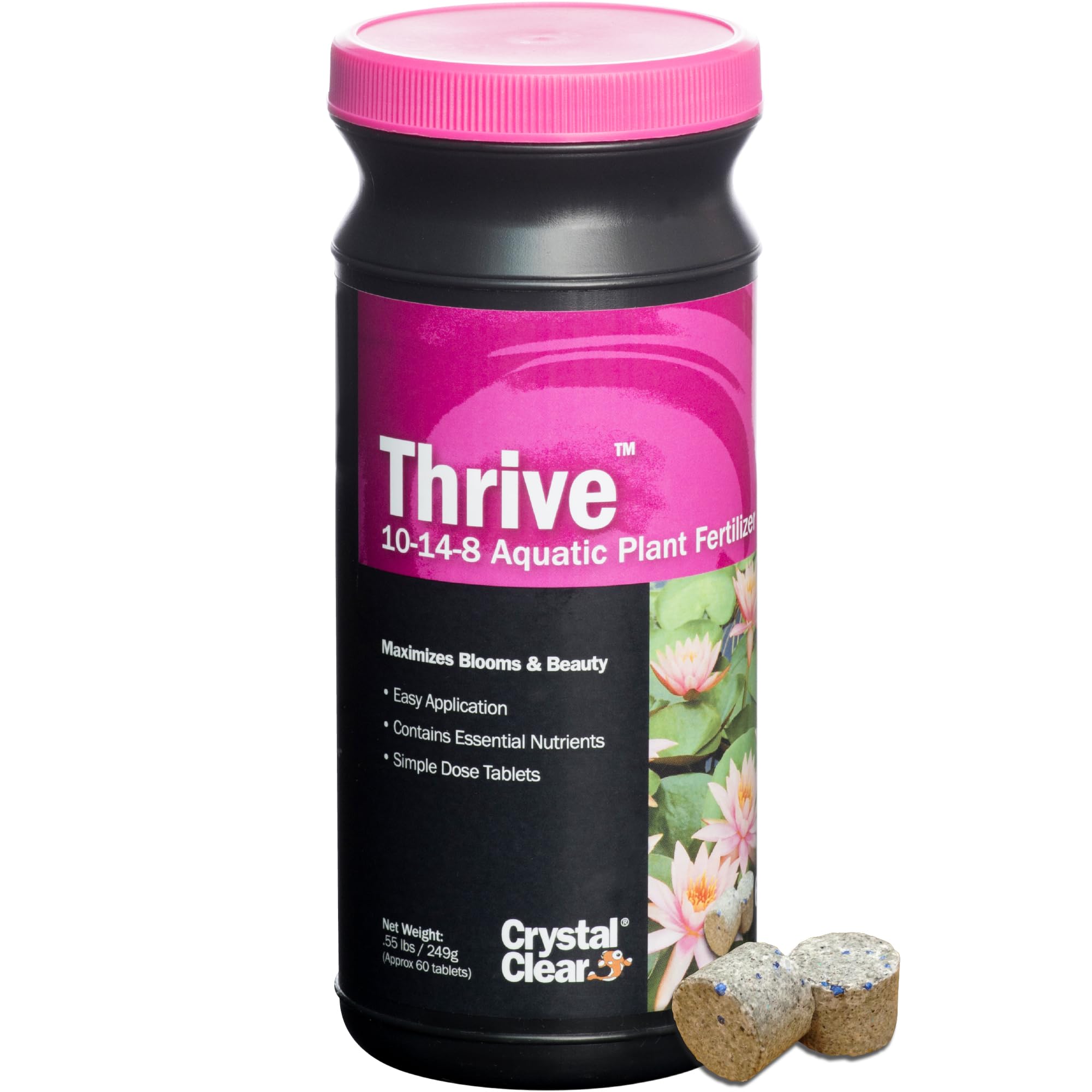
Use heavy clay-loam aquatic planting mix — sold for exactly this and cheaper than aquasoil per liter. Never use fluffy potting mix: it floats, clouds water, and its fertilizers can spike ammonia. Press one root tab per basket every 2–3 months; margin plants are heavy feeders, and a starved pickerelweed won't flower. The physiology is covered in our emersed-grown aquarium plants guide.
 ★4.3
CrystalClear Thrive Pond Plant Food
Check Price on Amazon ★4.3Winter: bringing pond plants inside
If your margin plants summer in an outdoor tub, bring hardy ones in before the first hard frost. Trim foliage to 2–4 inches, rinse off algae and snails, and hold baskets at 50–60°F with soil damp but crowns unsubmerged. A garage window or a basement shelf under a $20 shop light works.
Tropicals like umbrella palm won't survive a cold garage — move those straight into the aquarium under full light. For the full routine, see our fall guide to overwintering pond plants indoors.
Buying smart: the pond aisle is the cheapest plant shop
Pond plants arrive in April at $8–15 a pot and hit clearance from late August through September at 50–75% off — $3–5 for the same pot. Buy then, even if the tank isn't ready; they hold for weeks in a bucket of water. Pond clubs give away divisions every spring.
Buy potted over bare-root when you can — an established root ball transitions in days. Quarantine and rinse every purchase to shed pesticides and snails; see our tissue culture vs potted plants comparison and the emersed vs submerged buying guide.
Pond plants to avoid indoors
- Water hyacinth. Needs blazing light and a huge footprint, and is a prohibited noxious weed in Florida and restricted in several states — see the UF/IFAS invasive plant directory. Never release it into local waterways.
- Cattails (Typha). Six feet tall, with rhizomes that crack baskets and colonize substrate within a season.
- Parrot's feather (Myriophyllum aquaticum). Invasive across most of the US; illegal to sell or possess in many states.
- Purple loosestrife (Lythrum salicaria). Banned in most states; do not buy, do not plant.
- Acorus calamus — the 4-foot wild species, not the 12-inch gramineus cultivars.
The bottom line
Pond margin plants are the hobby's most underpriced resource: nursery-grown, pest-tolerant, and faster than almost anything in the fish aisle, as long as the crown stays in the air. Start with one divided pot of sweet flag or corkscrew rush in a raised basket and watch it double in two months. For the submerged half of the tank, the easiest aquarium plants for beginners is a good companion read.
Frequently Asked Questions
Can pond margin plants live fully submerged?
No — nearly all rot if their crown sits more than an inch or two underwater for weeks. They are emergent by design: roots wet, leaves in air. A few, like Acorus gramineus, tolerate brief shallow submersion, but they need a raised basket or riparium planter long-term.
Which pond plant is best for a small aquarium?
Acorus gramineus 'Ogon' or 'Variegatus' — 10–12 inches tall, slow-spreading, happy in a 3-inch basket. Corkscrew rush is the runner-up at 12–18 inches. Avoid umbrella palm and pickerelweed in tanks under 30 gallons; their mature height overwhelms small setups and forces constant cutting back.
Do pond margin plants need CO2 or special fertilizer?
No CO2 — their leaves breathe air, so they skip the carbon limitation behind most injection. They are heavy root feeders, though: press one root tab into each basket every 2–3 months and use clay-loam aquatic soil. Unfed, flowering species like pickerelweed grow leaves but never bloom.
Will pond plants survive winter in my aquarium?
Tropicals like umbrella palm thrive in a heated tank all winter under good light. Hardy species like pickerelweed and duck potato prefer a cool dormant rest at 50–60°F with damp soil and trimmed foliage — they look dead but resprout in spring.
Are garden-center pond plants safe for fish and shrimp?
Yes, once prepared: rinse all field soil off the roots, trim dead foliage, and quarantine for a week to shed pesticides and hitchhiking snails. Buy from pond specialists rather than general nurseries when possible. Never use garden potting mix in the tank — its slow-release fertilizers can spike ammonia.