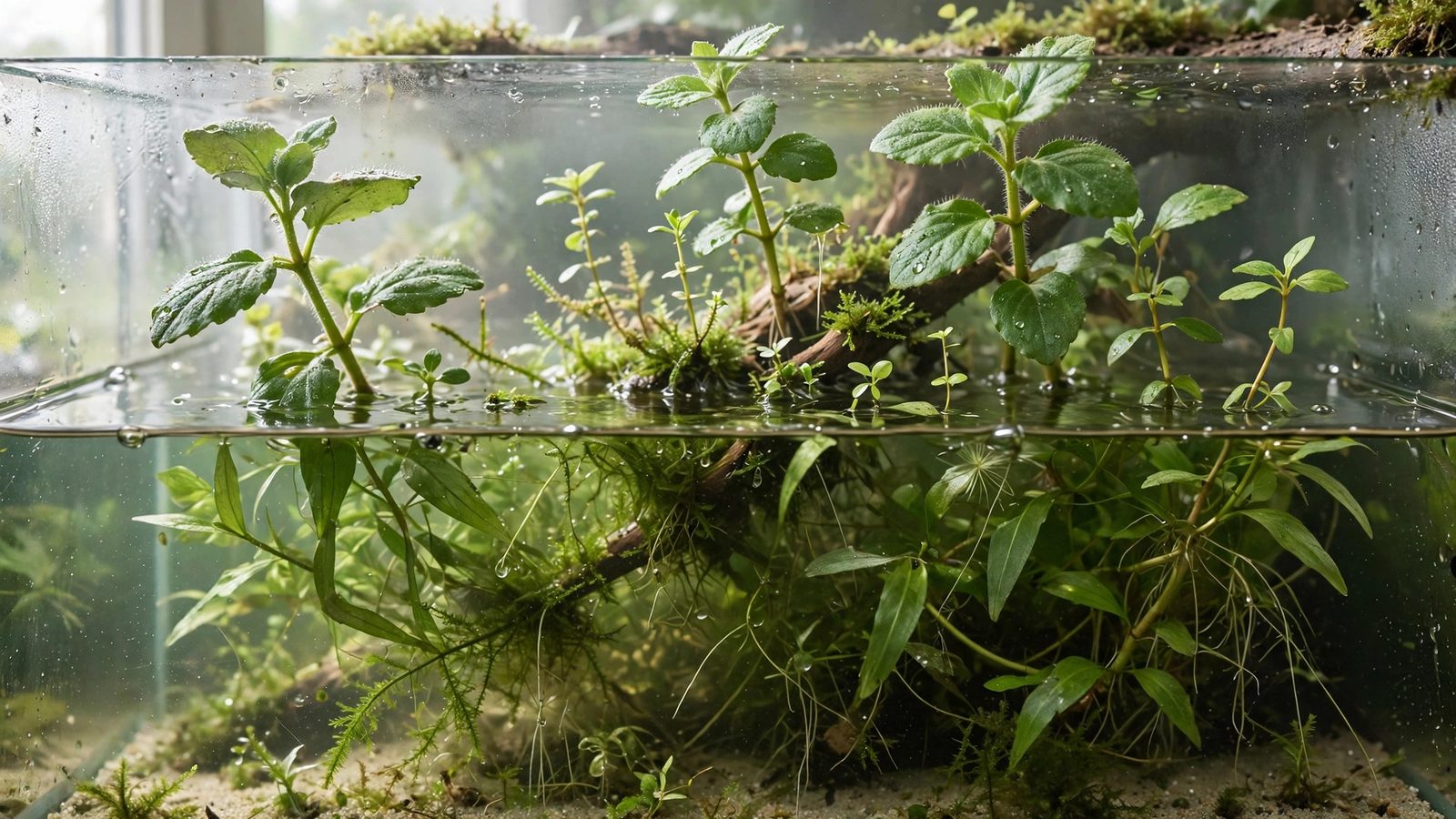
You brought home a lush, bushy plant from the shop, planted it with care, and within a week it turned to brown mush — and you were sure you had killed it. Almost every aquarist has lived that exact moment, and here is the twist: the plant was never an underwater plant to begin with. Most emersed grown aquarium plants are raised with their leaves in the air and only their roots in water, in humid nursery greenhouses. What you bought is a plant wearing its "air suit," and the melt you watched is it changing into its "water suit." Understanding that single fact changes everything about how you buy, plant, and judge new plants.
Why Your New Plant Melted: The Leaf Swap Explained
One plant, two bodies
Many aquarium plants are amphibious — they can live both above and below the waterline, but they build a completely different body for each life. An emersed leaf grows in air: it has a waxy cuticle to stop drying out, breathing pores (stomata) on its upper surface, and a stiff, thick structure built to hold itself up against gravity. Drop that same plant underwater and none of that hardware works anymore. Water is roughly 10,000 times denser than air and holds far less dissolved CO2, so a submerged leaf is built like a whisper — paper-thin, with almost no waxy cuticle, so gases and nutrients can diffuse straight through its surface.
Because the emersed leaves physically cannot breathe or feed underwater, the plant does the rational thing: it abandons them. It shuts down the old leaves, melts them down, reclaims what nutrients it can, and spends that budget on brand-new submerged leaves. That is the melt. It is not rot, it is not your fault, and it is not the plant dying — it is a wardrobe change, and it is dramatic.
The classic shop example is Rotala rotundifolia. In the pot at the store it has round, coin-shaped leaves. Two months later in your tank it is a feathery cascade of fine needle leaves, and you could be forgiven for thinking the shop mislabeled it. Ludwigia repens, Hygrophila polysperma, Bacopa caroliniana, and most stem plants pull the same trick.
What healthy transition looks like — and what dying looks like
Here is the timeline that separates a normal transition from a real problem. Days 1–3: the plant perks up, maybe yellows slightly at the edges. Totally normal. Days 4–14: the oldest emersed leaves go translucent, then mushy, melting from the base upward — while at the very same time you should see pinhead-sized new leaves appearing at stem tips and nodes. Those tiny new leaves are the whole verdict: if they are coming, the plant is succeeding. Weeks 2–4: the emersed foliage is mostly gone and submerged growth takes over; some plants, especially Cryptocoryne, may melt down to nothing but roots and a rhizome before bouncing back. Weeks 4–6: the plant is fully in its submerged form and growing steadily.
Dying looks different. Mushy stems, not just mushy leaves — that is rot, not transition. A rhizome that turns black or smells foul when you lift the plant is gone. And a plant that shows zero new growth of any kind after three weeks of stable conditions is probably not coming back. The rule of thumb: melting leaves with new growth is transition; melting with no new growth is trouble.
The Nursery Secret: Why the Plant Shop Sells You Air-Grown Plants
Why nurseries grow them emersed
Walk through a commercial aquatic plant nursery and you will see something surprising: most of the "aquarium plants" are growing in shallow trays of wet soil under misting nozzles, leaves in the open air. The reason is pure economics. In air, CO2 is free and unlimited, light is abundant, and growth can be three to five times faster than underwater. There is no algae to clean off, no water chemistry to balance, and the plants ship beautifully — firm, dry-ish foliage survives a week in a dark box far better than delicate submerged leaves would.
Even tissue culture plants — the sterile little cups beginners are told never melt — are grown emersed, in 100% humidity inside their sealed cups. That is why tissue culture plants also melt after planting, a fact that surprises a lot of buyers; the difference between potted and tissue culture is explained in detail in our guide to how tissue culture compares with potted plants. The rare exceptions are true aquatics like Vallisneria, which cannot grow emersed at all — Tropica's plant profiles note this explicitly, describing Vallisneria as a 100% aquatic plant "that will not grow emersed like most other aquarium plants."
How to spot emersed growth at the shop
Once you know the tells, you can read a plant pot like a label. Emersed-grown stems are stiff and upright, with leaves that feel leathery or waxy between your fingers. Look at leaf shape: round, broad, paddle-like leaves on a plant you expected to be feathery (Rotala, Ludwigia) means emersed stock. Check the base of the pot — emersed plants often have dense, white, vigorous root systems, because roots grown in damp soil are stronger than the fine feeder roots plants make underwater.
Another tell: many emersed stems have tiny hairs on the leaves or a slightly dusty, matte finish, while submerged leaves look glossy. If the plant has a flower stalk or a bud — dead giveaway, since most aquarium plants only flower in air.
Minimizing Transition Loss for Emersed-Grown Aquarium Plants
Planting-day technique
How you plant on day one sets the tone for the whole transition. First, get the plant out of its pot and rinse the rockwool or soil off the roots gently — leftover nursery media rots and fouls the substrate. Split dense pots into smaller portions; five small clumps planted an inch apart transition faster and more evenly than one big clump, because light and flow reach every stem. Plant stems deep enough that they stay put but shallow enough that the lowest node is not buried and rotting — about an inch into the substrate is the sweet spot for most stems.
For rooted plants like Cryptocoryne and Echinodorus, spread the roots out radially instead of bunching them; bunched roots rot from the center.
Should you cut off the emersed leaves?
This is the most argued question in the hobby, and the honest answer is: it depends on the plant. For stem plants, trimming aggressively is the pro move — cut the stems down to a few inches, strip the lower emersed leaves, and plant the bare stems. The plant will sprout submerged growth from every node, and you have removed the foliage that was going to melt and decay in your water column anyway, feeding algae. Our beginner-friendly stem plants roundup is a good place to pick forgiving species for this approach.
For rhizome plants and rosettes (Anubias, Java fern, Cryptocoryne, swords), do not defoliate. Their leaves are expensive to replace and they transition them gradually — an Anubias leaf grown emersed can photosynthesize underwater for months while the plant slowly adds submerged-form leaves. With Cryptocoryne, the special rule is: plant it, then do not touch it again. Crypts famously melt at the slightest environmental insult — new tank, moved pot, changed light — but the root system survives, and new leaves emerge from the crown in two to six weeks. Digging it up to "check" resets the clock.
The first month: stability over heroics
Transitioning plants are stressed plants, and stressed plants want one thing: boring stability. Keep light moderate for the first two weeks — blasting a fresh tank with high light while half the plants are melting is an algae invitation. Keep CO2 (if you inject) steady rather than high; fluctuating CO2 causes more melting than low CO2 does. Dose fertilizers conservatively — start at half strength and observe, since melting leaves are already leaching organics into the water, and excess nutrients plus decay equals algae.
Resist the urge to "rescue" melting plants by moving them, replanting them, or changing three parameters at once. Every intervention is another shock. Remove leaves only once they are fully mushy and detached — half-melted leaves are still photosynthesizing and feeding the transition. A quiet tank with consistent light, stable water, and patience transitions more plants successfully than any product ever will. If you want a forgiving plant list for this vulnerable period, start with easy aquarium plants that thrive without CO2; they ask the least of you while they change clothes.
Humidity is the bridge between emersed and submerged: misting.
 ★4.4
FLAIROSOL Botanica Plant Mister
Check Price on Amazon ★4.4Which Species Transition Hardest — and Easiest
Not all plants pay the same price for the wardrobe change. Here is an honest ranking of popular species, based on how their emersed and submerged forms differ and how hobbyists actually fare:
| Species | Emersed form | Submerged form | Transition difficulty | Notes |
|---|---|---|---|---|
| Cryptocoryne wendtii | Broad, waxy oval leaves | Narrower, ruffled leaves | Hard | Notorious "crypt melt" — can lose all leaves. Leave roots and crown alone; regrows in 2–6 weeks. |
| Monte Carlo | Tiny round leaves, compact | Smaller, denser carpet | Moderate–hard | Melts badly in low CO2; dry-start method avoids transition entirely. |
| Dwarf hairgrass | Stiff grassy blades | Finer, softer blades | Moderate | Old blades brown off while runners spread; trim emersed blades short at planting. |
| Echinodorus (swords) | Broad paddle leaves on stalks | Long strap-like leaves | Moderate | Sheds paddle leaves one by one over weeks; heavy root feeder — root tabs help. |
| Rotala rotundifolia | Round coin leaves | Fine needle leaves | Easy–moderate | Trim and replant tops; lower portions melt but nodes resprout fast. |
| Ludwigia repens | Round green leaves | Oval leaves, red under good light | Easy | Barely pauses; one of the most forgiving transitioners. |
| Bacopa caroliniana | Thick, succulent round leaves | Slightly elongated leaves | Easy | Slow but steady; emersed leaves often persist for weeks underwater. |
| Anubias barteri | Thick dark leaves | Nearly identical | Easy | Rhizome plants barely notice the change; do not bury the rhizome. |
| Java fern | Leathery green fronds | Nearly identical | Easy | Attach to wood or rock; old leaves may spot but rarely melt wholesale. |
| Pearl weed | Small round leaves | Smaller, brighter leaves | Easy | Melts a little, regrows a lot; trimmings root wherever they land. |
The pattern is simple: the more different the two leaf forms look, the harder the transition. Rhizome plants like Anubias and ferns — favorites in our epiphyte plants roundup — barely change at all, which is why they are the safest first purchase for a nervous beginner. And if you want to skip the whole drama, floating plants arrive exactly as they will grow, roots dangling in your water from day one, no wardrobe change required.
Frequently Asked Questions
Why did my new aquarium plant melt within days of planting?
Your plant was grown emersed — leaves in air, roots in water — at the nursery, which is how most commercial aquarium plants are raised. Its air-built leaves cannot function underwater, so the plant sheds them and grows new submerged leaves. This melt typically starts within the first week and is normal, not a sign you did something wrong. Watch for tiny new leaves at the stem tips: if they are appearing, the transition is working.
Should I remove melted leaves or leave them alone?
Remove leaves only once they are fully mushy and detaching — at that point they are just decaying matter feeding algae. Leave half-melted, yellowing leaves in place, because they are still photosynthesizing and funding the growth of new submerged leaves. For stem plants, trimming the whole stem down and replanting the healthy top is often better than picking at individual dying leaves.
How long does the emersed-to-submerged transition take?
Most stem plants complete the swap in two to four weeks, with new submerged growth visible within the first ten days. Cryptocoryne is the famous exception: it can melt to bare roots and take four to six weeks to send up new leaves. Rhizome plants like Anubias and Java fern transition gradually over months without a dramatic melt. If there is no new growth at all after three weeks of stable conditions, the plant is likely failing rather than transitioning.
Do tissue culture plants melt too, since they are sterile?
Yes — sterility and emersed growth are different things. Tissue culture plants are grown in sealed cups at 100% humidity with their leaves in air, so they face the same leaf-swap as potted plants when submerged. They do have advantages: no pests, no algae, and very young, adaptable tissue. But expect a melt-and-regrow phase just the same. See our comparison of tissue culture versus potted plants for the full trade-offs.
Can I avoid the melt by growing plants emersed at home first?
You can, and many aquascapers do — it is called the dry-start method. You plant the tank's substrate, keep it humid under a cover, and let carpeting plants establish for several weeks before flooding. It skips the transition shock entirely and grows strong root systems. The trade-off is time: a proper dry start takes four to eight weeks before you add water, and flooding day brings its own brief adjustment.
Why do some of my plants melt while others from the same shop are fine?
Different species pay different transition costs. Plants whose emersed and submerged leaves look nearly identical — Anubias, Java fern, Bucephalandra — barely melt at all. Species with radically different leaf forms, like Rotala rotundifolia or Cryptocoryne, melt hard. Tank conditions matter too: the plant nearest your filter outflow with the most stable CO2 and light will transition faster than one in a dim corner. It is not luck; it is species biology plus micro-environment. Species-by-species emersed reports are shared on the UK Aquatic Plant Society forum.
The Melt Is a Beginning, Not an Ending
The next time a new plant dissolves in your tank, do not mourn it — inspect it. Look for the pinhead leaves at the nodes, the white root tips pushing into the substrate, the tiny green promises that say the wardrobe change is underway. Emersed-grown plants are not a scam or a compromise; they are simply plants mid-journey, and your tank is the second half of the trip. Give them stable water, moderate light, and the one thing no product can replace — a few patient weeks — and they will repay you with the lush submerged growth the nursery always knew they had in them.