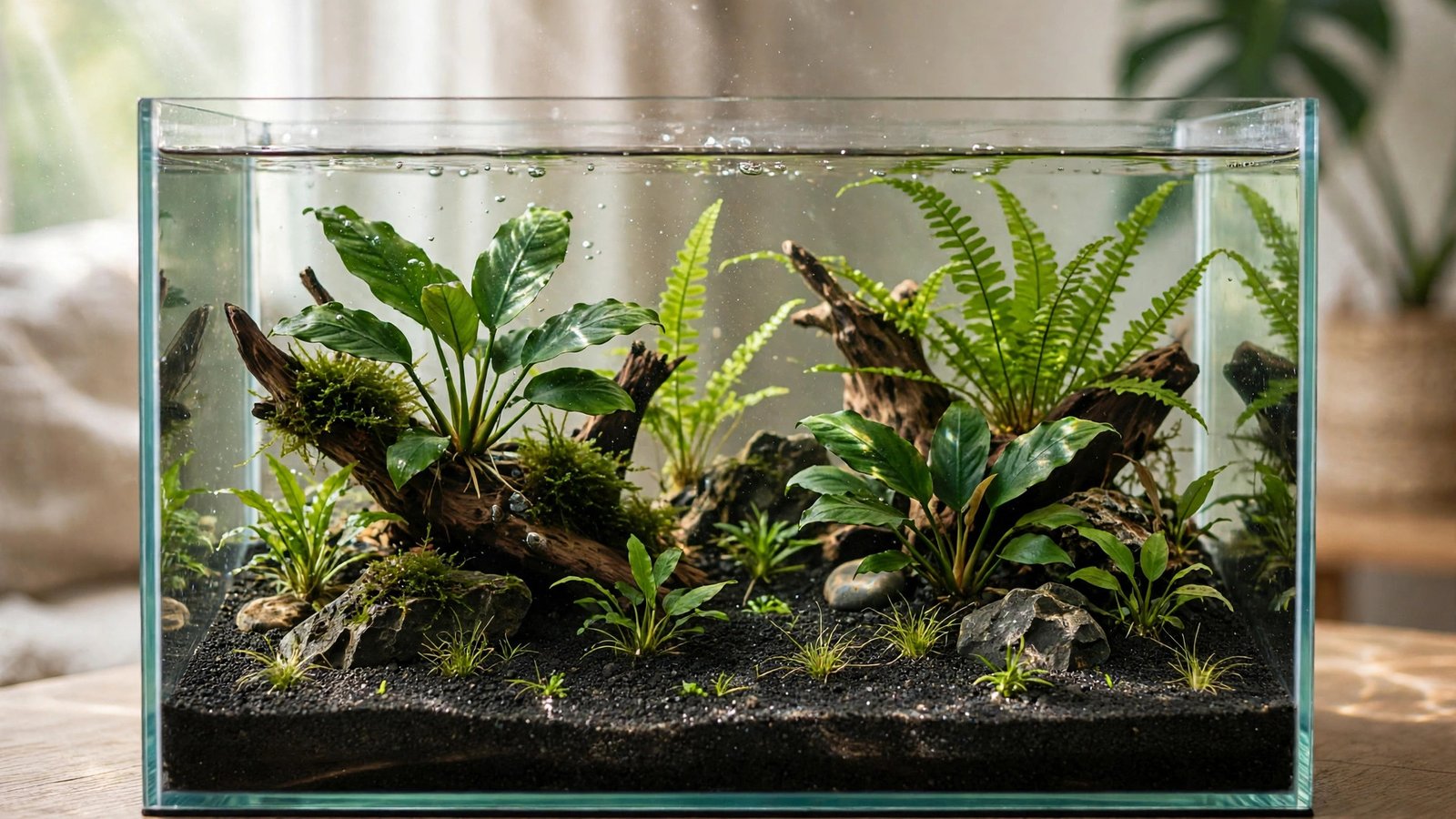
Black substrates have quietly taken over aquascaping — and tahitian moon sand is the bag most planted-tank keepers reach for first. It makes greens and reds explode. But fine black sand brings trade-offs absent from the label: compaction that suffocates roots, zero built-in nutrition, and debris that shows on dark grains. For the full head-to-head, see our guide to the best substrate for planted tanks — this guide goes deep on this one product and how to plant in it.
What tahitian moon sand actually is
CaribSea's Tahitian Moon Sand is a volcanic-mineral sand with a uniformly fine grain and a saturated black color. It became famous in reef tanks before planted-tank keepers adopted it, and its reputation rests on two things: it looks incredible, and it does nothing to your water chemistry. It's pH neutral, so a soft-water Amazon biotope and a hard-water cichlid tank both keep the pH their source water dictates.
That neutrality is the catch. This is an inert substrate, not an aquasoil — no ammonia spike on setup, but no nutrient reservoir for roots either. Compare it with a true baked-soil product in our review of the best aquasoils for planted tanks: aquasoils feed roots for months; this sand feeds nothing, so root feeders rely on root tabs or liquid fertilizer. The grain is finer than pool filter sand for planted tanks, closest in feel to the black blasting sand used in planted aquariums — and that fineness is both its charm and its main maintenance burden.
Pros: why planted-tank keepers love it
The color is the obvious win: reds look redder, green carpets look deeper, and silver or neon fish pop against the black. Dark floors also settle skittish fish, since the bed no longer reflects light up at them.
Fine sand is kind to bottom dwellers — corydoras barbels stay intact, kuhli loaches burrow happily — and planting into it has an underrated perk: stems slide in cleanly and the fine grains close around each base, so fresh stems rarely float back out. A 20 lb bag is affordable, needs no cycling, and one bag covers roughly a 2-inch bed in a 20-gallon long (about 1 lb per gallon at that depth). For more options, see our best sand for planted aquariums comparison.
Cons: the honest downsides
Compaction is the real enemy. Fine sand settles densely, and deep, undisturbed zones can go anaerobic, forming hydrogen sulfide — the rotten-egg smell if you disturb a bad pocket. Monthly gentle stirring in open areas prevents it, but it's upkeep aquasoil users never think about.
Debris is painfully visible on black sand — waste and mulm show as pale specks almost immediately. Lightly stocked tanks stay pristine for weeks; overstocked ones need a quick hover-vacuum weekly. Then the nutrition gap: column feeders and epiphytes do fine, but heavy root feeders grow slowly and pale on bare sand without root tabs. For a sword-heavy jungle, soil under a sand cap (see our guide to capping aquarium soil with sand) or straight aquasoil gets you there faster.
How to plant in fine black sand
Rinse the sand until the water runs mostly clear. Lay the bed 1.5–2.5 inches deep, sloping slightly toward the back for depth.
Stems: push each about an inch deep with tweezers and let grains settle around the base. Rosettes and swords: dig a small hole, spread the roots outward (don't bunch them), backfill, and push one root tab an inch or two from the crown — not directly underneath, which can burn tender roots. Anubias and java fern: never bury the rhizome; tie or glue it to hardscape above the sand line. Carpets like dwarf hairgrass root well into fine sand but need decent light and either CO₂ or patience.
Cleaning and long-term maintenance
Hover a siphon about half an inch above the surface — don't jam it in, or you'll suck up the sand itself. Fine grain helps here: detritus sits on the sand rather than sinking between grains, so a gentle swirl lifts waste easily. Our full routine is in the guide to cleaning aquarium substrate without uprooting plants.
Monthly, stir open areas lightly with a thin skewer, working section by section across two weeks. Top up annually — fine sand compacts and migrates more than you'd expect. Shrimp keepers: red cherry and crystal shrimp show their best color on this background, and CaribSea's Eco-Complete is the brand's plant-focused alternative if you want the black look with more mineral content in the grains.
Where to buy and what size bag
CaribSea sells it in a 20 lb bag — the size stocked by most aquarium shops and on Amazon. One bag suits a 1.5–2 inch bed in tanks up to about 20 gallons; a 55-gallon needs two to three bags for the same depth. Confirm it's the black sand (CaribSea makes several), and order root tabs at the same time so day-one planting isn't underfed. The manufacturer lists it as pH neutral for fresh and salt water (CaribSea's Tahitian Moon Sand product page), and university aquarium-plant resources — such as the University of Minnesota Extension — confirm inert sands are safe, chemistry-neutral choices that rely on supplemental fertilization.
Article's buying section names Tahitian Moon Sand bags directly; same product (5-lb listing): Tahitian Moon Sand on Amazon.
Frequently Asked Questions
Is Tahitian Moon Sand safe for freshwater planted tanks?
Yes. It's a natural, chemically inert mineral sand that doesn't buffer pH or release ammonia, so it suits soft-water biotopes, shrimp tanks, and community setups alike. Rinse it well before use — the fine dust is the only real hazard, and it settles quickly.
Do I need root tabs with Tahitian Moon Sand?
For heavy root feeders, yes — swords, crypts, and vallisneria grow slowly and pale on bare inert sand. Push a root tab near (not directly under) the root crown at planting and refresh every 6–8 weeks. Column feeders and epiphytes like anubias don't need them.
How deep should Tahitian Moon Sand be in a planted tank?
Aim for 1.5–2.5 inches (4–6 cm). Shallower and stems won't anchor well; deeper raises the risk of compaction and anaerobic gas pockets unless you stir the bed regularly. Slope it slightly higher at the back for visual depth, and keep heavy root feeders in the deeper zones.
Does Tahitian Moon Sand affect pH or water hardness?
No. It's pH neutral and neither raises nor lowers pH, KH, or GH. That makes it a flexible choice for fish and shrimp with specific water requirements — your source water and remineralizer decide the chemistry entirely, not the sand.
Will Tahitian Moon Sand compact and go anaerobic?
It can, like any fine sand — grains settle tightly over months, and undisturbed deep zones may develop hydrogen sulfide pockets. Prevent it with a light monthly stir in open areas, keep the bed under 2.5 inches, and never disturb a large section all at once.
Is Tahitian Moon Sand better than aquasoil for planted tanks?
Not for growth speed. Aquasoil feeds roots for months and grows heavy root feeders faster — no contest. Tahitian Moon wins on looks, price, zero cycling, and compatibility with sand-sifting fish and shrimp. Many scapers split the difference: aquasoil capped with black sand, or sand plus disciplined root tabs.
The bottom line
Tahitian Moon Sand earns its popularity honestly: it's stunning, safe, and cheap, once you accept its two real demands — root tabs for hungry plants and a monthly stir to keep the bed breathing. It won't out-grow aquasoil on pure plant performance, but for aquascapes built around contrast, color, and sand-dwelling livestock, it's hard to beat. Start with a rinsed 2-inch bed, plant heavy on day one, feed the roots, and let the black floor do the rest.