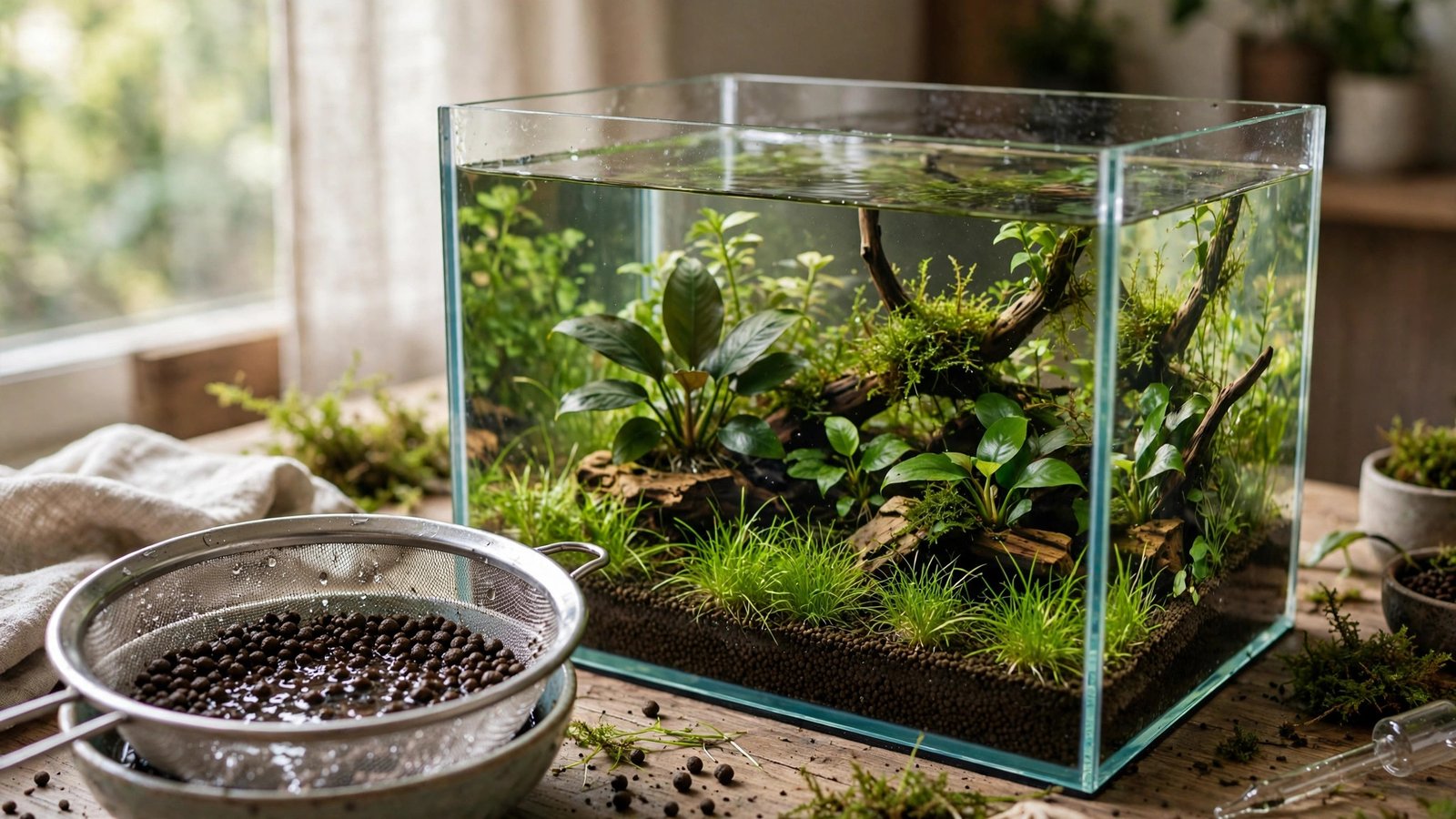
Rinsing aqua soil under the tap before adding it is one of the costliest mistakes in the planted-tank hobby — and it feels like the right thing to do, because you rinse gravel, sand, and rock before they go in. Should you rinse aqua soil? For almost every brand, the answer is no: a thorough rinse turns a premium nutrient-rich substrate into a muddy, depleted bed.
Each granule is a baked pellet of nutrient-loaded volcanic ash. Every minute under running water strips fertilizer and trace minerals and dissolves the binding agents holding the granules together. If you're still choosing a product, our 7 Best Aquasoils for Planted Tanks Compared covers the top performers — every one of which works best straight from the bag.
Should You Rinse Aqua Soil? Why It's Usually a Mistake
Aqua soil is nothing like aquarium gravel, which is inert stone that only needs its surface dust washed off. Each soil granule is an engineered sponge: baked clay holding nitrogen, phosphates, potassium, and trace elements, plus humic substances that buffer your water's pH and KH. Blast it with tap water and agitate it in a bucket, and you flush the nutrients, crumble granules into silt, and create more fines than you removed — the bag looked clean because the manufacturer already sieved it.
Manufacturers agree: ADA's official Amazonia instructions say do not rinse before use — add water slowly. UNS lists "no rinsing required" as a Controsoil feature, noting the soil actively absorbs impurities from the water column.
What Rinsing Actually Destroys
- Nutrient coating. The water-soluble fertilizer charge dissolves into your bucket and goes down the drain, leaving expensive inert clay.
- Granule integrity. Heat-set granules soften in water; agitation crumbles them into silt that compacts, blocks oxygen flow, and rots roots over months.
- Cycling power. Fresh aquasoils like ADA Amazonia release a controlled ammonia spike that feeds nitrifying bacteria for 2–4 weeks. Rinsing weakens it, making cycling through the ammonia leach phase slower and less predictable.
- Buffering capacity. The pH/KH-lowering effect you bought the soil for is partly carried by humic acids on the granule surfaces — a heavy rinse strips them before the tank is even wet. (See also: how aqua soil affects pH.)
Brand-by-Brand Rinse Guidance
Not every "aqua soil" is built the same, so here's what the major brands actually say:
| Brand | Granule | Maker's rinse guidance | What it means |
|---|---|---|---|
| ADA Amazonia (Ver.1 / Ver.2 / powder) | Baked volcanic soil | Do not rinse before use | Use straight from the bag. |
| UNS Controsoil | Volcanic ash granules | No rinsing required | Add dry; fill gently. |
| Tropica Aquarium Soil | Baked clay granules | Do not rinse (manufacturer instructions) | Very low dust; safe unrinsed. |
| Fluval Stratum | Softer volcanic granules | Light rinse per package instructions | A gentle pass only. |
| Landen Aqua Soil | Baked volcanic soil | Does not require rinsing | Install dry; fill over a plate. |
The pattern is clear: no brand tells you to bucket-scrub soil like gravel. Finer grades, which feel dustiest, need the most delicate handling — see our powder vs normal aquasoil guide.
 ★4.7
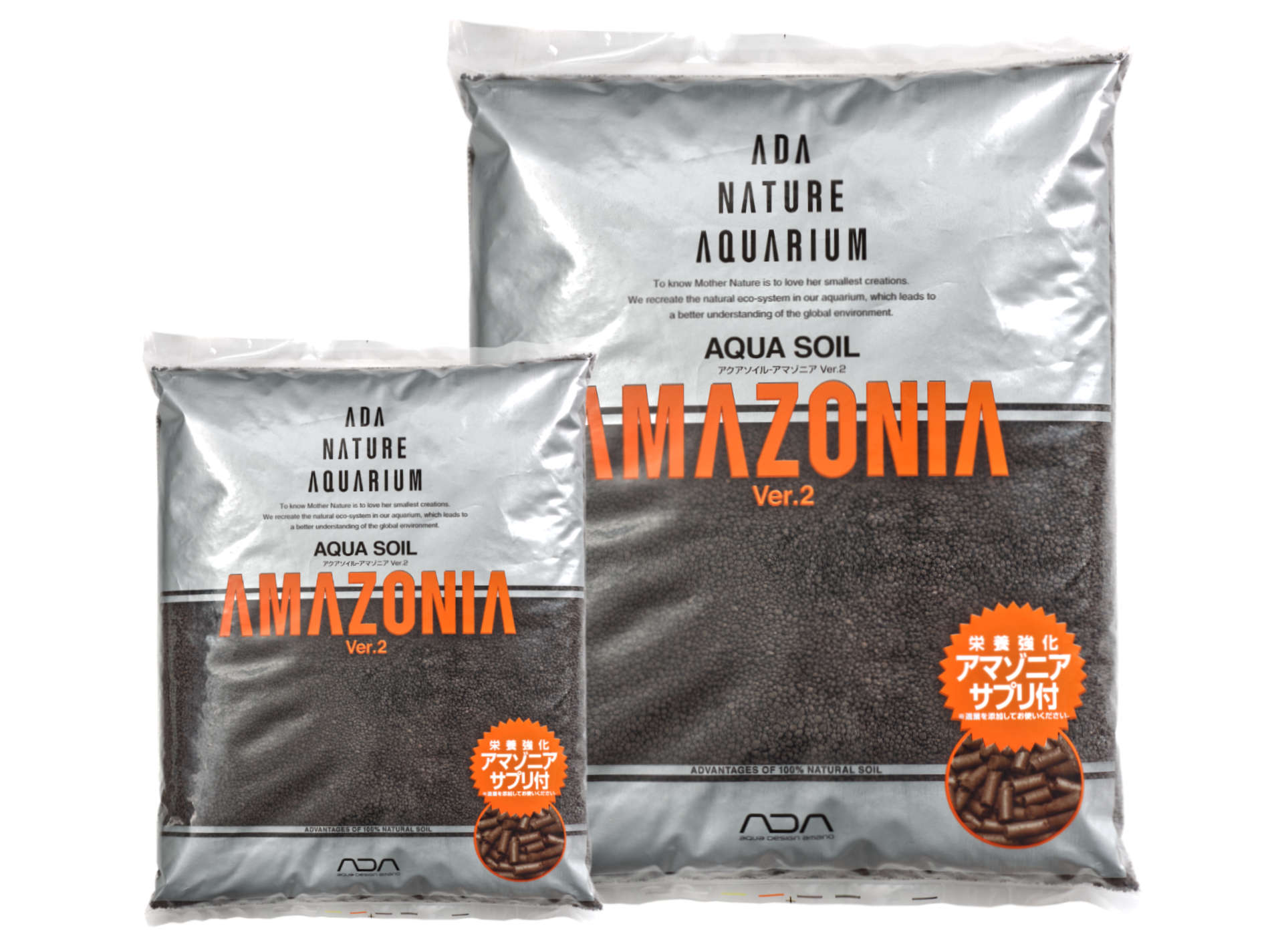
ADA Aqua Soil Amazonia Ver 2
Check Price on Amazon ★4.7The Rare Exceptions: When Rinsing Makes Sense
There are exactly two situations where water touches soil before it goes back in a tank.
1. Used or recycled soil between tank resets. When you tear down a scape and reuse soil, it's loaded with mulm, old root fragments, and algae spores. A gentle rinse in old tank water is fine here — the nutrient charge is mostly spent anyway, so aquascapers add fresh soil underneath the recycled layer or supplement with root tabs. Treat recycled soil as structural filler, not a nutrient source; our guide to recharging and replacing exhausted aquasoil covers the strategy.
2. A bag that arrived visibly contaminated. Broken packaging that let in debris, or a bag stored damp and torn — rare, but real. One quick shower rinse over a sieve, no hand-agitation, stopping as soon as the runoff looks reasonably clean.
Everything else — brand-new bags, powder type, fine type — goes in dry.
Dealing With Dust and Cloudiness — Without Rinsing
The fear driving the rinse habit is the bag's dusty look. In practice, an unrinsed aqua soil tank clouds lightly on filling and clears fast — overnight with a filter running, within 24–72 hours at most. The dust is suspended silt, and fine filter floss removes it easily.
What actually matters is how you add water. A firehose blast into a fresh soil bed creates a dust storm no rinse could have prevented; a slow, diffused fill keeps the water nearly clear from minute one.
Adding Aqua Soil Cleanly, Step by Step
- Slope it dry. Pour the soil straight from the bag into the empty, dry tank. Build your slope — 3–5 cm in front, up to 10–12 cm at the back for a 60 cm tank — and shape it by hand.
- Mist and plant first. Lightly mist the bed, then plant before flooding: roots seat into dry granules without floating up. (Running a sand-capped front section? Do it now.)
- Lay a plate or plastic bag. Cover the soil with a dinner plate, plastic bag, or bubble wrap, and pour onto that — never directly onto the soil.
- Fill slowly. A siphon-paced flow of a few liters per minute. Stop at 50–70% depth, plant any remaining stems, then finish.
- Filter, then wait. Start the filter immediately so the floss polishes out residual haze. Still hazy after 48 hours? Do a 30–50% water change and wait another day.
What to Do If You Already Rinsed It
Don't panic — and don't throw the soil away. A rinsed bag is still usable; it's just degraded toward a mid-tier soil. A quick light rinse costs some fines; a long aggressive bucket-scrub softens the granules noticeably.
Compensate: press root tabs vs aquasoil feeding under heavy root feeders like swords and cryptocorynes, start liquid fertilizer from day one, and expect a weaker ammonia spike. Test ammonia, nitrite, and nitrate weekly, and add livestock only once the cycle is genuinely finished (timeline in our aquasoil ammonia leach guide). Never rinse a second time to "fix" muddiness — it only gets worse. The UNS Controsoil planted tank guide shows what a clean unrinsed setup should look like for comparison.
Frequently Asked Questions
Should I rinse aqua soil to remove the ammonia spike?
No — that's counterproductive. The ammonia release from soils like ADA Amazonia feeds your nitrogen-cycle bacteria for the first 2–4 weeks. Control the spike with frequent water changes (50% twice a week early on) instead of trying to wash the soil.
Should powder-type aqua soil be rinsed?
Definitely not — powder type is the most fragile grade and the easiest to destroy. Its ~1 mm granules crumble fast under agitation. Add it dry, use the plastic-bag fill method, and let the filter clear the haze within a day or two.
Will unrinsed aqua soil hurt my fish or shrimp?
The dust itself is harmless — it's just baked soil minerals. What matters is chemistry: fresh aquasoil releases ammonia and buffers pH downward, so never add livestock on day one. Cycle the tank fully, test parameters, and most soils are safe within 2–4 weeks.
Can I reuse old aqua soil after rinsing it?
Yes, with realistic expectations. A gentle rinse in old tank water removes trapped debris between resets, but the nutrients are mostly spent and some granules will crumble. Reuse it as a base layer, top with fresh soil for planting zones, and supplement with root tabs.
How long does cloudiness last if I don't rinse?
With a slow, diffused fill and a running filter, most aquasoils clear within 24–48 hours; some, like Controsoil, clear overnight. If haze lingers past 72 hours, do a 30–50% water change and add fine filter floss — don't drain and re-rinse.
So the next time a fresh bag of aqua soil tempts you toward the kitchen sink, pour it into the tank dry instead. Your plants get the full nutrient charge, your granules stay intact, and your water clears in days — all for the price of one slow, careful fill.