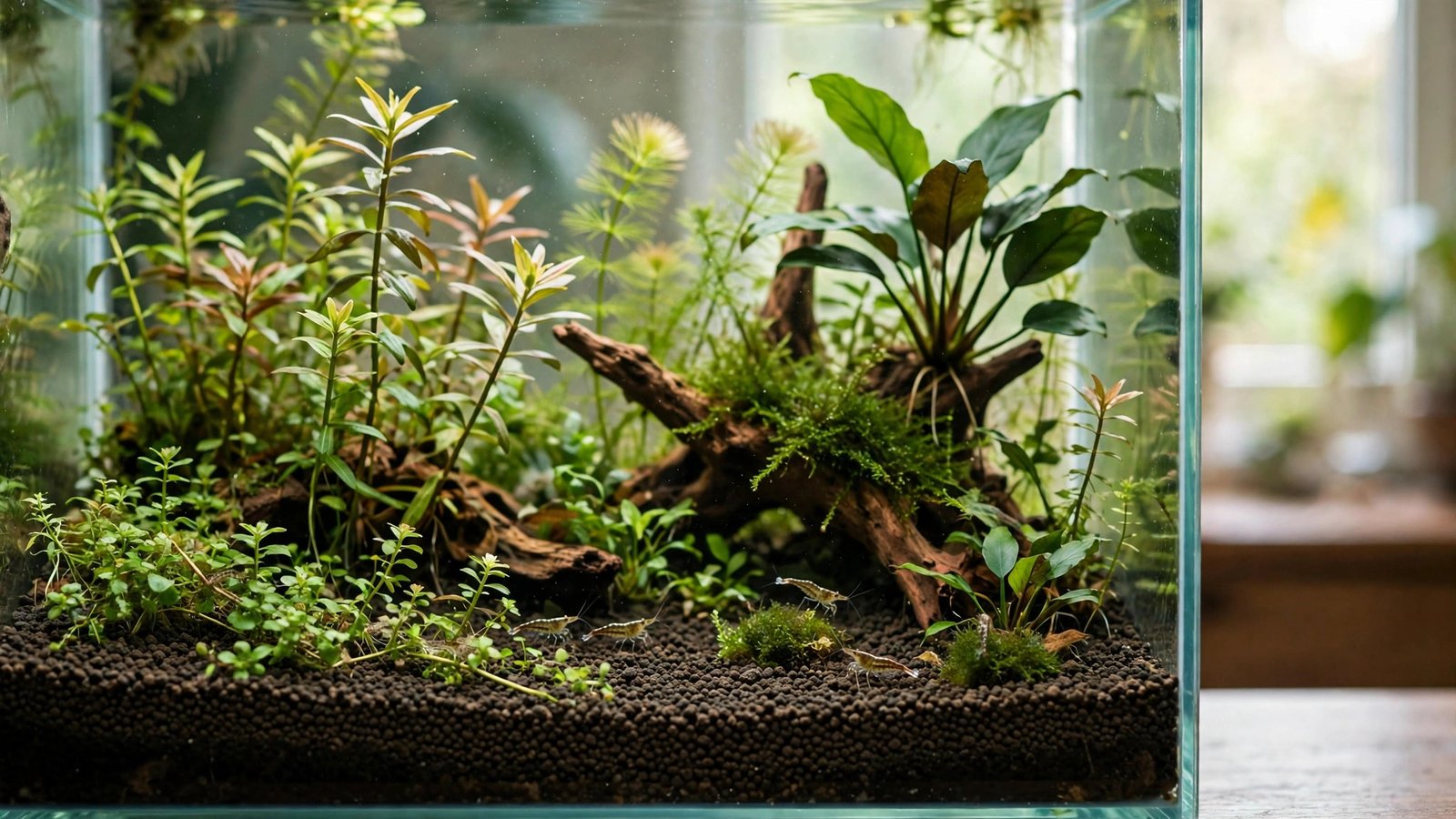
If your pH crashed from 7.6 to 6.2 three days after filling a new tank, nothing is broken — and you should absolutely not "fix" it with a bottle of pH-Up. That crash is your aqua soil doing exactly what it was built to do.
So, does aqua soil lower pH? Yes. Active soils like ADA Amazonia and UNS Controsoil release humic acids and strip carbonate hardness from the water through ion exchange, dragging pH down into the soft, slightly acidic range most aquatic plants prefer. The real question isn't whether — it's how far, for how long, and whether your livestock agrees with the result. (Still shopping? Our 7 Best Aquasoils for Planted Tanks Compared ranks buffering strength alongside nutrients and price.)
How Far Does Aqua Soil Lower pH?
The drop depends on your soil and your water's KH. Typical settled values for moderate tap water (3–6 dKH):
| Soil | Expected settled pH | Typical drop | Buffering lifespan |
|---|---|---|---|
| ADA Aqua Soil Amazonia (original) | 6.0–6.5 | 1.0–1.5+ points | 12–18 months |
| UNS Controsoil | 6.0–6.8 | 0.8–1.5 points | 12+ months |
| Tropica Aquarium Soil | 6.0–6.8 | 0.8–1.3 points | 12+ months |
| ADA Amazonia Ver.2 | 6.5–7.0 | 0.5–1.0 point | 12–18 months |
| Fluval Stratum | 6.5–7.0 | 0.3–0.8 points | 6–12 months |
| Seachem Flourite / Eco-Complete (inert) | Follows tap water | None | N/A |
"Aqua soil" isn't one answer — there's nearly a full pH point between the strongest and mildest buffers. And inert substrates don't move pH at all, which is precisely the point in hard-water setups.
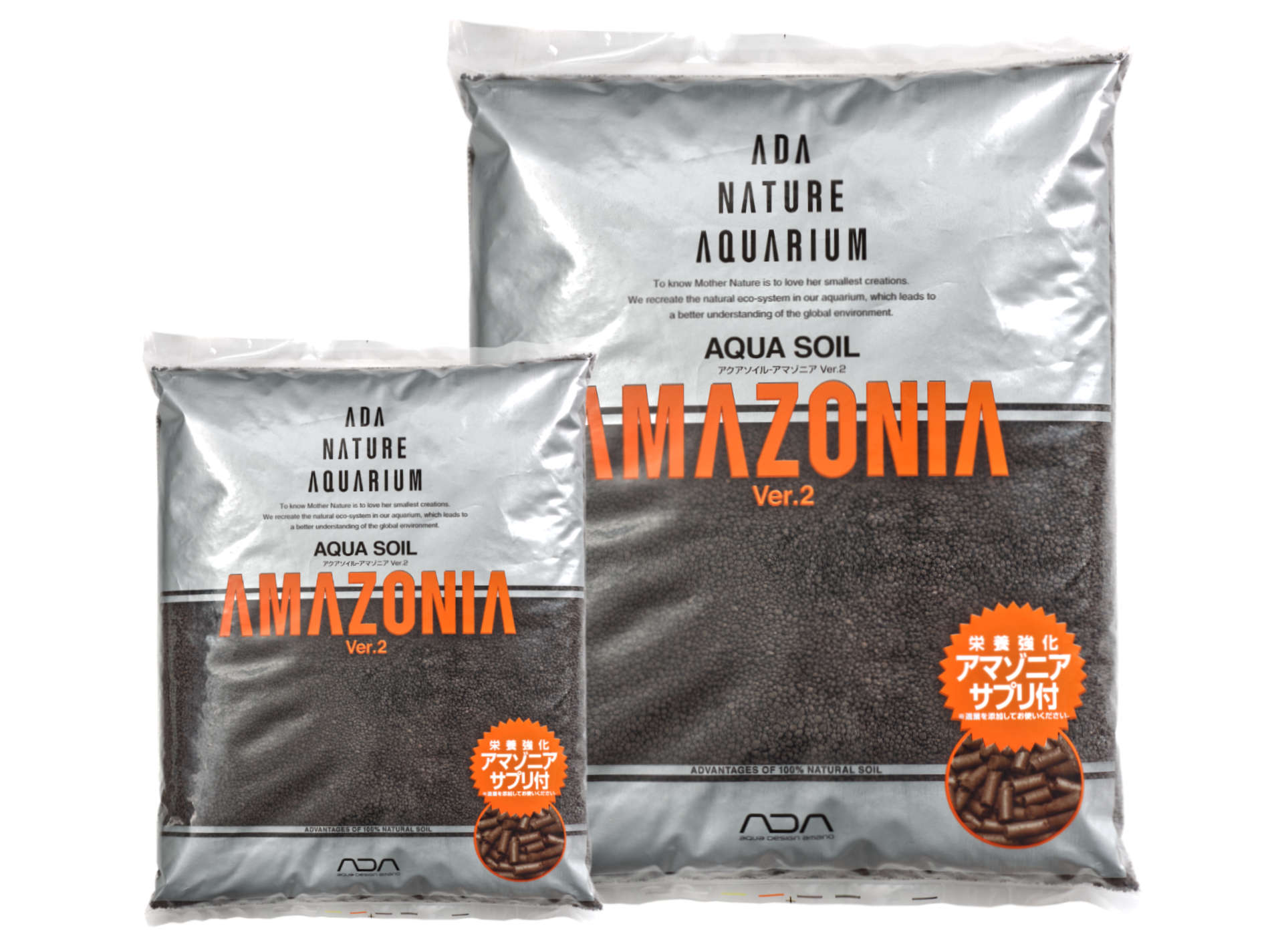 ★4.7
ADA Aqua Soil Amazonia Ver 2
Check Price on Amazon ★4.7The KH Connection: Why Your Tap Water Fights Back
Aqua soil lowers pH mostly by attacking KH — carbonate hardness, the buffer propping up your tap water's pH. The granules are rich in humic substances with strong cation-exchange capacity: they pull calcium and magnesium out of the water and trade them for hydrogen ions. Less KH means less resistance, so pH slides down. (For the deep chemistry, this long-running hobbyist discussion breaks down aquasoil's ion-exchange behavior in detail.)
That's why the same bag gives different results in different houses. With soft tap water (0–3 dKH) the soil barely works, and buffering can last 18 months. With hard tap water (6–10 dKH), every water change reloads the carbonate buffer, the soil burns through its capacity, and pH may only dip to 6.8–7.2 before climbing back within months. Test your KH before buying soil — a liquid GH/KH kit predicts your future pH better than any substrate review, and the API Freshwater Master Kit is the hobby workhorse for tracking the drop itself.
How Long Does the Buffering Last?
Buffering is a consumable, not a fixture:
- Weeks 1–4: strongest effect — pH drops fast while the soil is fresh.
- Months 1–3: stabilization — pH finds its floor and holds.
- Months 3–12: the long plateau.
- Months 12–18: the taper — pH creeps back toward your tap level.
- Beyond ~18 months: exhausted as a buffer (still fine for planting).
Hard tap water, big frequent changes, and a thin soil bed shorten the timeline; RO water stretches it. When pH drifts upward month after month, that's your signal — see our guide to spotting and handling exhausted aquasoil.
Surviving the First-Month Swings
Fresh soil — Amazonia especially — leaches ammonia hard for 2–4 weeks while pH bounces, which is exactly why livestock goes in after the cycle, never during:
- Do the water changes. Large, frequent changes keep ammonia in check in the first weeks; expect pH to tick up after each change and slide back down over a day or two — normal, don't chase it.
- Test at the same time daily. pH drifts between morning and evening once plants photosynthesize; random readings will spook you for no reason.
- Don't judge the final pH before week 4–6. Early numbers are noise.
And skip the rinse panic: rinsing aqua soil washes away fines and some ammonia, but the buffering chemistry lives inside the granules. For the full week-by-week playbook, read cycling through aquasoil's ammonia leach.
When Low pH Is the Whole Point
For some setups the buffering is the reason to buy the soil. Caridina shrimp (Crystal Reds, Taiwan Bees) need pH 5.8–6.4 and near-zero KH — active soil is practically mandatory. Discus, cardinal tetras, and Apistogramma come from blackwater rivers and do better at 6.0–6.8; finicky plants like Tonina and Syngonanthus are far easier in acidic, soft water. Building around these? Pick the strongest buffer with soft or RO source water. Our UNS Controsoil setup guide covers a shrimp-tank favorite, and powder vs normal aquasoil explains the grain-size choice.
When Low pH Is a Problem
Flip the stock list and the same chemistry becomes a liability. Livebearers (guppies, mollies, platies) and African cichlids want pH 7.2–8.2 with real hardness — Amazonia is a slow-motion mismatch. Snails with shells (mystery, nerite) need calcium and neutral-to-alkaline water; below ~6.5 their shells pit and erode. Crushed coral in the filter just burns through the soil's buffering faster — pick one approach, not both. For hard-water livestock, go inert and feed plants directly: root tabs vs aquasoil and aquarium soil vs gravel for plants lay out the tradeoff.
What If the Drop Goes Too Far?
Staring at 5.8 a week in with fish that wanted 6.8? Work this list in order: wait — early-cycle readings are the lowest you'll see, and pH often rises half a point as the tank matures; accept it — a rock-stable 6.0 beats a chemically wrestled 6.8, and most community fish adapt to stable-but-low far better than to swings; change the source water, not the tank — blending RO (or RO plus remineralizer) sets the KH floor the soil can reach; or choose a milder soil next scape — Ver.2 or Stratum instead of original Amazonia. What never works: pH-up powders and crushed coral, which don't raise the floor — they just exhaust the soil early.
Frequently Asked Questions
Does aqua soil lower pH permanently?
No — buffering is consumable: strong for 3–6 months, tapering over 12–18 depending on your KH, water changes, and soil depth. Once the ion-exchange capacity is spent, pH drifts back toward tap water. The granules still plant fine — they just stop fighting your KH.
Will aqua soil lower pH in hard water?
Only partially, and not for long. High-KH tap water (6+ dKH) resists the drop — you might see pH settle at 6.8–7.2 instead of 6.0–6.5 — and every water change reloads the carbonate buffer the soil must neutralize, exhausting it in months rather than a year or more. With hard tap, use RO water or choose an inert substrate instead.
Does Fluval Stratum lower pH as much as ADA Amazonia?
No — Stratum is noticeably milder, typically settling around 6.5–7.0 versus Amazonia's 6.0–6.5, and its buffering fades sooner (roughly 6–12 months). That makes it a good pick if you want some buffering without the dramatic crash, but a weaker choice for Caridina shrimp that need pH under 6.4.
Is the low pH from aqua soil safe for fish?
A stable low pH is safe for most soft-water and community fish — stability matters far more than the number. The danger window is the first month, when pH and ammonia swing together, which is why livestock goes in only after the cycle completes. Hard-water species like livebearers and African cichlids are the exception: they genuinely need alkaline water.
Can I add crushed coral with aqua soil to raise pH?
You can, but it's counterproductive. The coral's carbonate dissolves to raise pH and KH, the soil immediately works to neutralize it, and you burn through the soil's buffering months early while getting unstable readings. Pick one approach — active soil for soft-water setups, or inert substrate plus coral for hard-water ones — never both.
Aqua soil lowers pH on purpose — the mechanism behind thriving soft-water plants and Caridina shrimp. Match the soil to your tap water and stock list, let the cycle settle, and let a stable pH beat a "perfect" one every time.