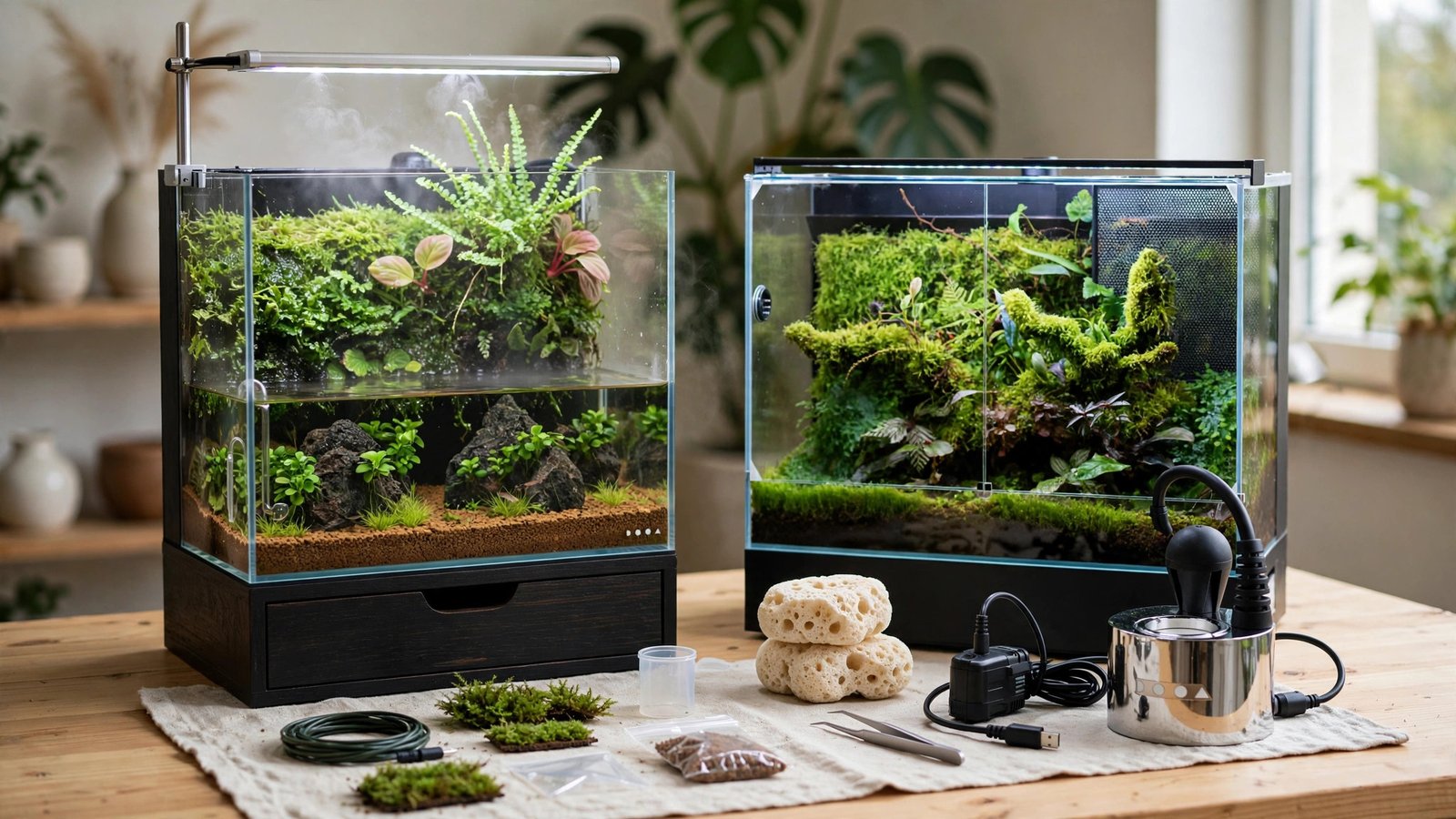
The most beautiful planted display at the last aquascaping event I walked through wasn't a tank at all. It was a 30 cm glass box with a waterfall wall of moss, an orchid the size of a coin, and fog drifting down like dawn in a cloud forest. That display was built on the DOOA Terra 30 — and if the photos have tempted you, this guide will stop you buying the wrong piece of a system that is genuinely brilliant and genuinely expensive.
DOOA is Aqua Design Amano's sister brand, built on one idea: aquatic plants are just as beautiful out of water. Below: the full lineup (Terra 30, Mistflow, Paluda 30/60), what each one actually does, a real setup walkthrough, and the honest cost math.
What DOOA actually is (and what it isn't)
DOOA was launched by Aqua Design Amano with the mission to "enjoy aquatic plants more freely." ADA's classic tanks are precision glass boxes for submersed aquascapes. DOOA gear covers everything the classic tank ignores — plants grown emersed, the transition zone where water meets air, and layouts that look like a streambank or misty hillside rather than a riverbed.
The trick shared across the line is the waterfall wall. A small pump lifts water from the base reservoir and spills it down a textured back wall, keeping it permanently wet. Mosses, epiphytes, and creepers root into mats pinned to that wall. Below sits a shallow water section; above, open air. It's a paludarium without the DIY fog-machine-and-plexiglass chaos.
What DOOA isn't: a replacement for your aquarium. Water volume is tiny, fish stocking is effectively zero, and the point is the above-water display. If you want a thriving underwater community, standard nano hardscape principles in a regular tank serve you better.
The lineup: what each system does
Three core systems, one optional mister, and a long tail of accessories. Here's the comparison that matters before anyone opens a wallet.
| System | Size | Core idea | Mistflow | Best for |
|---|---|---|---|---|
| System Terra 30 | 30 × 30 × 40 cm | Open-top aqua terrarium with waterfall wall | Optional add-on | First DOOA purchase; moss-wall desk display |
| System Paluda 30 | 30 × 30 × 45 cm | Enclosed paludarium, swing door + Mistflow box | Included | Humidity-hungry orchids and tropical plants |
| System Paluda 60 | 60 × 30 × 45 cm | Wider enclosed paludarium, double doors | Included | Larger rainforest vignettes; the showpiece tier |
| Mistflow | 37 mm Ø puck | Ultrasonic fog generator | — | The signature dawn-fog effect on any DOOA wall |
System Terra 30: the gateway
A rimless, open-top glass vessel with a rear compartment hiding the pump and filter sponges. The back wall is the star: you pin Wabi-Kusa mats to it (six in the box), and the pump's cascade keeps them wet around the clock. A small side hole admits a CO₂ line for the submerged section without hoses ruining the view. Note the pricing trap: lighting, Mistflow, plants, and stand are all sold separately.
Mistflow: the fog machine
A 37 mm ultrasonic fogger that sits in the Terra 30's cascade. A vibrating ceramic plate throws up superfine mist that falls down the wall, humidifying everything on the mats — the famous fog-spilling-over-moss look. It ships with three spare vibration plates and a replacement tool (the plates are a wear item), and DOOA sells a Mistflow Cap against upward splashing plus a dedicated glass cover to direct airflow over the wall.
System Paluda 30 and 60: the rainforest boxes
The enclosed siblings: glass tanks with front doors (single swing door on the 30, double doors on the 60) and a sliding glass top, built for tropical plants that need sustained humidity. A Mistflow box is built in, with a circulation pump holding the water level constant so mist falls from the weir continuously. Nine (30) or eighteen (60) Wabi-Kusa mats pin to retainer grids on the wall. A Circulation Fan 40 mounts to a side hole or the stainless-steel mesh top to push mist downward and give orchids air movement; the sold-separately Power Cord S-70 timers the light, fan, and mist. The 60's kit adds a drainage piece and absorbent sponges for pooled water.
What the waterfall wall changes
One mechanic explains the whole system: the wall is the filter and the garden at once. Falling water irrigates the plants, oxygenates itself, and returns dissolved organics to the sponge filters. So your "substrate" for wall plants is a mat, not soil, and feeding happens through the water column or by misting the wall directly.
That sets the constraints: no aquasoil piled against the wall (it washes into the reservoir), no heavy root-feeders, and a shallow water section — sand foreground, a few stones, low submersed plants. The usual stone-safety rules still apply; see choosing aquarium-safe rocks, and for the classic dark DOOA look consider Frodo stone or dragon stone. Light the top of the wall well — that's where growth is densest.
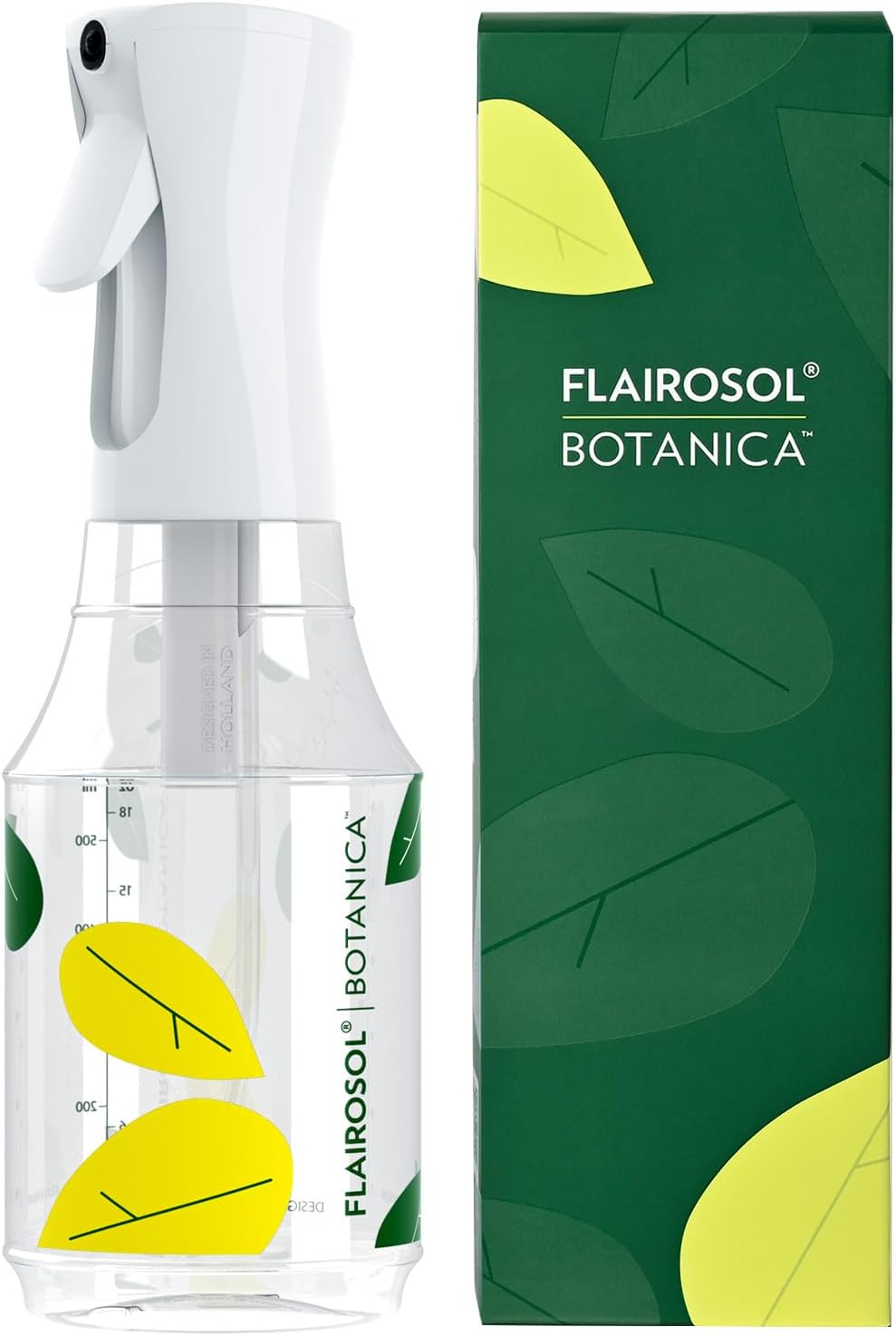 ★4.4
FLAIROSOL Botanica Plant Mister
Check Price on Amazon ★4.4Setting up a DOOA Terra 30 emersed display, step by step
A realistic first build takes a weekend: one day for hardscape, one for planting and tuning.
- Plan on paper first. DOOA layouts reward restraint — one stone, one wood branch, one moss, two or three accents. Our hardscape planning guide covers sketching the skeleton first, and the minimalist ethos pairs well with zen aquascape principles.
- Install pump, sponges, and outflow. Seat the pump in the rear chamber, fit the five sponges, and aim the outflow for an even cascade — dry spots become dead spots for moss. Test with plain water before planting.
- Build the water section. Thin sand or fine gravel in the base, one or two stones, and a small aquasoil pocket for any submersed plants. A natural grain like tropical river sand suits the streambank look.
- Pin the six Wabi-Kusa mats to the wall with small gaps — moss fills in — keeping the top row slightly proud so the cascade wets it first.
- Plant the wall. Tie mosses on with cotton thread or ADA Moss Cotton (it dissolves as moss attaches). Press epiphytes — Anubias 'petite' types, Bucephalandra, Hydrocotyle tripartita 'mini' — into crevices; set creepers like Ficus pumila 'minima' at the base to climb. Attachment methods from our moss wall guide transfer directly to the mats.
- Plant the water section simply: Cryptocoryne parva or Marsilea in the soil pocket, maybe Riccardia on a low stone. With ~10 L of water, substrate hygiene matters even more than usual.
- Fill, start the pump, tune the cascade. Use the flow controller for an even sheet — too strong blasts moss off, too weak dries the top. Top up evaporation every few days (daily in dry rooms).
- Add Mistflow last (optional). Seat the puck in the cascade, fit the cap, and timer it — 15–30 minute bursts a few times daily is plenty. Continuous running wastes water and plates.
Plants that love the wall (and plants that don't)
The wall is constantly wet, bright, and humid — paradise for a specific list, a slow death for everything else.
Thrive: mosses (Java, Christmas, weeping, spiky, Taiwan, Fissidens, Riccardia, Monosolenium); epiphytes (Anubias nana 'petite', Bucephalandra, Bolbitis heteroclita 'difformis'); creepers (Ficus pumila 'minima', Marcgravia, Hydrocotyle tripartita 'mini'); and in enclosed Paludas, mini orchids (Barbosella, Lepanthes) and small ferns. A small manzanita or spider-wood branch wired to the wall gives climbers support and adds the "tree" element these displays need.
Don't belong: heavy root-feeders with nowhere to root; high-light carpet plants wanting CO₂-rich submerged conditions; anything needing dry air (most succulents); and in the open-top Terra, true rainforest orchids demanding 80%+ humidity — that's what the Paluda's doors are for.
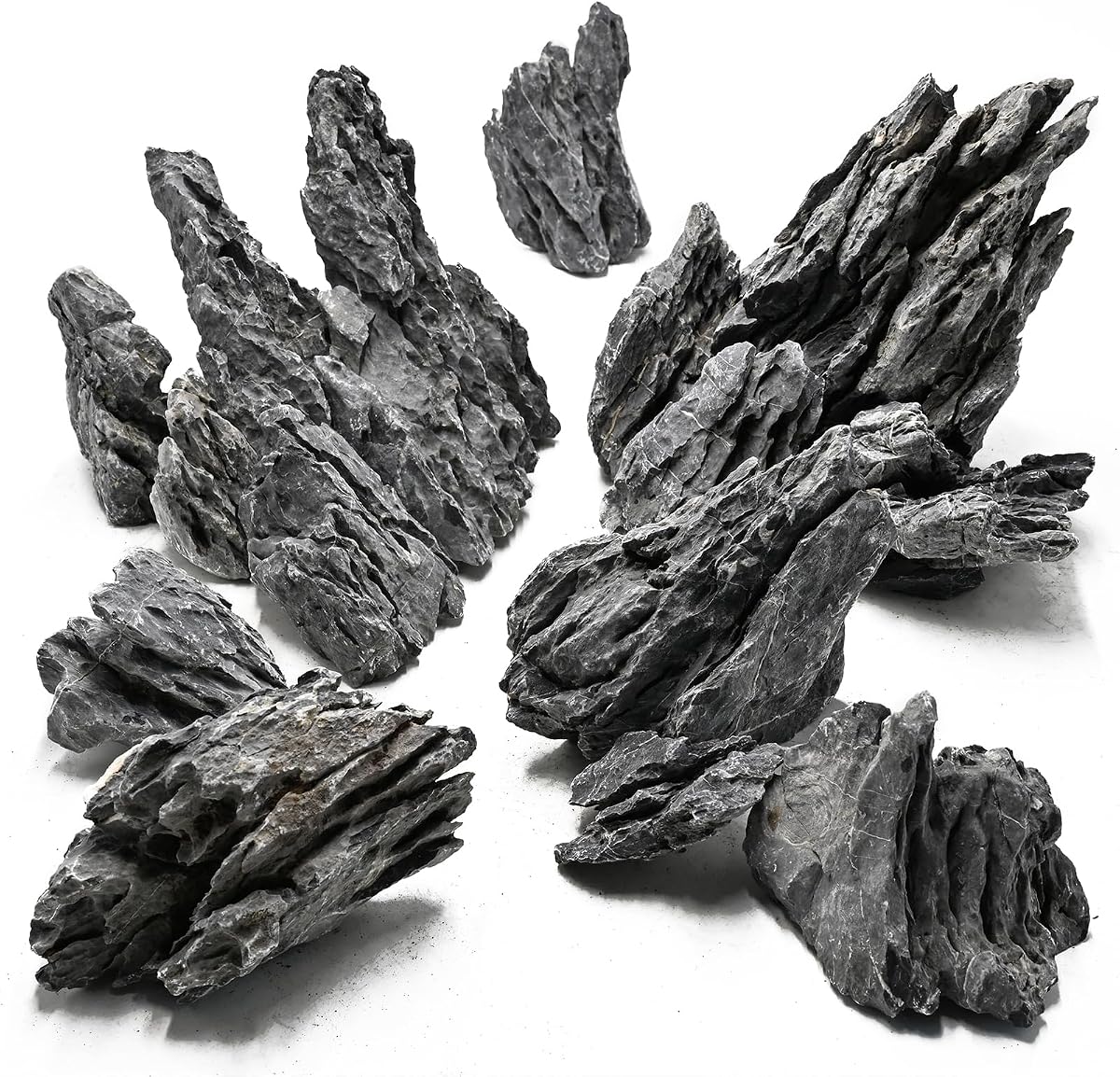 ★4.5
Eorbow Natural Seiryu Stone Rocks
Check Price on Amazon ★4.5The honest cost math
Count the whole system. A US retailer lists the Terra 30 Mistflow Set at roughly $470–$490 (tank, pump, mats, sponges, mister). Mistflow alone runs about $145–$150 — and it ships with spare vibration plates because they wear out. Add lighting ($50–$150), plants and moss ($40–$100), hardscape ($30–$80), and RO water costs. A realistic complete Terra 30: $600–$800. The Paluda 60, lit and planted, clears four figures easily; accessories (Wabi-Kusa Wall panels, hangers, Wabi-Kusa Mist spray, Power Cord S-70, Circulation Fan 40) are all separate line items.
DIY is far cheaper — a glass box, pond fogger puck, and small pump replicate the mechanics. What you don't get is the integration: hidden pump chamber, even cascade, purpose-made wall grids, furniture-grade finish. Whether that delta is worth $400+ is the entire buying decision, and there's no wrong answer — only an uninformed one.
Who should buy DOOA — and who should skip it
Buy it if: you love emersed growth, moss, and orchids more than fish; you want a living art object on a desk; you enjoy tuning humidity and misting schedules; or you're an aquascaper learning the emersed side of the hobby. The Paluda 30 is one of the few off-the-shelf answers to "I want a small orchidarium that doesn't look homemade."
Skip it if: you want fish (even the Paluda 60's water section is a puddle by aquarium standards); you're on a tight budget (a standard nano tank gives more hobby per dollar); you travel often (an open-top Terra needs topping up every few days); or you want low maintenance — the wall needs trimming, the glass wiping, the mister new plates. For a first planted tank, conventional nano hardscape fundamentals teach more for less.
Frequently Asked Questions
Is the DOOA Terra 30 an aquarium?
Not really — it's an "aqua terrarium" holding about 10 litres in a shallow base, with the display mostly above the waterline on the waterfall wall. It's designed for emersed plants, moss, and hardscape, not fish. Think nano tank crossed with a terrarium, defined by its pump-driven cascade.
Do I need the Mistflow, or is the Terra 30 fine without it?
The Terra 30 works fine without it — the cascade alone keeps the wall wet. Mistflow adds humidity and the signature fog look, and helps mosses and epiphytes establish faster. Worth it if you love the aesthetic or grow humidity-sensitive plants; skippable at first if budget is tight, since it's a drop-in puck you can add later.
What's the difference between the Terra 30 and the Paluda 30?
The Terra 30 is open-top (30×30×40 cm): great airflow, but humidity escapes — best for mosses, epiphytes, and hardy creepers. The Paluda 30 (30×30×45 cm) has a swing door and sliding glass top that trap humidity, includes the Mistflow box, and suits orchids and true rainforest plants. Choose Paluda for humidity, Terra for airflow and simplicity.
Can I keep fish or shrimp in a DOOA system?
A few cherry shrimp can work in the Terra 30's water section if it's planted and stable. Fish are a bad idea: ~10 litres of shallow, warm, evaporation-prone water with a pump intake is stressful for any species. DOOA systems are plant displays; for livestock, build a real nano aquarium instead.
How often does the Mistflow's vibration plate need replacing?
Typically every few months of regular use, varying with water hardness and run time. DOOA ships three spares plus a replacement tool — it's a consumable, not a lifetime part. RO or distilled water and timer-based bursts (rather than continuous running) both extend plate life noticeably.
Is DOOA worth it over a DIY paludarium?
For mechanics alone, no — a DIY build with a pond fogger replicates the concept cheaply. DOOA's value is integration and finish: hidden filtration, an even cascade, purpose-made wall grids, furniture-grade glass. If the display lives in your living room, the premium makes sense; for a fish-room grow-out project, DIY wins.
The bottom line on DOOA
The DOOA Terra 30 earns its reputation: the most refined way to grow a moss waterfall on a desk, Mistflow fog as atmospheric as the photos promise, and the Paluda systems the easiest path to a small orchidarium that looks designed rather than improvised. None of it is necessary gear. Go in knowing the full-system cost, the RO-water habit, and that you're buying a plant display — not a fish tank — and you'll love it. Before you buy, check the official DOOA Paluda brochure (PDF) and this detailed UKAPS hobbyist Paluda 30 build thread.