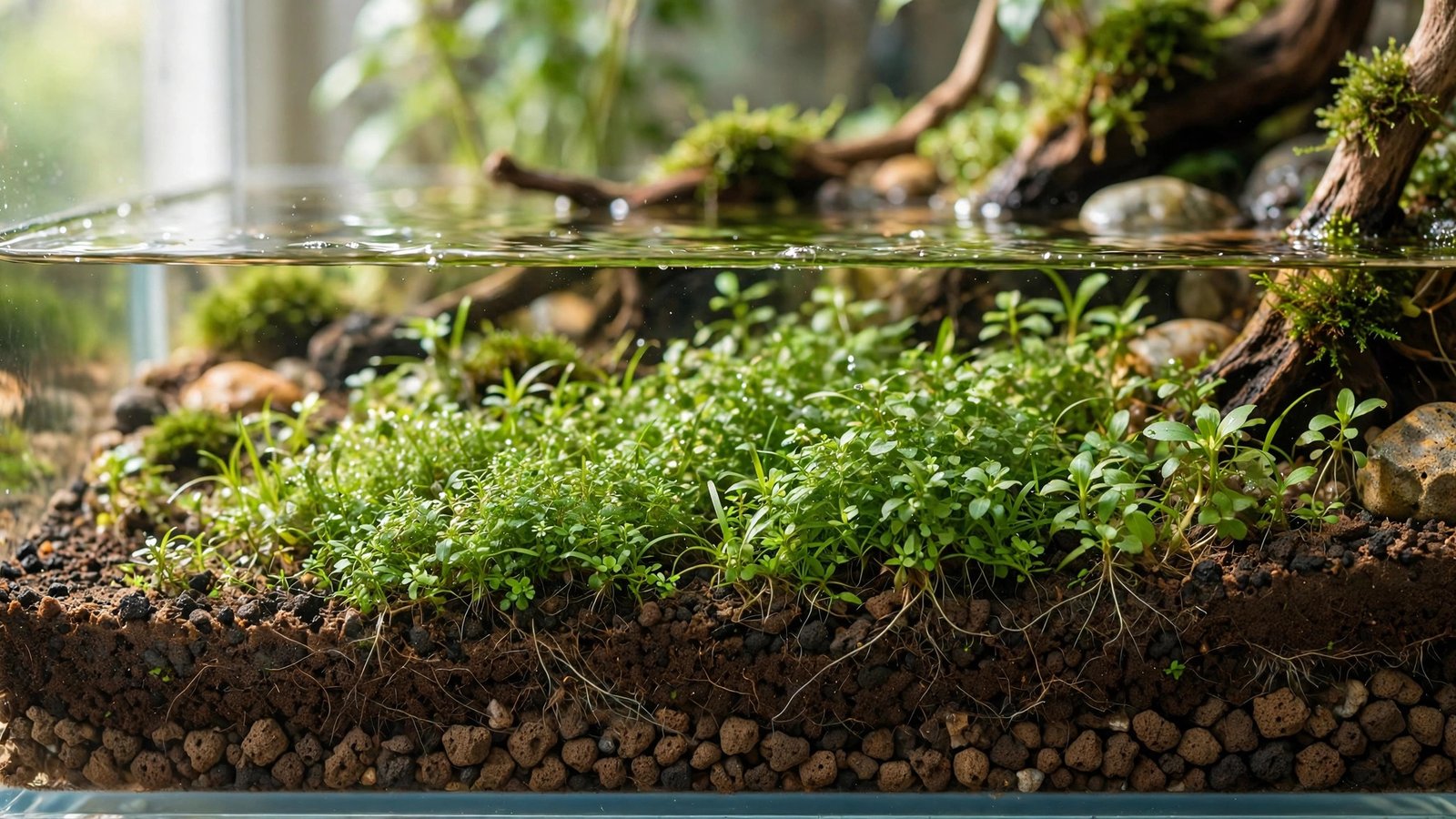
Most carpeting plants don't die for lack of light or CO2 — they die because their runners have nothing to grip. Those hair-thin stolons need grains fine enough to thread through and soft enough to push aside, which is why the best substrate for carpeting plants is a grain-size decision long before it's a brand decision. If you're picking plants from a list of easy foreground carpeting plants for beginners, the substrate underneath decides whether they knit into a lawn or float loose and melt.
Best Substrate for Carpeting Plants: What Runners Actually Root In
Carpeting plants spread sideways by sending out runners — horizontal stems with thread-fine roots that must burrow between grains. When grains are too big (coarse gravel at 5+ mm), those roots dangle into open gaps and plantlets sit on top of the bed instead of weaving into it. When grains pack too tightly, water can't circulate, the zone goes anaerobic, and roots rot. The sweet spot is 1–3 mm grains: big enough to hold pore space for oxygen, small enough that a runner can grip and root.
That single fact explains most carpet failures. Two identical tanks — same light, same CO2 — can look wildly different after eight weeks if one has powder aquasoil and the other has 5 mm pea gravel. Our broader comparison of the best substrates for planted tanks overall weighs whole-tank nutrition, but carpets are a special case: the foreground bed has to be a rooting medium first and a nutrient bank second. Grain wins.
How the Options Compare
| Substrate | Nutrient built-in? | Ammonia leach? | Compaction risk | Best for |
|---|---|---|---|---|
| Powder aquasoil (ADA/UNS/Tropica) | Yes — rich NPK + trace | Yes, 2–6 weeks | Low | Fast, dense carpets |
| Normal-grain aquasoil | Yes — same nutrition | Yes, 2–6 weeks | Low | Whole-tank use + powder cap in front |
| Fine sand + root tabs | Only where tabs sit | No | Moderate–high | Budget and low-tech tanks |
| Calcined clay (Safe-T-Sorb etc.) | No (high CEC — stores dosed ferts) | No | Low | Budget setups with liquid dosing |
Aquasoils: The Fastest Carpet, With a Cycling Cost
Baked-soil aquasoils from ADA, UNS, Fluval, and Tropica are the professional carpet standard: runners get fine grains and a nutrient reserve in one product. Tropica's soil powder is milled to 1–2 mm specifically for foreground plants, and contest tanks almost always run powder grain in the front zone. Our 7 best aquasoils for planted tanks compared and Fluval Stratum vs ADA Amazonia break down nutrition and buffering; for carpets specifically, grain type matters more than brand.
The honest trade-off: rich aquasoils leach ammonia for the first 2–6 weeks, so you cycle the tank before adding livestock and do 25–50% water changes twice weekly during startup. Normal grain (2–5 mm) works for carpets too, but tiny plugs like HC Cuba root faster in powder. If you already own normal aquasoil, cap the foreground with an inch of powder — the grain-size mechanics are covered in our powder vs normal aquasoil guide. Expect real carpeting in 6–12 weeks with CO2, roughly double that without.
 ★4.7
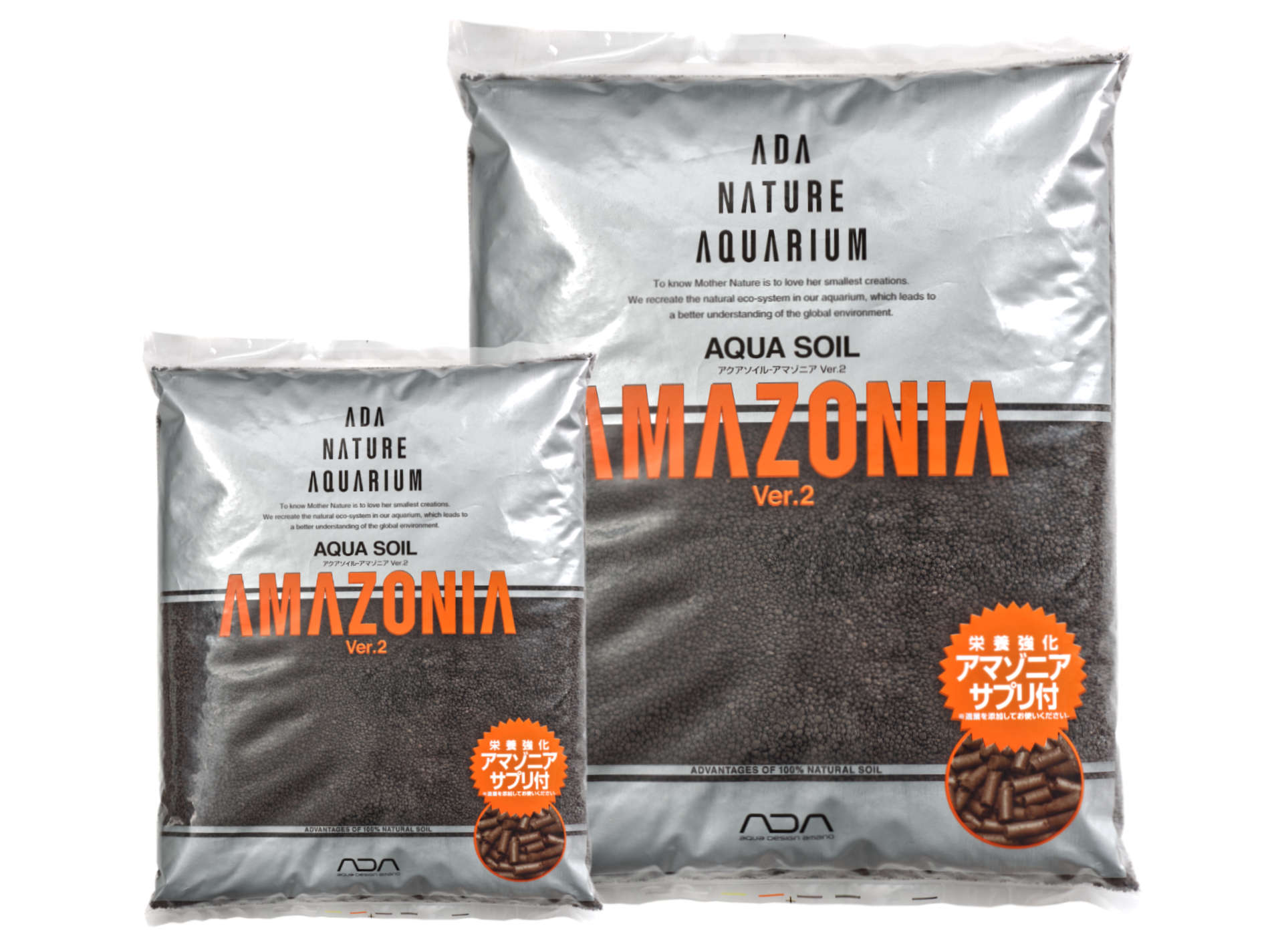
ADA Aqua Soil Amazonia Ver 2
Check Price on Amazon ★4.7Fine Sand Plus Root Tabs: The Budget Carpet That Works
Aquasoils are the fastest route, not the only one. Pool filter sand (roughly 0.45 mm grains) carpets beautifully once you accept its limitation: sand holds zero nutrients, so you feed the roots yourself. Press root tabs into the bed — one per 4–6 square inches, replaced every 2–3 months — and runners get everything they'd get from aquasoil, on your schedule instead of the soil's. Our best sands for planted aquariums and root tabs vs aquasoil comparisons lay out the math: sand plus two years of tabs still costs less than one bag of premium aquasoil.
Sand compacts over time, trapping gas pockets in the bed that can burp hydrogen sulfide into the water. Poke the carpet zone gently with a chopstick once a month — not deep enough to uproot plants, just enough to break channels. A rotten-egg smell means stir more regularly and thin the bed.
Depth: Keep the Carpet Zone Shallow
Carpeting plants root in the top inch of bed — anything deeper wastes product and invites compaction. Aim for 1–1.5 inches in the foreground, sloping up toward the back where stems need anchorage. Experienced aquascapers converge on the same guideline — aim for around 25–40 mm up front for carpet plants, deeper only behind them.. If you're unsure of quantities, our guide to how deep aquarium substrate should be for plants has the per-tank math.
Feeding the Carpet After the Soil Runs Out
Aquasoils are not forever. Their nutrient reserve depletes over 1–3 years depending on plant load and water changes, after which a carpet that once exploded can stall and thin. That's the aquasoil exhaustion lifecycle, not a failure. The fix is the same one sand users start with: root tabs in the carpet zone on a 2–3 month schedule. A $10 pack of tabs can keep an "exhausted" aquasoil carpeting like new for another year or more, no tear-down required.
What to Skip for Carpets
Two common choices actively fight carpeting. Coarse gravel (3–8 mm) is the biggest: runners can't grip between the grains, and detritus falls into gaps you can't vacuum without ripping plantlets up. Sharp blasting sand is the quieter trap — it compacts worse than rounded pool filter sand and its angular grains are miserable for bottom-dwelling fish sharing the carpet zone.
Frequently Asked Questions
Can carpeting plants grow in plain sand with no soil underneath?
Yes, as long as you feed the roots. Sand holds no nutrients, so press root tabs into the bed (one per 4–6 square inches) and replace them every 2–3 months. Expect slower spread than aquasoil — roughly 12–16 weeks for full coverage with CO2 — but dwarf hairgrass and Marsilea root fine in sand.
Is powder or normal aquasoil better for carpeting plants?
Powder (1–2 mm) is better up front because tiny carpet plugs root into fine grains faster and small plantlets stay anchored. Normal grain (2–5 mm) still works, but delicate species like HC Cuba grip powder noticeably sooner. Many aquascapers use normal grain tank-wide and cap just the foreground with powder.
How long does it take for a carpet to fill in on aquasoil?
With medium-high light, CO2, and rich aquasoil, most carpets fill in within 6–12 weeks from tissue-culture plugs planted 1–2 inches apart. Without CO2, double that — 4–6 months is normal. Monte Carlo and dwarf hairgrass are fast spreaders; HC Cuba and Utricularia graminifolia run slower.
Do I need to replace my substrate when the carpet stops growing?
Almost never. A stalled carpet usually means the aquasoil's nutrients are depleted after 1–3 years, not that the grains failed. Push root tabs into the carpet zone every 2–3 months and growth resumes — the fine grains still root runners perfectly. Only replace substrate if it's physically breaking down into mud.
Can I put sand over aquasoil to make a carpet bed?
Yes — it's a popular hybrid. A nutrient-rich aquasoil base with a 1-inch fine sand or powder-soil cap gives runners an easy rooting surface while the bed below feeds them. Keep the cap at 1 inch or less so roots reach the soil beneath; the layers blending slightly over time is cosmetic, not harmful.
Pick Grain First, Brand Second
The fastest carpet you'll ever grow sits on 1–2 mm powder aquasoil; the cheapest reliable one sits on fine sand with a root-tab schedule. Both beat coarse gravel because both respect what runners need: fine grains to grip, open pores to breathe, steady food at the roots. Choose by grain first, feed on schedule, give it 8–12 weeks — the lawn will come.