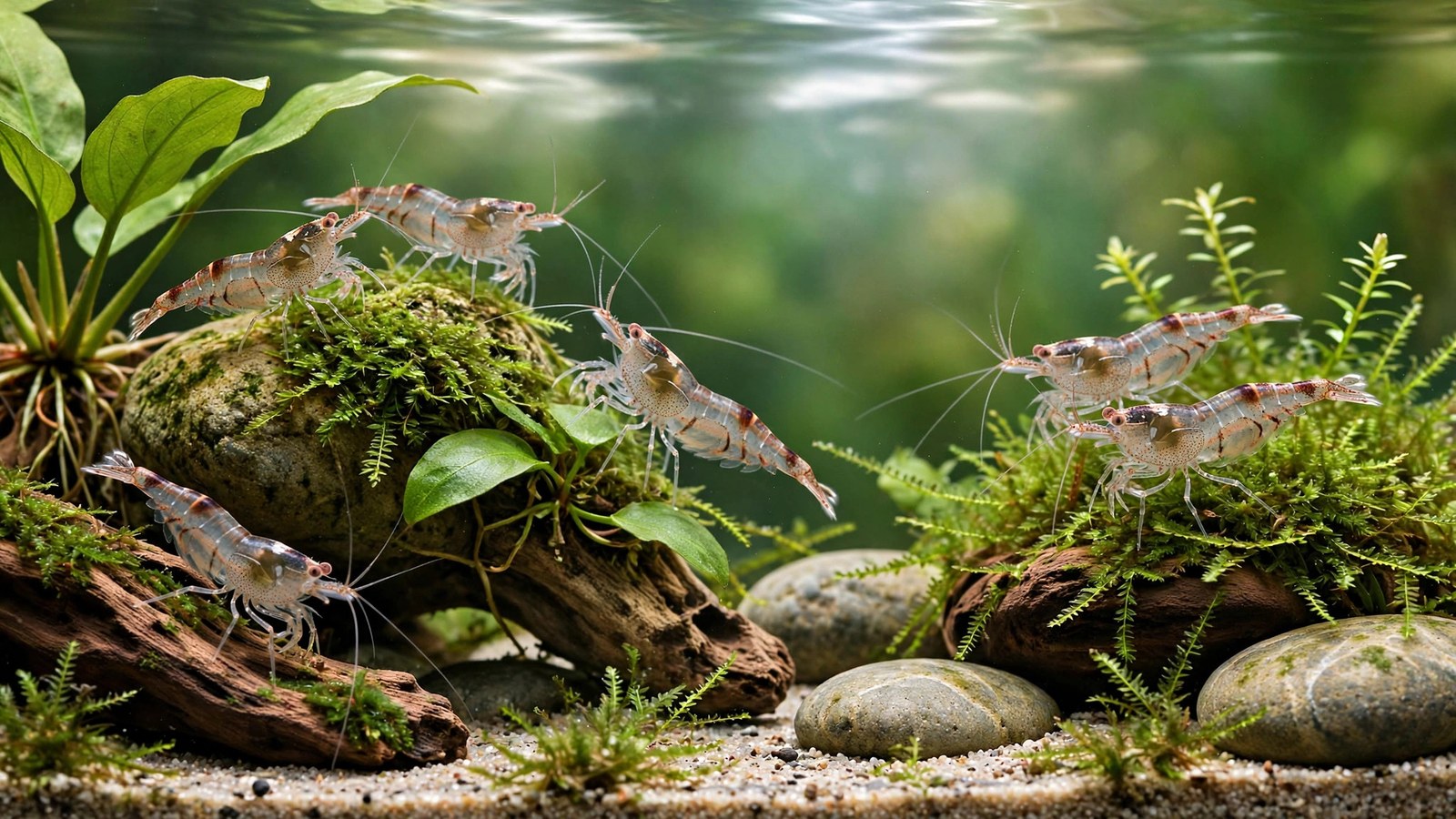
Most Caridina shrimp have a reputation for being delicate — demanding soft acidic water, expensive active soils, and temperature stability that punishes beginners. The Malawa shrimp breaks every one of those rules. This rusty-orange Sulawesi native survives a pH range from 6.5 to 8.5 and temperatures from 16 to 30°C, breeds in ordinary freshwater with no brackish larval stage, and shrugs off conditions that would wipe out crystal shrimp overnight. This is malawa shrimp care for what they are: the hardy, nearly unkillable Caridina.
Malawa shrimp (Caridina pareparensis parvidentata) tolerate pH 6.5–8.5 and 16–30°C — the widest range of any Sulawesi shrimp. Females hatch 20–40 fully formed shrimplets in freshwater after four to six weeks, with no brackish stage. They are currently believed not to interbreed with Neocaridina. A 10–20 litre moss-heavy tank with a sponge filter is all they need.
Malawa shrimp care essentials: tank setup
Everything about a Malawa setup follows one principle: give the biofilm somewhere to grow. These shrimp spend most of their day grazing — picking through moss fronds, wood crevices, and leaf litter for the microbial film and detritus they feed on. A 10–20 litre tank is enough for a starter colony of ten. Because shrimp feed mostly on plants rather than the water column, the same logic from our planted aquarium plants for a fish tank guide applies: denser planting means a more self-sufficient colony.
Moss is the single most important plant in a Malawa tank. Java moss, Christmas moss, or any of the best aquarium mosses for biofilm create the enormous surface area where biofilm blooms and where newborn shrimplets hide. Tie generous clumps to driftwood or let them sprawl across the substrate. Add botanicals like catappa or oak leaves on the bottom; as they soften, they feed the biofilm cycle continuously. See our planted shrimp tank setup guide for layout logic, and a low-tech planted tank setup is all Malawas need — no CO2 required.
Filtration and water parameters
Sponge filters are the default for a reason: gentle flow, enormous biological surface, and zero risk to shrimplets. If you run a hang-on-back or canister filter instead, fit a sponge over the intake — our prefilter sponge guide shows how. A heater is optional within the 16–30°C tolerance band. Cycle the tank for at least three to four weeks before adding shrimp, and let the biofilm establish — a sterile new tank is the one real killer of a Malawa colony.
| Parameter | Range | Sweet spot |
|---|---|---|
| Temperature | 16–30°C | 22–26°C |
| pH | 6.5–8.5 | 7.0–7.8 |
| GH | 3–30 dGH | 6–12 dGH |
| KH | 0–30 dKH | 2–8 dKH |
| Ammonia / nitrite | 0 ppm | 0 ppm |
| Nitrate | <20 ppm | <10 ppm |
| Tank size | 10–20 L+ | 20 L for beginners |
Feeding Malawa shrimp
Malawas are unfussy omnivores, but "unfussy" does not mean "feed nothing." In a moss-heavy tank, biofilm covers perhaps half of their daily needs. Supplement with high-quality sinking shrimp pellets every second or third day — only what they finish in two hours. Blanched zucchini, spinach, and nettle leaves are relished. Add protein food once or twice a week (per Garnelio's species profile) with an otherwise plant-based diet, and their colours deepen noticeably.
Vegetable matter should be pesticide-free: blanch garden vegetables for two minutes and rinse well. Avoid copper-based medications in the tank — copper is acutely toxic to all dwarf shrimp. Uneaten food left to rot is a bigger danger than a missed feeding, so vacuum uneaten vegetable matter after 24 hours.
Breeding in plain freshwater
This is the Malawa's real party trick. Unlike Amano shrimp and most Sulawesi species, which need a brackish phase for larvae, Malawa females produce fully developed shrimplets directly. A berried female carries eggs for four to six weeks, then releases 20–40 miniature versions of the adults that graze biofilm immediately.
Colonies reach self-sustaining momentum fast. In a mature tank, you will spot berried females year-round, and populations of several hundred in a 30-litre tank are common within a year. If you want a dedicated breeding project, a species-only 20-litre with dense moss will outperform a bigger community tank every time — shrimplet survival in fish-free water approaches 100%.
Co-keeping with Neocaridina
Malawas and cherry shrimp make an excellent partnership. First, they are currently believed not to interbreed with Neocaridina, so you can keep a colourful cherry colony and a rusty-orange Malawa colony in the same tank without the hybrid offspring that muddy other shrimp mixes — each bloodline stays pure.
Second, they occupy slightly different niches: cherries roam openly while Malawas favour moss thickets, so competition for grazing is low. Keep feeding generous enough that both colonies get pellets and vegetables, and maintain the dense moss the Malawas favour. Other compatible tankmates include our bamboo shrimp care guide species — gentle filter-feeders that share the same water — plus small snails. Skip fish if breeding is the goal; even small peaceful fish take a toll on shrimplets.
Malawa shrimp are rusty-orange to brown and shift colour with mood — pale when stressed, richly rust-coloured when settled. At 2–2.5 cm they are small but constantly active, and a healthy colony is one of the busiest sights in a planted tank. Garnelio's Malawa shrimp profile lists the full parameter table, and the Aquarium Wiki's species page compiles keeper reports on cohabitation.
Frequently Asked Questions
Do Malawa shrimp really not need brackish water to breed?
Correct. Unlike Amano shrimp, which need a brackish larval stage, Malawa shrimp complete their whole reproductive cycle in freshwater. Females carry eggs for four to six weeks and release 20–40 fully formed shrimplets that graze biofilm immediately. This is what makes them the only genuinely beginner-friendly Sulawesi Caridina — breeding needs nothing beyond a mature, mossy tank.
Can I keep Malawa shrimp with cherry shrimp?
Yes, and it is one of the best co-keeping combinations in the hobby. Malawa shrimp are currently believed not to interbreed with Neocaridina, so cherry, blue pearl, and other Neocaridina bloodlines stay pure alongside them. The two genera also use the tank slightly differently — cherries roam openly while Malawas favour moss thickets — so competition for grazing is low. Just feed generously.
What is the minimum tank size for Malawa shrimp?
Ten litres is the absolute minimum for a starter colony of ten shrimp, but 20 litres is the recommended size, especially for beginners. Larger water volumes buffer parameter swings and hold more moss — and moss surface area is what actually limits colony size. A 20-litre moss-heavy tank can support a self-sustaining colony of a hundred or more Malawas with routine feeding.
Why do Malawa shrimp tolerate such a wide pH range?
Malawas come from Sulawesi's river systems rather than its famous ancient lakes, so they evolved without the stable, mineral-rich chemistry that makes other Sulawesi shrimp so demanding. That riverine origin is why they handle pH 6.5–8.5 and temperatures from 16 to 30°C. Stability still matters more than any exact number — avoid sudden swings even within the tolerated range.
What filter should I use for a Malawa shrimp tank?
A simple sponge filter is ideal: gentle flow, huge biological surface, and zero danger to shrimplets. If you prefer a hang-on-back or canister filter, fit a fine sponge over the intake so babies are not sucked in. Malawas come from slow-moving water and dislike strong current, so keep flow gentle and let the moss do the heavy lifting for water quality.
If you want a Caridina colony that forgives beginner mistakes, breeds without saltwater wizardry, and thrives in the same tank as your cherry shrimp, the Malawa shrimp is the easiest choice in the hobby. Set up the moss, let the biofilm mature, add a starter group of ten — and watch the most tolerant Sulawesi shrimp there is do the rest.