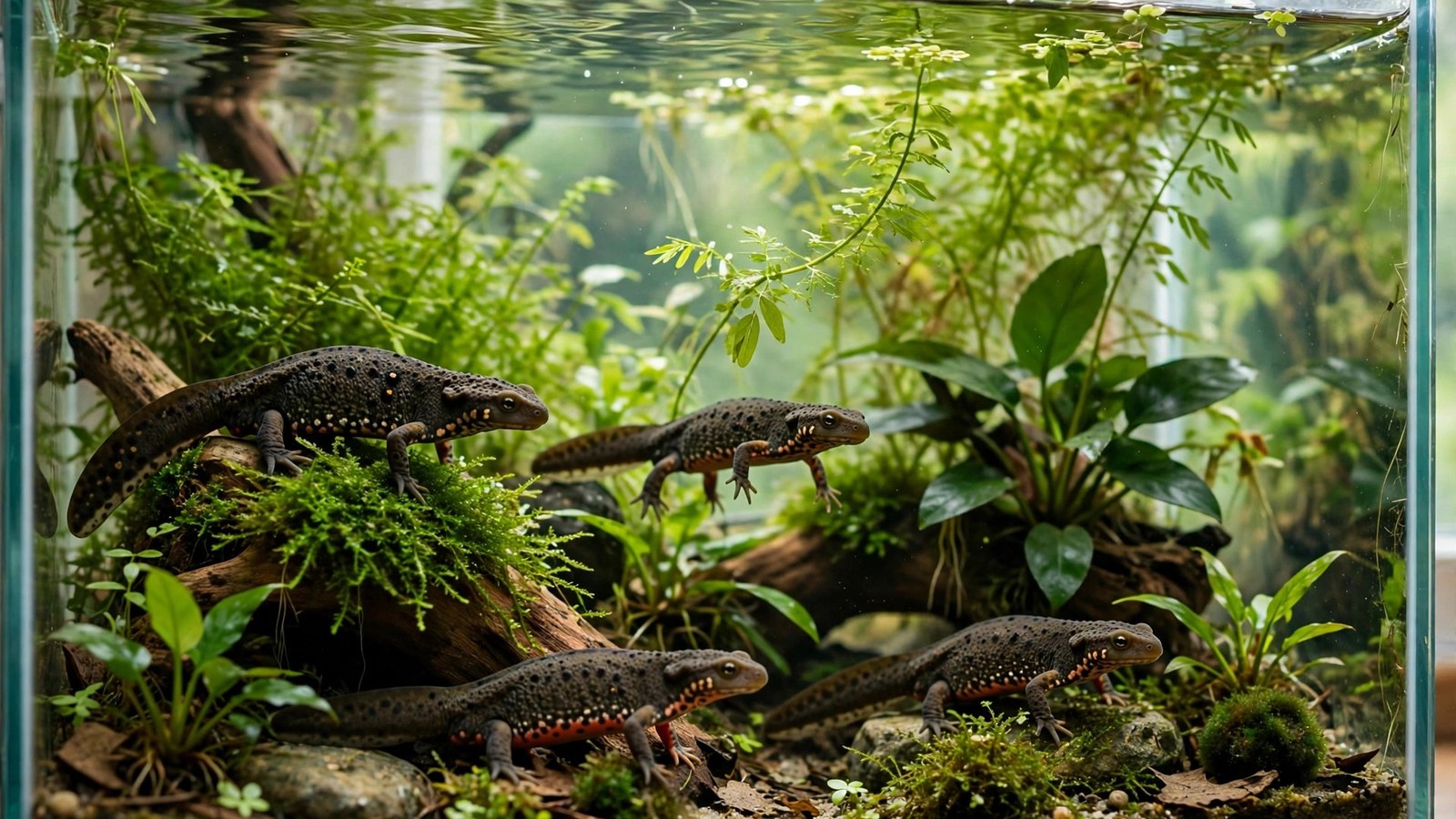
The costliest mistake in this hobby is building a fire belly newt aquarium like a fish tank — heater on, power filter churning, lid gaps an amphibian finds by nightfall. The Chinese fire-bellied newt (Cynops orientalis) is not a fish: it needs cool, still water, a haul-out spot, and plants to rest and lay eggs among. Get those right and it lives 5–10 years.
Chinese fire-bellied newts (Cynops orientalis) do best at 58–68°F (14.4–20°C) in a 10-gallon-plus tank with an 80/20 water-to-land split, sponge filtration, and live plants. No heater — above 75°F (24°C) they stress badly. The most overlooked requirement is an escape-proof lid: newts climb glass, and any gap over ¼ inch is a breakout waiting to happen. Their skin carries tetrodotoxin-type toxins — wash your hands after handling.
Why a Newt Tank Isn't a Fish Tank
Fish tanks are built around warmth, current, and open water. A newt tank is the opposite: cool stillness, dim light, and structure. Newts breathe partly through their skin, so clean, well-oxygenated but barely moving water matters more than any gadget — and a haul-out perch is husbandry, not decoration. Our planted axolotl tank setup runs on the same cool-water, gentle-flow logic.
How to set up a fire belly newt aquarium
Start with at least a 10-gallon tank per newt — a 20-gallon long houses 4–6. Fill the water only 3–10 inches deep: newts are weak swimmers and must reach the surface easily. A longer tank beats a taller one, because floor space matters more than volume.
For the land portion, slope smooth river rocks, cork bark, or a floating turtle dock so it breaks the surface. The haul-out must be climbable, stable, and damp.
| Group size | Tank | Water depth |
|---|---|---|
| 1–2 newts | 10 gallon | 3–6 in |
| 3–4 newts | 20 gallon long | 4–8 in |
| 5–6 newts | 20 gallon long, heavily planted | 6–10 in |
The Cool-Water Rule: No Heater, Ever
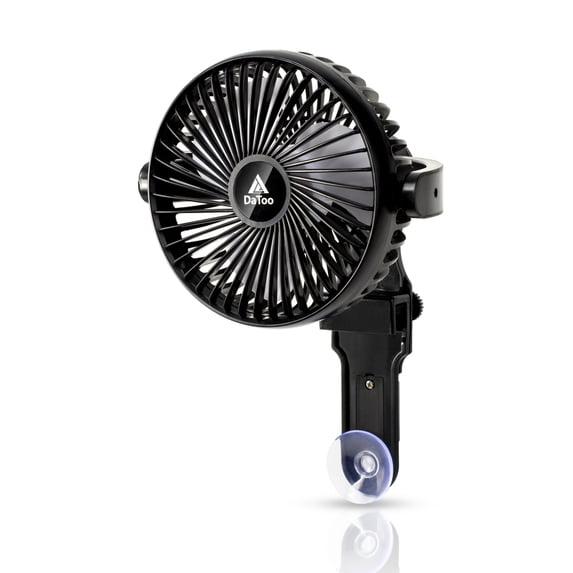
Fire-bellied newts thrive at 58–68°F (14.4–20°C) — ordinary room temperature. Above 75°F (24°C) they stop feeding and sicken; sustained heat kills. The first equipment decision is negative: skip the heater. If summer pushes the room past the low 70s, a clip-on fan across the surface or a cool partial water change does the job; keep the tank away from sunny windows and heat vents.
 ★3.8
DaToo Aquarium Cooling Fan
Check Price on Amazon ★3.8Filtration: Sponge Power, Zero Current
One sponge filter on an air pump is the whole plan: strong biological filtration, almost no current, and no intake a newt can get pinned on. Canisters and hang-on-backs are overkill — their outflow stresses newts and their intakes are limb traps. For larger tanks, a Hamburg matten filter scales up the same gentle philosophy; see our Hamburg matten filter setup guide.
Cycle the tank before any newt arrives — ammonia and nitrite must read zero. Our planted tank first-month guide covers the timeline, and Josh's Frogs fire-bellied newt care notes echo the same pairing: sponge filtration plus an escape-proof lid.
Substrate: Sand or Bare, Nothing Swallowable
Newts strike at food with a gulp that inhales whatever sits nearby, so the bottom must be smooth fine sand (pool-filter sand is ideal) or bare glass. Gravel and large pebbles are a genuine hazard — newts swallow them and food rots between them. Keep sand an inch deep at most so it cannot develop anaerobic dead zones.
Live Plants: Rest Spots, Shade, and Egg-Laying Sites
Plants are furniture and nursery here, not decoration. Females wrap each egg inside a folded leaf, so hornwort and java moss are breeding essentials; broad-leaved Anubias and java fern give perches just beneath the surface, and floaters dim the light — newts are calmer in dim water. Pick low-light species from our low-tech planted tank setup guide and freshwater aquarium plants guide, and quarantine new plants first.
| Plant | Job in a newt tank |
|---|---|
| Hornwort (floating) | Egg-laying fronds and resting raft |
| Java moss | Egg-laying sites and fry shelter |
| Anubias on driftwood | Broad leaves for lounging |
| Java fern | Cover and underwater perches |
| Salvinia or frogbit | Floating shade, calms newts |
Feeding: Live Foods Every Other Day
Fire-bellied newts are carnivores that hunt by smell and movement. Staples: chopped earthworm pieces (no wider than the newt's head), frozen or live bloodworms, and quality amphibian pellets. Feed every other day, only what disappears in minutes, and net out leftovers — rotting protein spikes ammonia fast in cool water. For a shy new arrival, offer food on tongs at its snout after lights-out.
Handling Honestly: The Tetrodotoxin Rule
Fire-bellied newts carry tetrodotoxin-type toxins in their skin glands — the bright orange belly is a warning signal. Handle only when necessary, with clean wet hands, never with dry hands or open cuts, and wash thoroughly afterward. Dry hands harm the newt; the toxin irritates your eyes and mouth. A soft wet net beats fingers. WetWebMedia's long-running fire-belly newt FAQ is a solid second source on low-handling husbandry.
Tank Mates: The Honest Answer Is No
Newts nip slow fish, fish nip newt limbs and tails, and the newts' skin toxins can poison tank mates in a closed volume. Fish also steal food and want warmer water. The only tolerated companions are cherry shrimp and snails as a cleanup crew — and even shrimp babies become snacks. Run a species-only tank.
Frequently Asked Questions
Does my fire belly newt aquarium need a heater?
No — skip the heater entirely. Chinese fire-bellied newts thrive at 58–68°F (14.4–20°C). Heaters push water past 75°F (24°C), where newts stop eating and sicken. In a hot summer, a clip-on fan across the surface or a cool partial water change cools more safely.
How deep should the water be?
Keep it 3 to 10 inches deep. Newts are weak swimmers, and a haul-out — sloped rock, cork bark, or a floating turtle dock — must break the surface so they can rest with lungs above water. Leave 2 inches of air below the lid: newts launch upward when exploring.
Can fire-bellied newts live with fish?
Practically no. Newts nip slow fish, fish nip newt limbs and tails, and tetrodotoxin-type skin secretions can poison tank mates in a closed volume. Fish also steal food and prefer warmer water. Cherry shrimp and snails work as a cleanup crew — though shrimp babies become snacks.
What do fire-bellied newts eat?
Small meaty live foods: chopped earthworm pieces (no wider than the newt's head), frozen or live bloodworms, and quality amphibian pellets. Feed every other day, only what vanishes in minutes, and net out leftovers — rotting protein spikes ammonia fast in cool water.
Are fire-bellied newts poisonous to touch?
They secrete tetrodotoxin-type toxins from skin glands — a defense against predators. Handle only with clean, wet hands, never with dry hands or open cuts, and wash thoroughly afterward. The toxin irritates eyes and mouths — and dry hands harm the newt.
How long do fire-bellied newts live?
Five to ten years with correct care — cool clean water and a steady diet of live foods. Most early deaths come from three classic mistakes: a heater, poor filtration, or an escape through a gappy lid. Treat it as a decade-long commitment.
A Decade of Newts, Built Right
Cool water, a haul-out, gentle filtration, safe substrate, live plants, live food, and a lid with no excuses — that is the whole recipe. Build it right and your fire-bellied newts will thrive in it for years.