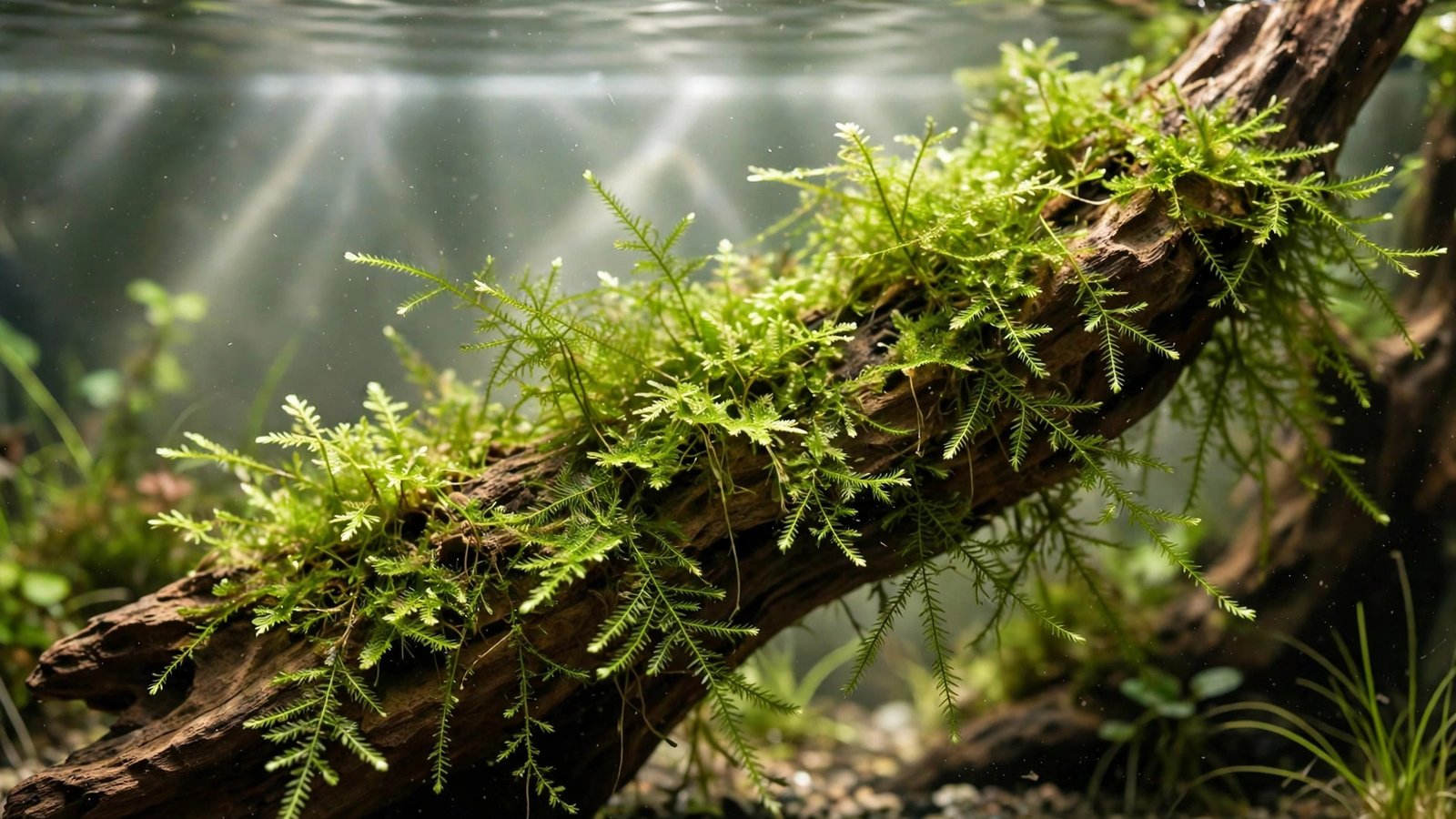
Much of the "Java moss" sold online isn't Java moss at all — it's the finer, tighter-weaving Taiwan moss (Taxiphyllum alternans), and most buyers like it better once they learn what they have. This guide covers taiwan moss care end to end: ideal water conditions, attachment tricks that hold, and why shrimp breeders quietly prefer it over Java moss.
What Taiwan Moss Actually Is
Taiwan moss is sold as Taxiphyllum alternans (Tropica's plant database lists it as 'Taiwan Moss'), though its exact taxonomy is still unsettled. It's a small Asian moss that grows in overlapping, fern-like branchlets, each slimmer and more delicate than Java moss.
Fineness changes how a moss scapes. Java moss sends up chaotic, stringy growth that looks lush from afar but messy up close. Taiwan moss weaves itself into a compact, velvety mat with a horizontal, slightly overhanging habit. That tight weave is why aquascapers reach for it on bonsai-style moss trees and moss walls, where Java moss would blob.
How to Tell Taiwan Moss from Java Moss
The common mistake is paying Taiwan-moss prices for mislabeled Java moss. Under identical conditions, Taiwan moss fronds are visibly narrower, the branching more regular and fern-like, and the mat denser and darker green. Java moss is broader, stringier, more upright — and faster.
| Trait | Taiwan moss | Java moss |
|---|---|---|
| Scientific name | Taxiphyllum alternans | Taxiphyllum barbieri |
| Frond width | Narrow, delicate | Broader, coarser |
| Growth habit | Horizontal, dense mats | Stringy, upright |
| Growth rate | Medium | Fast |
| Best look | Trees, walls, carpets | Filling gaps quickly |
Still deciding between the two? Read our Java moss care guide first, then see how both rank in our 7 best aquarium mosses compared.
Taiwan Moss Care: Light, Temperature, and CO2
Tropica rates Taiwan moss easy, with low light and CO2 demand. But "survives" and "thrives" differ — a few concrete numbers separate a mediocre patch from a moss wall worth photographing.
- Light: Low to medium, roughly 30–50 PAR at moss level. It survives dim stock lighting, but medium light plus lean fertilization gives the dense, branching fronds of showcase tanks.
- Temperature: 20–28 °C (68–82 °F) is the sweet spot. Growth stalls above 29 °C (84 °F) and the moss turns stringy — skip it in uncooled discus tanks.
- CO2: Not required — but 10–25 mg/L of CO2 with good light promotes much better branching and faster knitting. Treat it as an accelerator, not a requirement.
- Water: Adaptable to soft through hard water, pH 6.0–7.5. Stability beats exact numbers.
- Fertilizer: A half dose of a comprehensive liquid fertilizer weekly. Mosses feed from the water column, and lean dosing starves competing algae.
How to Attach Taiwan Moss
Taiwan moss has no true roots — just tiny rhizoids that grip surfaces. Burying it in substrate rots it. Three reliable methods:
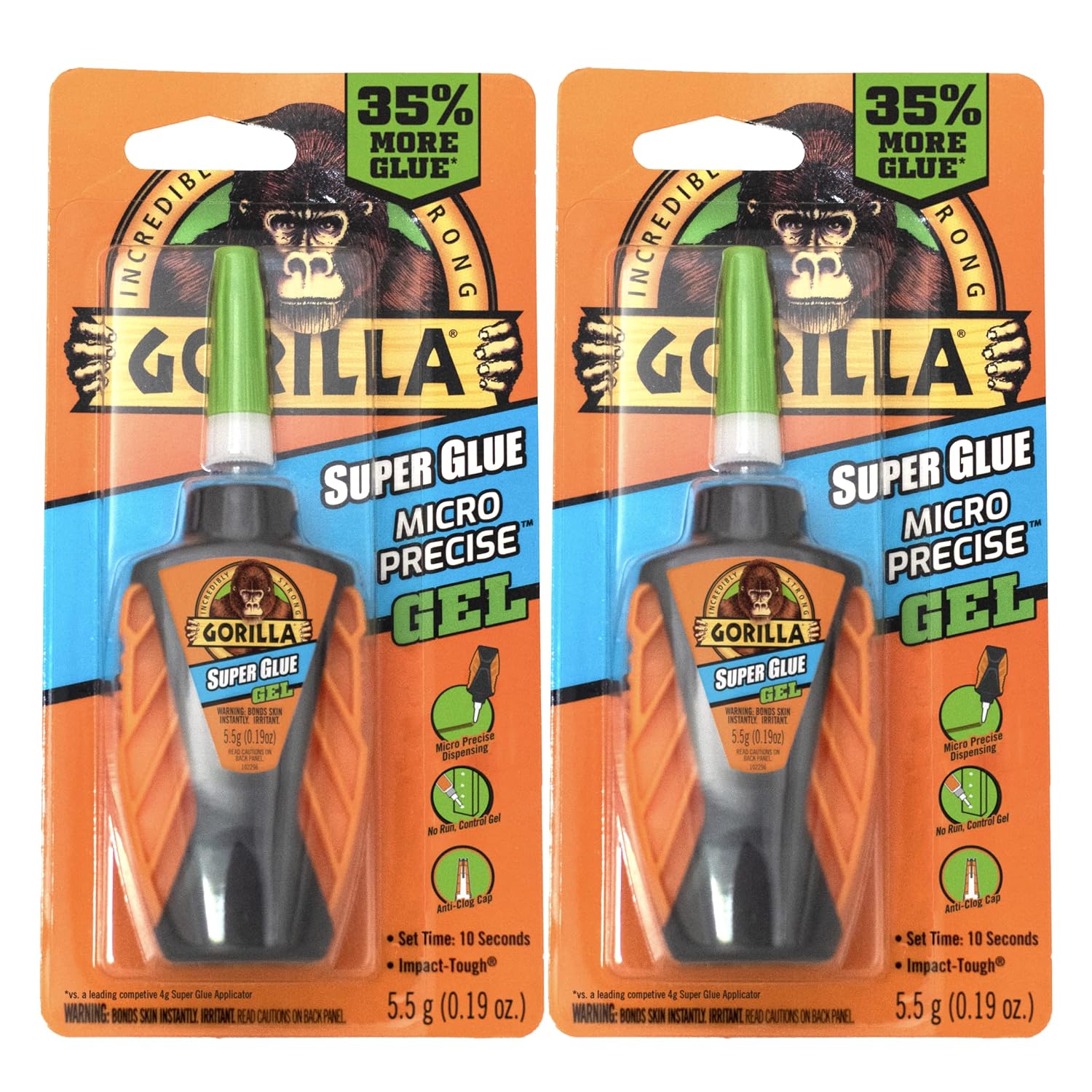
- Cyanoacrylate gel superglue: Pat the hardscape dry, dab plain gel superglue (no additives), press a thin moss portion on, hold 30 seconds. Bonds through water in about a minute; shrimp-safe once cured.
- Fishing line or cotton thread: Spread a thin moss layer over wood or rock and wrap it. Cotton dissolves in 2–3 weeks; fishing line lasts longer but must be removed eventually.
- Mesh sandwiches: For moss walls, press moss between two stainless mesh sheets and suction-cup them to the glass — a living green wall in 4–6 weeks.
Keep each portion about 5 mm thick — thin layers attach and grow evenly, while thick clumps rot from the inside. See our guide to how to propagate Java moss for the full technique breakdown; the methods are identical.
 ★4.6
Gorilla Micro Precise Super Glue Gel
Check Price on Amazon ★4.6Growth Rate and Trimming
Expect a new layer to knit in over 4–6 weeks under medium light, or 8–12 weeks in a low-tech tank. Taiwan moss stays lower and tighter than Java moss, so trim every 3–4 weeks in high light, or 6–8 weeks in low light.
Cut the mat down to about 1–2 cm of fresh green with curved aquascaping scissors. The classic error is letting the mat get thick: the shaded underlayer dies and detaches in ugly brown sheets. Light, frequent trims keep everything photosynthesizing — and every cutting is a free plant. Scatter trimmings over a new rock or press them into mesh; they anchor within two weeks.
Best Uses: Shrimp Tanks, Nano Scapes, and Moss Walls
- Shrimp breeding tanks: Dense fronds host biofilm and microorganisms that baby shrimp graze constantly. Many breeders report noticeably more surviving Neocaridina fry in tanks with thick Taiwan moss.
- Nano scapes: In a 5–10 gallon tank, coarse mosses look oversized. Taiwan moss's fine texture stays in proportion — wrap it on a small branch and it reads as a miniature tree canopy.
- Moss walls and trees: Its horizontal, overhanging habit drapes like weeping willow foliage on branching wood and knits into seamless green backdrops on mesh.
Among fine-textured mosses, Taiwan moss sits between peacock moss (similarly fine, more upright) and weeping moss (more dramatic draping, pricier). Also compare Christmas moss, flame moss for a vertical look, and phoenix moss as the ultra-slow alternative.
Beating Algae in Taiwan Moss
Dense mats are algae magnets — thread algae weaves into fronds where it can't be picked out by hand. Prevention beats treatment: start with tissue-culture portions, run 6–8 hours of light daily in new tanks (8–10 only once established), dose lean, and stock Amano shrimp and nerites early to graze the moss clean.
If thread algae takes hold, a 3-day blackout plus a hard trim usually resets the mat — healthy moss rebounds from its rhizoids even after an aggressive cut. Strong growers like Java fern and anubias lock nutrients in plant tissue instead of feeding algae.
Frequently Asked Questions
Is Taiwan moss easier than Java moss?
Equally easy to keep alive, but Taiwan moss demands more patience. It grows at a medium pace versus Java moss's fast growth, and fine fronds show algae sooner. In exchange you get a denser, more refined look — start with Java moss for instant coverage, Taiwan for texture.
Does Taiwan moss need CO2?
No — Tropica rates its CO2 demand as low, and it grows well in low-tech tanks. Adding CO2 at 10–25 mg/L with medium light noticeably improves branching density and speed, but treat it as an accelerator, not a requirement for success.
How fast does Taiwan moss grow?
It's a medium grower: a thin layer knits into a solid mat in 4–6 weeks under medium light with CO2, or 8–12 weeks low-tech. Growth slows above 29 °C (84 °F) and in very dim light. Trim every 3–4 weeks to keep it dense.
Can I glue Taiwan moss to driftwood?
Yes — plain cyanoacrylate gel superglue is the most popular method. Dry the spot, apply a small dot, press a thin moss portion on, and hold about 30 seconds. It's shrimp- and fish-safe once cured, under a minute in water.
Why is my Taiwan moss turning brown?
Usually a mat that's too thick: the shaded underlayer dies and browns from the inside out. Trim hard back to 1–2 cm of green, improve water flow, and check temperatures aren't above 29 °C. Brown patches after sudden changes are often just transition melt.
Is Taiwan moss good for shrimp tanks?
Excellent — among the best mosses for shrimp. Dense, fine fronds collect biofilm that newborn shrimp graze constantly, and shrimplets hide safely inside the mat. Tissue-culture cups are the safest buy: guaranteed free of snails, algae, and pesticides that harm sensitive shrimp.
Bringing It All Together
Taiwan moss rewards a simple formula: attach it thin, keep water stable at 20–28 °C with low to medium light, and trim before it mats too thick. Whether it's carpeting a shrimp nursery, draping a bonsai tree, or turning a glass wall green, its fine texture delivers a look Java moss can't. Buy tissue-culture portions for a pest-free start, glue them on, and in two months you'll understand why so many "Java moss" listings are secretly this species instead.