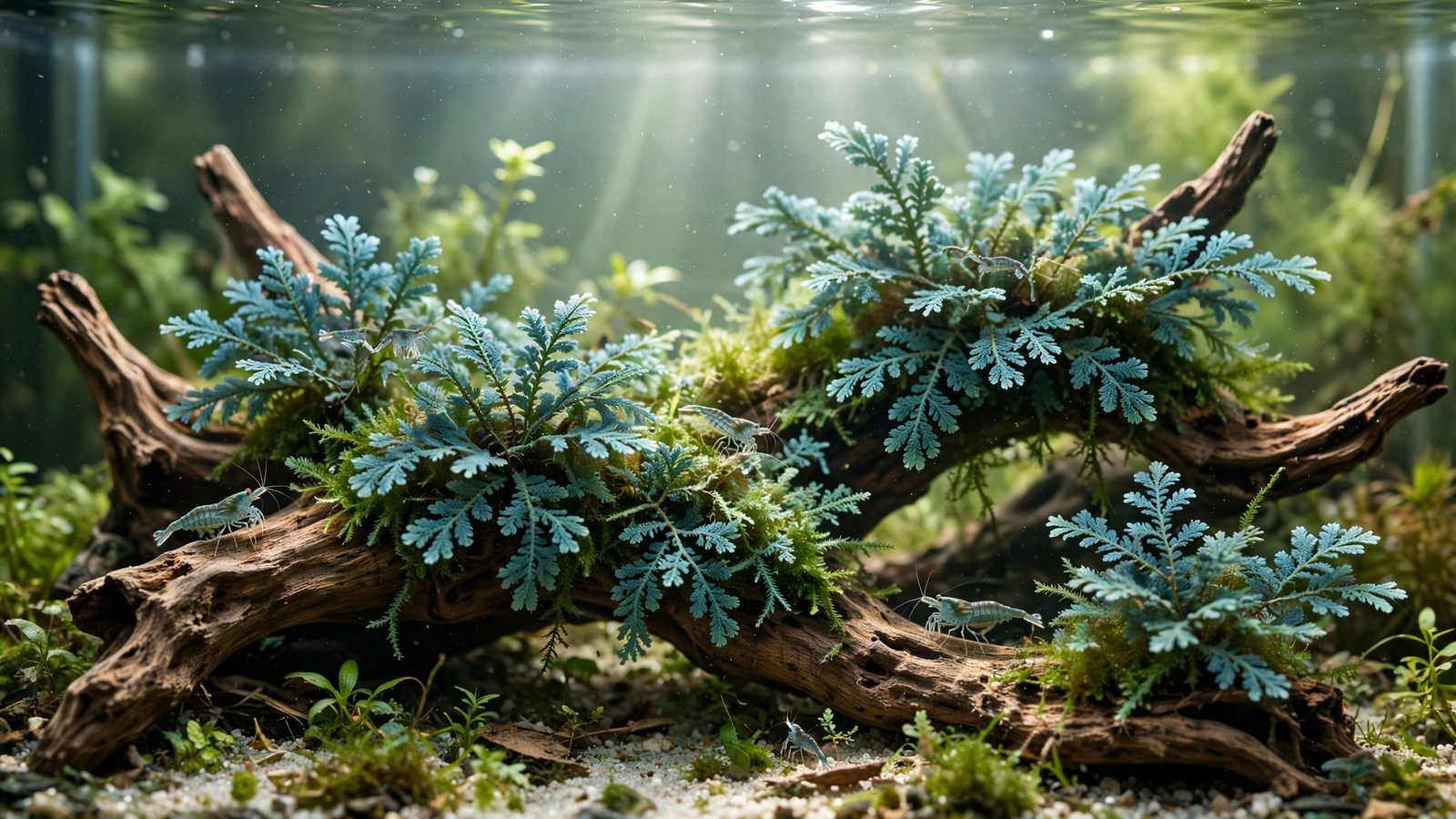
You'll know peacock moss the moment you see a great shrimp tank — soft blue-green fans of feathered fronds spilling over a branch, each tip glowing faintly teal. Peacock moss (Taxiphyllum sp. "Peacock") is one of the hobby's most quietly prized mosses: easy to keep, endlessly versatile, and — its real claim to fame — a magnet for shrimplets grazing biofilm. If you've kept java moss, you'll find it just as forgiving but distinctly more refined in looks. This guide covers identification, care, attachment, trimming, and turning it into the shrimp haven other keepers ask about.
How to Identify Peacock Moss
It gets its name from the way its fronds splay outward in neat, overlapping fans — a display that recalls a peacock's tail in a healthy clump. Its other giveaway is color: a blue-green or teal sheen, lighter and cooler than most aquarium mosses, that intensifies under moderate light without CO2 or high-tech gear.
Identification matters because the moss trade is full of mix-ups. Christmas moss looks similar at a glance, but its branchlets form triangular "tree" shapes that hang downward, while peacock moss spreads in flatter, wider fans. Java moss is coarser, darker, and messier — peacock is the tidier, bluer cousin. Weeping moss drapes in teardrop strands and flame moss grows in stiff upright spirals; peacock sits between the two, creeping outward with layered fans.
When buying, look for bright blue-green tips and short, dense branching — pale, stringy portions have been starved of light and recover slowly. Most peacock moss is sold as loose golf-ball-sized portions, which establish well once attached.
Care Parameters: Temperature, pH, and Light
Care is where peacock moss quietly beats most lookalikes: it asks for almost nothing. It thrives at 18–28°C, tolerates pH from 5.5 to 7.5, and grows in soft or moderately hard water (GH 3–12). Low to medium light for 6–8 hours a day is the sweet spot — enough for the teal color, not so much that algae colonizes the fronds. It needs no CO2 injection; in a stocked tank, fish and shrimp waste plus a light all-in-one liquid fertilizer dosed weekly is plenty.
Stability matters more than perfection. It can shed older fronds after a big move — a temperature or water-chemistry change — then rebound once conditions settle. Give new portions a week or two of gentle conditions rather than blasting them with light to "speed things up."
How to Attach This Moss to Wood and Stone
Peacock moss won't root into substrate — it anchors to hardscape with tiny rhizoids, so your job is holding it still for the 2–4 weeks it takes to grab on. The cleanest method is cyanoacrylate superglue gel: pat the wood or stone dry, dab a thin line of gel, press a small clump on for ten seconds, and it's fixed. Gel (not liquid) is the key — liquid runs and smothers fronds; gel stays put. One tube goes a long way, which is why most planted-tank keepers keep one handy.
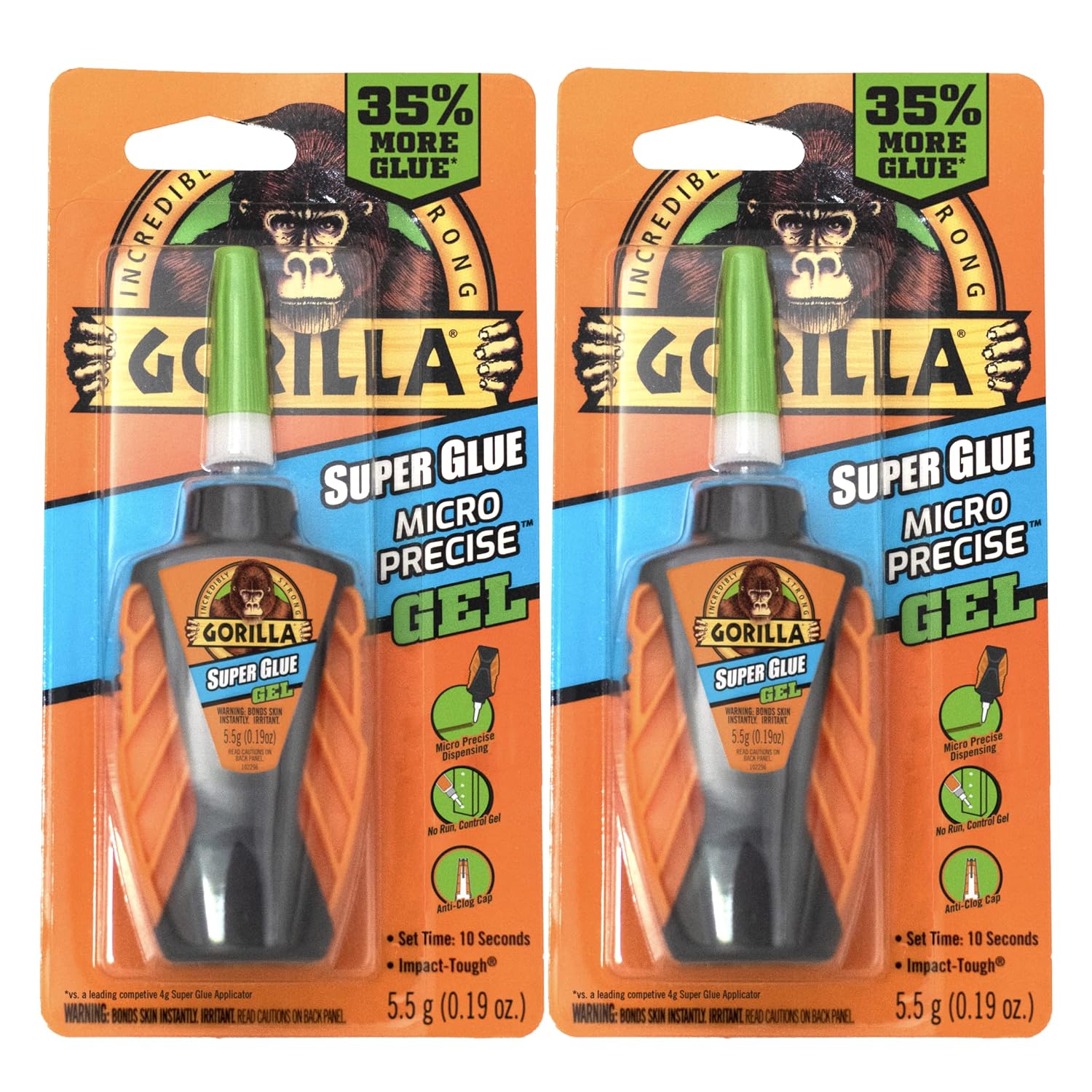 ★4.6
Gorilla Micro Precise Super Glue Gel
Check Price on Amazon ★4.6Alternatively, tie thin tufts onto branches with cotton thread or dark fishing line. Thread rots away on its own in a few weeks; fishing line is invisible but needs cutting free once the moss has attached, or it can girdle growing fronds. For moss walls or tree canopies, sandwich a thin layer between two pieces of plastic mesh — growth pokes through both sides within a month.
Buy peacock moss in loose portions and split each one into three or four smaller clumps before attaching — coverage multiplies much faster than planting one big lump. Keep new attachments in gentle flow at first; strong current can peel unrooted clumps loose before the rhizoids set.
Growth Rate and Trimming
Expect slow to medium growth — roughly 1–3 cm of new frond extension per month, faster with CO2 and stronger light. Peacock moss layers new fans over old ones, so the base eventually gets shaded and dies back. Trim every 6–8 weeks: snip the outer layer, shake the clump gently underwater to release trapped detritus, and thin any section that has gone dark underneath.
Never throw trimmings away — every cut clump is a free new portion. Press fresh cuttings onto bare spots of hardscape and they'll anchor within weeks, so a single purchase can colonize a whole aquascape in a few months. A turkey-baster blast during water changes lifts settled mulm out of the fronds. For a broader comparison with its relatives, see our roundup of the best aquarium mosses for planted tanks.
Why Shrimp Keepers Love This Moss
This is where peacock moss earns its cult status. The fine, layered fans create enormous surface area, and in a cycled tank every square millimeter gets coated in biofilm — the microscopic mix of bacteria and algae that shrimplets graze constantly. Newly hatched shrimp are too small for powdered foods, so mature peacock moss is a 24-hour buffet and nursery in one. Keepers routinely report higher shrimplet survival in tanks with generous moss coverage.
It suits both Neocaridina and Caridina — bluer and more compact in soft water, faster and looser in hard water. Add it to breeding tanks, shrimp-only cubes, or as a foraging patch under a feeding dish. Flame moss pairs beautifully alongside it, its upright spirals contrasting peacock's flat fans.
Frequently Asked Questions
Is peacock moss good for beginners?
Yes — it's one of the most forgiving mosses you can start with. It tolerates a wide temperature and pH range, needs no CO2 or special lighting, and survives inconsistent dosing schedules. The only real beginner trap is too much light in a warm tank, which invites algae. At moderate light it largely takes care of itself.
How can I tell peacock moss apart from java moss?
Look at color and structure. Peacock moss is blue-green with fan-shaped fronds that splay outward in layers. Java moss is darker green with irregular, tangled branching and no fan habit. Side by side, peacock looks tidier — which is why it suits formal aquascapes better.
Does peacock moss need CO2?
No — it's one of the classic no-CO2 mosses and grows fine without injected CO2. Supplementation speeds growth and deepens color, but it's optional; stable water, moderate light, and weekly water changes matter far more.
How fast does peacock moss grow?
Slowly to moderately — about 1–3 cm of new frond growth per month in a typical low-tech tank. It spreads by layering new fans over old, so coverage builds steadily even when upward growth looks modest. Trim every 6–8 weeks to stop the shaded base dying off, and re-attach the cuttings to multiply coverage for free.
Why is my peacock moss turning brown?
The three usual culprits are heat above 28°C, sudden parameter swings after a move, and the shaded base dying under overgrown layers. Check temperature first, then trim away the brown sections — green fronds beneath regrow within weeks. Patchy, stringy browning usually means algae is smothering it; reduce light hours and improve water changes.
A Living Pantry for Your Shrimp
Peacock moss asks little and gives a lot: teal fans that elevate any aquascape, beginner-friendly care, and a biofilm factory shrimplets genuinely depend on. Attach a few portions to wood or stone, keep light moderate and temperature under 28°C, trim every couple of months — soon you'll be giving cuttings away. For grower notes, see Tropica's Taxiphyllum moss database entry and their profile of the closely related Taxiphyllum barbieri, covering attachment and pruning that applies to peacock moss too.