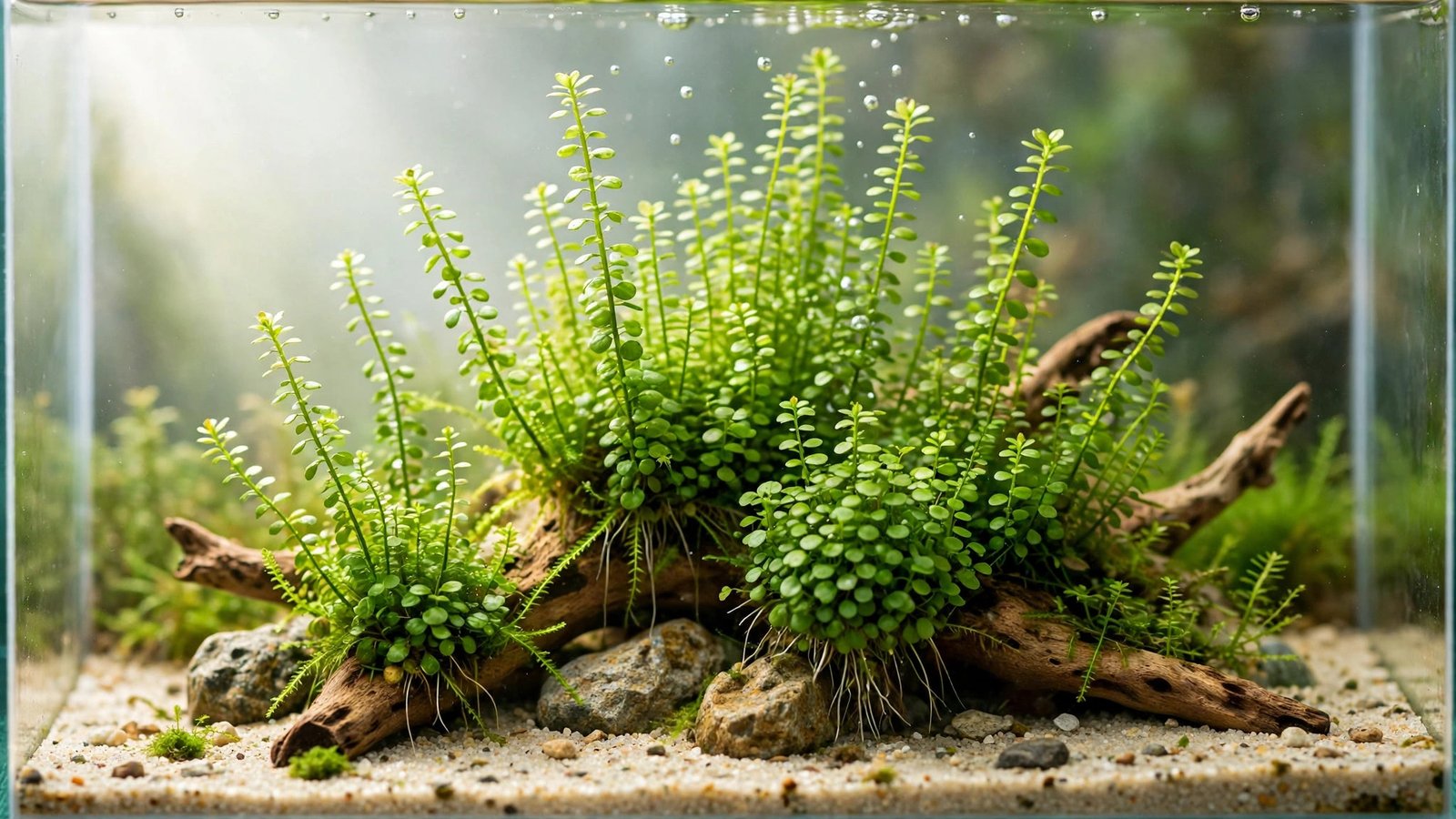
Most aquarium mosses creep. They smother driftwood and stone in trailing sheets of feathery fronds — beautiful, but predictable. Pearl moss refuses to behave. Its tiny round leaflets stack into upright, star-shaped rosettes five to ten centimeters tall — an accent texture no creeping moss can imitate. Master pearl moss care and you get one of the most distinctive hardscape mounds in aquascaping: a terrestrial Mniaceae moss adapted gracefully to life underwater. It grows slowly, prefers cool water, and is particular about light — but it asks for very little else.
Pearl Moss vs Pearl Weed: Clearing Up the Mix-Up
Shops sell both names side by side, and the mix-up costs beginners weeks. In every head-to-head comparison of the best aquarium mosses, pearl moss is the upright outlier among creeping mosses — and the only one confused with a completely different plant. Pearl moss (Plagiomnium cf. affine) is a true moss: no roots, no vascular stems. Pearl weed (Hemianthus glomeratus) is a fast-growing stem plant that roots in substrate and can carpet a tank in a month. One is a slow epiphyte; the other is a weed in the nicest sense. If you buy "pearl moss" expecting a carpet and receive stem cuttings, the label was wrong. The Fishy.wiki database entry for Plagiomnium cf. affine confirms the taxonomy: family Mniaceae, very slow growth, epiphyte on hardscape — nothing like a Hemianthus carpet.
| Feature | Pearl moss | Pearl weed |
|---|---|---|
| Scientific name | Plagiomnium cf. affine (Mniaceae) | Hemianthus glomeratus (Plantaginaceae) |
| Plant type | True moss — no roots, no vascular stems | True stem plant with roots and nodes |
| Growth habit | Upright star-shaped rosettes, 5–10 cm | Upright branching stems, up to 15 cm |
| Leaves | Round leaflets ~2 mm in whorled rosettes | Tiny rounded leaf pairs along thin stems |
| How it is planted | Epiphyte — tied or glued to rock/wood | Planted in substrate, spreads by runners |
| Growth speed | Slow — months to form a mound | Fast — weeks to form a carpet |
Getting pearl moss care right: light, temperature, and water
Pearl moss is a temperate moss adapting to submersed life — think forest floor: cool, humid, dappled light. It tolerates 10–28 °C, but grows best at 20–24 °C (68–75 °F) and stalls above 26 °C. Give it medium light around 25–40 PAR to keep rosettes compact and pearl-green. Soft water suits it best — pH 6.0–7.5, 1–12 °dGH — which is why it pairs well with soft-water companions like myriophyllum.
| Parameter | Target | Notes |
|---|---|---|
| Light | Medium, 25–40 PAR | Below ~20 PAR it thins and withers; above ~50 it invites algae |
| Temperature | 20–24 °C (68–75 °F) | Cool-preferring; tolerates 10–28 °C but stagnates above 26 °C |
| pH | 6.0–7.5 | Slightly acidic to neutral |
| Hardness | 1–12 °dGH | Soft water preferred |
| CO2 | 15–25 mg/L | Recommended, not mandatory — denser mounds with it |
| Fertilization | Lean all-in-one, 1–2 doses weekly | Heavy dosing feeds algae on its dense rosettes |
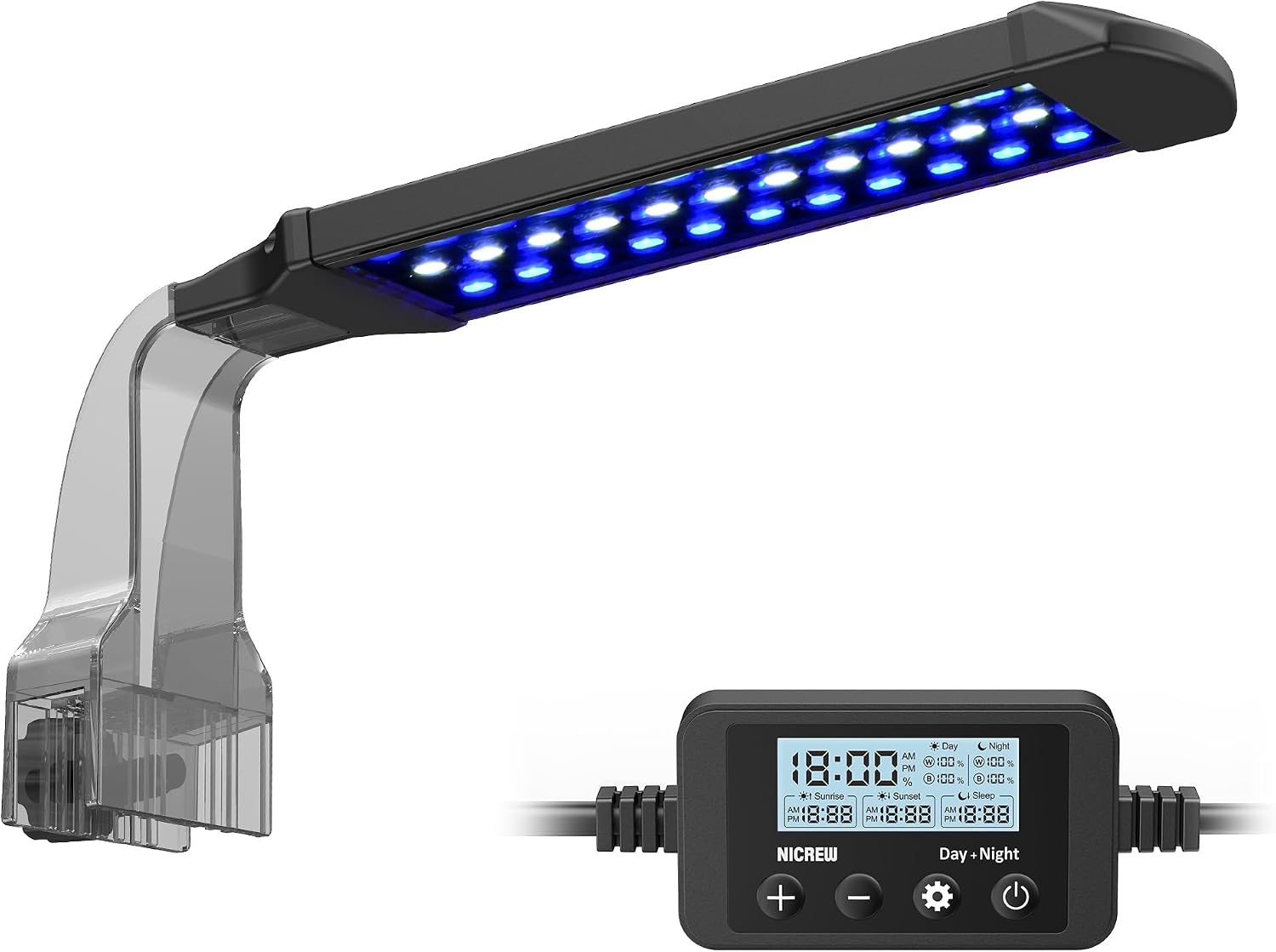
CO2 deserves an honest note. Pearl moss survives without it — visible mounding takes six to ten weeks. At 15–25 mg/L, rosettes stack tighter and look fuller by week eight. Start at the low end of that range and watch your livestock before raising it — slow moss never justifies gassing fish. In a low-tech tank, a daily liquid carbon dose plus lean all-in-one fertilizer is the economical middle ground. Choose a low-to-medium LED that holds 25–40 PAR — too much light on a slow plant is the most common mistake.
 ★4.6
NICREW ClassicLED Plus planted aquarium light
Check Price on Amazon ★4.6How to Plant Pearl Moss: Attachment That Lasts
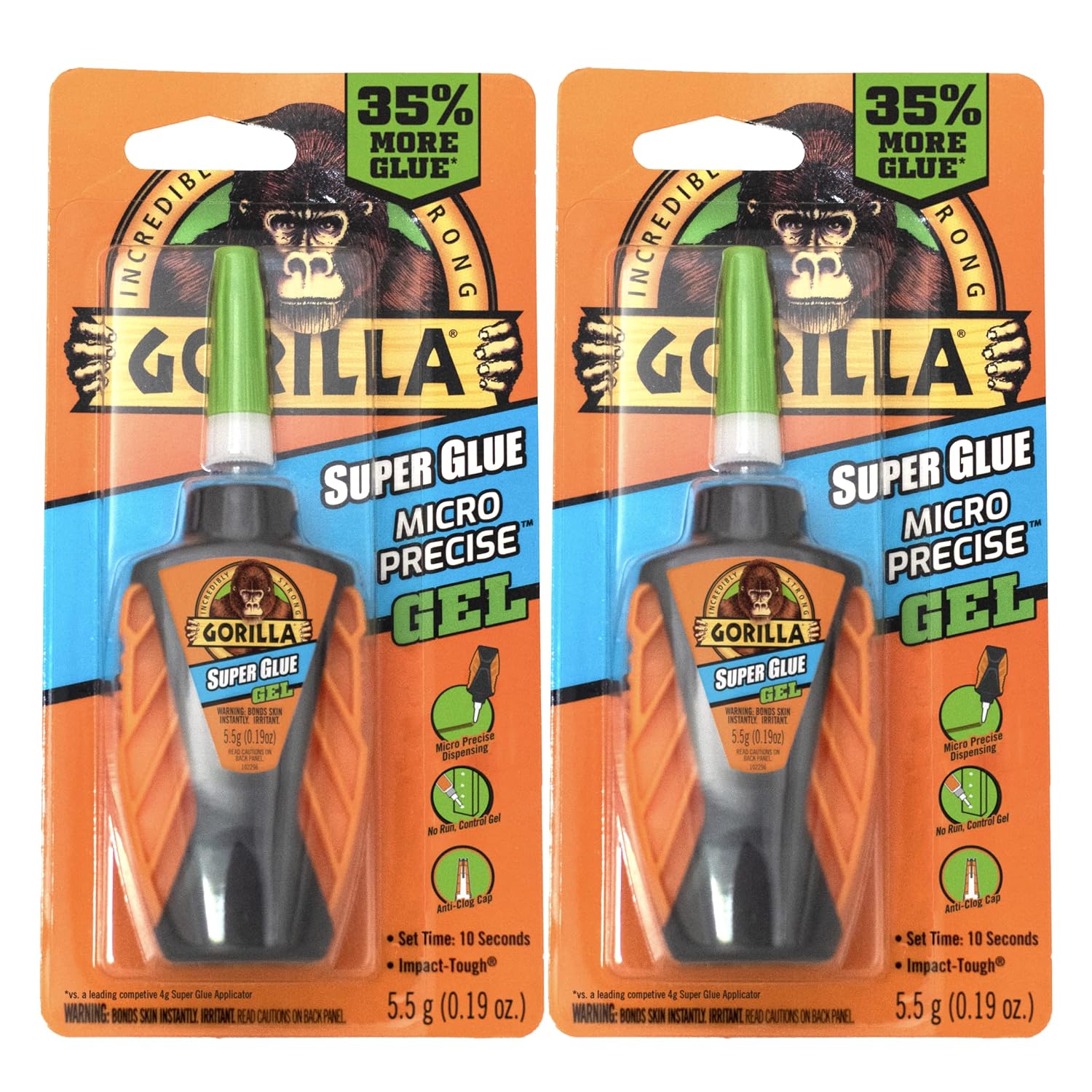
Pearl moss is an epiphyte, so "planting" means attaching. Take a clean portion — Dennerle's InVitro pearl moss cups arrive algae-free and adapt fastest — and split it into marble-sized tufts. Dot cyanoacrylate gel glue on rough rock or wood, press each tuft on, and hold for ten seconds. Dark cotton thread works too; it rots away as the rhizoids grip, usually within four to six weeks. Space tufts one to two centimeters apart so light reaches the inner rosettes.
Propagation is the same operation in reverse. Once a mound is established — expect three to four months in a low-tech tank — pull it apart into daughter tufts and reattach them, much like how to propagate java moss, without the sprawl. Never divide a tuft still converting from emersed growth; give new portions four to six weeks first.
 ★4.6
Gorilla Micro Precise Super Glue Gel
Check Price on Amazon ★4.6Growth Rate, Algae, and Low-Light Withering
Patience is the actual difficulty rating. Pearl moss is genuinely slow — a thumbnail-sized tuft becomes a walnut-sized mound in eight to twelve weeks with CO2, longer without. Trim only when a mound outgrows its silhouette: pinch the top third of rosettes with tweezers and reattach the trimmings elsewhere.
The two failure modes are opposites. Low-light withering shows as pale, thinning rosettes that stop stacking — raise light toward 25 PAR rather than reaching for fertilizer. Algae tangles dense rosettes in too-bright or nutrient-heavy tanks, and pearl moss cannot outgrow it. Spot-treat with a syringe of liquid carbon at half label dose, and keep shrimp on patrol: a handful of amano or cherry shrimp picks rosettes clean.
Aquascaping With Pearl Moss: Iwagumi Accents and Mounds
Pearl moss earns its place as a contrast texture. In an iwagumi layout, one mound against hairgrass or Monte Carlo gives the eye a soft, star-textured focal point among blades and carpets. Pair it with a bold-leaf background like crinum natans and fine stems such as rotala hra or ludwigia ovalis.
Among the best plants for a planted aquarium, pearl moss is the unusual texture pick.
Frequently Asked Questions
Is pearl moss the same as pearl weed?
No. Pearl moss (Plagiomnium cf. affine) is a true moss with no roots that grows upright in star-shaped rosettes. Pearl weed (Hemianthus glomeratus) is a fast-growing rooted stem plant. They share only the name "pearl," and stores sometimes mix up the labels. Check the base: rhizoids and no stem means moss.
Can pearl moss grow without CO2 injection?
Yes. Pearl moss grows without injected CO2 at a slow but steady pace — expect walnut-sized mounds in three to five months. Adding CO2 at 15–25 mg/L tightens the rosettes and roughly halves that timeline. In low-tech tanks, a daily liquid carbon dose plus lean all-in-one fertilizer is the best middle ground.
Why is my pearl moss turning brown or thinning out?
Pale thinning rosettes almost always mean too little light — raise it toward 25–40 PAR. Browning in a new tank is usually the emersed-to-submersed transition; leave it undisturbed for four to six weeks while it converts. Browning at the base with healthy tips means the tuft was buried — reattach it to hardscape.
How do you attach pearl moss to rocks or wood?
Split the portion into marble-sized tufts and fix them with cyanoacrylate gel glue or dark cotton thread. Hold glued tufts for about ten seconds. Thread rots away within four to six weeks once the moss's rhizoids grip the surface. Space tufts one to two centimeters apart so light reaches the inner rosettes.
Does pearl moss need to be trimmed?
Rarely. It is slow enough that most mounds need attention only every two to three months. When a mound outgrows its silhouette, pinch the top third of the rosettes off with tweezers. Reattach the trimmings elsewhere — every piece becomes a new tuft, so trimming is how you propagate it.
Pearl moss asks for three things — cool water, medium light, and a surface to hold — and gives you a texture almost nothing else in the hobby can match. Buy it under its proper name, treat it as an accent, and let it take its time.