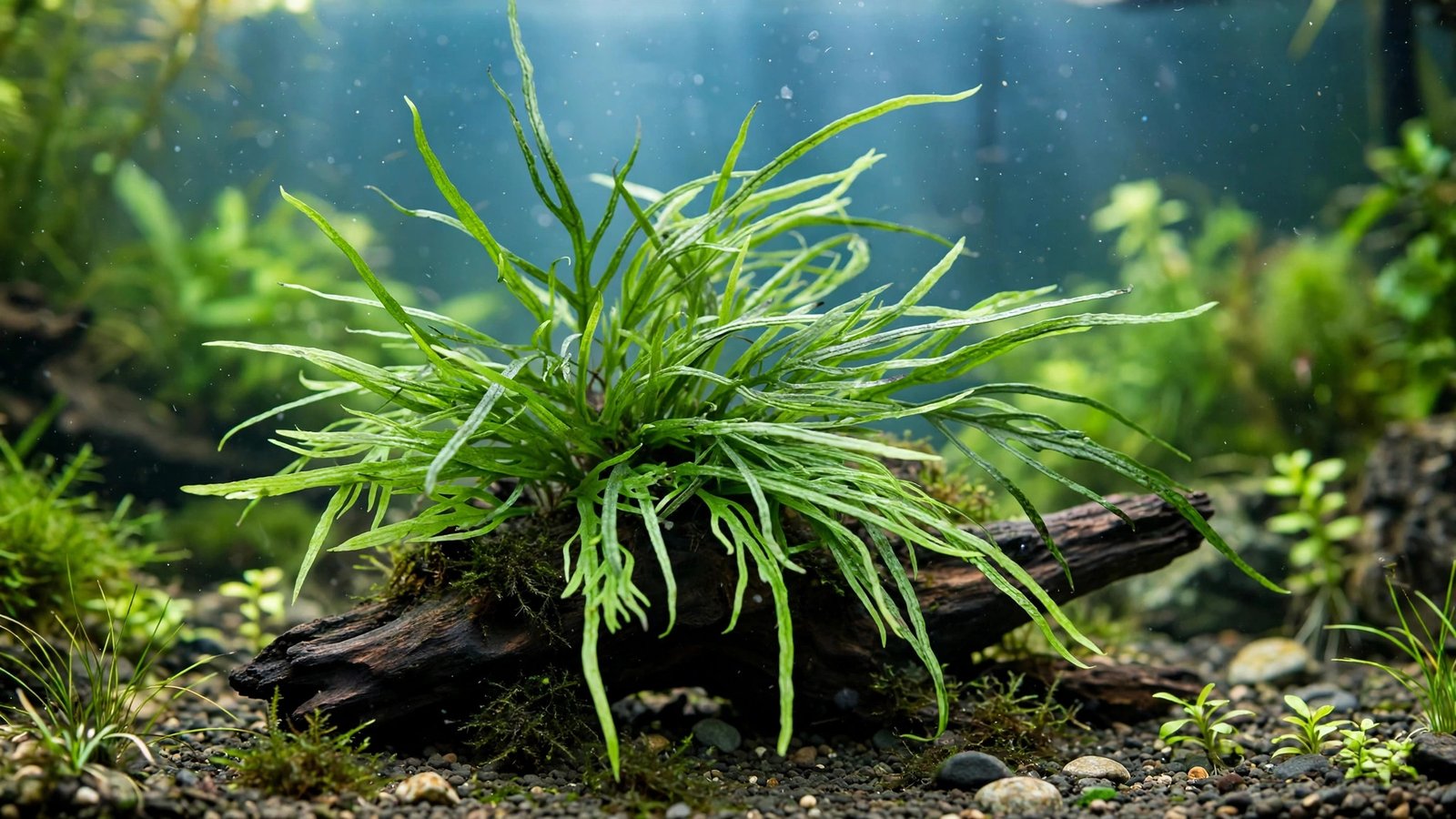
Bury it and it rots; tie it to wood and it flourishes — that single choice decides whether your trident java fern lives or melts within a fortnight. More Java ferns die from one innocent mistake — pressing the thick green rhizome into the gravel — than from any disease or algae outbreak, and this needle-lobed cultivar is no exception. A compact, slower-growing form of the classic plant (Microsorum pteropus 'Trident', Tropica 008G), it tops out around 15–20 cm on low light and water-column food alone. For the species-wide fundamentals, see our Java Fern Care: Lighting, CO2, Fertilizer & Growth guide; below is everything that makes the Trident form special.
What makes the trident java fern so compact?
The name gives it away: where standard Java fern grows broad, spear-shaped blades, Trident's leaves split into narrow, needle-like lobes — usually in threes — "tripartite" — though leaves vary from whole to deeply multipartite. Tropica selected it as cultivar 008G, a smaller form of Microsorum pteropus, and its official plant profile for Trident confirms the essentials: 15–20 cm tall, low light demand, slow growth.
That size is the appeal: the classic Java fern can push 20–35 cm and swallow a midground pocket, while Trident keeps the species' feathery texture at a scale that suits 20–40 litre nano tanks. It also means less maintenance — where stem plants demand weekly pruning, a Trident clump can go months with just the occasional dead-leaf removal.
| Cultivar | Leaf shape | Typical height | Best use |
|---|---|---|---|
| Standard Java fern | Broad, spear-shaped | 20–35 cm | Background |
| 'Windeløv' | Broad with forked, lace-like tips | 10–20 cm | Midground texture |
| 'Trident' | Narrow, tripartite needle lobes | 15–20 cm | Midground, nano tanks |
If you like forked foliage with the classic broad-leaf look, compare it with our Java fern 'Windeløv' care guide — the two most popular upgrades from the standard form.
The rhizome rule: never bury it
The thick, creeping green stem that the leaves sprout from is the rhizome — the plant's lifeline. In the wild it anchors to rocks and wood in flowing streams; the rhizome needs water circulation, and burying it in gravel or sand suffocates it. Rot sets in within one to three weeks — leaves yellow from the base, the stem turns to mush — and beginners assume the plant was defective.
To keep Trident low in the layout, wedge the rhizome between two stones or tie it just above the substrate line. The fine black roots will dangle down and grip the gravel on their own, and that is completely fine. The rule is simple: roots may go in the substrate; the rhizome may not.
How to attach Trident to wood and rock
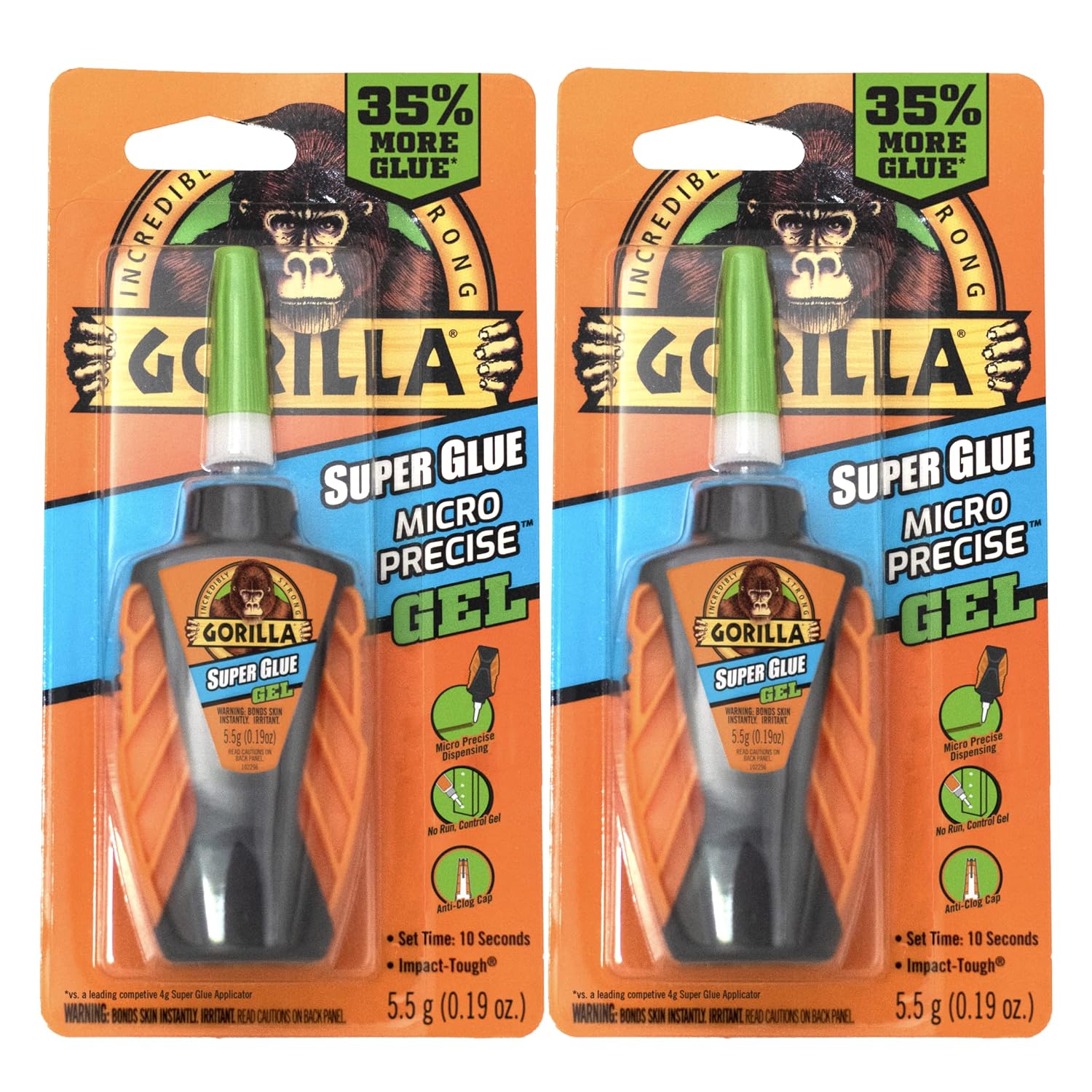
Three methods work. Dark cotton thread is the classic: wrap it loosely around rhizome and wood a few times — it dissolves on its own in weeks. Fishing line is nearly invisible and just as easy, though you'll snip it away later. Fastest is cyanoacrylate super glue gel: dab a pea-sized dot on a dry spot of wood, press the rhizome in for 10–15 seconds, and it sets into an aquarium-safe bond. Use gel, not runny liquid.
Spread the rhizome flat along the surface rather than bunching it, so every frond gets light. Within 4–8 weeks its roots grip the surface and thread can come off.
See our guide to attaching Java fern to driftwood and rock — the technique is identical for every cultivar.
 ★4.6
Gorilla Micro Precise Super Glue Gel
Check Price on Amazon ★4.6Light, water and food for low-tech growth
Trident is a poster plant for low-tech tanks: 20–50 PAR, 8–10 hours a day. More light won't speed it up — the cultivar is genetically slow — but it invites algae onto the slow-growing leaves. Keep 20–28 °C; like all Java ferns it sulks above 29–30 °C. It tolerates pH 5–8 and soft to moderately hard water.
No CO2 is required, which is why Trident belongs in any Lightly Planted Aquarium Setup: The Anti-High-Tech Guide. Feeding is water-column only: dose a comprehensive liquid fertilizer weekly, since the roots dangle in the water rather than sitting in substrate — root tabs under a rhizome plant are wasted money. It pairs naturally with Anubias, the other great rhizome plant sharing the same attach-don't-bury rules and low-light appetite.
Propagating Trident: plantlets and rhizome splits
This is the easiest part of microsorum pteropus trident care: the plant multiplies itself. Mature leaves sprout tiny plantlets along their edges and tips, usually 6–12 weeks after settling in. Wait until each shows 3–4 miniature leaves and ~2 cm roots, then pull or snip them off and attach to new hardscape — each is a free plant.
For faster multiplication, divide the rhizome with sharp scissors, keeping at least 4–5 healthy leaves per section. Each division branches from the cut ends — one portion can become three or four clumps within a few months.
Troubleshooting: melt, black spots and slow starts
New-plant melt
Tissue-culture and emersed-grown portions often shed old leaves in the first 2–4 weeks. This looks alarming but is normal — trim mushy leaves back to the rhizome and leave the firm green stem in place; new submerged leaves follow within weeks if the rhizome is solid.
Black dots under the leaves
Rows of small dark dots on leaf undersides are sporangia — the fern's reproductive structures, not disease. Every healthy Java fern develops them, and Trident is no exception. Don't scrub them off; they mark a mature, settled plant.
Months with no visible growth
A new leaf every 2–4 weeks is normal pace, and fresh portions often sit still for a month while acclimating. Only worry if leaves yellow (the rhizome may be buried) or temperatures run hot — sustained heat above 29 °C stalls Java ferns of every variety.
Frequently Asked Questions
Can I plant trident java fern in gravel or sand?
No. The thick rhizome rots when buried, usually within 1–3 weeks. Attach it to driftwood, rock, or decor with thread or super glue gel, keeping the rhizome fully exposed to the water. The thin black roots can dangle into the substrate — only the rhizome must stay uncovered.
How fast does trident java fern grow?
Slowly — roughly one new leaf every 2–4 weeks, topping out at 15–20 cm. Added CO2 and good fertilization help, but Trident is genetically slow. The upside is minimal trimming: a clump can go months without maintenance.
Does trident java fern need CO2 or fertilizer?
Neither is required. Trident thrives in low-tech tanks on a weekly dose of comprehensive liquid fertilizer. It feeds through its leaves and dangling roots, so use liquid ferts rather than root tabs. Added CO2 helps but is entirely optional.
Why are there black spots on the underside of the leaves?
Those are sporangia — the fern's natural reproductive structures — and they appear on every healthy Java fern, including Trident. They are not disease or algae, so don't scrub them off or treat the tank. They usually mean the plant is mature and settled.
Will trident java fern outgrow a nano tank?
Very unlikely. It tops out around 15–20 cm with a slow, tight habit, making it one of the best Java fern cultivars for 20–40 litre tanks. If a clump gets too wide, divide the rhizome with scissors and reattach the sections — each piece becomes a new plant.
Respect the rhizome, give it modest light and a weekly splash of liquid fertilizer, and the trident java fern will reward you with years of feathery texture — proof the easiest plants are often the most beautiful.