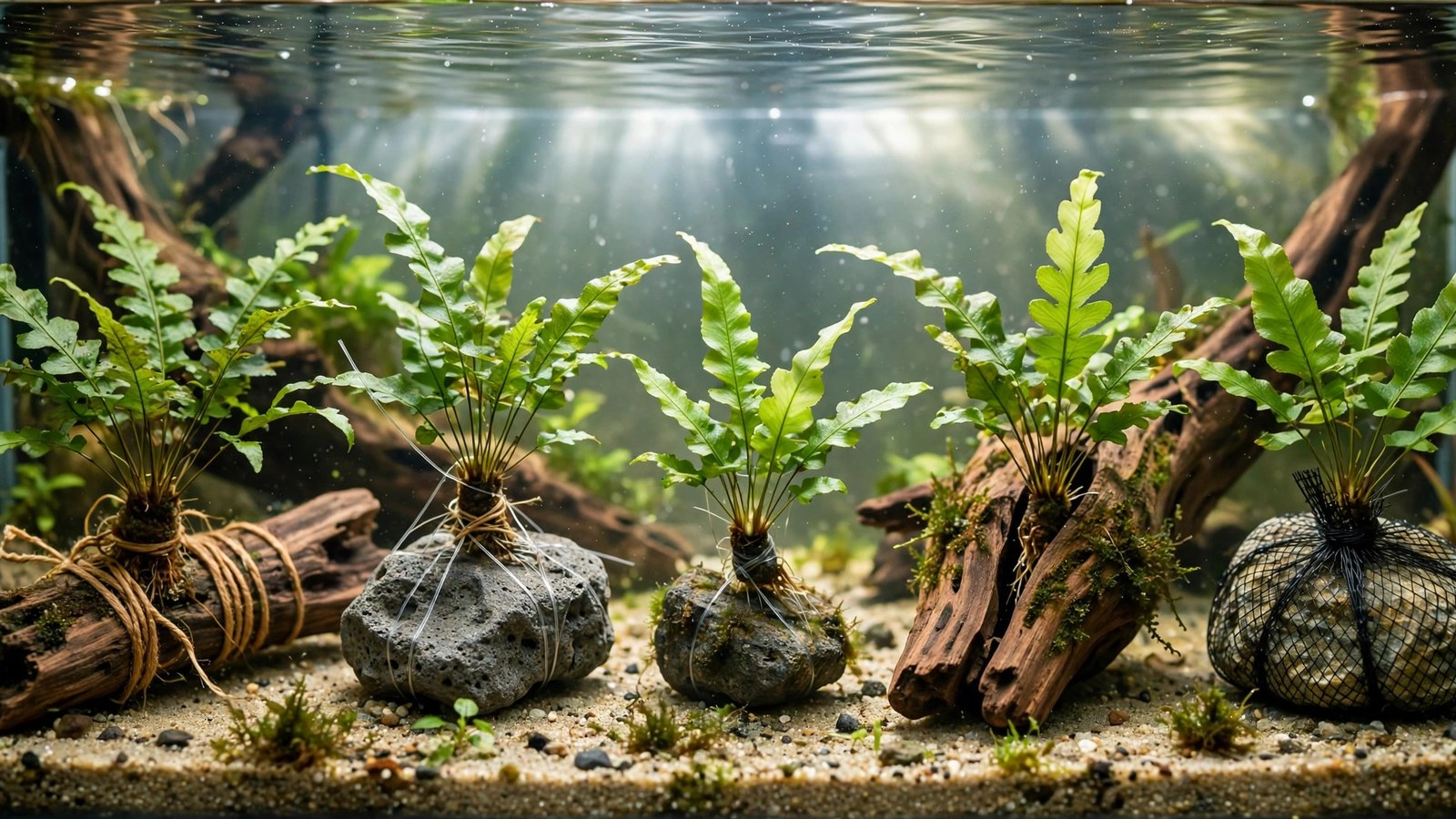
Most Java fern deaths aren't accidents — they're slow suffocations. The number-one mistake beginners make is burying the rhizome in gravel, and within weeks the plant melts into black mush. Learning how to attach Java fern to driftwood instead takes five minutes: the rhizome stays exposed, the roots clamp onto the wood, and the plant can thrive for years. Pair this with Java Fern Care: Lighting, CO2, Fertilizer & Growth for the full picture.
The One Rule: Never Bury the Rhizome
A Java fern has three parts: the leaves, a thick horizontal stem called the rhizome, and thin brown roots dangling from it. The rhizome is the plant's engine room — bury it under gravel or soil and it suffocates, bacteria take over, and it turns to black mush while the leaves yellow and melt. This is exactly why planting Java fern in substrate fails so reliably.
Every method below keeps the rhizome on top of the wood or rock — and if you bought a potted fern, rinse the rockwool off the roots first, since trapped rockwool rots the rhizome like gravel does.
How to Attach Java Fern to Driftwood: 5 Methods Compared
All five methods hold the rhizome against the hardscape until the roots take over; they differ in speed, cost, and visibility. (Rhizome plants like Anubias follow the same rules — see our rhizome division guide.)
| Method | Ease | Cost | Removal | Roots grip in | Best for |
|---|---|---|---|---|---|
| Cotton thread | Easy | Pennies | None — rots away | 3–6 weeks | Small rhizomes, natural look |
| Super glue gel | Easiest | A few dollars | Permanent | Instant | Vertical or smooth rock faces |
| Fishing line | Easy | Pennies | Cut away after 4–8 weeks | 4–8 weeks | Heavy pieces needing a tight hold |
| Rubber bands | Easiest | Pennies | Remove after 4–6 weeks | 4–6 weeks | Oddly shaped hardscape |
| Wedging into crevices | Free | Free | Nothing to remove | 3–6 weeks | Creviced hardscape |
Method 1: Cotton Thread
The classic, most forgiving method. Wrap 3–4 loose loops of plain cotton sewing thread around the rhizome and the driftwood, then knot it. Dark thread blends in best; loops should be snug but not strangling — slide a fingernail under them. A crushed rhizome rots.
Choose thread for a chemical-free, natural hold — it rots away in 4–8 weeks, by which point the roots have usually taken over. Best on textured wood or stones with edges the thread can bite against — on smooth round rock it can slide sideways.
Method 2: Super Glue Gel
The fastest method, and completely safe once cured — reef keepers have mounted corals with cyanoacrylate for decades. Use plain cyanoacrylate gel only — no additives. Gel stays where you put it; liquid formulas run everywhere.
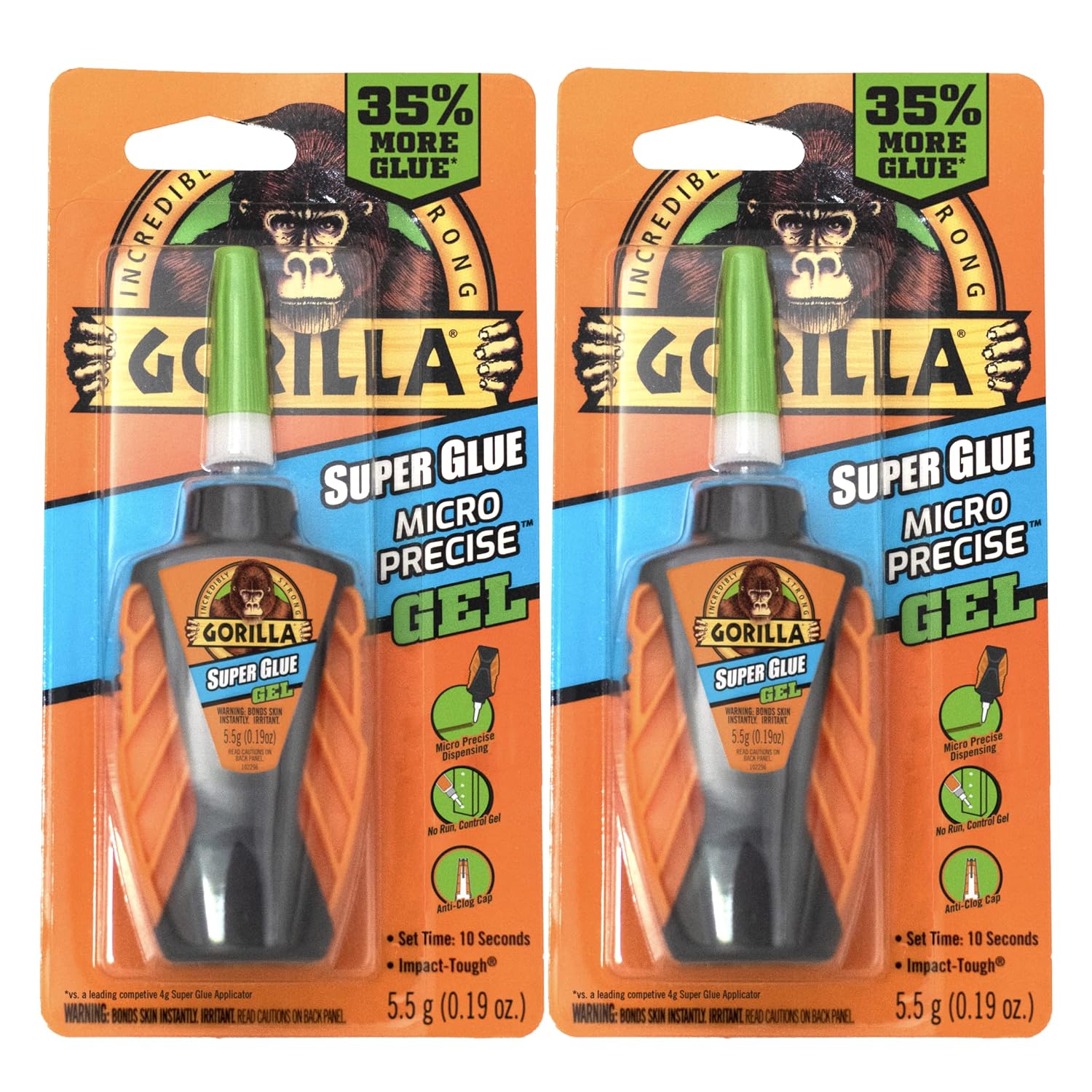
If you can, lift the hardscape out and pat the spot mostly dry. Squeeze a pea-sized dot of gel onto the wood (not the rhizome), press the rhizome in, hold 30 seconds, and wait 2 minutes before submerging. Once cured, it's inert and fish- and shrimp-safe. Any pure cyanoacrylate gel works — Loctite and Gorilla gel tubes both bond plants fine. Place 2–3 small dots along a long rhizome rather than one big blob.
 ★4.6
Gorilla Micro Precise Super Glue Gel
Check Price on Amazon ★4.6Method 3: Fishing Line
Clear monofilament is nearly invisible underwater and stronger than thread — the workhorse for heavy rhizomes on big driftwood. Loop it around the rhizome and wood 3–4 times, pull snug (not guitar-string tight), and knot off.
Unlike cotton, monofilament never rots: come back and cut it away after 4–8 weeks once the roots have gripped. A forgotten loop is a hazard for curious fish and looks terrible in close-up photos.
Method 4: Rubber Bands
Slip a small band over the plant and around the wood — done in ten seconds. Perfect for oddly shaped hardscape where thread slides off. The price of convenience: bands degrade in warm water, so cut (don't stretch-pull) them off after 4–6 weeks, or you'll yank the new root hairs loose. They'll be visible as dark rings until then, so use them on the back of the hardscape.
Method 5: Wedging Into Crevices
The most natural method needs no materials. Find a crack, fork, or pitted area in the driftwood or lava rock and press the rhizome in, roots trailing. Spider wood and lava rock are ideal — their texture gives roots something to bite into immediately. Press firmly, but don't jam: a crushed rhizome rots like a buried one.
This also works for other rhizome ferns — the African water fern (Bolbitis) is a slow grower that appreciates being wedged into hardscape the same way.
How Long Until the Roots Grip?
Expect white root tips reaching out within 1–2 weeks, a real anchor hold by 3–6 weeks, and a fully self-sufficient grip by 2–3 months. Warm water, gentle flow, and decent light speed things up; a stressed plant stalls.
The biggest cause of failed attachments is impatience — retying every few days tears off the fragile new root hairs and resets the clock. The lacy-leaf Java Fern Windelov attaches exactly the same way (see Tropica's Windeløv page).
Troubleshooting: When Things Go Wrong
The plant floats off within days. The tie was too loose or the glue bond too small. Re-glue with two or three pea-sized dots, pressing the roots into the gel; on very smooth rock, switch to thread or line.
The rhizome turns brown and mushy. It's rotting — buried, crushed by an overtight tie, or sitting in trapped debris. Trim off all black tissue, keep only firm green rhizome, and reattach with the rhizome fully exposed.
Leaves melt but the rhizome is firm. Normal adaptation, not death. Java fern commonly melts old leaves for 2–4 weeks after being moved — leave it alone; new leaves sprout once the rhizome settles.
Black dots appear under the leaves. Those are sporangia — reproductive organs, not disease. Tropica's Java fern plant profile confirms this confuses many keepers, and the dots often precede baby plantlets on the leaf tips.
Frequently Asked Questions
Can you super glue Java fern underwater?
Yes — cyanoacrylate gel cures on contact with moisture, so it bonds underwater. It's far easier on a towel-dried surface, though: press the rhizome into a pea-sized dot of gel, hold 30 seconds, and wait 2 minutes before submerging. Once cured, the bond is inert and safe for fish, shrimp, and snails.
How long does it take for Java fern roots to attach to driftwood?
First root tips appear in 1–2 weeks, a firm hold by 3–6 weeks, and full attachment by 2–3 months. Warm water, gentle flow, and adequate light speed things up. The biggest delay is disturbance — every retie tears off fragile new root hairs and resets the clock.
Will Java fern attach itself to rocks on its own?
Yes, given time. The roots naturally creep along surfaces and grip porous textures like lava rock fastest — smooth slate takes longer. Wedging the rhizome into a crack gives roots a head start. Just lay the plant on the rock with the rhizome exposed, and growth does the rest over several weeks.
Can you attach Java fern with regular cotton sewing thread?
Yes — plain cotton sewing thread is one of the best methods. Wrap 3–4 loose loops around the rhizome and the wood, knot it, and leave it alone. Dark thread is nearly invisible underwater, and the cotton rots away in 4–8 weeks, by which point the roots have usually gripped the hardscape firmly.
Why did my Java fern float away after I glued it?
Three usual causes: the gel went onto a soaking-wet surface and washed out, the dot was too small for the rhizome's weight, or the plant was submerged before the 2-minute cure finished. Re-glue with 2–3 pea-sized dots on a towel-dried spot, press the roots into the gel, hold 30 seconds, and wait the full 2 minutes.
Five methods, one rule: keep the rhizome in open water and Java fern is almost impossible to kill. Pick the method that fits your hardscape — glue for instant scapes, thread for the natural look, wedging for creviced rock — then give the roots three quiet weeks to do their work.