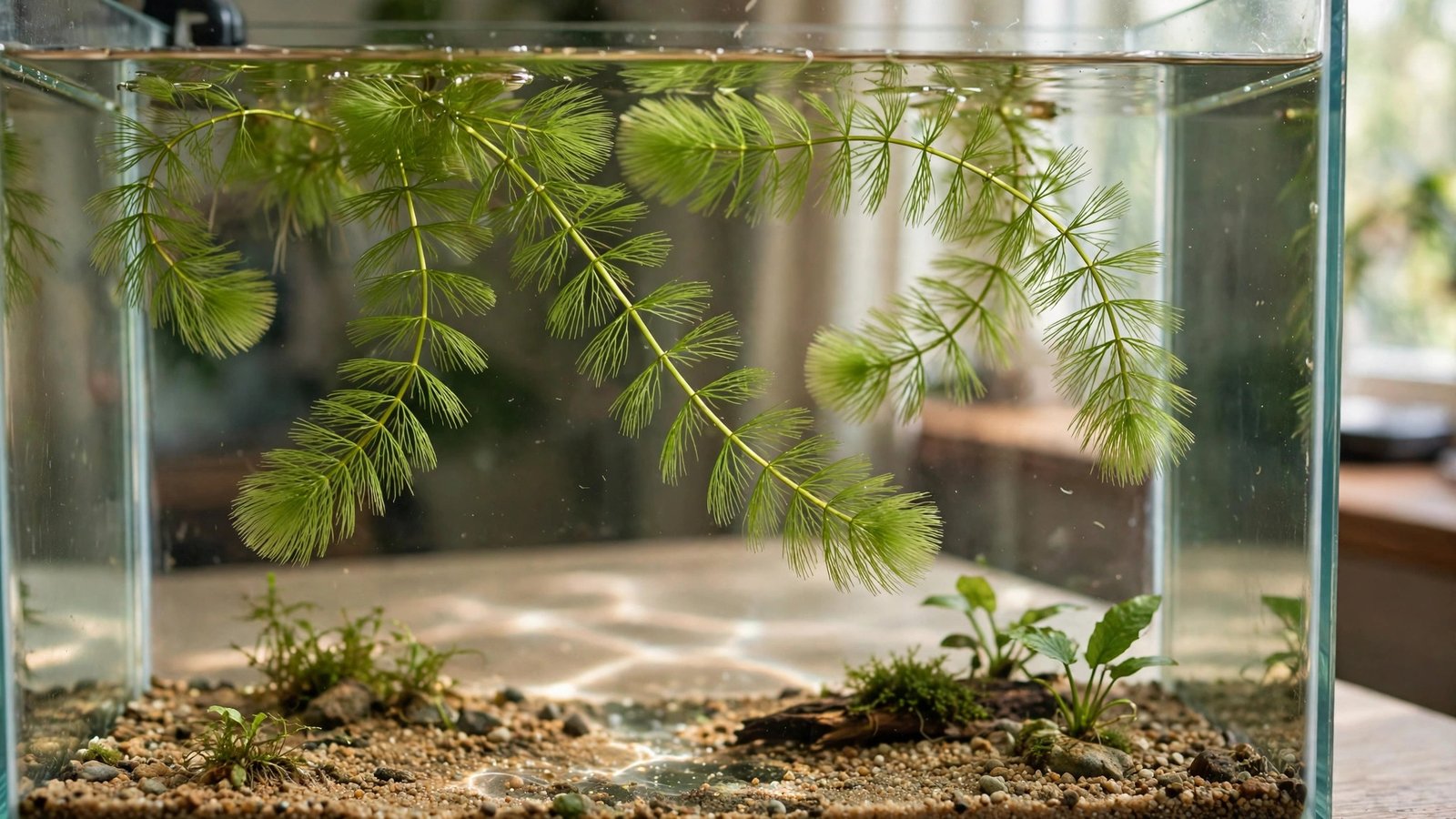
Ask five aquarists for the easiest first plant and three will say hornwort. It's the weed-like stem that survives in unheated fish-store holding tanks, grows in bare quarantine tubs, and costs less than a cup of coffee. So is hornwort good for beginners? Mostly, yes — it's one of the most forgiving aquatic plants you can buy. But it's also the plant most likely to leave your filter intake clogged with brown needles two weeks after you bring it home. This guide gives you the honest verdict: the real pros, the real cons, and whether hornwort deserves a spot in your first tank.
Is Hornwort Good for Beginners? The Short Answer
Yes — with caveats. Hornwort (Ceratophyllum demersum) tolerates the conditions beginners accidentally create: low light, no CO2, plain gravel, the odd missed water change. Rootless, it absorbs everything from the water itself. Drop a bunch in and it works from day one.
That said, hornwort has a reputation for being messy, and it earns it. New bunches commonly shed needles for a week or two, leaving beginners scooping brown debris off the substrate. They haven't killed it — the shedding phase, plus two quirks (its shade-casting habit and heat limit), is the difference between loving hornwort and swearing it off. See our complete hornwort care guide for the full mechanics.
Why Beginners Love It: 5 Real Strengths
Hornwort's beginner appeal isn't hype — it's mechanical. Here's what the plant actually does for a first-timer.
1. It needs nothing special
No CO2 injector, no aquasoil, no root tabs. Hornwort pulls ammonia, nitrate, and phosphate straight from the water through its needle-like leaves, and it thrives under basic LED hood lights. Hornwort doesn't need substrate at all — float it, anchor it loosely, or toss it in a bare-bottom tub.
2. It grows visibly, which builds confidence
In moderate light hornwort adds several centimeters a week — visible day to day. That progress matters: beginners who watch their first plant thrive stick with the hobby. Compare it to a slow rhizome plant that looks identical for a month, and you see why fast growers make better starters.
3. It's a nitrate sponge for cycling tanks
Fast growth means fast nutrient uptake: a decent mass in a new tank pulls down ammonia and nitrate while filter bacteria establish, smoothing the dangerous early weeks. See does hornwort help reduce algae for the honest take: it helps, but it's no miracle cure.
4. Fry and shrimp love the cover
Hornwort's dense, feathery structure is ideal habitat: guppy fry, platy fry, and shrimplets hide in its needles where larger fish can't reach. In livebearer or shrimp tanks, a floating raft measurably improves fry and shrimplet survival.
5. It's cheap and easy to multiply
One bunch becomes two within a month or two — snap a stem and re-float the cutting. A single purchase can fill a whole tank: arguably the best value-per-dollar plant in the hobby.
The Honest Cons: What Nobody Tells Beginners
Every beginner guide gushes about hornwort's toughness and skips the messy parts. Here they are.
1. The needle-shedding phase
The number-one beginner complaint. Hornwort sheds needles — fine brown debris that clogs filter intakes and dusts the substrate — after environmental changes: a new tank, new lighting, a temperature swing, or the ride home. It settles within 1–2 weeks. Rinse your filter sponge more often and don't panic. If shedding persists past three weeks or stems turn mushy, keep heat below 28°C/82°F and conditions stable.
2. It can shade out everything else
Fast growth cuts both ways. A floating raft doubles quickly and shades the plants below. With one light and slow growers underneath (anubias, java fern), unchecked hornwort starves them of light. Trim weekly — snap off the top half of floating stems — and it stays an asset, not a canopy.
3. Heat melts it
Hornwort has a genuine thermal ceiling: sustained temperatures near 30°C/86°F make it soften, shed, and melt — a real risk in un-air-conditioned rooms in summer. Keep it at 28°C/82°F or below. If your tank runs hot year-round, tougher picks like guppy grass or water sprite are safer.
4. Not all hornwort is equal
The common aquarium hornwort is Ceratophyllum demersum — tough, coarse-needled, widely available. Its cousin C. submersum is softer and less forgiving of temperature swings. Choosing blindly? Pick demersum:
| Trait | C. demersum | C. submersum |
|---|---|---|
| Foliage | Coarse, stiff needles | Soft, fine, delicate |
| Hardiness | Very hardy, wide temp range | Less tolerant of swings |
| Availability | Everywhere, cheap | Less common, pricier |
| Best for | First-time beginners | Experienced keepers wanting texture |
5. It's invasive — dispose of it responsibly
Hornwort fragments survive astonishingly well and establish in the wild from tiny stem pieces. Never dump trimmings or rinse water into storm drains, ponds, or waterways — bag them and bin them, or dry them out first. It's the one responsibility that comes with a zero-maintenance plant.
Buying Hornwort: What to Get and What to Skip
Buying hornwort is refreshingly simple. Pick bunches with bright green, firm needles and no slimy coating — avoid anything that smells swampy or arrives mostly brown, since shipping-stressed hornwort sheds for weeks. A basic bunch of hornwort suits a 10–20 gallon starter tank; for larger tanks, look for multi-bunch or portion-size listings.
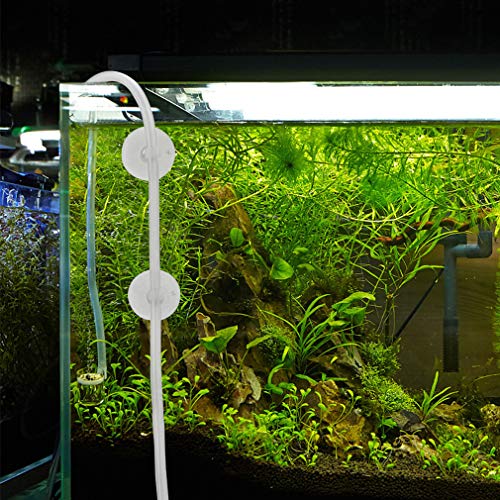
Two accessories earn their keep: reusable plant weights (they keep anchored stems out of the filter outflow) and a beginner plant pack bundling hornwort with other easy species like cabomba. One caution: pond-grown hornwort can carry hitchhikers — snails, damselfly nymphs, even leeches. Quarantine new bunches in a bucket for a few days and rinse thoroughly first.
 ★4.0
Pawfly 2 Pcs Aquarium Plant Holder
Check Price on Amazon ★4.0Frequently Asked Questions
Can hornwort survive with very little light?
Yes, down to a point. It tolerates dim room light or a basic hood light, but still needs 8–10 hours of daily light to photosynthesize. In a truly dark tank it sheds rapidly and melts within weeks. Even an inexpensive clip-on LED is enough.
Why is my new hornwort turning brown and shedding?
Almost always acclimation shedding. Hornwort drops its outer needles in response to temperature, lighting, chemistry, or transport changes — worst in the first 1–2 weeks. Keep conditions stable and the filter intake clear. If whole stems turn mushy instead, check your water is below 28°C/82°F.
Should I float hornwort or plant it?
Float it. Hornwort has no true roots, so "planting" it buries stem tissue that rots and triggers shedding. Floating gives maximum light, the fastest growth, and instant surface cover for fry. To hold it lower in the water column, loosely anchor stems with plant weights — never bury them.
Will hornwort help cycle my new aquarium?
It helps meaningfully but doesn't replace cycling. Fast growth means it absorbs ammonia, nitrite, and nitrate directly, softening the toxic spikes of the early weeks while filter bacteria establish. Add it on day one of a fishless cycle — but still wait for ammonia and nitrite to read zero before adding fish.
Is hornwort safe with goldfish and plant-eaters?
Non-toxic, but don't expect it to survive as decoration. Goldfish, silver dollars, and large cichlids find its soft needles delicious and strip a bunch in days. It suits community, shrimp, and breeding tanks — with goldfish, hornwort is expensive fish food.
The Bottom Line
So, is hornwort good for beginners? Yes — one of the best first plants in the hobby, provided you go in with your eyes open. Expect the shedding phase, trim weekly, stay under 28°C, and dispose of trimmings responsibly. Do that, and a cheap bunch rewards you with fast growth, cleaner water, and happy fry. For authoritative plant data, bookmark the Tropica plant database and the Texas A&M Aquaplant site.