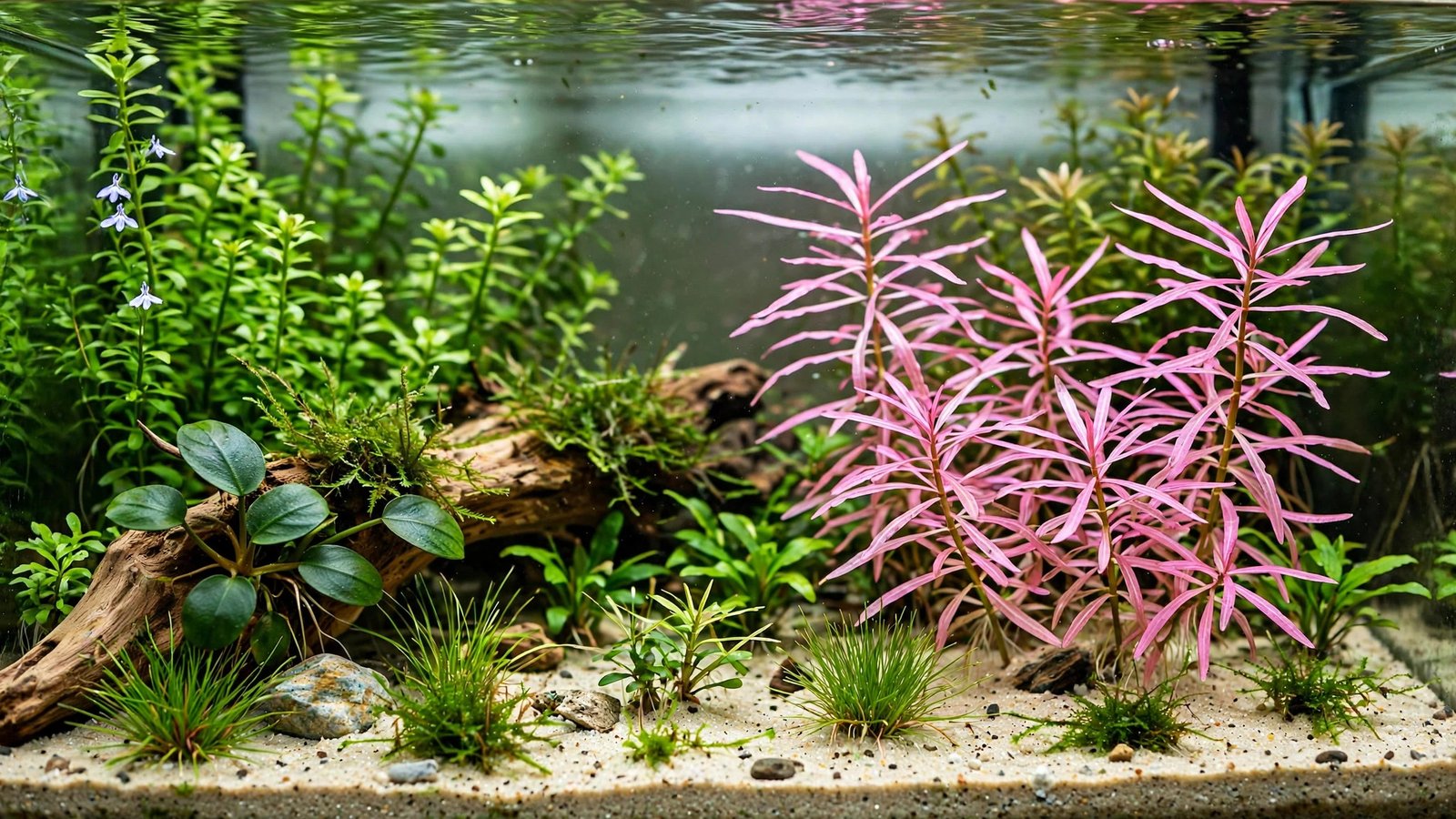
Hygrophila 'Chai' costs five times what an ordinary stem plant costs, grows about half as fast, and still sells out every tissue-culture restock. If you are reading a guide to hygrophila chai care, you know why: nothing else puts blush-pink, cream-marbled leaves on a midground stem. Here is how to get the color — and how to turn one cup into a cluster.
What Makes Hygrophila 'Chai' Different
Most Hygrophila species are bulletproof beginner plants. Hygrophila polysperma will grow in a bucket on a windowsill — fast, green, and nearly indestructible. 'Chai' shares the genus name and almost nothing else. It is a variegated cultivar with cream-and-pink leaves, and its pale foliage carries far less chlorophyll than a normal green stem — which is why it grows slowly and demands so much light.
Think of it as a collector plant in the true sense: you are paying for rarity and looks, not an easy win. Hobbyists who expect polysperma-style growth are the ones who lose it. Those who understand they are growing a light-hungry, slow-motion stem plant usually do fine.
Hygrophila Chai Care: Lighting and CO2 for Pink Coloration
The core challenge of hygrophila chai care is not keeping the plant alive — it is keeping it pink. Under medium light and no CO2, 'Chai' survives but reverts to washed-out pale green. The pink is a stress response: the plant produces extra anthocyanin pigments in its newest leaves when light is intense enough.
Light. Aim for roughly 50 PAR or more at the substrate level. In practical terms, that is a modern full-spectrum LED run at 80–100% over a tank 30–45 cm deep, on a 7–8 hour photoperiod. Plant 'Chai' in open midground where taller plants and hardscape do not shade it. To dial this in precisely, see our guide to how much light aquarium plants need.
CO2. Injected CO2 is effectively non-optional. Hold a drop checker steady at lime-green (roughly 25–30 ppm) from one hour before lights-on until lights-off. Liquid carbon is not a substitute. Without CO2, the plant's already-slow metabolism crawls, new leaves stay small, and the pink fades.
Substrate, Water, and Fertilization
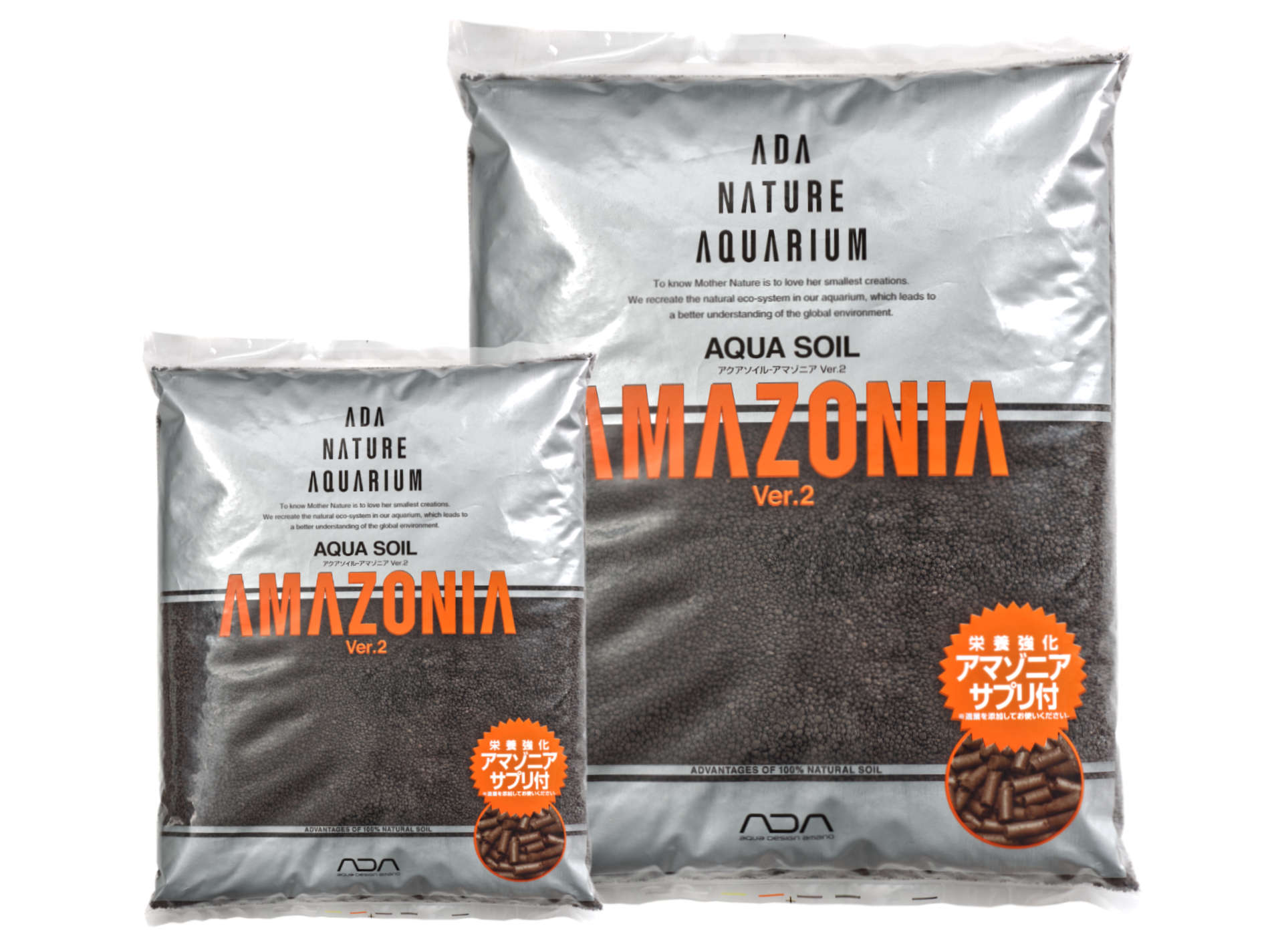
'Chai' feeds from its roots more than most stem plants, so substrate matters. An active aquasoil — one that buffers pH down and releases nutrients — gives the best results, planted 3–4 cm deep so the fine roots of tissue-culture plantlets can anchor quickly. Inert gravel or sand works only with diligent root tabs.
| Parameter | Target | Notes |
|---|---|---|
| Temperature | 22–26 °C | Pink fades above 28 °C |
| pH | 5.5–7.0 | Aquasoil naturally lands here |
| GH | 3–8 dGH | Soft to moderately hard water |
| Nitrate | 10–20 ppm | Leaner nitrate can intensify pinks |
| Iron | 0.1–0.5 ppm | Essential for coloration |
On nutrition, the color question overlaps with general planted-tank feeding — do aquarium plants really need fertilizer covers the full dosing picture. For 'Chai' specifically, run a complete liquid fertilizer at label dose (the iron matters for pink), keep nitrate in the 10–20 ppm band, and let the aquasoil handle root feeding for the first 3–6 months.
 ★4.7
ADA Aqua Soil Amazonia Ver 2
Check Price on Amazon ★4.7Planting Tissue Culture the Right Way
Almost all 'Chai' arrives as tissue-culture cups, and that is the form you want. Rinse the gel off gently under room-temperature water, then separate the plantlets into portions of 3–5 stems. Plant each portion with tweezers, 3–4 cm apart, so light reaches between stems.
Expect a transition period: TC plants grow emersed in sterile gel, so the first submerged leaves are adaptations, not failure. For 'Chai' this takes 3–4 weeks and old leaves may melt. Do not disturb or re-trim the plantlets in this window — every move resets the rooting clock.
Propagation: Topping and Replanting
'Chai' propagates like other stem plants, just more slowly. When a stem reaches 15–20 cm, cut the top 8–10 cm and replant the cutting beside the parent. The stump sprouts one or two side shoots from the node below the cut, and the cutting roots within 1–2 weeks under CO2.
This is how you build a bush. One TC cup yields 6–10 plantable stems; after two or three topping cycles over a few months, those become a genuine midground cluster. Healthy 'Chai' trimmings are genuinely valuable — trade them and recover your cost quickly. The variegation is stable, so cuttings grow true to the pink form.
Where to Buy Hygrophila 'Chai'
Because 'Chai' is a specialty cultivar, it rarely appears in local store plant tanks. Realistic sources are tissue-culture cups from online aquarium plant retailers, plant auctions, and hobbyist sellers. Buy from sellers who show photos of the actual submerged-grown mother plants — form and color vary between producers.
Healthy plantlets look pale pink-green and compact; skip cups where the gel is cloudy or the plantlets are brown and slimy. One cup is enough to start. Pair the purchase with a bag of quality aquasoil if your tank runs inert substrate — it is the single biggest upgrade for this plant's root feeding.
Troubleshooting Common Problems
- No pink, just pale green: light is too weak or CO2 too low. Raise intensity first — color follows light.
- Melting after planting: normal TC transition for 2–4 weeks. Remove mushy leaves; leave stems with firm tissue.
- Leggy growth: the plant is reaching for light. Move it brighter or trim and replant the tops.
- Tiny stunted new leaves: usually CO2 or flow — confirm CO2-rich water reaches the plant.
- Algae on the leaves: slow growers collect algae faster than they outgrow it. Add a small algae-eating crew instead of scrubbing delicate leaves.
For comparison with other colored hygros, Sunset Hygro 'Rosanervig' follows similar variegation principles with pink-white leaves, while Hygrophila pinnatifida takes a completely different route as an epiphyte that grows on hardscape rather than in substrate.
Frequently Asked Questions
Why is my Hygrophila 'Chai' turning green instead of pink?
Pink requires intense light (50+ PAR at the substrate) and injected CO2. Under weaker light or no CO2 it survives but stays green. Raise intensity first, confirm 25–30 ppm CO2 through the photoperiod, and give new growth two to three weeks to color up.
How fast does Hygrophila 'Chai' grow?
Slowly — 3–5 cm per month under high light and CO2, less without it. Its variegated leaves carry less chlorophyll than normal green stems, so it grows far slower than typical Hygrophila. Plan your scape around patience, and avoid moving it: frequent disturbance slows it further.
Can I grow Hygrophila 'Chai' without CO2?
You can keep it alive, but not thriving. Without injected CO2 it grows very slowly, stays small, and loses most of its pink — liquid carbon is no substitute here. If you are not ready for pressurized CO2, Hygrophila araguaia is a more forgiving compact red stem.
How do I propagate Hygrophila 'Chai'?
Cut the top 8–10 cm of a healthy stem and replant it; it roots in one to two weeks under CO2. The stump sprouts side shoots from the node below the cut. Repeat topping over several months to build a bush from one tissue-culture cup.
Is Hygrophila 'Chai' a beginner plant?
No — 'Chai' is advanced. It needs high light, injected CO2, stable fertilization, and patience through a slow tissue-culture transition. Beginners wanting a pink look should start with easier plants and work up to 'Chai' once the tank runs stable high-tech conditions.
The Collector Plant That Rewards Patience
Hygrophila 'Chai' asks for a lot — bright light, pressurized CO2, good substrate, and months of patience — and gives back one of the most distinctive pinks in the hobby. Get the fundamentals right in the first month, resist the urge to fuss with it, and it settles into a slow, steady rhythm that fills your midground with color no fast grower can match. That is the whole deal, and for most 'Chai' keepers, it is a fair one.