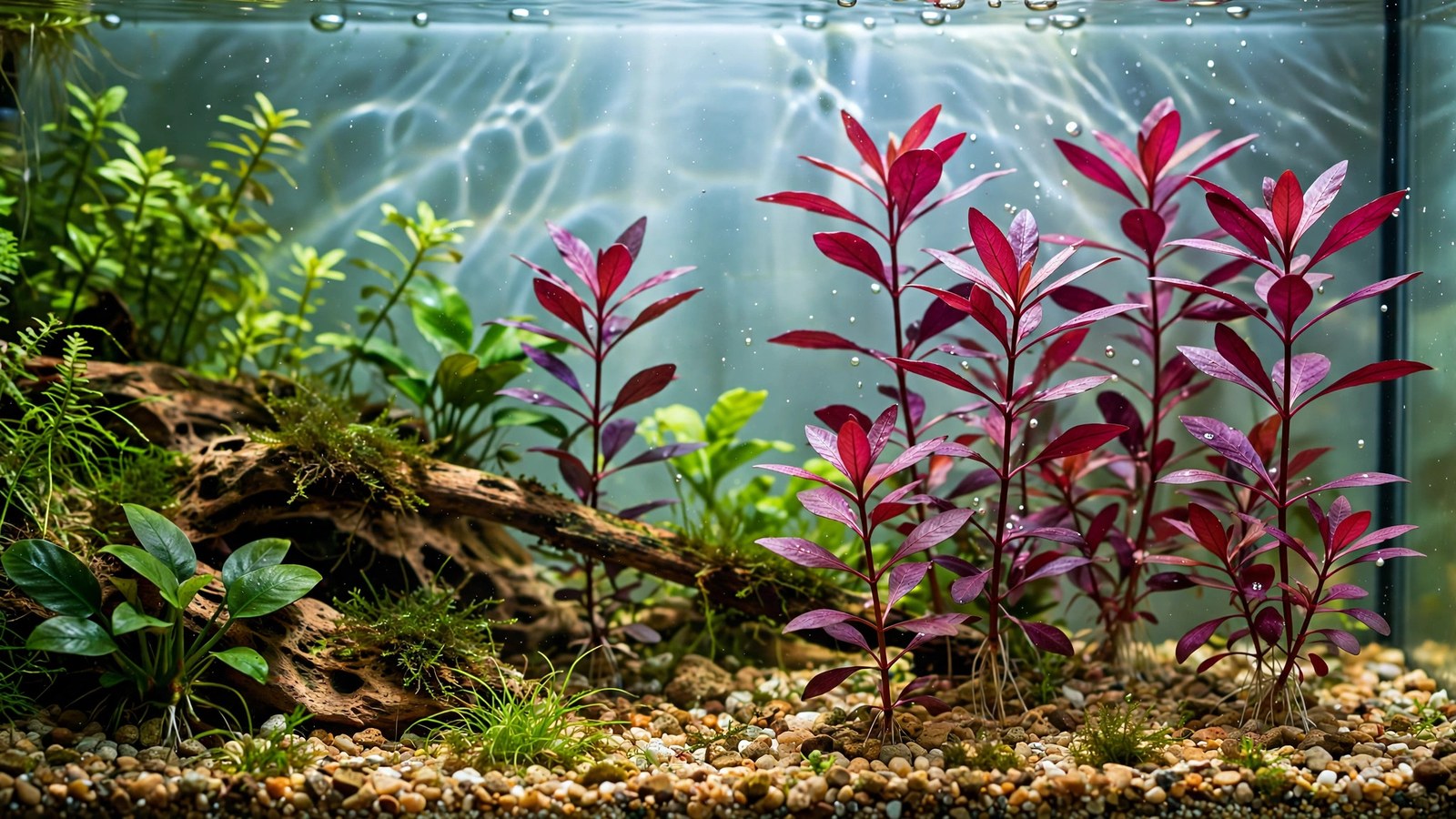
The listing promises a vivid red stem plant for your aquascape — and the photos are real. But if you are researching alternanthera sessilis care, you deserve the sentence most product pages bury: several experienced retailers openly state that sessile joyweed is a marsh plant with a limited life underwater, not a true long-term aquarium plant. This guide gives you the honest picture — where it genuinely thrives, what happens when you try it fully submerged, and which species to buy instead if you want red stems underwater.
In short: Alternanthera sessilis is a tropical marsh plant of the family Amaranthaceae that thrives emersed in wet soil, pond margins, paludaria and terraria at 23–28 °C, but planted fully underwater it typically stalls within weeks to months — one retailer states it "does not survive submerged for more than a few months" — developing long internodes, small leaves and roots sprouting high up the stem. Buy it for wet terrestrial or marginal use; for submerged red stems, choose Alternanthera reineckii.
Sessile Joyweed: A Marsh Plant First
Sessile joyweed (Alternanthera sessilis) grows wild across the tropical and subtropical world — in swamps, ditches and rice-field margins — with prostrate stems that creep along the ground and root at every node. It is a staple leafy vegetable in South and Southeast Asia, known as mukunuwenna in Sri Lanka and ponnanganni in Tamil Nadu.
This lifestyle matters because the plant's whole anatomy is built for air: leaves that breathe, stems that sprawl and re-root. Emersed growth is straightforward in every credible cultivation record; submerged growth is contested at best. And before you order, check local rules — it spreads aggressively outdoors in warm climates and is regulated as a noxious weed in several US states.
Alternanthera Sessilis Care and the Submerged Controversy
Honest sellers are explicit: One retailer states it "does not survive submerged for more than a few months" and sells it for terrarium or paludarium use; Premier Aquatics notes it is a terrarium plant with a limited submerged lifespan; and its species datasheet marks it as not aquarium compatible, noting that underwater it grows long internodes, small leaves and roots high on the plant. Other sellers claim it "can grow really well under water" — both can look true for the first few weeks, because planted stems keep growing on stored reserves for a while.
What actually happens long-term: growth turns leggy as internodes stretch toward the surface, leaves shrink, and aerial roots appear along the stem — the plant is trying to escape the water, not live in it. Red coloration fades too, because the plant is stressed rather than thriving.
One thing is genuinely true: while submerged it behaves like any red stem plant in that it demands strong light, and you can learn how much light aquarium plants actually need before spending money on upgrades — but understand that extra light buys time, not permanence, with this species.
Where It Actually Thrives: Emersed Setups
Given wet roots, warm air and bright light, A. sessilis grows fast and lush — this is the care it was built for. Any of these setups will outperform a fully submerged planting within weeks:
| Setup | Conditions | Why it works |
|---|---|---|
| Paludarium | Shallow substrate above the waterline, 23–28 °C, high humidity | Mimics its natural marsh habitat; expect dense red mats |
| Pond margin / bog filter | Roots in wet soil, crown above water, full sun | The classic outdoor home for marginal plants; vigorous growth |
| Terrarium | Moist soil, bright light, warm temperatures | Several retailers sell it explicitly as a terrarium plant |
| Riparium / hang-on planter | Roots in aquarium water, foliage in air | Feeds on fish waste while the shoots stay emergent and healthy |
Feeding is simple in these setups: a balanced liquid feed in the water or root-zone fertilizing works well — see a guide to the best liquid fertilizer for aquarium plants for a proven dosing reference.
Sessilis vs Reineckii vs Lilacina: Telling Them Apart
Most confusion comes from the shared genus name and similar red coloration. The three species are genuinely different plants with different habits:
| Trait | A. sessilis | A. reineckii | A. lilacina |
|---|---|---|---|
| Growth habit | Prostrate, creeping, roots at nodes | Upright stems, true aquatic | Upright stems, true aquatic |
| Long-term submerged | No — declines in weeks to months | Yes — classic red aquarium stem | Yes — purple-red aquarium stem |
| Natural habitat | Marshes, wet disturbed ground | Flooded areas of South America | South American wetlands |
| Leaf width | Narrow, 0.3–3 cm | Broad, paddle-shaped | Broad, lily-like |
| Best role | Paludarium / pond margin | Midground–background red stem | Background accent |
If you want red stems underwater, start with Alternanthera reineckii care — it is the proven long-term aquarium plant of the group. For the lilac-purple alternative, see Alternanthera lilacina care. Both stay submerged permanently and develop the broad foliage A. sessilis can never sustain underwater.
Frequently Asked Questions
Can Alternanthera sessilis live permanently submerged in an aquarium?
No — honest retailers and species datasheets agree it is not a long-term submerged plant. One seller states it does not survive submerged for more than a few months. It can look fine for weeks on stored energy, which is why some sellers claim otherwise — then it declines.
Why is my sessile joyweed growing leggy with tiny leaves underwater?
That is the textbook submerged-decline pattern: stretched internodes reaching for the surface, smaller leaves and roots sprouting high on the stems. It is not a light or nutrient problem — the plant is built for emergent growth. Move it to an emergent basket or pond margin, where the same stems recover quickly.
How do you propagate Alternanthera sessilis?
It roots from every node, so propagation is trivial: snip a 10–15 cm stem section, press the nodes into wet soil, and roots form within one to two weeks in warm, humid conditions. This ease of rooting is exactly why it becomes invasive outdoors — trash the trimmings, never compost them near waterways.
What is the difference between A. sessilis and A. reineckii?
They share a genus but not a habitat. A. sessilis is a prostrate, node-rooting marsh plant with narrow leaves that fails long-term underwater. A. reineckii is an upright-stemmed true aquatic with broad paddle leaves that lives permanently submerged — the right species for red stems in an aquarium.
Is sessile joyweed invasive — can I grow it in my outdoor pond?
Only where it is legal. It is classified as invasive in parts of the southern USA and is a prohibited noxious weed in Florida, California and North Carolina. In temperate zones it survives outdoors only through the warm months, so keep it contained in pots.
The Bottom Line
Sessile joyweed is a beautiful, easy marsh plant that got miscast as an aquarium plant — give it wet soil, warm air and bright light instead of a submerged planting, and it will reward you with dense red growth and even white flower spikes. Buy it for a paludarium, riparium shelf or pond margin, and reach for a different Alternanthera when you want red stems under water.
Sources: retailer care notes quoted above from Premier Aquatics' Alternanthera sessilis listing and the fishy.wiki Alternanthera sessilis datasheet.