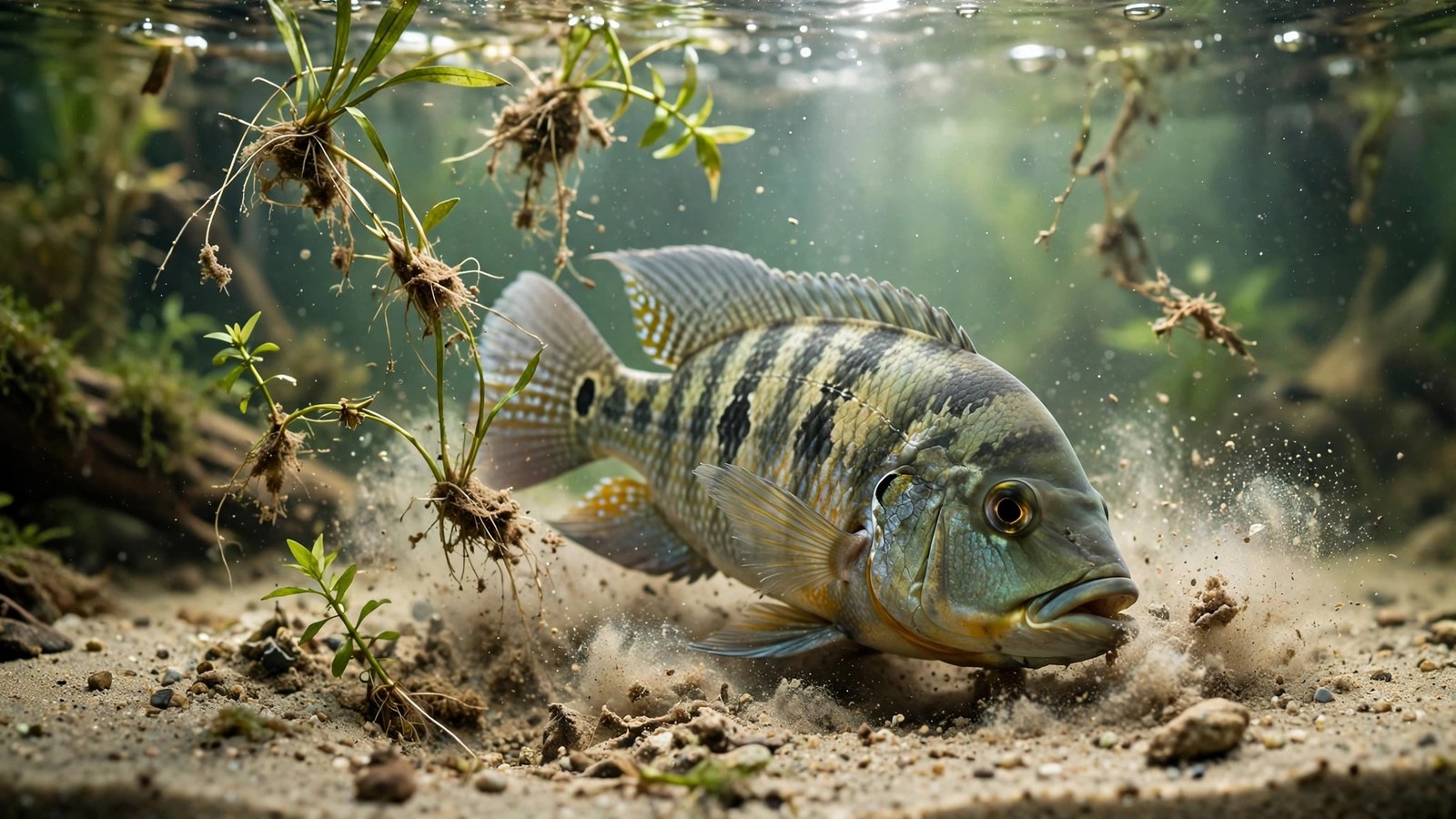
You can do everything right — plant at the correct depth, dose the fertilizer — and still find half your plants floating by morning. The culprit is rarely the plants. If you want to know how to stop fish from uprooting aquarium plants, start by accepting the fish aren't malicious: they're foraging, spawning, guarding territory, or just too heavy to turn without bulldozing a foreground. This guide covers which fish dig and why, five anchoring and substrate strategies, plants that survive goldfish and cichlids, and tank-by-tank playbooks for goldfish, cichlids, and loaches.
Why fish dig up your plants in the first place
Every fish that uproots plants is doing something that made sense in a river or lake. The behavior falls into four buckets, and identifying which one drives your fish tells you which fix will actually work.
Foraging. Goldfish, loaches, and cichlids are wired to root through the bottom for insects, worms, and fallen seeds. A newly planted stem looks exactly like something worth yanking out and checking underneath — and rooting fish learn fast: if one yank once released a puff of detritus, they'll do it daily. The first week after planting is the danger window, because root systems haven't anchored yet and foraging routines haven't hit a wall of established roots.
Spawning behavior. Many cichlids — convicts, jewel cichlids, firemouths — dig pit nests before breeding, and a pair can excavate a 15–20 cm crater overnight, ripping out everything inside. This is the hardest digging to stop because it's hormonal, not hunger-driven. If your plants only vanish during spawning weeks, you're not fighting foraging at all.
Territory and redecorating. Male African cichlids (mbuna, peacocks) constantly rearrange their tanks, picking up gravel — and anything in it — to mark boundaries. Oscars and severums are notorious for deciding a plant is in the wrong place and shoving it aside repeatedly.
Sheer physics. A 30 cm common pleco or a 25 cm fancy goldfish doesn't need intent — a single turn at feeding time creates a wake that lifts shallow-rooted plants out of a thin substrate bed. Big fish need big anchoring.
Match the fix to the bucket: foraging and physics yield to anchoring and feeding, spawning yields to a staged nest site outside the planted zone, and territorial redecorating yields to heavy hardscape the fish can't shift.
Know your culprit: which fish dig, and how badly
This table ranks the common offenders so you can calibrate your defenses.
| Fish | Digging style | Damage level | Main trigger |
|---|---|---|---|
| Goldfish (fancy) | Rooting, mouthing, nibbling stems | High | Foraging; also eats soft leaves |
| Common/comet goldfish | Constant gravel sifting + size | Very high | Foraging and physics |
| African cichlids (mbuna) | Picking up and moving substrate | Very high | Territory |
| Oscars, severums, Jack Dempseys | Shoving, tail-sweeping, nest digging | Very high | Territory and spawning |
| Clown loaches | Digging under plants for snails/food | High | Foraging, especially nocturnal |
| Common plecos (large) | Bulldozing, sucking, rasping roots | Very high | Physics + hunger for wood/vegetables |
| Bristlenose plecos | Rasping driftwood near plants | Moderate | Hunger — give them wood |
| Silver dollars, tinfoil barbs | Eating plants whole | Extreme (eats, not digs) | Herbivory |
If your tank holds any of the "very high" group, skip the gentle fixes and go straight to heavy-duty anchoring. One honesty check: silver dollars and tinfoil barbs don't uproot plants — they consume them, which is a plant-eating problem rather than a digging one.
Fix 1: Anchor plants like you mean it
Most float-ups are a planting-depth problem wearing a fish problem costume. In a digger tank you need mechanical anchoring that holds until roots take over.
Plant weights. Soft, malleable plant weights wrapped gently around the base of stem bunches are the single highest-return fix. They pin stems down so digging fish can't work them loose, and when you remove them 4–6 weeks later, a dense root mat takes over. Old-school lead strips still float around the hobby, but they raise toxicity questions — read the full breakdown of aquarium plant weights safety before choosing. Ceramic rings and stainless-steel wraps are the modern safe defaults.
Tie, don't plant. Rhizome plants — anubias, java fern, bolbitis — should never go in the substrate at all. Tie them to driftwood or rock with cotton thread or fishing line (remove it after 6–8 weeks once the rhizome grips), or wedge them into crevices — Tropica's own planting guide says the same: never bury the rhizome. A fish can't uproot what was never planted. This is the closest thing to a permanent, fish-proof solution the hobby has.
Stainless-steel anchors and pots. For centerpiece plants like Amazon swords, push aquarium-safe stainless anchors deep under the root crown, or plant the sword in a small terracotta pot sunk flush into the substrate. The pot walls force roots down and out instead of letting fish work sideways under the crown. Swords with a fist-sized root ball are nearly immovable.
Mesh and barrier tricks. A 2.5 cm square of plastic craft mesh (egg-crate light diffuser works too) laid flat around a newly planted stem cluster stops fish rooting underneath — they can't push substrate up through the mesh, and stems grow through the holes. Lift it out once the plant is established: 3–4 weeks for fast stems, 6–8 for slow ones. Ugly but effective for the danger window.
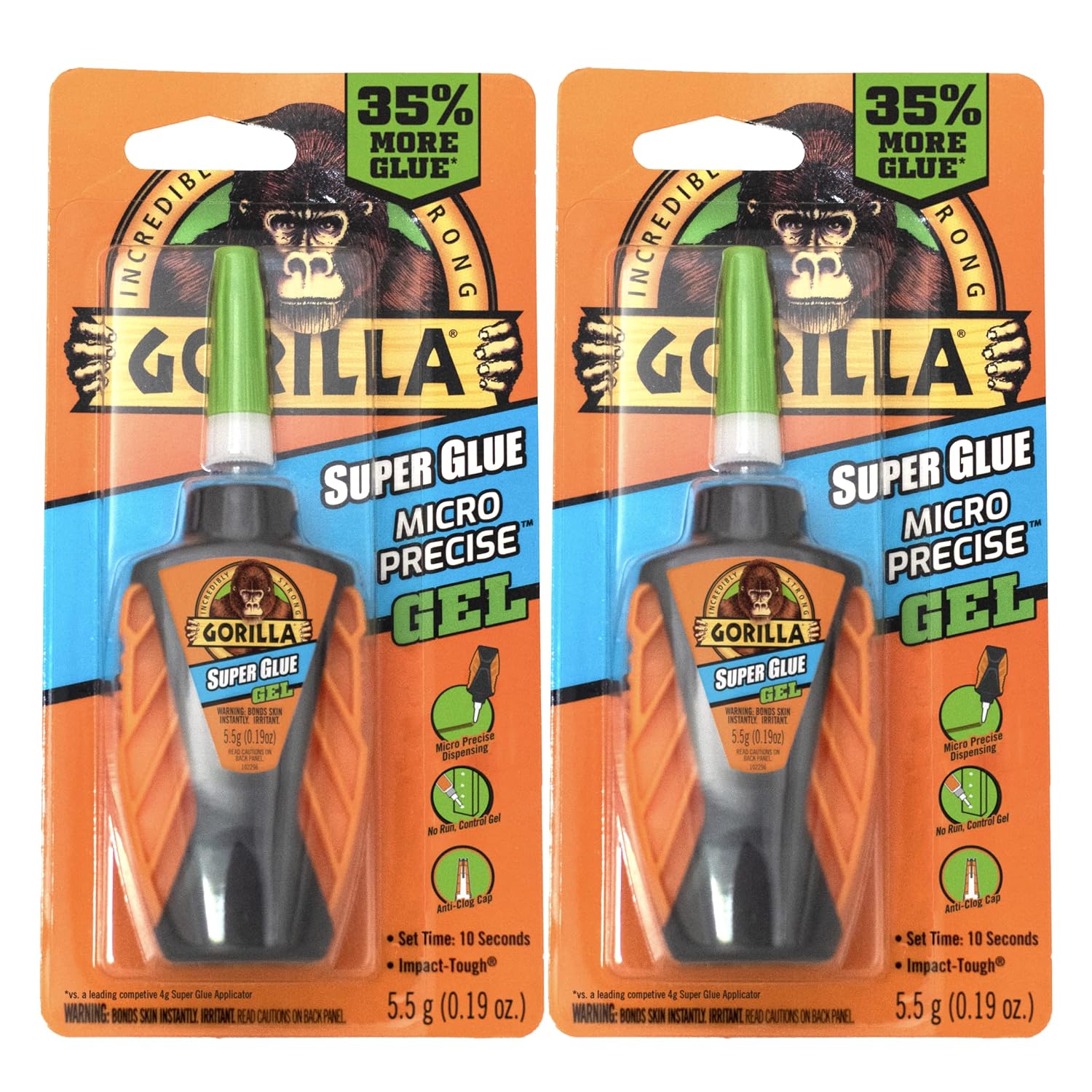
Glue rhizome plants to hardscape so diggers can't physically move them: cyanoacrylate super glue gel.
 ★4.6
Gorilla Micro Precise Super Glue Gel
Check Price on Amazon ★4.6Fix 2: Give roots a substrate worth holding onto
Fish exploit weak substrates. If your plants sit in 2–3 cm of loose gravel, a goldfish barely has to try. Resist the urge to bulk the bed out with filter media — there are real downsides to using filter media as a substrate base. The defenses are simple:
- Go deeper. 5–7.5 cm of substrate in planted zones gives roots enough purchase that casual rooting can't lever plants out. Keep open swimming areas at 2.5–4 cm to avoid anaerobic pockets.
- Cap loose aquasoil. Aquasoil pellets are light and fish scatter them easily — one reason churned tanks see plants melt in new aquasoil. A 1.5–2 cm cap of coarse sand or fine gravel adds weight and resists scattering.
- Use gravel over sand for diggers. Small pebbles (3–5 mm) resist digging better than fine sand, which loaches jet around easily. The trade-off: sand is kinder to loach barbels, so use it for small peaceful loaches and pebbles for clown loaches and cichlids.
- Never bare bottom. Breeder tanks with bare glass and potted plants are fine, but a "planted" tank with no substrate and fish that dig is a floating-plant factory. Grow everything in pots and accept the look.
Re-anchored plants root faster when fed at the roots: root tabs placed near the crown.
Fix 3: Plant what the fish can't move — or can't kill
The plants that survive digger tanks share traits: tough or bitter-tasting leaves, rhizomes that attach to hardscape, or root systems no fish can lever out.
| Plant | Why diggers fail | Best against |
|---|---|---|
| Anubias (all species) | Tied to wood/rock; leathery, bitter leaves goldfish ignore | Goldfish, cichlids, plecos |
| Java fern (Microsorum) | Same as anubias; tough, unpalatable | Goldfish, cichlids |
| Bolbitis heudelotii | Rhizome on hardscape; coarse texture deters nibbling | Goldfish, severums |
| Amazon sword (Echinodorus) | Fist-sized root ball; anchors deep | Loaches, medium cichlids |
| Crinum calamistratum | Bulb planted deep; leathery strap leaves | Goldfish, large cichlids |
| Vallisneria | Runners spread wide; cheap to replace; fish rarely eat it | Goldfish (planted in weighted bunches) |
| Hornwort / anacharis (floating) | Doesn't need substrate at all — can't be "uprooted" | Any digger |
Stop buying these for digger tanks: dwarf hairgrass and other carpet plants that won't spread never get the chance — goldfish vacuum them like noodles. Delicate stems like rotala and ludwigia are snacks, not plants, to a determined goldfish; much of what looks like stunted growth in aquarium plants is really just mechanical damage. Floating plants are the cheat code: hornwort, water sprite, and anacharis give you greenery no fish can dig up, and they pull nitrates straight from the water column.
Fix 4: Remove the reason the fish dig
Anchoring fights the symptom. These changes fight the cause — and separate tanks that stay planted for years from tanks needing weekly replanting.
Feed properly, twice. The number one driver of foraging is underfeeding — or feeding only floating flakes that never reach the bottom. Bottom-dwelling diggers need sinking pellets or wafers that land where they live. Feed a goldfish tank twice daily, only what vanishes in 2–3 minutes, and include sinking food every day. A satiated goldfish still roots out of habit, but the intensity drops dramatically within a week.
Give plecos their wood and vegetables. Common plecos rasp driftwood for fiber — a genuine dietary need; PlanetCatfish's feeding guide notes wood-eaters graze on wood constantly out of instinct. A pleco without wood will rasp plant stems and suction-cup onto leaves. One good chunk of driftwood plus blanched zucchini 2–3 times per week ends most pleco-on-plant behavior.
Build territory they can't move. Cichlid redecorating is frustrated engineering: the fish wants structure and keeps finding movable gravel. Give mbuna and peacocks heavy rockwork — piles of slate or limestone too heavy to shift — with caves and sightline breaks. With good territory in place, the urge to excavate drops. Plant behind and between rocks where diggers can't get a clean run.
Distract the spawners. For breeding cichlids, provide a flat slate or a terracotta pot in one corner — and plant nothing within 20 cm of it. The pair will dig their pit where you've staged it. You sacrifice a corner of the tank to fish interior design, but you save the other 90%.
Enrichment beats boredom. Fish in bare tanks dig for entertainment. Loaches benefit from varied caves, leaf litter, and frozen or live food that gives them a legitimate foraging target. A clown loach hunting bloodworms isn't excavating your crypts.
Tank-by-tank playbooks
The goldfish planted tank
Goldfish are the most common diggers and the most winnable fight. Build around them: 5–7.5 cm of gravel (not sand — they sift sand relentlessly), all stems in plant weights planted at 45 degrees, anubias and java fern tied to driftwood as the visual backbone, and vallisneria along the back. Feed sinking pellets twice daily. Expect two weeks of test-nibbling on anything new; plants that survive the first fortnight usually survive permanently.
The African cichlid planted tank
Be realistic: an mbuna tank will never be a lush aquascape. Aim for "green hardscape" instead. Heavy rock piles first, then anubias, java fern, and bolbitis tied or glued (rhizome only) into the rockwork — never planted in the substrate, because mbuna will move every grain of it. Crinum bulbs can go in deep behind rock barriers. If you want a real planted display, the honest answer for most people is one cichlid tank and one planted tank.
The loach and pleco tank
Clown loaches dig at night, so check for floaters every morning and replant promptly — a stem left floating for two days won't reroot. Feed sinking wafers after lights-out so their nocturnal foraging has a target, plus bloodworms or brine shrimp 2–3 times a week to satisfy the hunting drive. For common plecos over 20 cm: one large piece of driftwood, vegetables 2–3 times weekly, and no delicate foreground plants — use anubias nana petite on wood and accept the bottom belongs to the pleco. Bristlenoses under 12 cm coexist fine with most planted setups.
Frequently Asked Questions
Will my fish eventually stop digging on their own?
Usually not. Foraging and territorial digging are instinctive, so they don't fade with age. What changes is the tank: once plants are established with deep roots (8–12 weeks), casual digging stops dislodging them. Your goal isn't a reformed fish; it's plants that can withstand the fish.
Are plant weights safe, or will they poison my fish?
Modern weights made of ceramic, stainless steel, or zinc alloys are aquarium-safe, but old lead strips are a genuine concern — lead softens and can leach, especially in acidic water below pH 6.5. If you inherited lead strips, replace them. Wrap any weight loosely around the stem base, never tight enough to crush tissue, and remove it after 4–6 weeks once roots anchor.
My cichlids dig a new pit every time they spawn. Can I plant around it?
Don't plant within 20 cm of the spawning site — you'll lose the plants every cycle and stress the breeding pair. Stage a preferred spawning spot (flat slate or terracotta pot) and keep it plant-free; most pairs pick the staged site within one or two spawns. Plant the rest of the tank normally, and accept that spawning weeks may cost you a stem or two near the territory boundary.
Is it true goldfish eat every plant? Are any truly goldfish-proof?
Goldfish test every plant, but anubias, java fern, and bolbitis are effectively goldfish-proof: their leaves are thick, leathery, and bitter-tasting, so goldfish mouth them once and lose interest. Crinum and vallisneria usually survive too. Goldfish reliably destroy soft, fine-leaved stems — so the question isn't whether goldfish eat plants, but whether you planted the ones they don't eat.
Why do my plants float up only at night?
Nighttime float-ups point to nocturnal diggers — clown loaches, plecos, and some catfish do their heaviest foraging after lights-out. Check with a dim flashlight an hour after lights-off; you'll likely catch the culprit red-handed. Feed sinking food right before lights-out to give them a legitimate target, and replant floaters first thing in the morning before they weaken.
Stop fighting the fish — out-engineer them
Every planted digger tank that survives runs on the same formula: anchor mechanically for the first 6–8 weeks, choose plants the fish can't move or won't eat, feed the bottom of the tank properly, and give territorial species structure they can't rearrange. Do that, and the daily replanting ritual ends. That's the whole answer to how to stop fish from uprooting aquarium plants: stop asking the fish to change, and change the conditions they dig in.