If you've ever peeled the packaging off a new bunch of stem plants and found a flimsy metal strip coiled around the stems, you've probably wondered: are aquarium plant weights safe to leave in the tank, or should they go straight in the bin? It's a fair question. Those bendable strips sit right at the waterline of your livestock, they're made of soft, grayish metal, and for decades the aquarium hobby quietly called them "lead weights." The honest answer is more reassuring than the nickname suggests — but also a bit more nuanced than "totally harmless." Here's what those strips actually are today, when they genuinely cause problems, and how to anchor your plants safely.
What Those Metal Plant Weights Are Actually Made Of
Let's start with the thing people worry about most: the metal itself. The strips that come wrapped around commercially sold aquarium plants are not pure lead. Almost every plant weight sold in the hobby today is a soft, easily bendable metal strip made from a non-toxic zinc alloy — commonly described by retailers as a zinc/magnesium blend. Manufacturers switched away from lead years ago as toxicity concerns grew and regulations around consumer products tightened, and any reputable aquarium plant supplier now ships bunches with these alloy strips, sometimes called "plant anchors" or "plant lead substitutes" on wholesale packaging.
The confusion persists because hobbyists still call them "lead weights" out of habit, and because very old products — we're talking decades-old stock or weights salvaged from vintage tank gear — may genuinely be lead. If you've inherited an old tank setup or found strips in a dusty box of second-hand equipment, those deserve more caution. But anything that arrived with a plant order from a modern shop in the last fifteen-plus years is virtually certain to be the zinc-based version.
There's a real difference in behavior between the two metals that you can use to your advantage, which we'll get to in a moment. The key point: a zinc/magnesium alloy is considered safe for aquarium use precisely because it doesn't meaningfully dissolve or leach into tank water at normal aquarium pH and temperatures. That's why wholesalers ship live plants with them pressed right against the stems for days at a time — and why suppliers who care about their livestock recommendations keep using them.
The Lead Question: How Worried Should You Be?
Lead toxicity is a real and serious thing, so let's not hand-wave the history. Lead is a heavy metal with no safe exposure threshold for fish or invertebrates, and it does leach slowly in soft, acidic water — the exact kind of water many planted tanks run. If your plant weights were genuine lead, long-term exposure could plausibly contribute to stress or mortality in sensitive species like shrimp and delicate tetras. That worry is the entire reason the hobby moved to zinc alloys in the first place.
The practical reality today: actual lead plant weights are essentially legacy items. The chance that a strip purchased from any aquarium retailer, online plant shop, or pet-store plant tube in recent years is pure lead is extremely low. The persistent "lead weight" nickname keeps the anxiety alive long past the problem, the way people still say "dial" on a phone.
That said, there's no harm in being careful about genuine unknowns. If you have weights of uncertain origin — garage-sale finds, weights that came with a used tank, strips with no packaging and no memory of where they came from — the cautious move is simply to not use them. Replacement options are cheap: ceramic anchor rings, stainless steel plant anchors, or just tweezers and deep planting. There's no scenario where a mystery strip is worth the worry.
How to Tell What Kind of Weight You Have
So how do you identify the metal in your hand? A few practical observations:
- Age and origin. Bought with plants from a shop or reputable online seller in the last decade or so? Almost certainly the safe zinc/magnesium alloy. Found in a box of 1990s-era aquarium gear? Treat with suspicion.
- Feel and appearance. Modern zinc alloy strips are soft, very easy to bend by hand, and dull gray. Genuine lead is heavier for its size, scratches with a fingernail easily, and leaves a dark metallic mark when rubbed on paper. Honestly, though, both are soft and gray, so this test is suggestive at best — don't bet your livestock on it.
- Corrosion. Zinc alloy weights may develop a whitish, powdery oxidation in hard water over time; this is typically harmless and doesn't indicate dissolving lead. Lead in soft acidic water can develop a different crust and, more importantly, actually releases lead ions.
The rule of thumb: known source equals modern alloy, which equals fine. Unknown, antique source equals don't risk it. There is no home test that conclusively distinguishes the two metals, and a lead test kit from a hardware store will give you a definitive answer if you really want one before using mystery strips.
When Plant Weights Cause Problems (It's Usually Not the Metal)
Here's the part most articles gloss over: when plant weights cause trouble, the culprit is almost never poisoning — it's mechanical damage. The strip is wrapped tightly around delicate stems to keep the bunch from floating, and that pressure does real harm to certain plants:
- Stem crushing. A tight metal band can pinch soft stems (think Rotala, Ludwigia, Hygrophila), collapsing the vascular tissue. The crushed section rots, and the rot spreads upward. This is the single most common "weight problem" in planted tanks.
- Rhizome damage. Rhizome plants — Anubias, Java fern, Bucephalandra — should never be wrapped, banded, or buried. A weight pressing on a rhizome can bruise it and trigger decay. If a rhizome is already soft or melting, that's a separate problem: read our rhizome rot rescue guide rather than blaming the strip.
- Trapped debris and low flow. A tightly wrapped bunch holds detritus against the stems and restricts water flow to the lower leaves, which encourages algae and encourages the classic stem base rot many aquarists blame on everything except the bunching.
- Saltwater edge case. Zinc alloys are considered safe in freshwater. In reef or brackish setups, metal behavior changes and hobby-grade anchors aren't standard practice anyway — marine aquarists use epoxy and plugs instead.
Notice what's absent from that list: "the metal poisoned my fish." With modern alloy weights, metal poisoning is a theoretical footnote. The physical damage is the lived reality, and it's entirely avoidable.
Safer Alternatives to Metal Strip Weights
Whether you want to avoid mystery metal entirely or just sidestep the crushing problem, you have plenty of good options. Many experienced aquascapers use weights only as a temporary measure — a week or two until roots take hold — then remove them.
Ceramic and terracotta anchors
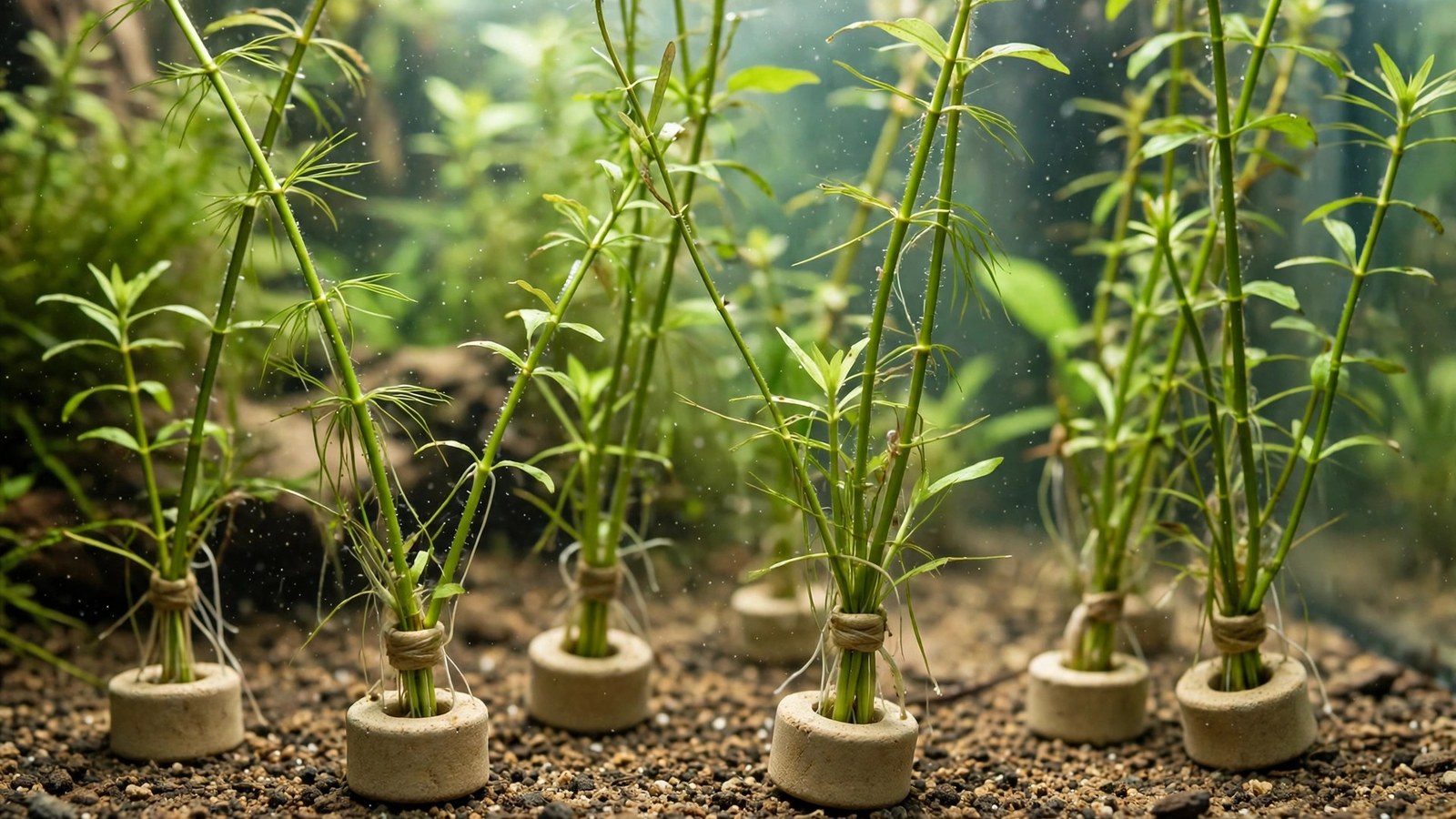
Unglazed ceramic rings and small terracotta pots are the classic lead-free alternative. They come pre-shaped to hold stems, they're completely inert, and they look natural once algae and roots colonize them. Downside: they're bulkier than strips and can look clunky in a minimal aquascape.
Stainless steel anchors and plant weights
Food-grade stainless steel spiral weights (often sold as "plant anchors") are another inert option. They're reusable, easy to sanitize between uses, and they hold stems more gently than a crimped strip. Check that what you're buying is genuinely stainless and not chrome-plated mystery metal — buy from an aquarium brand, not a random craft supplier.
Tying and gluing
For rhizome plants, forget weights entirely: tie Anubias and Java fern to driftwood or rock with cotton thread or fishing line (cotton eventually dissolves; remove synthetic line once roots grip). Aquarium-safe cyanoacrylate gel works too — a dab on the rhizome, press to hardscape, hold thirty seconds. Neither involves the rhizome being crushed, which is the entire point.
Planting deeper with tweezers
The old-school reliable method: long aquascaping tweezers, insert the stem deep into at least two inches of substrate at a slight angle, and release gently while withdrawing the tweezers. Many floating-plant problems are really shallow-planting problems — check our guide to aquarium plant roots rotting if stems keep popping up no matter what you do. A little substrate depth solves more anchoring issues than any gadget.
Best Practices If You Keep Using Strip Weights
If you use modern weights — and plenty of hobbyists do, safely — a few habits eliminate nearly all risk:
- Loosen them. Unwrap the strip, fan the stems out slightly, and re-wrap loosely, or use the weight as a gentle anchor under the substrate rather than a tourniquet around the stems.
- Split big bunches. Wholesale bunches are packed dense for shipping. Divide them into smaller groups of 3–5 stems before planting; this improves flow, light penetration, and survival, and it means each weight holds less.
- Remove them after rooting. Once stems have grown roots into the substrate (usually 2–4 weeks), the weight has done its job. Pull it out and reuse it on the next planting.
- Never wrap rhizomes. Anubias, Java fern, Bucephalandra — tie or glue these, full stop. A weight on a rhizome is how you get melt that looks like disease but is really a bruise.
- Watch shrimp tanks. Invertebrates are the canaries of the aquarium. If you're using weights of uncertain vintage in a shrimp tank, that's the one scenario where replacing them with ceramic anchors is cheap insurance worth buying.
- Don't confuse symptoms. If plants decline near weights, suspect crushing and flow issues first. If leaves develop holes or stems melt after a water change, you're looking at nutrition or water-parameter problems — see our aquarium plant nutrient deficiency guide to sort them out.
What About Snails, Fertilizer, and Other Suspects?
Because weights are such a visible suspect, they get blamed for problems they didn't cause. A quick triage to save you from chasing the wrong culprit:
- Leaves being eaten? That's usually snails eating aquarium plants or a nutrient-starved plant becoming soft enough to interest them — not the weight.
- Yellowing leaves with intact stems? Think iron deficiency in aquarium plants or potassium deficiency, not metal toxicity.
- Everything melting after dosing? Over-fertilizing symptoms look dramatic and happen fast; a weight problem develops slowly at the contact point only.
Pattern to remember: damage from weights is localized — it happens exactly where the strip grips the plant. Anything system-wide (all leaves yellowing, every plant melting at once) points elsewhere.
Frequently Asked Questions
Are aquarium plant weights made of lead?
Not anymore. Modern plant weights from aquarium suppliers are made from a non-toxic zinc/magnesium alloy that is considered safe for freshwater aquariums. The "lead weight" name is a legacy nickname from decades ago when lead was actually used. Anything shipped with plants by a current retailer is virtually certain to be the alloy version. Truly old strips of unknown origin could be lead, so don't use mystery weights.
Should I remove plant weights after planting?
Yes, that's best practice. Use the weight as a temporary anchor for the first two to four weeks while roots establish, then remove it. Long-term wrapping crushes stems, traps debris, restricts water flow to lower leaves, and encourages rot at the contact point. Once the plant is rooted, the weight is doing nothing but adding risk.
Can plant weights kill fish or shrimp?
Modern zinc alloy weights are not known to harm fish or shrimp under normal aquarium conditions. Genuine lead weights, if you somehow still have them, could theoretically leach lead in soft acidic water over long periods, and invertebrates are the most sensitive. If your livestock is struggling, look for the usual suspects first — water parameters, ammonia spikes, and problems after water changes — before blaming the weights.
Can I use plant weights on Anubias or Java fern?
No — not wrapped around the rhizome. Rhizome plants must have their rhizome exposed to the water column; wrapping, banding, or burying a rhizome causes bruising and rot. Tie Anubias, Java fern, and Bucephalandra to driftwood or rock with cotton thread, or glue them with aquarium-safe cyanoacrylate gel. If a rhizome is already softening, follow our rhizome rot rescue guide for treatment steps.
How do I anchor plants without any weights?
Plant stems deep with long aquascaping tweezers into at least two inches of substrate at a slight angle — depth alone holds most plants. For hardscape plants, tie or glue rhizomes to wood and rock. Ceramic anchor rings and stainless steel spiral weights are inert alternatives that hold stems more gently than crimped strips. Many aquascapers use strips only temporarily, then remove them once roots take hold.
Are ceramic plant anchors safer than metal strips?
Ceramic and terracotta anchors are completely inert and eliminate both the (tiny) metal question and much of the crushing risk, since they cradle stems rather than crimping them. They're the best choice if you have vintage mystery weights you don't trust, a sensitive shrimp breeding tank, or just want a set-and-forget solution. Their only real downside is bulk — they look clunkier than a thin strip in a minimalist scape.
The Honest Bottom Line: Are Aquarium Plant Weights Safe?
So, are aquarium plant weights safe? With modern products: yes, the metal itself is fine — it's a non-toxic zinc alloy, not the lead the old nickname warns about. The real hazards are a tight strip crushing soft stems and any weight at all pressing on a rhizome, both of which are solved by loosening, splitting bunches, and removing the weights once roots establish. Treat mystery vintage strips with suspicion, prefer ceramic or stainless anchors when in doubt, and remember the golden rule of plant troubleshooting: damage at exactly the grip point means the weight did it; damage everywhere means something else did. Anchor smart, plant deep, and your plants will hold just fine.