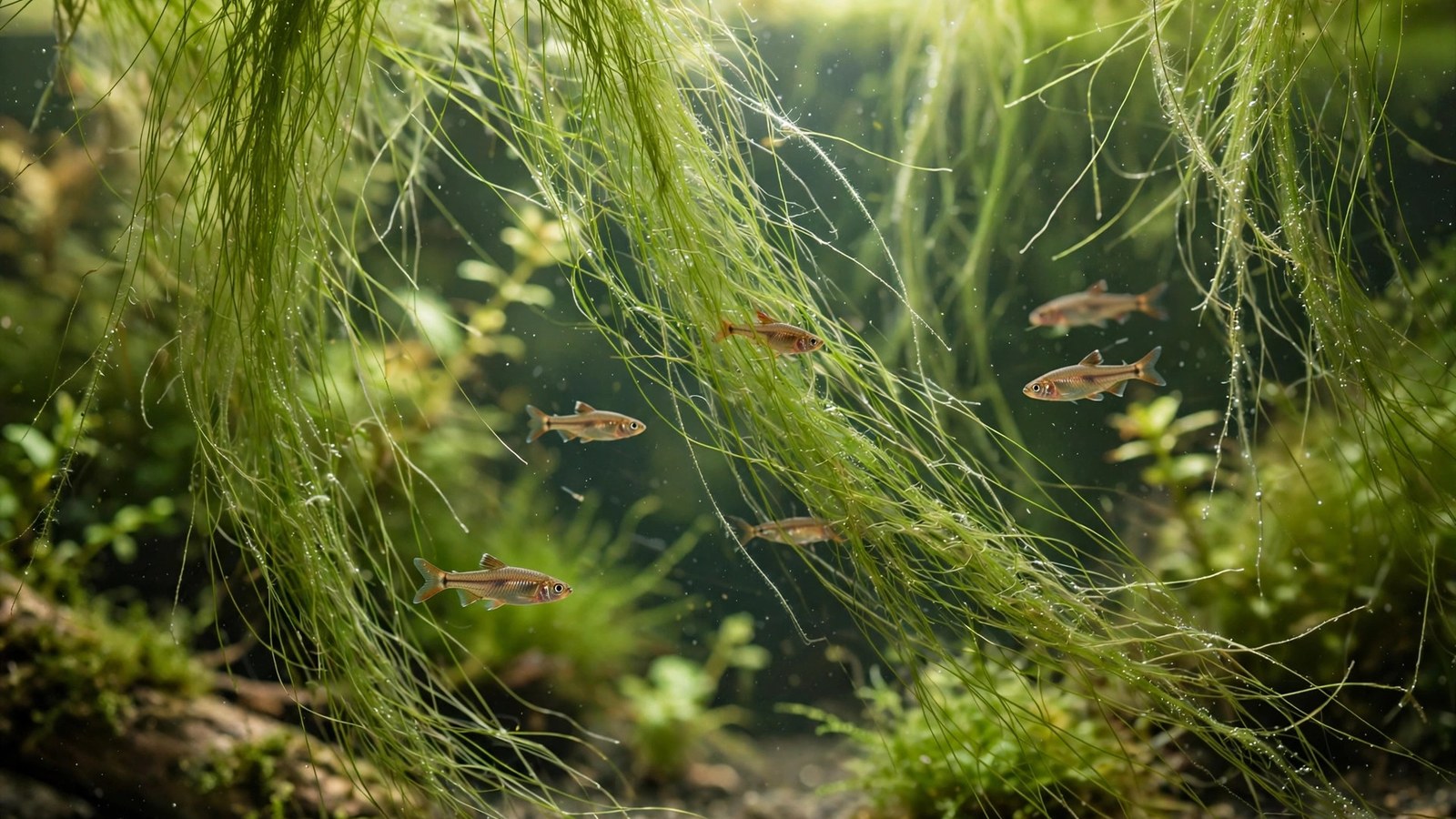
You've spotted bright green, wispy strands waving from your plants and driftwood, and the first question in every fishkeeper's mind is the same: is hair algae going to hurt my fish? The honest answer is that hair algae is one of the least dangerous algae problems you can have — but "not toxic" and "harmless" are two different things. Here's what it can and can't do to your livestock, and when a benign bloom crosses the line into a real problem.
What hair algae is doing in your tank
Hair algae is a thread-like green algae — long, soft filaments anchoring to leaves, driftwood, and rocks, then waving in the current. It thrives when light and nutrients fall out of balance: too much light, or too much phosphate, nitrate, or ammonia relative to what your plants can absorb. Unlike cyanobacteria, it produces no toxins — it's simply a fast-growing organism stealing lunch from your plants.
Fish react to it like a tuft of fine grass. Mollies, platies, and guppies pick at it curiously, and herbivores like proven hair algae eaters treat it as a free buffet. If your fish are behaving, breathing, and eating normally, the algae isn't the emergency. It IS a neon sign that your tank's ecology has a gap your plants aren't filling — and that gap is where the genuine risk lives.
Why It Isn't Directly Dangerous to Fish
There is no scientific evidence that common hair algae (Oedogonium, Rhizoclonium, and similar filamentous greens) secretes toxins harmful to fish, shrimp, or snails. Compare it with cyanobacteria (blue-green algae), which can genuinely release hepatotoxins — hair algae is in a completely different, benign category.
Fish can swim through it and even nibble it without harm. Shrimp graze inside it safely — dense strands are a known refuge for newborn cherry shrimp, who hide in the filaments and feed on the microorganisms there. If you see a modest tuft of green threads and your livestock are thriving, the correct response is calm, not panic.
The Real Risks: When the Bloom Stops Being Harmless
Hair algae doesn't poison fish — but a severe bloom creates three real problems worth taking seriously.
1. Entanglement of fry and tiny shrimp
The one direct physical risk is to the smallest livestock. Newborn fry and freshly hatched shrimp are weak swimmers; in a dense mat of filaments they can tangle and be unable to reach food. If you're breeding guppies, tetras, or neocaridina shrimp in a tank with heavy hair algae, clear the bloom or use a separate breeding tank. Adult fish simply push through.
2. Plant smothering and nighttime oxygen crashes
Hair algae wraps leaves and blocks light, slowly starving your plants. Fewer photosynthesizing leaves means less daytime oxygen — and every cell in the tank keeps consuming oxygen after lights-out. In a plant-choked tank, that nighttime drawdown can stress fish, especially in warm water above ~26°C. If your fish gasp at the surface in the morning, the algae-driven oxygen swing is a prime suspect. More surface agitation and regularly cleaning algae off plant leaves both help.
3. What the bloom says about your water
Hair algae exploits imbalance faster than plants can. A severe outbreak often coincides with ammonia spikes (decaying food, an uncycled filter, a dead snail behind a rock) or chronic phosphate excess from overfeeding. Those underlying conditions absolutely CAN harm fish. Treat a sudden thick bloom as a water-quality alert: test ammonia and nitrite immediately. The algae is the smoke alarm — the fire might be a cause of hair algae like a filter problem that is genuinely dangerous. If you're unsure what organism you're looking at, run through the aquarium algae identification chart first, because treatment differs.
Hair Algae Risk Level by Tank Situation
| Bloom level | What you see | Risk to fish | What to do |
|---|---|---|---|
| Light | A few wisps on a rock or leaf tip | None — cosmetic | Pull by hand; often resolves on its own |
| Moderate | Strands on several plants, up to 5 cm | Low — watch fry | Trim leaves, cut light to 7 hours, feed less |
| Heavy | Dense mats wrapping plants | Medium — oxygen + water risk | Test ammonia; manual removal; add algae eaters |
| Extreme | Tank-wide takeover, morning gasping | High — oxygen crash possible | Increase agitation, 50% water change, find the cause |
Let Nature Help: Stock a Cleanup Crew
The simplest, fish-safe way to beat hair algae is to hire the tank's own residents. Amano shrimp (1 per 5–8 liters) graze filaments relentlessly, and mollies are genuine hair-algae nibblers — hardy, affordable community fish that prefer harder, slightly alkaline water. Combine grazers with a 7-hour photoperiod and modest feeding, and most blooms fade within weeks.
It's a genuine buying opportunity: a 6-pack of Amano shrimp and 2–3 mollies costs less than most algaecides, works longer, and adds life to the tank instead of chemicals. Round out the crew with the best algae eaters for planted tanks — and remember that algae doesn't automatically mean a healthy tank, but a tank that has defeated it and stays stable usually is one. For the science behind filamentous growth, see the University of Minnesota Extension's guide to aquatic plants and algae.
Frequently Asked Questions
Can hair algae kill my fish?
Directly, no — hair algae produces no toxins and cannot poison fish. Indirectly, an extreme bloom can lower nighttime oxygen by smothering plants, and a sudden bloom often signals a real water-quality problem like an ammonia spike. Keep the bloom moderate, ensure good surface agitation, and test your water.
Is hair algae bad for betta fish?
No, it's not toxic to bettas. The main concern is that long strands can wrap around a betta's flowing fins, hindering swimming if the bloom is heavy. Bettas breathe from the surface, so oxygen dips bother them less. Trim heavy strands near the surface and keep the bloom controlled.
Will hair algae hurt my shrimp and snails?
Adult shrimp and snails are safe — Amano and cherry shrimp actually live and feed inside it. Only newborn shrimp fry in very dense mats face entanglement risk. If you're breeding neocaridina, thin out heavy growth in the nursery areas of the tank.
Should I remove hair algae immediately or leave it alone?
Light wisps can stay — they often fade once you fix light and feeding. Heavy mats should be pulled out by hand gradually, not all at once, to avoid an ammonia spike from rotting algae. Pair removal with a shorter photoperiod and a cleanup crew for a lasting fix.
Can I use algaecide if I have fish in the tank?
It's risky and usually unnecessary. Algaecides stress fish and invertebrates, and the mass die-off they cause can spike ammonia. Manual removal, reduced lighting, and natural grazers like Amano shrimp resolve hair algae safely without chemicals. Reserve algaecide as an absolute last resort.
The Bottom Line
Hair algae is ugly and annoying, but it's one of the few aquarium problems that looks scarier than it is. It won't poison your fish or crash your cycle, and mild blooms often burn out while you fix the real issue. Respect the two genuine dangers — tangled fry and plant-choked oxygen levels — pull out the worst by hand, feed less, light less, and let shrimp do the rest. For the complete step-by-step treatment plan, see the removal guide linked in the takeaways above.