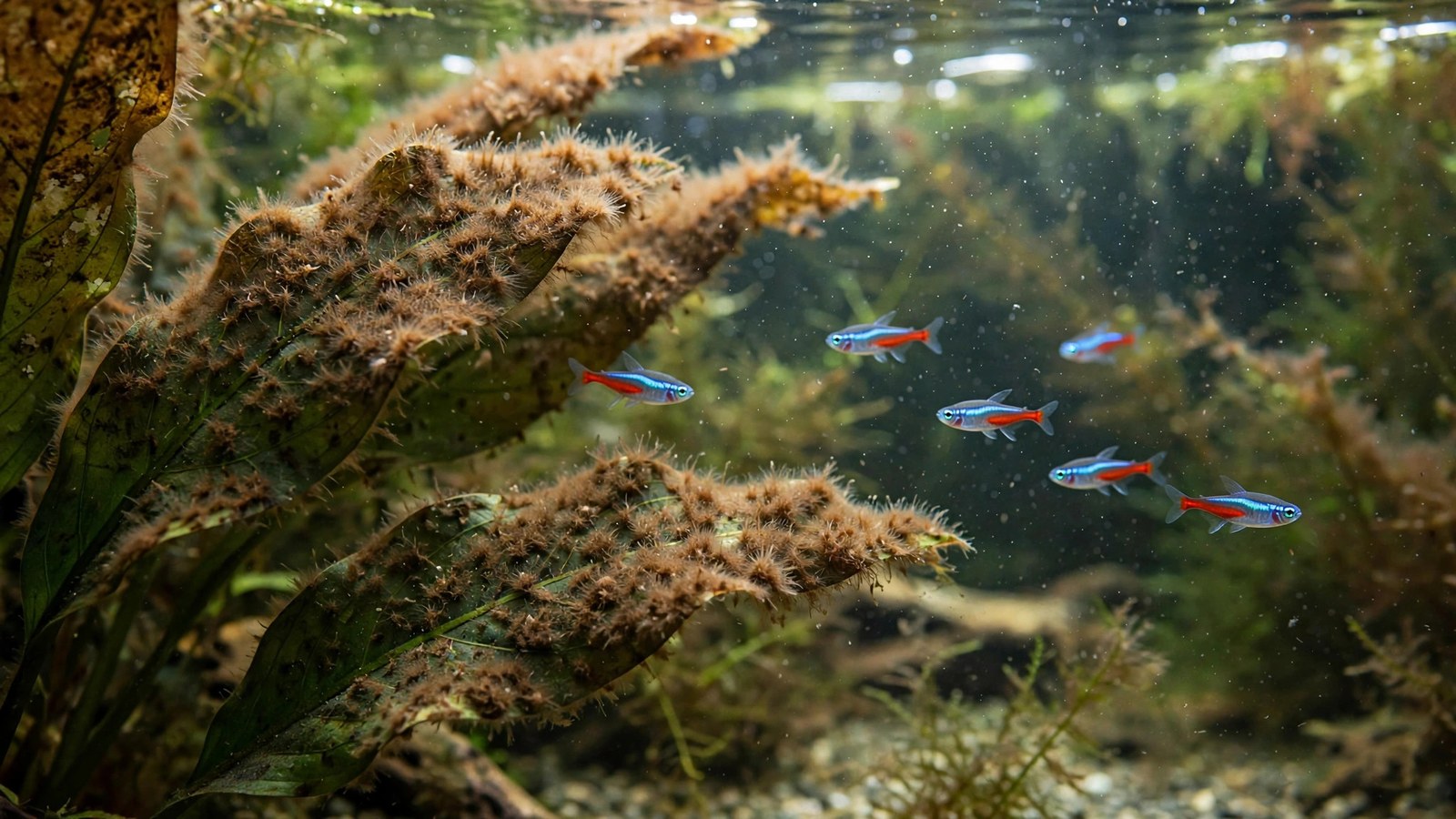
You wake up, glance at your tank, and yesterday's sparkling glass is coated in a dusty, rust-colored film. Brown algae in fish tank glass looks alarming — but is your livestock actually in danger? Here is the honest answer: almost never. The real problem isn't toxicity; it's what the brown film is telling you about your water.
The Short Answer: Brown Algae Won't Poison Your Fish
Let's name the culprit first. The "brown algae" in most aquariums is a colony of diatoms — single-celled organisms with tiny silica shells that dust every surface in a soft, rusty-brown film (the diatom entry on Wikipedia explains why they're so ubiquitous in aquatic systems). Diatoms are harmless houseguests: no toxins, no gill or fin attacks, no oxygen depletion like a bacterial bloom. Many fish and invertebrates actively graze on them — otocinclus, bristlenose plecos, nerite snails, and amano shrimp treat a brown-dusted leaf like a buffet.
So if you spotted brown fuzz this morning and your first thought was "are my fish going to die?" — no. Your Brown Diatom Algae in New Tanks: Causes & Fixes guide explains where it comes from, but the safety verdict is reassuring: a diatom bloom is a cosmetic nuisance and a symptom, never a poison.
That said, "not toxic" and "nothing to worry about" are different things. The danger of brown algae is indirect — it points at conditions that can stress fish if they linger.
When Brown Algae in Fish Tank Setups Does Mean Trouble
Think of diatoms as a dashboard warning light, not a blown engine. They thrive on silicates (common in fresh tap water, new sand, and some rocks), excess nutrients, and dim or imbalanced lighting. When brown algae blankets everything for months instead of weeks, it's reporting one of these underlying problems:
- An unfinished nitrogen cycle. New tanks almost always grow diatoms while bacteria colonize the filter. Ammonia and nitrite spikes are the real killers here — the brown film is just along for the ride.
- Silicate-rich source water. High silicates in tap water give diatoms endless food — the number one cause of brown algae that lingers in established tanks.
- Smothered plants. Thick brown coats block light from slow growers like anubias and Java fern. Weakened, decaying plants release ammonia, which genuinely degrades water quality — and that affects fish.
- Too little light. Diatoms outcompete green algae in dim tanks, so a persistent bloom can mean your photoperiod is too short for your plants.
Brown Algae vs. Cyanobacteria: Don't Confuse the Two
Many aquarists call any brownish coating "brown algae," but cyanobacteria (blue-green algae) is a different organism — and unlike diatoms, some strains release toxins that can genuinely harm fish. Compare the two before you relax:
| Feature | Brown diatoms | Cyanobacteria |
|---|---|---|
| Color | Rusty, dusty brown; looks like fine dirt | Blue-green, dark green, or dark brown-black |
| Texture | Powdery film, wipes off easily | Slimy or leathery sheets that peel off in layers |
| Smell | No odor | Earthy, musty smell when disturbed |
| Fish safety | Not toxic | Some strains release toxins harmful to fish |
| Typical cause | Silicates, new tank, low light | Excess organics, poor flow, phosphate imbalance |
| Resolution | Often fades in 2–6 weeks as the tank matures | Needs intervention — see our cyanobacteria treatment guide |
If your coating matches the cyanobacteria column — slimy, smelly, sheet-like — treat it as a genuine threat and start treatment rather than waiting. Mistaking cyanobacteria for harmless brown algae is the one error that can cost you fish, so identify first, relax second.
What to Do About Brown Algae (Without Panicking)
Since the diatoms themselves aren't dangerous, the fix is calm and simple: clean up the symptom, then correct the cause so it stays gone. Wipe the glass with a magnetic cleaner or soft sponge during each water change, and gently rub coated leaves instead of tearing them off. For buried foliage, cleaning algae off plant leaves gently beats pruning healthy growth.
Next, check your cycle. If the tank is under two months old, test ammonia and nitrite before anything else — diatom blooms in cycling tanks are normal, and keeping those parameters safe is the real task. Once the cycle finishes, most blooms fade on their own; our guide on whether brown algae goes away on its own covers the typical timeline.
For stubborn cases, test your tap water for silicates. A silicate test kit is a cheap, underrated diagnostic — high readings call for RO/DI water or a phosphate-silicate absorbing resin in the filter. And don't overlook a cleanup crew: a school of otocinclus catfish or a few nerite snails will graze diatoms off glass and leaves around the clock, turning a chore into a living feature. Stock modestly, acclimate carefully, and match species to your tank — pick algae eaters matched to your tank size and conditions, and brown algae eaters covers the specialists that target diatoms.
Finally, resist the urge to nuke the problem. Broad algaecides and antibiotics are massive overkill for a harmless organism — and they can crash your filter bacteria, which will endanger your fish. For the long game, read how to prevent brown algae from coming back, and keep perspective: a thin dusting that comes and goes is a sign your tank is alive, not failing. Aim for balanced, not sterile.
Frequently Asked Questions
Can brown algae kill my fish?
No. Brown diatom algae is not toxic to fish, shrimp, or snails, and it doesn't harm gills, fins, or skin. Fish can die during a diatom bloom, but the real cause is usually ammonia or nitrite in an uncycled tank — the diatoms are just blooming in the same conditions. Test your water parameters, not the algae.
Why does brown algae show up in new tanks?
New tanks have high silicates from fresh substrate and tap water, immature biofiltration, and unstable nutrient levels — perfect diatom food. As beneficial bacteria establish and plants settle in, diatoms lose their advantage and typically fade within 2–6 weeks. Regular water changes and gentle manual removal speed things along.
Should I remove brown algae manually?
Yes, lightly. Wipe glass and gently rub coated leaves during weekly water changes so plants keep receiving light. Heavy smothering weakens slow-growing plants, which can decay and pollute the water — so manual removal protects plants, not just aesthetics. Avoid scrubbing so hard you tear leaves.
What eats brown algae safely?
Otocinclus catfish and nerite snails are the best diatom specialists, followed by amano shrimp and bristlenose plecos. They graze brown film off glass, decor, and leaves continuously. Always research each species' tank-size and water-parameter needs before buying — a cleanup crew that's wrong for your tank becomes a casualty, not a solution.
How is brown algae different from blue-green algae?
Brown algae is diatoms — a powdery, odorless, non-toxic film. Blue-green "algae" is cyanobacteria: slimy sheets with an earthy smell, and some strains release toxins that can harm fish. Diatoms wipe off like dust; cyanobacteria peels off in layers. Confusing the two is dangerous, because cyanobacteria needs active treatment.
My brown algae never goes away — what should I test?
Test silicates in your tap water first; high-silicate source water is the top cause of diatoms in established tanks. Also check nitrates and phosphates, and review your lighting — diatoms thrive in dim tanks. If silicates are high, RO/DI water or a silicate-absorbing filter resin usually ends the cycle for good.
The Bottom Line
Brown algae in a fish tank is ugly, not dangerous. Diatoms can't poison your fish — but they are your tank's way of asking for attention: finish the cycle, check your source water, and keep plants clean and lit. Handle the cause, and the brown dust usually handles itself.