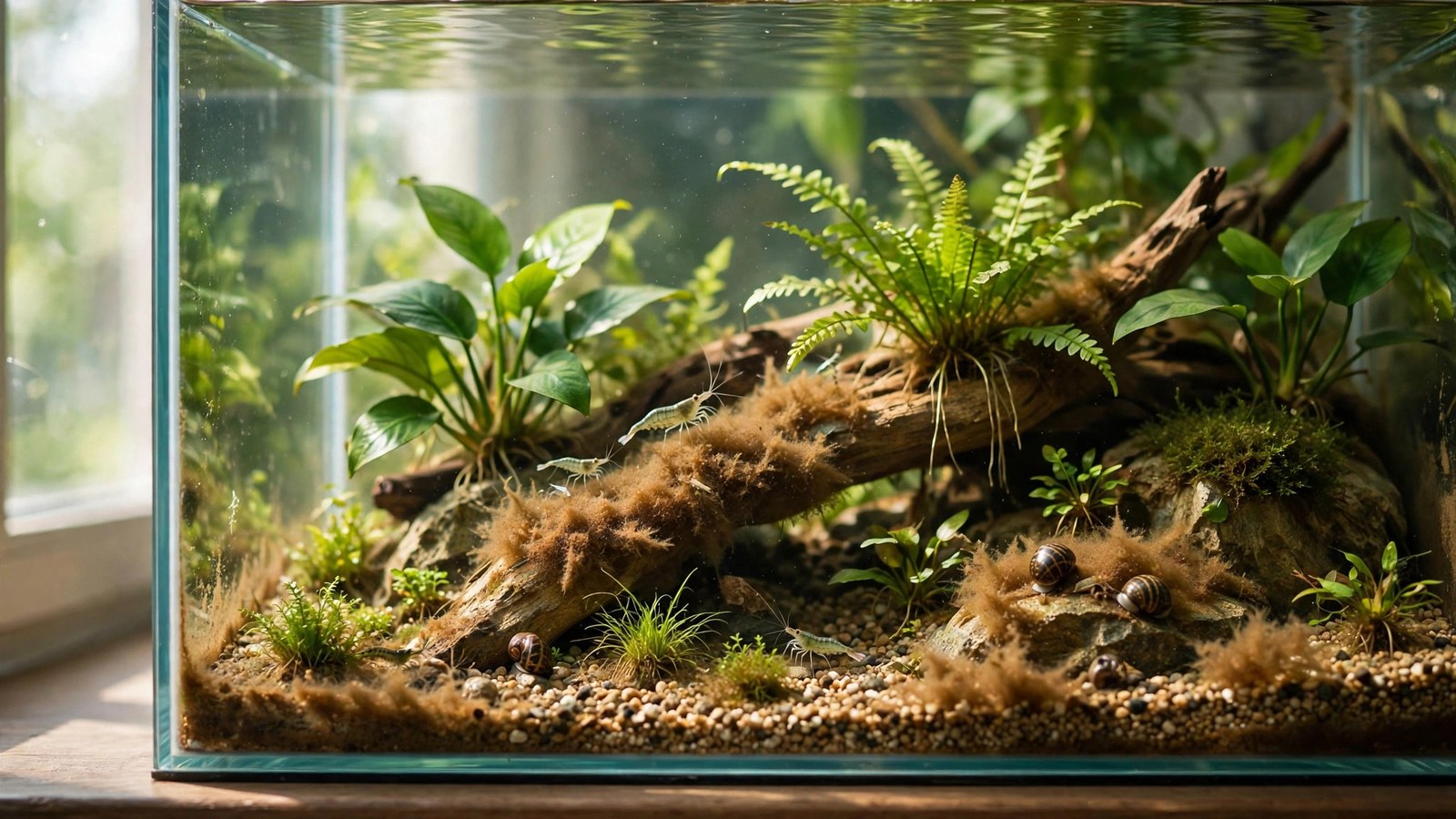
That rusty-brown dust on your glass and plant leaves is almost certainly not true algae — it's diatoms, single-celled organisms that bloom in most new tanks and then, in most cases, starve themselves out of existence. The real question about brown algae isn't whether you can kill it, but whether you need to do anything at all. In a typical new setup, the answer is: mostly, just wait.
What "Brown Algae" Actually Is
True brown algae barely exist in freshwater aquariums. What hobbyists call brown algae is a film of diatoms — single-celled organisms that form dusty brown coatings on glass, substrate, decorations, and leaves. Run your finger over it and it wipes away as powder, unlike green algae that needs real scraping. If you're unsure what you're looking at, check the aquarium algae identification chart first.
This distinction matters: diatoms and true algae respond to different levers. Diatoms need dissolved silicates to build their glass-like shells, and new tanks are flush with them — tap water, new sand, even the glass panels contribute. Once that supply is consumed, the bloom collapses. That's the whole mechanism behind the "it just went away" stories.
For the complete treatment walkthrough — causes, silicate sources, and fixes in order — see Brown Diatom Algae in New Tanks: Causes & Fixes.
Why Brown Algae Usually Disappears on Its Own
A new aquarium is a temporary silicate buffet. In the first weeks, ammonia also spikes and falls as bacteria colonize the filter. Diatoms thrive in this unstable window — then exhaust the dissolved silicate inventory faster than water changes replenish it, and the population collapses.
The curve is predictable: the coating appears in weeks 1–3, peaks around weeks 3–6, and fades by weeks 6–12.
What to Do While You Wait (the Boring, Correct Plan)
Waiting is not doing nothing — it means maintenance instead of intervention:
- Wipe the glass weekly with a magnetic scraper, and siphon the substrate gently during your normal 25–30% water change. Cosmetic work — it won't slow the bloom, but it keeps you sane. Don't deep-vacuum a new planted substrate.
- Dust plant leaves lightly. Fan them with your hand or a turkey baster so thick film doesn't block light from slow growers. For heavier coatings, wipe leaves gently with a soft sponge instead of scraping them.
- Add a cleanup crew. Nerite snails, otocinclus, and Amano shrimp graze diatoms enthusiastically. See the best brown algae eaters and diatom clean-up crew.
- Skip the algaecides. Chemical killers disrupt the bacterial cycle and dead diatoms just re-release silicates.
Wait or Act: The Decision Table
| Signal | What it means | Action |
|---|---|---|
| Brown film appeared in the first 2 months | Classic new-tank diatom bloom | Wait — follow the plan above |
| Gradually fading after week 4–6 | Silicates running out | Wait — it's working |
| Persists past ~12 weeks unchanged | Silicate supply keeps replenishing | Act — test for silicates |
| Smothering leaves into rot | Plants losing light faster than they adapt | Act — manual removal + crew |
| Sudden return in an old, stable tank | New silicate source introduced | Act — find the source |
| Tap water tests high in silicates | Every water change feeds the bloom | Act — silicate media or RO |
When Brown Algae Won't Leave: What to Do
If the film is still going strong at three months, something is refilling the silicate supply faster than the diatoms drain it. The most common culprit is tap water — some municipal supplies run high in silicates, so every water change restarts the buffet. Other suspects: new sand that hasn't finished leaching, and occasionally certain rocks or additives.
Start with a test — silicate kits are cheap and give a yes-or-no answer in minutes. If the tap is the problem, run silicate-absorbing filter media (resins that trap silicic acid) on schedule, or for heavy cases, mix in remineralized RO water. Both are genuinely recommended fixes, covered in how to prevent brown algae from coming back.
Never strip and restart the tank. Fresh water, fresh substrate, fresh glass = a fresh silicate buffet = another full diatom cycle. The bloom you have now is the one closest to ending. And the same wait-or-act logic applies to the green variety — see whether hair algae goes away on its own.
 ★4.8
Pawfly Filter Media Bags
Check Price on Amazon ★4.8How Long Until It's Gone? A Realistic Timeline
- Weeks 1–3: Brown dust appears on glass and substrate. Normal in a new tank.
- Weeks 3–6: Peak bloom. Maintenance mode: wipe, siphon, keep the filter running.
- Weeks 6–12: Visible fading. Patches thin out and stop returning after cleanings.
- Past week 12: Still thick? Treat it as a silicate-supply problem and work the decision table.
For the full treatment walkthrough once you've decided to act, start with a silicate test, then work the decision table above for the act-now steps. External science backup: the University of Minnesota Extension homepage for science-based aquatic and gardening resources, and Tropica's algae guide on the self-limiting new-tank diatom phase.
Frequently Asked Questions
Will brown algae go away on its own without me doing anything?
In most new tanks, yes. Diatoms consume the dissolved silicates from tap water, new substrate, and fresh glass, and once that supply runs out — typically within 2 to 12 weeks — the bloom collapses on its own. Keep up basic maintenance (wiping glass, weekly water changes) while you wait; no chemical treatment is needed for a normal new-tank bloom.
How long does it take for brown algae to disappear naturally?
Most tanks see the brown film appear in weeks 1–3, peak around weeks 3–6, and fade by weeks 6–12 as silicates are exhausted and the cycle stabilizes. Fast-growing plants and a diatom-eating cleanup crew can shorten that window. If it's still going strong after about three months, something is replenishing silicates — time to investigate.
Does brown algae mean my tank is cycling?
Often, yes — brown diatom films are a classic early-cycle milestone, arriving while beneficial bacteria colonize your filter. That said, diatoms run on silicates, not ammonia, so the bloom can linger slightly past cycle completion. The fading film is a good sign your tank is maturing, though an ammonia/nitrite test is the real confirmation.
Should I do water changes if brown algae will go away on its own?
Yes — keep your normal 25–30% weekly water changes so the cycle completes and you can siphon out the brown dust. One exception: if your tap water tests high in silicates, each change refuels the bloom, so use smaller changes or silicate-absorbing media until the bloom breaks.
Can brown algae kill my plants?
A light dusting won't hurt established plants, but a thick film can block light from slow growers like Anubias and Java Fern, weakening them. Fan or wipe affected leaves during water changes. If leaves are rotting under heavy coating, that's an act-now signal — add grazers like otocinclus and step up manual removal.
Why did brown algae come back in my established tank?
A sudden return in a mature tank means a new silicate source: new substrate or sand, a large water change with silicate-rich tap water, or new hardscape. Track what changed, test the tap for silicates, and run silicate-absorbing media while you find the source. Established-tank recurrences rarely resolve on their own.
The Bottom Line
For most tanks, brown algae is a phase, not a problem — a self-limiting diatom bloom that runs out of fuel within a couple of months. Your job is maintenance, patience, and resisting the urge to nuke or restart the tank. The moment it stops fading and starts persisting — past ~12 weeks, smothering plants, or returning in a mature setup — switch from waiting to hunting silicates. That one shift in strategy is the entire skill.