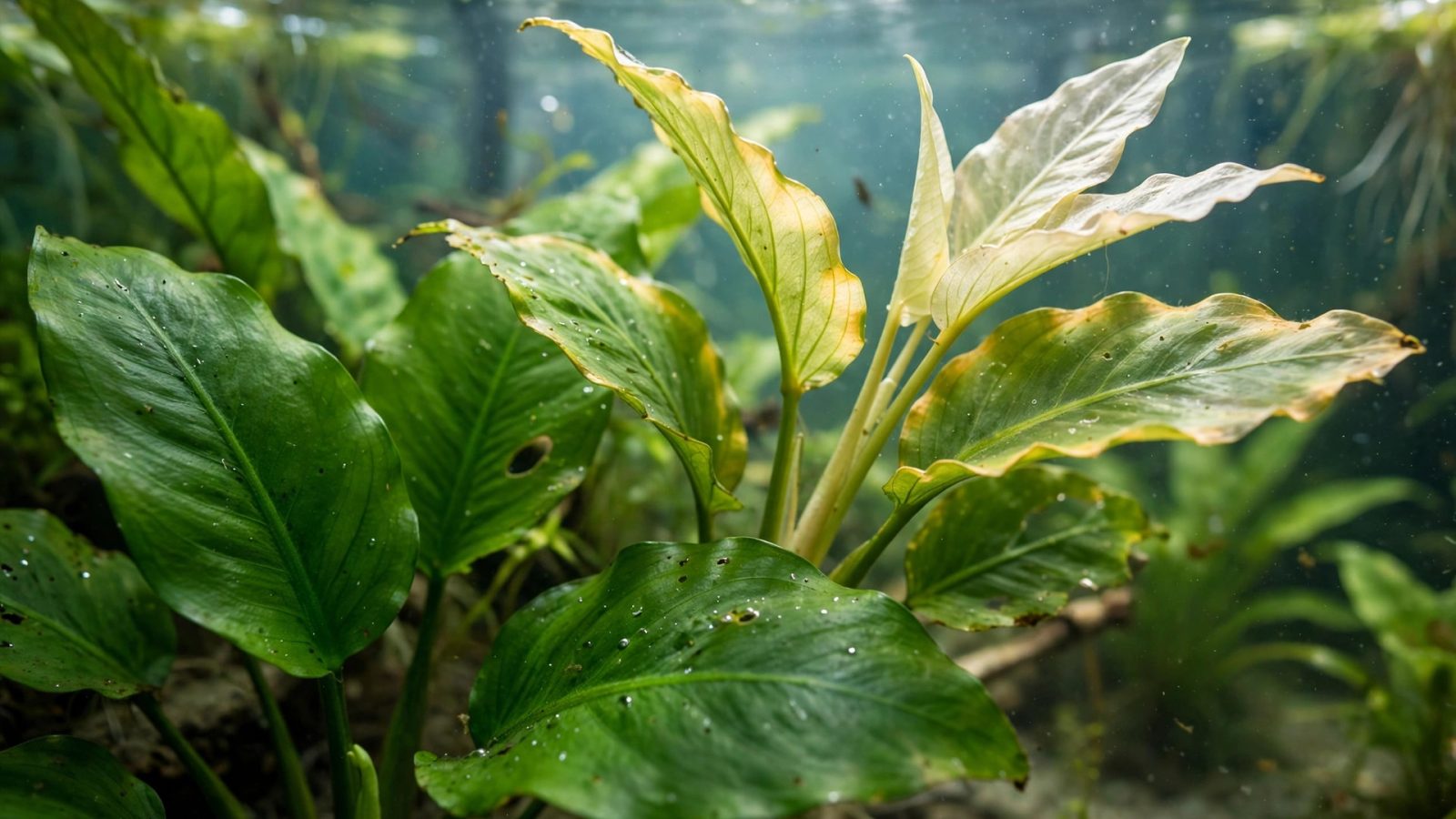
Learning to spot an aquarium plant nutrient deficiency is the single most useful diagnostic skill in the planted-tank hobby. Yellow leaves, holes, stunted tips, and transparent patches are not random bad luck — they are your plants telling you exactly which nutrient is running short. The trick is that different deficiencies leave different fingerprints, and once you know how to read them you can fix most plant problems in days instead of guessing for months.
This guide gives you a complete aquarium plant nutrient deficiency chart covering nitrogen, phosphorus, potassium, iron, magnesium, and the rest, plus a step-by-step method for confirming your diagnosis before you dose anything. Work through it in order: identify the symptom pattern, match it to the chart, confirm with a test or elimination trial, then correct with the right fertilizer approach.
Mobile vs Immobile Nutrients: The Key to Reading Symptoms
Before the chart, you need one concept. Plants can move some nutrients from old leaves to new growth (mobile nutrients) but cannot relocate others (immobile nutrients). This determines where symptoms appear first:
- Symptoms on OLD leaves first (lower, outer leaves) → mobile nutrient: nitrogen, phosphorus, potassium, magnesium, or sometimes zinc.
- Symptoms on NEW leaves first (young leaves, growing tips) → immobile nutrient: iron, calcium, boron, manganese, copper.
This one observation cuts your suspect list in half immediately. If you take nothing else from this guide, take this: look at where the damage starts before you look at what the damage looks like. For a full worked example of this logic, see our guide on why anubias leaves turn yellow, which walks through the same diagnostic process for one species.
Aquarium Plant Nutrient Deficiency Chart
Match what you see to the table below, then read the detailed section for each suspect.
| Nutrient | Type | Classic symptom | Where it starts |
|---|---|---|---|
| Nitrogen (N) | Macro, mobile | Uniform pale yellowing, small new leaves | Old leaves first |
| Phosphorus (P) | Macro, mobile | Dark green leaves with brown/black spots; stunted growth | Old leaves first |
| Potassium (K) | Macro, mobile | Yellow edges, then pinholes with yellow halos | Old leaves first |
| Magnesium (Mg) | Macro, mobile | Yellowing between veins, veins stay green | Old leaves first |
| Iron (Fe) | Micro, immobile | New leaves pale/white, green veins | New leaves first |
| Calcium (Ca) | Macro, immobile | Twisted, deformed new growth; stunted tips | New leaves first |
| Manganese (Mn) | Micro, immobile | Mottled yellowing between veins on new leaves | New leaves first |
| Boron (B) | Micro, immobile | Blackened, dying growing tips; brittle new leaves | Growing tips |
| Zinc (Zn) | Micro, mobile-ish | Small, narrow new leaves; shortened internodes | New leaves |
| Copper (Cu) | Micro, immobile | Wilting tips, bluish tint — rare in aquariums | New leaves first |
Nitrogen Deficiency: Uniform Yellowing From the Bottom Up
Nitrogen is the nutrient plants consume in the largest quantity, and a shortage shows as a general, even yellowing that starts on the oldest leaves and creeps upward. New growth comes in small and pale. In a planted tank, true nitrogen deficiency is most common in one of two situations: a very lightly stocked tank (few fish producing waste) combined with lean dosing, or a tank where fast-growing stem plants have simply outstripped the available supply.
Before you dose, check your nitrate reading. If nitrates are consistently at or near zero and you see the classic bottom-up yellowing, nitrogen is a strong suspect. If nitrates read 10–30 ppm and plants still yellow, look elsewhere — adding more nitrogen to an already nitrogen-rich tank just feeds algae. Recovery after correction is usually visible within one to two weeks as new green growth emerges; old yellowed leaves rarely green up again, so judge progress by the new leaves.
Phosphorus Deficiency: Dark Leaves, Brown Spots, Stalled Growth
Phosphorus deficiency is the quiet one. Leaves stay dark green — sometimes unusually dark — but develop brown or blackish spots and the plant’s growth stalls. Because fish food is rich in phosphorus, this deficiency is genuinely rare in stocked tanks and shows up mostly in fishless plant-only setups or in tanks with very aggressive phosphate-removing filter media.
A word of caution: phosphate test kits are notoriously imprecise at low ranges, and chasing a “perfect” phosphate number causes more problems than it solves. If your tank is stocked and fed normally, phosphorus is very unlikely to be your limiting factor. Suspect it only when you have the full picture: dark leaves, necrotic spots, stunted growth, and near-zero phosphate readings in a lightly fed tank.
Potassium Deficiency: Yellow Edges and Pinholes
Potassium deficiency is one of the most commonly misdiagnosed problems in the hobby, because its signature symptom — small pinholes in older leaves, often ringed with yellow — is frequently blamed on snails. The difference: potassium pinholes appear on intact leaves with yellowing margins first, while snail damage looks like ragged chewing from the edges inward. If you are seeing the classic holes, read our dedicated guide to holes in aquarium plant leaves for a full side-by-side diagnosis.
Potassium is rapidly consumed by fast growers and is not replenished by fish waste in any meaningful amount, so tanks without regular potassium supplementation often run short. The fix is straightforward — potassium is available as a standalone supplement (potassium sulfate) or as part of any complete fertilizer — and holes stop appearing on new growth within two to three weeks. Existing holes never heal, so again, watch the new leaves.
Iron Deficiency: Pale New Leaves With Green Veins
Iron deficiency is unmistakable once you have seen it: new leaves emerge pale, yellowish, or almost white while the veins stay green — a pattern called interveinal chlorosis on new growth. Because iron is immobile, old leaves stay green and healthy-looking while the growing tips fade. Red plants are often the first to show it, losing their color and turning washed-out pink or pale green.
The catch with iron is that it is not just about how much you dose — it is about whether the iron stays available. In alkaline water (pH above 7), many iron chelates break down quickly and the iron precipitates out before plants can use it. If you dose iron but new growth stays pale, check your pH and consider switching to a chelate stable at your pH (DTPA chelates hold up better in alkaline water than EDTA). Dosing iron in the morning before lights-on, or splitting the dose, can also improve uptake.
Magnesium Deficiency: Marbled Yellowing on Old Leaves
Magnesium sits at the center of the chlorophyll molecule, so a shortage fades the green between the veins while the veins themselves stay green — like iron chlorosis, but on old leaves instead of new ones. That old-versus-new distinction is the whole diagnosis: interveinal yellowing starting on lower leaves is magnesium; the same pattern starting on new leaves is iron or manganese.
Magnesium deficiency is most common in very soft water, where the water itself carries almost no magnesium, and in tanks where heavy calcium supplementation (from certain substrates or rocks) competes with magnesium uptake. A GH booster containing both calcium and magnesium, dosed at water changes, usually resolves it. If your tap water is very soft (GH below 3), magnesium shortfalls are worth suspecting whenever you see marbled old leaves.
Calcium Deficiency: Twisted, Deformed New Growth
Calcium deficiency shows as distorted new growth — leaves emerge twisted, curled, or stunted at the tips, and growing points may die back. It is rare in most tap water because calcium is abundant, but it appears in tanks running pure RO/DI water without remineralization, or in extremely soft-water setups.
If you use RO water, this is a remineralization problem, not a fertilizer problem: add a GH remineralizer that includes calcium and magnesium at every water change. Do not try to fix it with calcium alone — calcium and magnesium compete for uptake, and dosing one without the other can induce a deficiency of the other.
Manganese, Boron, Zinc: The Rare Micros
Manganese deficiency looks like iron deficiency’s cousin — mottled interveinal yellowing on new leaves — but is far less common because most complete micro mixes include adequate manganese. Boron deficiency blackens and kills growing tips, producing stunted, bushy, brittle new growth. Zinc shortage shrinks new leaves and shortens the distance between leaf nodes.
In practice, you will almost never diagnose these individually, and you should not try. They are included in any reputable complete micronutrient mix, so if you are dosing micros regularly and still see new-growth problems, the issue is far more likely to be iron availability, CO2, or light than a single exotic trace element. When a micro problem resists the standard fixes, the pragmatic answer is usually a water change plus a fresh, complete micro dose rather than chasing individual elements.
How to Confirm Before You Dose
Matching symptoms to the chart gives you a hypothesis, not a verdict. Confirm it before changing your dosing — wrong guesses waste weeks and can trigger algae. Use these methods in order:
- Test what you can. Nitrate and phosphate test kits are affordable and genuinely useful. GH/KH kits tell you about calcium/magnesium. Iron kits exist but are finicky — treat borderline iron readings with skepticism.
- Check the easy confounders. Is the light actually reaching the plant? Is CO2 (if injected) stable? Did you recently change anything — new light, rescape, new fertilizer? Many “deficiencies” are really light or CO2 problems wearing a nutrient costume. If your plants have simply stopped growing altogether, work through our 10-reason diagnostic for plants that won’t grow before assuming nutrients.
- Run an elimination trial. Dose the suspected nutrient (and only that nutrient) for two to three weeks and watch the new growth. Old damaged leaves will not recover — that is normal. If new growth comes in clean, you found it. If nothing changes, your diagnosis was wrong; stop and reassess rather than increasing the dose.
Fixing Deficiencies: Dosing Approaches That Work
All-in-one liquid fertilizers
For most beginners, a reputable all-in-one liquid fertilizer dosed per the label is the right starting point — it covers macros and micros together and eliminates most deficiencies at once. If symptoms persist on a full dose of an all-in-one, the problem is usually light, CO2, or a specific availability issue (like iron at high pH), not a missing product. See our comparison of liquid fertilizer vs root tabs to make sure each plant type is actually receiving what you dose.
Targeted dosing
Once you can diagnose confidently, targeted dosing is cheaper and more precise: potassium sulfate for pinholes, an iron chelate for pale new growth, GH booster for soft-water magnesium/calcium issues. Keep a simple log — what you dosed, when, and what the new growth looked like two weeks later. Patterns emerge fast.
Root tabs for heavy root feeders
Swords, crypts, and vallisneria feed heavily through their roots. If these plants show deficiencies while your water-column dosing looks right, the substrate may be exhausted — especially inert gravel or sand more than a year old. Root tabs placed near the crown solve what water-column dosing cannot.
When It Is Not a Deficiency At All
Honest troubleshooting means knowing the mimics. Run through these before blaming nutrients:
- New plants melting: tissue-culture and emersed-grown plants routinely shed old leaves when submerged. This is transition, not deficiency — see why aquarium plants melt.
- Algae on leaves: algae coating a leaf blocks light and looks like a dying plant. The plant may be fine; the algae is the problem. Our black beard algae removal guide covers the worst offender.
- Too much light, too little CO2: pale, stunted new growth under strong light with no CO2 is usually carbon limitation, not iron deficiency. Light drives demand for everything else.
- Old age: individual old leaves die. If one or two bottom leaves yellow on an otherwise thriving plant, that is normal senescence, not a crisis.
Prevention: A Routine That Avoids Most Deficiencies
- Dose consistently, not heroically. A regular weekly schedule beats sporadic mega-doses. Build one with our aquarium plant fertilizer schedule for beginners.
- Change water weekly. Water changes reset the buildup of organics and unconsumed fertilizer that skews your chemistry over time.
- Watch new growth, not old leaves. Make it a habit: every week, look at the growing tips. They tell you what the tank is doing right now.
- Change one thing at a time. When you adjust dosing, light, or CO2, change a single variable and wait two to three weeks. Changing three things at once teaches you nothing.
- Keep a simple log. Dose dates, water-change dates, and a one-line note on plant condition. When problems appear, the log usually reveals the cause.
Frequently Asked Questions
Can I diagnose deficiencies from a photo alone?
Photos help, but the single most useful fact — whether symptoms started on old or new leaves — often is not visible in one picture. Note the pattern over a few days before deciding.
Will yellow leaves turn green again after I fix the deficiency?
Usually not. Damaged leaves rarely recover fully. Judge success by new growth: if fresh leaves emerge clean and healthy, the fix worked. Trim badly damaged leaves so the plant redirects energy to new growth.
Should I dose more fertilizer “just in case”?
No. Excess fertilizer does not make plants grow faster — light and CO2 set the speed limit, and surplus nutrients mostly feed algae. Dose to resolve a diagnosed shortage, then maintain.
Do I need a CO2 system to avoid deficiencies?
No. Low-tech tanks without injected CO2 can be fully healthy; they just grow slower and need correspondingly less fertilizer. Match your dosing to your light and CO2 levels rather than copying a high-tech dosing regime into a low-tech tank.
Dosing Math: How Much Is Enough?
Once you have diagnosed a deficiency, the next question is how much to dose. The honest answer is that exact numbers matter less than consistency — but having ballpark targets keeps you from underdosing into chronic deficiency or overdosing into algae.
Estimative Index (EI) targets
The Estimative Index method doses nutrients in slight excess, then resets with a large weekly water change. Typical weekly targets: 20–30 ppm nitrate (NO3), 2–3 ppm phosphate (PO4), 20–30 ppm potassium (K), and iron around 0.5 ppm from a complete micro mix. EI is deliberately generous — it removes nutrients as a variable entirely so you can focus on light and CO2. The tradeoff is the mandatory 50% weekly water change to prevent buildup.
Lean dosing targets
Lean dosing (popularized by ADA-style approaches) runs much lower: nitrates 5–10 ppm, phosphate 0.5–1 ppm, with daily micro-dosing. Plants grow slower but often with better color and less algae — provided light and CO2 are also restrained. Lean dosing demands more attention: the margin between “enough” and “deficient” is thinner, so weekly observation of new growth is essential.
Which should you choose?
Beginners usually do better starting with a commercial all-in-one at label dose — it splits the difference between EI and lean, and the manufacturer has done the math. Move to EI-style or lean dosing once you can read your plants and want finer control. Whatever method you choose, the diagnostic skill in this guide matters more than the dosing philosophy: all methods fail if you cannot tell what the plants are asking for.
Three Real-World Case Studies
Case 1: The pinhole mystery
Symptoms: A 6-month-old low-tech 20-gallon with swords and crypts develops pinholes with yellow halos on older leaves. The owner blames the nerite snails and removes them. Holes continue.
Diagnosis: Classic potassium deficiency — old-leaf-first pinholes with halos, no snails needed.
Fix: Complete all-in-one fertilizer at label dose. New leaves emerge clean within three weeks; old holes never heal and are trimmed.
Lesson: Snails at the scene are usually witnesses, not perpetrators.
Case 2: The pale tips that weren’t iron
Symptoms: In a high-tech tank with pH 7.6, new growth on rotala comes in pale despite daily iron dosing. The owner doubles the iron. No change.
Diagnosis: Iron present but unavailable — at pH 7.6, the EDTA-chelated iron in the fertilizer breaks down within hours.
Fix: Switch to a DTPA-chelated iron stable at higher pH. New growth greens up in ten days on the same dose.
Lesson: Availability beats quantity. More of an unavailable nutrient is still unavailable.
Case 3: The “deficiency” that was light
Symptoms: Stem plants stall with small pale new leaves in a tank with a 4-year-old T5 fixture. The owner tries three fertilizers over two months.
Diagnosis: The tubes had aged past useful output — the plants were light-starved, and no fertilizer fixes darkness.
Fix: New tubes (or an LED upgrade). Growth resumes within two weeks on the original fertilizer.
Lesson: Always check light age and CO2 before blaming nutrients. The deficiency chart assumes adequate light and carbon.
Deficiency or Toxicity? Knowing the Difference
Overdosing is rarer than underdosing, but it happens — usually with iron or micronutrient mixes dosed far above labels. Iron toxicity shows as bronzed, speckled leaves with stunted roots; copper excess (from some algaecides or old pipes) blackens root tips. The signature difference: toxicity affects new growth first with a history of heavy dosing, while deficiency shows the classic shortage patterns. If you have been dosing double or triple the label “just to be sure,” cut back to label dose and do a water change before diagnosing anything else.
Building Your Diagnostic Instinct: Practice Exercises
Reading about deficiencies is one thing; recognizing them in your tank is another. Build the skill deliberately:
- Photograph new growth weekly. A phone photo of the growing tips every Sunday creates a timeline. When problems appear, scroll back — you will often see the exact week symptoms started, which usually matches a change you made.
- Learn five plants deeply. Rather than memorizing every deficiency for every species, learn how your five most-grown plants look when healthy. Deviations from your baseline are more diagnostic than textbook photos.
- Change water before diagnosing. A 50% water change resets accumulated organics and gives you a clean baseline. If symptoms persist two weeks after the reset with consistent dosing, the diagnosis is real; if they fade, it was buildup, not deficiency.
- Teach someone else. Explaining mobile vs immobile nutrients to another hobbyist cements the concept permanently — and their questions will expose the gaps in your understanding.
The goal is not to become a botanist. It is to reach the point where you glance at new growth during a water change and know — potassium is drifting low, iron needs a bump, everything is fine. That instinct is worth more than any test kit, and it comes from months of exactly this kind of structured observation.