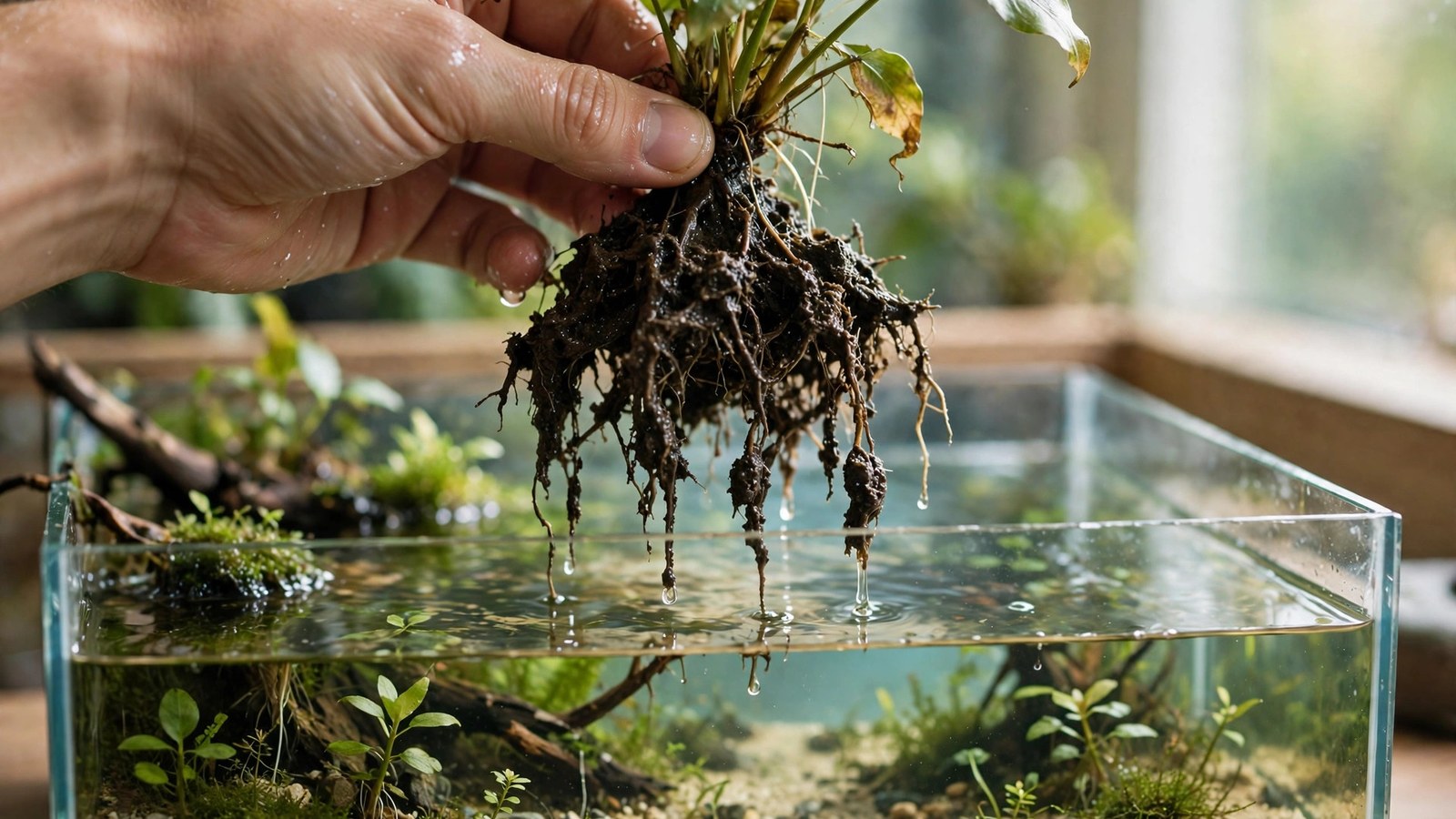
Your plants looked fine last week — and now the stems are floating free with slimy black stubs where roots should be. Before you blame your lights, fertilizer, or fish, look under the substrate: aquarium plant root rot kills from the bottom up, and the leaves are often the last thing to show it. It is one of the few aquarium plant problems you can reliably reverse — if you know the difference between dead roots and a plant that is simply melting and regrowing. This guide walks you through diagnosing it, rescuing what is salvageable, and fixing the substrate conditions that caused it.
What root rot actually is
Root rot is the decay of a plant's root system in oxygen-starved substrate. Healthy roots are white and firm; rotted roots turn brown or black, feel mushy, and often carry a rotten-egg smell — hydrogen sulfide, the signature gas of anaerobic bacteria feeding on trapped organic matter.
Aquarium plants need some oxygen exchange around their roots. When substrate becomes a sealed, compacted layer — sand pressed flat for months, deep aquasoil with zero water flow — bacteria consume the remaining oxygen and their anaerobic waste products poison the roots. The die-back feeds more bacteria, so the rot zone keeps expanding, and leaves can stay green for weeks while roots disintegrate underneath. Treat the substrate, not just the plant.
How to inspect your plant's roots
When you suspect rot, don't guess from the leaves. Pull the plant up gently and check:
- Rinse in old tank water. Swirl the root mass in siphoned water-change water to wash off substrate.
- Check color and texture. White or pale tan and firm = healthy. Brown, gray, or black and soft or stringy = rotted.
- Do the tug test. Healthy roots resist a gentle pull. Rotted roots slide off with almost no resistance.
- Smell the root mass. Clean and earthy is fine; sulfurous or rotten-egg means anaerobic decay.
- Check the crown or rhizome. The crown (where roots meet stem on Cryptocoryne and swords) or rhizome (Anubias, Java fern, Bucephalandra) must be firm — not squishy.
Even a small amount of firm white root or a firm crown means the plant is a rescue candidate. A crown or rhizome that is soft all the way through means no rescue will work — see when to toss the plant below.
The diagnosis table: cause → symptom → fix
| Cause | Symptoms you will see | Fix |
|---|---|---|
| Anaerobic substrate pockets | Black substrate layers when disturbed; rotten-egg smell; roots rot where you stir up dark areas | Stir sand gently with a chopstick during water changes; add Malaysian trumpet snails; keep substrate ≤5 cm deep |
| Compacted fine sand | Roots stop at a shallow depth and mat on the surface; plants uproot easily; no smell | Aerate with a planting fork weekly; consider mixed-grain substrate or aquasoil in planted zones |
| Over-fertilization root burn | Root tips brown and die back within days of placing a root tab; only plants nearest the tab affected | Remove the offending tab; one tab per plant, at least 5 cm from the crown; wait 2–3 months between refreshes |
| Buried rhizome | Anubias, Java fern, or Bucephalandra rhizome buried in substrate turns black and mushy | Unbury the rhizome and tie or glue it to hardscape above the substrate line |
| Cryptocoryne melt (not rot) | Leaves dissolve rapidly after a water change or replanting, but the crown stays firm and white | Do nothing — leave the crown planted; new leaves emerge in 2–4 weeks |
| Deep aquasoil with no flow | Roots rot in the deepest layer of a >7 cm aquasoil bed; deep-planted plants fail while surface ones thrive | Reduce depth; use porous lava rock as a filler base under aquasoil |
Anaerobic pockets: the hidden killer
The most common cause of aquarium plant root rot is also the least visible. In a fine sand bed, grains pack so tightly that water barely circulates below the top centimeter. Organic waste — fish waste, uneaten food, dead leaves — works its way down and accumulates in the dark, where anaerobic bacteria take over and produce hydrogen sulfide as a byproduct.
Test for this in ten seconds: push a thin bamboo skewer into the substrate in a few spots during your water change, then sniff. Damp-earth smell is healthy; rotten-egg bubbles mean anaerobic territory — and any roots growing through it are already under attack.
Prevention takes no equipment. Once a week, gently twirl a skewer or thin planting fork through the top 3–4 cm of sand in open areas, releasing trapped gases. Malaysian trumpet snails do this job around the clock — 15–20 snails for a 75-liter (20-gallon) tank burrow through sand constantly, breaking up pockets before they form. Like all aquarium life, never release trumpet snails — or any plant material — into local waterways; they are invasive in many regions. Work around plants, not through their root balls. Keep sand at 4–5 cm (about 2 inches); anything deeper in fine sand is a rot factory. For a dramatic slope, build the back with inert lava rock and cap it with cosmetic substrate — the porous core never goes anaerobic. Tropica's plant care guide likewise recommends a minimum of 3–4 cm of gravel over substrate and pressing root-zone nutrition capsules deep with tweezers rather than scattering them.
Compacted sand vs. over-fertilization root burn
These two look alike from above — stunted plants, yellowing from the base — but need opposite fixes, so get the diagnosis right.
Compacted sand has no smell and no black layers. Roots look thin but pale, and simply refuse to penetrate — they mat along the surface or stop at a shallow, hard-packed depth. The fix is mechanical: aerate with a fork around the roots short term, and use mixed-grain substrate or aquasoil in planted zones long term. A dense filter media substrate base under a planted bed seals off water flow and creates the exact oxygen-starved zone you're trying to avoid.
Over-fertilization root burn is chemical. It shows up within days of pushing a root tab too close to a plant: root tips turn brown and slimy, concentrated around the tab. One tab 2–3 cm from a crown can create a salt spike that burns delicate root tips before it disperses. Pull the tab out, do a 30% water change, then re-dose properly: one tab per plant, at least 5 cm from the crown, at mid-substrate depth, no more often than every 2–3 months.
Cryptocoryne melt is not root rot — don't panic
You replant a Cryptocoryne or change water aggressively, and within days every leaf dissolves into translucent mush. It looks exactly like root rot — but it isn't.
Cryptocoryne melt is a stress response: the plant sheds leaves when water parameters shift (pH, hardness, temperature, even CO₂ changes). The critical difference is the crown — the firm base where leaves meet roots stays solid and white, and the roots stay firm. Find a firm crown, replant it, and leave it alone — new leaves emerge in 2–4 weeks. True root rot is soft at the core: the crown squishes, the roots are mushy, and there's a foul smell. Firm crown = melt; soft crown = rot.
The step-by-step rescue protocol
If your inspection found any firm, healthy tissue, work quickly but gently — the plant is stressed:
- Uproot and rinse. Rinse the root mass in a bucket of old tank water.
- Trim dead tissue. With sharp, clean scissors, cut away every brown, black, or mushy root back to clean white tissue — be ruthless.
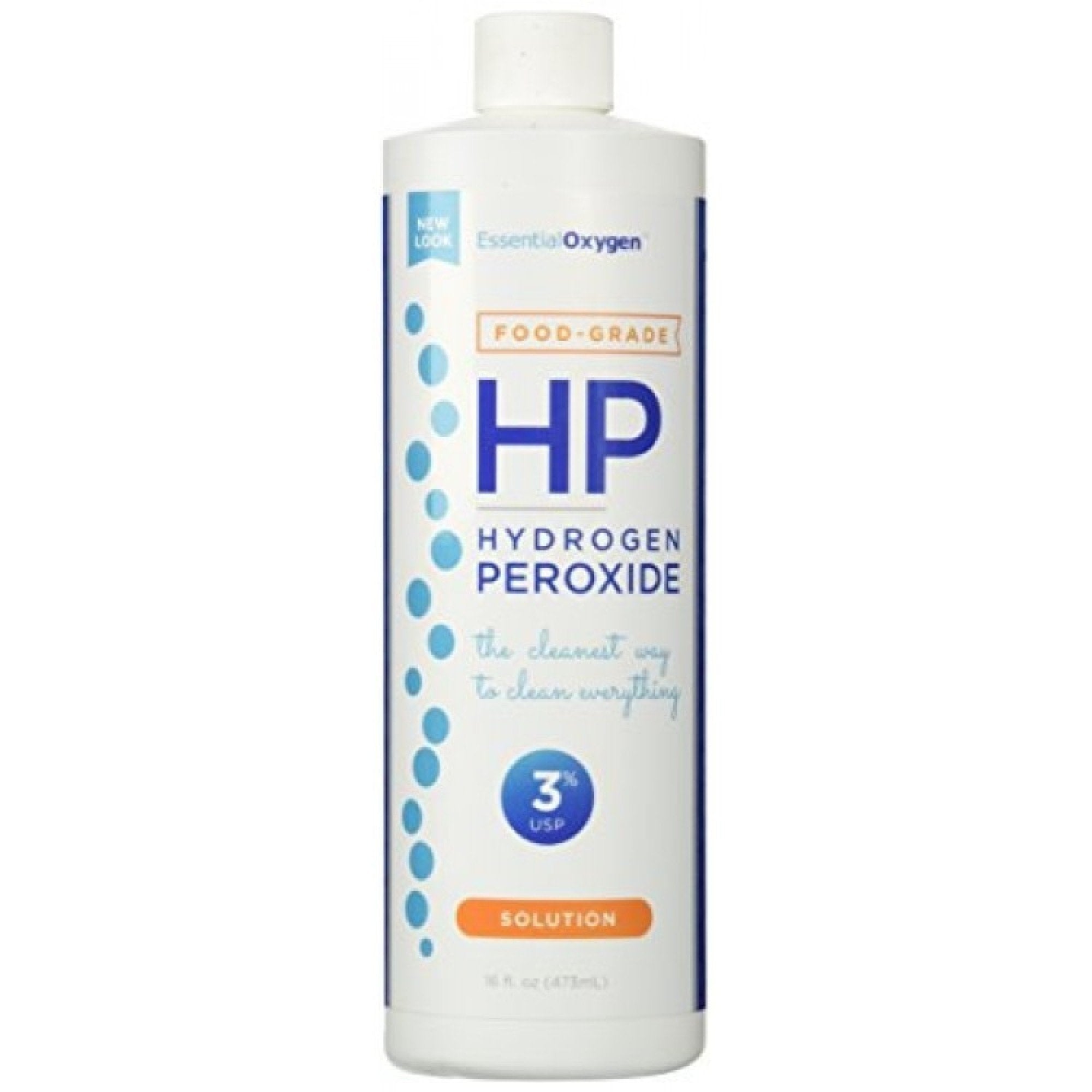
- Disinfect the wounds. Mix 3% hydrogen peroxide at 1 part H₂O₂ to 20 parts tank water. Soak the trimmed root mass for 60 seconds, then rinse in clean tank water. Never use undiluted peroxide — it burns living tissue.
- Fix the substrate. Before replanting, address the cause: stir the bed where the plant came from, remove any black smelly substrate, and check your depth. Most people skip this step — and it's why rot comes back.
- Replant shallow and loose. Keep crowns above the substrate, rhizomes above for Anubias-type plants, and loosen surrounding substrate so water reaches the new roots.
- Support recovery. Dose liquid fertilizer at half strength for 2 weeks — full dosing risks algae. Keep lighting normal; new white root tips within 7–14 days mean the rescue worked.
 ★4.6
Essential Oxygen Food Grade Hydrogen Peroxide 3%
Check Price on Amazon ★4.6For stem plants with severe rot (blackened bases, green tops), skip the roots: cut the healthy top 10–15 cm, strip lower leaves, and replant the bare stem — they root from nodes and recover faster from a clean cutting.
Substrate fixes that prevent it coming back
Rescuing the plant is half the job. Now fix the conditions so it doesn't come back:
- Control depth. 4–5 cm for sand, up to 6–8 cm for aquasoil in planted areas. Deeper beds need porous fillers underneath.
- Aerate on schedule. Stir open sand areas gently with a skewer during every weekly water change.
- Add Malaysian trumpet snails. The closest thing to a self-maintaining anti-rot system — 15–20 for a 75-liter tank.
- Space root tabs correctly. One per plant, 5+ cm from the crown, every 2–3 months.
- Keep rhizomes out of the substrate. Anubias, Java fern, and Bucephalandra go on hardscape — never buried. Buried rhizomes are a plant weight away from the same kind of rot.
- Gravel-vac open areas. Siphon detritus from non-planted zones monthly so organics never accumulate.
- Watch your diggers. If fish keep uprooting new plantings, roots never establish deeply — see how to stop fish uprooting aquarium plants.
If you're dealing with recurring die-off in a new setup, also check whether the problem is environmental rather than substrate-bound — covered in our guide to shrimp dying in planted tanks.
After a rescue replant, targeted root tabs feed recovering roots directly without the water-column dosing that caused the burn: root tabs placed away from the crown.
When to toss the plant
Not every plant is worth saving, and a rotting plant left in the tank does active harm: it releases ammonia and organics as it decays, feeding the bacteria that caused the problem. Toss it when:
- The crown or rhizome is soft all the way through — no firm tissue to regrow from.
- All roots are black and mushy with nothing white left, and the stem is rotting above the substrate line too.
- The plant has lost more than 80% of its foliage and the remaining leaves are translucent.
- You've rescued the same plant twice and it rotted again both times — the third rescue is a subscription to disappointment.
Remove the plant entirely, roots and all, and replace the substrate around its former spot — black, smelly substrate holds the bacteria that killed it. If it was an expensive or rare online aquarium plant purchase, check whether your tank suits that species before buying a replacement.
Frequently Asked Questions
Can aquarium plants recover from root rot?
Yes — if any firm, healthy root tissue or a firm crown or rhizome remains. Trim all rotted material back to clean white tissue, disinfect with a 1:20 hydrogen peroxide dip for 60 seconds, fix the substrate cause, and replant. New white root tips usually appear within 7–14 days. Plants with a completely soft crown or rhizome cannot recover.
How do I tell Cryptocoryne melt apart from true root rot?
Check the crown where leaves meet roots. In melt, the crown stays firm and white while leaves dissolve — leave it planted and new leaves arrive in 2–4 weeks. In true rot, the crown is soft and mushy, roots are black and stringy, and there's a foul sulfurous smell. Firm crown means melt; soft crown means rot, and you should rescue or discard.
What causes root rot in aquarium plants most often?
Anaerobic substrate pockets are the top cause: fine sand packed too deep with no water flow lets anaerobic bacteria produce hydrogen sulfide, which kills roots. Compacted sand, root tabs placed too close to the crown, and buried rhizomes are the other common culprits. Keeping sand at 4–5 cm deep and stirring it weekly prevents most cases.
Should I use hydrogen peroxide to treat root rot?
Yes, as a short disinfecting dip only. Mix 3% hydrogen peroxide with tank water at 1:20, soak trimmed roots for 60 seconds, then rinse. This kills anaerobic bacteria on the cut surfaces without damaging living tissue. Never pour undiluted peroxide into the tank or soak plants for longer — it burns healthy cells too.
Can root rot spread to other plants in the tank?
The rot itself isn't contagious, but the conditions that cause it — anaerobic pockets, compacted substrate, excess organics — hit every plant rooted in that zone. Inspect neighbors, remove black smelly substrate, and improve aeration, or the next plant in line will follow.
How long does it take for rescued plants to recover?
Expect first signs — new white root tips and firm leaf growth — within 7–14 days. Full recovery takes 4–6 weeks for heavy root feeders like Amazon swords and Cryptocoryne, 2–3 weeks for stem plants replanted from cuttings. If nothing new appears after 3 weeks, remove the plant.
Fix the cause, not just the plant
Root rot feels like bad luck the first time it hits you, but it's almost always a substrate problem with a visible signature — the smell, the black layers, the compacted zones. Pull suspicious plants, inspect the roots, trim ruthlessly, and fix the conditions underneath. Do that, and root rot becomes a one-time lesson instead of a recurring expense.