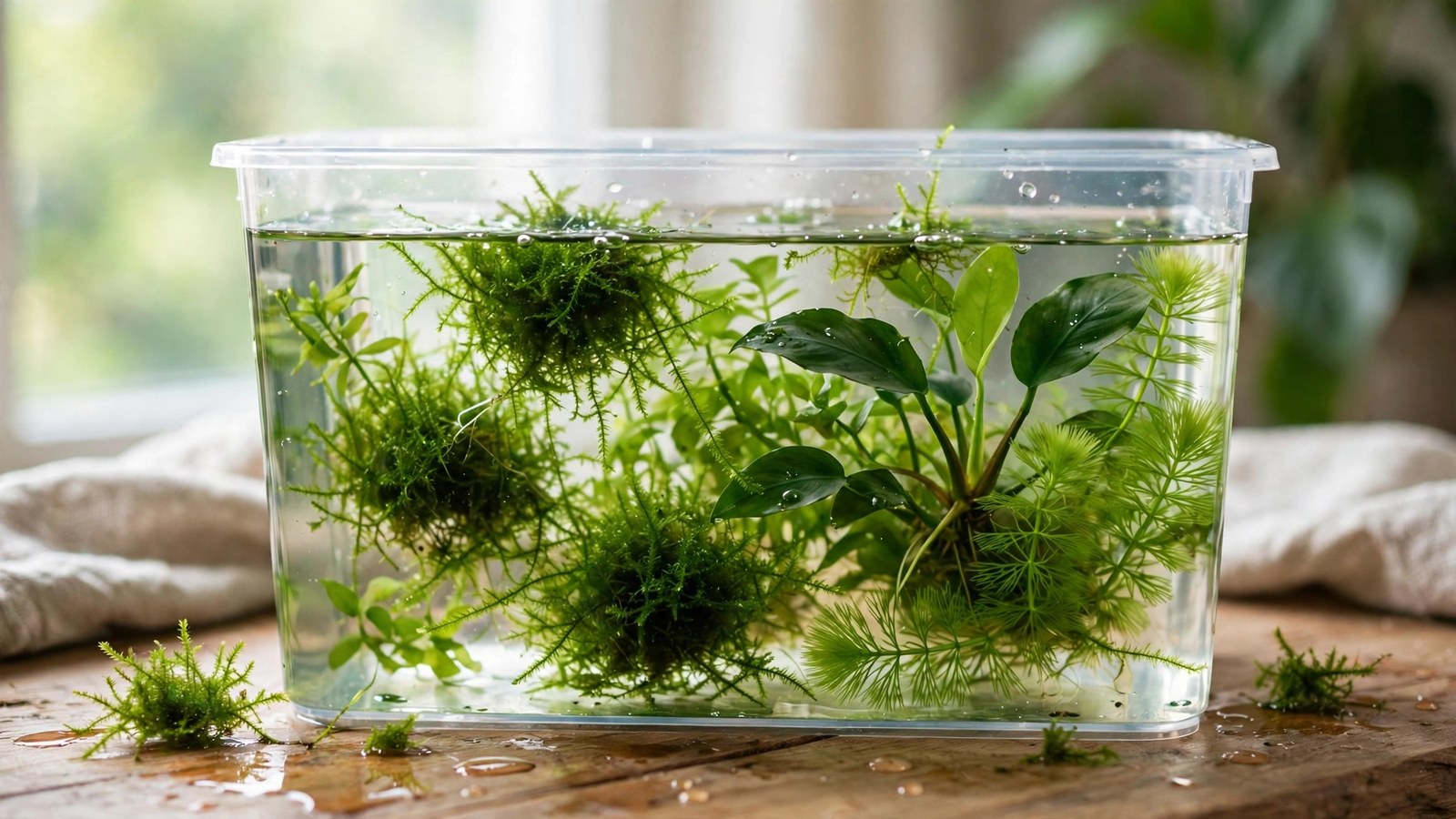
One snail cluster on a new stem plant becomes a hundred tank invaders within weeks — and the two dips most hobbyists try first have real weaknesses: bleach melts soft leaves in seconds, while peroxide often leaves snail eggs untouched. A potassium permanganate dip is the middle ground new aquarium plants need before going in the tank: strong enough to oxidize snails, leeches, and hydra, with a built-in color cue that warns you before you overdose. Here's the exact 10 mg/L ratio, the visual "pink scale," safe timing per plant type, and the rinse routine that keeps the purple out of the tank.
Potassium permanganate dip aquarium plants: what it actually is
Dissolved in water it releases oxygen radicals that destroy the cell walls of small invertebrates, algae spores, and many bacteria on contact — the same oxidizer chemistry university aquaculture guides list it among standard chemical disinfectants. It's the third classic plant dip, alongside a bleach dip for aquarium plants and a hydrogen peroxide dip — harsher on pests than peroxide, with a built-in color cue.
The tradeoff: PP doesn't discriminate between a snail egg and a tender leaf tip. Soft, fast-growing species tolerate it poorly, and even tough plants take a hit if the solution runs dark or the soak runs long. Treat it as a quarantine-step tool, not a casual rinse, and pair it with a proper plant quarantine routine afterward.
Ratios: the pink scale (10 mg/L standard)
PP dosing works in milligrams per liter, and the chemistry gives you a built-in cheat: color tracks concentration. A light pink bath ≈ 10 mg/L — the standard dip. Medium pink ≈ 20 mg/L — the strong dip for rhizome-heavy plants. Cherry-red or purple is overkill and melts most plants within minutes.
No scale? Add crystals a pinch at a time to one gallon (~3.8 L) of dechlorinated water until it turns a clear light pink, like rosé — about 38 mg, or a quarter of a level 1/16-teaspoon scoop. Err pale; you can add another pinch, but you can't un-dip a melted plant.
| Strength | Concentration | Color cue | Time | Best for |
|---|---|---|---|---|
| Standard | 10 mg/L | Light pink (rosé) | 10–15 min | Most plants; routine new arrivals |
| Strong | 20 mg/L | Medium pink | 5–10 min | Anubias, crypts, swords, java fern |
| Overdose — avoid | 50+ mg/L | Cherry red / purple | Any | Melts leaves; stains everything |
Mix in a white or clear container so the color reads accurately, use room-temperature dechlorinated water, and stir until every crystal dissolves — undissolved granules burn leaf tissue. Mix fresh each session, discard after use, and never pour dip water into the aquarium.
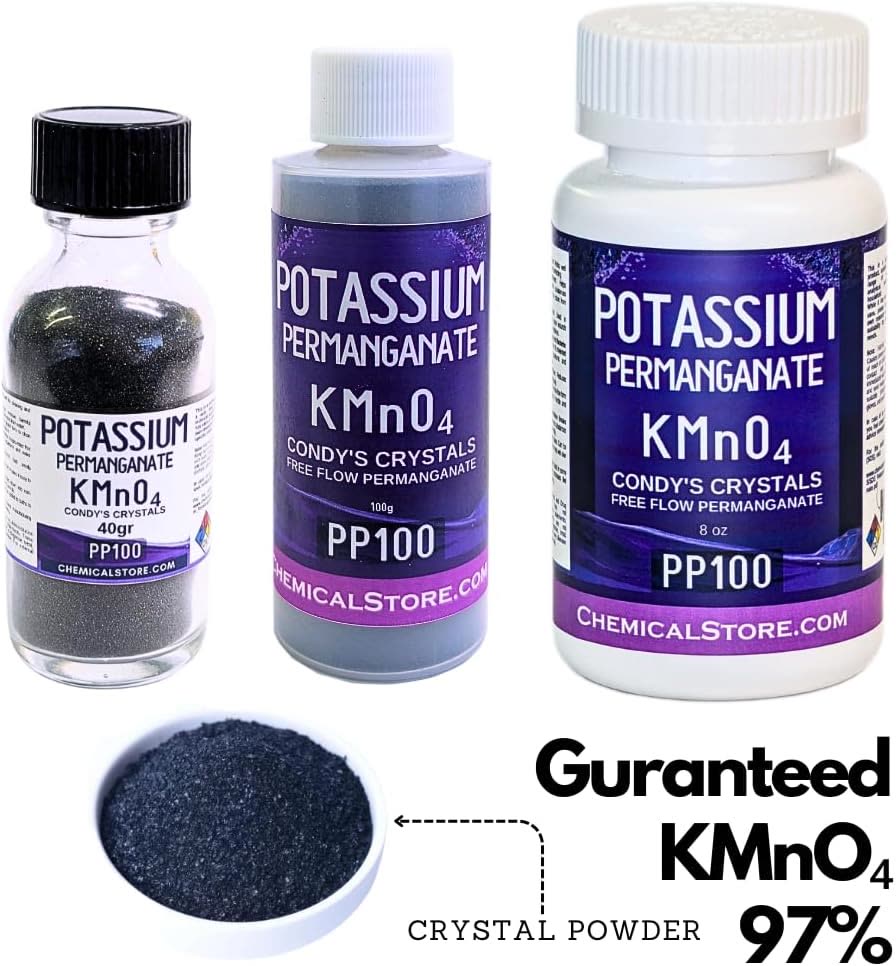
Aquaculture-grade PP crystals for the dip ratios in the guide: aquaculture-grade potassium permanganate crystals.
 ★4.8
Potassium Permanganate, Condy's Crystals 97% Pure
Check Price on Amazon ★4.8Timing and technique, step by step
- Prep: Trim damaged leaves, rinse plants under tap water, and mix the light-pink solution in a dedicated bucket — never the tank.
- Dip (10–15 min): Submerge fully, swishing gently every few minutes so the solution reaches leaf undersides and crown crevices.
- Rinse 1: Lift out and rinse under running tap water for 60 seconds.
- Rinse 2: Soak 10 minutes in dechlorinated water with a double dose of water conditioner — it neutralizes residual oxidizer.
- Rinse 3: Another 10-minute soak in clean dechlorinated water.
- Quarantine (7 days): Hold in a plant quarantine tank or lit bucket for a week; watch for snail hatchlings before planting.
For the strong 20 mg/L dip, halve the soak (5–10 min) and skip it on mosses, vals, and tissue-culture plants entirely. Tissue-culture cups are already pest-free, so planting tissue culture cups straight in is the safer move when you can buy them.
Which plants tolerate it — and which don't
Thick-leaved, slow growers handle PP best. Anubias, cryptocorynes, sword plants, java fern, and bucephalandra sail through the standard dip with zero melt — and they're the plants most likely to arrive with snail eggs in rhizome crevices, so the dip earns its keep on exactly the species that tolerate it. Most stem plants — rotala, ludwigia, bacopa — survive the standard dip but show tip burn at 20 mg/L or past 15 minutes; dip stems for 10 minutes flat and inspect tips during the rinse.
Skip PP entirely for mosses (they brown almost every time), vallisneria and thin-ribbon plants, hornwort, water sprite, and hairy-rooted floaters like frogbit. For those, a gentle hydrogen peroxide dip or the alum method in the alum dip guide is safer.
Snail, shrimp, and tank safety
A PP dip is a snail-killing procedure: eggs, bladder snails, ramshorns, and trumpet snails die in the standard dip — that's why you use it. But that lethality extends to everything soft-bodied, so never dip shrimp, snails you want to keep, or any livestock, and never let dip water near the aquarium. Even a splash of pink water can stress shrimp and harm filter bacteria.
For your own safety: PP stains skin brown for days and irritates eyes — wear disposable gloves. Store it dry, sealed, and away from medications, carbon dust, and anything flammable; label the jar and keep it out of reach of kids and pets.
Dipping plants for a shrimp tank? The triple rinse plus 7-day quarantine is non-negotiable. A plant that smells of chemicals or leaches pink tint into quarantine water isn't ready — extend the final soak another day. The same caution-first mindset applies to everything you add, as the shrimp-safe fertilizers guide explains.
PP vs bleach vs peroxide: the honest comparison
| Potassium permanganate | Bleach | Hydrogen peroxide (3%) | |
|---|---|---|---|
| Standard ratio | 10 mg/L, light pink | 1:19 bleach:water | 1:4 peroxide:water |
| Soak time | 10–15 min | 90 sec–2 min | 5 min |
| Snails & eggs | Excellent | Excellent | Fair (misses eggs) |
| Algae | Good | Excellent | Excellent (spot) |
| Plant risk | Medium | High (fast melt) | Low |
| Dosing feedback | Color cue (best) | None — easy to overdo | Mild fizz cue |
| Staining | Yes (skin, silicone) | No | No |
Reach for PP when you want bleach-level snail kill with a visual safety net and a gentler margin on hardy plants; bleach when speed matters and plants are tough; peroxide for delicate species and in-tank algae spot treatment. Whichever you pick, quarantining new plants is what keeps pests out long-term.
Frequently Asked Questions
How much potassium permanganate do I use per gallon?
For the standard 10 mg/L dip, dissolve about 38 mg of crystals in one gallon (3.8 L) of dechlorinated water — roughly a quarter of a level 1/16-teaspoon scoop. Stir until the water turns a clear light pink, like rosé wine. Add crystals a pinch at a time.
How long do you dip aquarium plants in potassium permanganate?
Ten to fifteen minutes at the standard 10 mg/L (light pink) strength, or five to ten minutes at the stronger 20 mg/L (medium pink) strength for tough plants like anubias and swords. Start the timer when the last plant goes in, and rinse immediately when it ends.
Will potassium permanganate kill snail eggs on plants?
Yes — killing snails and their eggs is the main reason hobbyists use it. The standard 10 mg/L dip destroys snail eggs, bladder and ramshorn snails, leeches, and hydra on contact, and knocks back algae and many surface bacteria. Never dip livestock or let dip water reach the aquarium.
Is a potassium permanganate dip safe for shrimp tanks?
The dip itself never touches shrimp — it is done in a separate bucket. Plants become shrimp-safe after the triple rinse (tap rinse, dechlorinator soak, fresh-water soak) plus a 7-day quarantine. If quarantine water shows any pink tint, extend the soak another day before planting near shrimp.
Bring it home
A potassium permanganate dip earns its place as your third tool alongside bleach and peroxide: the 10 mg/L light-pink soak for 10–15 minutes kills the hitchhikers peroxide misses, with a color cue that makes overdosing obvious. Mix in a dedicated bucket, respect the timer, triple-rinse, and quarantine for a week. New plants arrive as assets — never as Trojan horses.