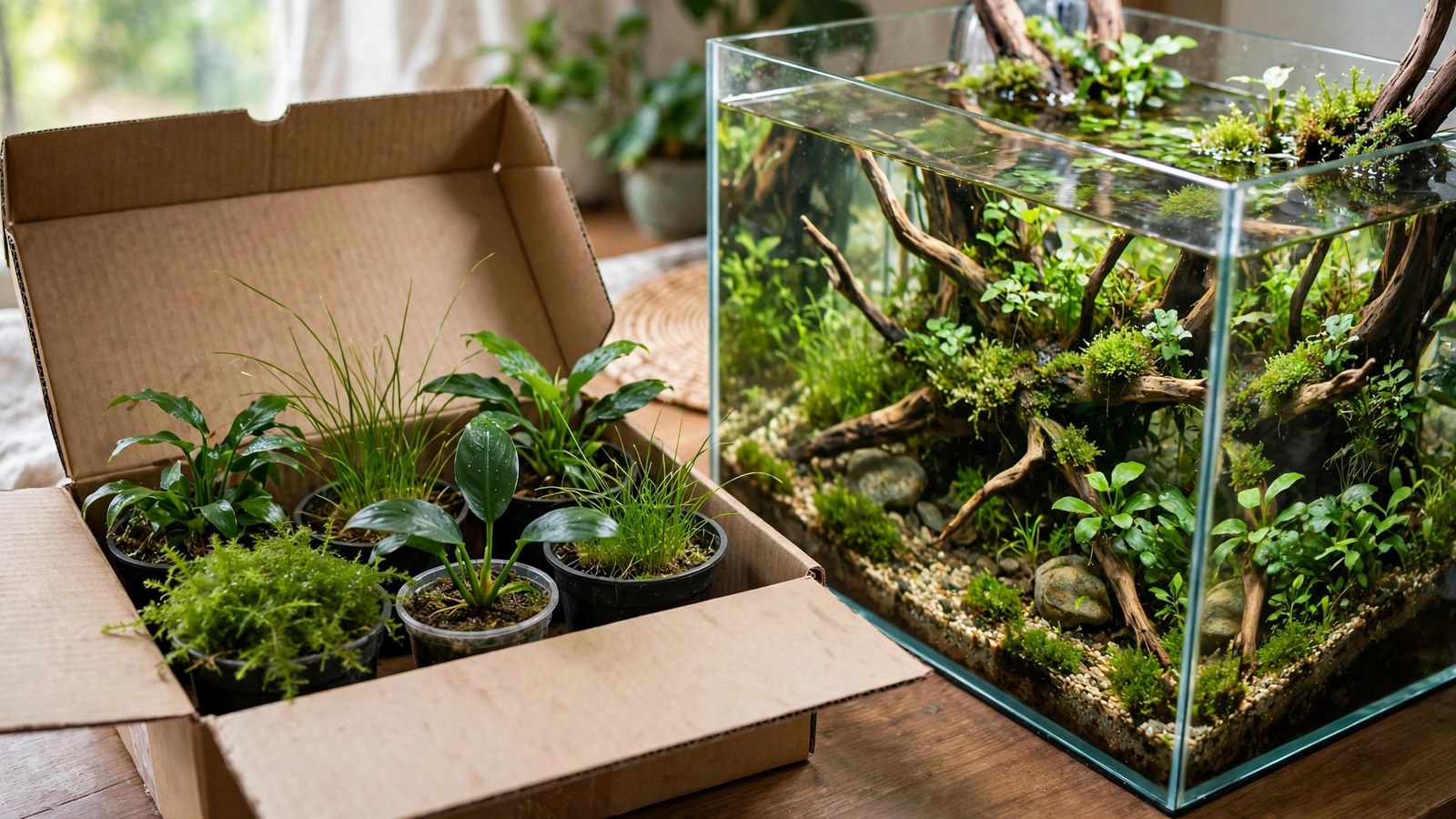
Every month, a damp parcel lands on your doorstep and you have no idea what's inside. An aquarium plant subscription box is exactly that — a curated bundle of live plants shipped on a schedule, chosen by someone else. For some hobbyists, unboxing day is the best part of the month; for others, it is the fastest route to unwanted plants and uninvited pests. This guide runs the honest math: cost per usable plant versus retail, what to do with the surprises, and whether you should sign up at all.
Are aquarium plant subscription boxes worth it? For a beginner stocking a community tank, usually yes — a box beats buying plants one pot at a time, provided you quarantine and plant everything you receive. The deciding number: a fast-growing stem plant such as Rotala rotundifolia produces roughly one plantable cutting per week under medium light, so one box stem can multiply into a background hedge within a month — the propagation dividend that separates a genuine deal from an expensive surprise. Skip boxes if you need specific species, run a high-tech layout, or dislike uncertainty.
What an Aquarium Plant Subscription Box Actually Gets You
A typical box delivers a handful of live plants — usually a mix of stems, rosettes, and floaters — packed damp in paper or breathable bags and shipped by post. The seller chooses the selection, sometimes themed by tank size, sometimes a genuine mystery, so you trade control for variety. Because plants must survive shipping in a dark box, growers lean toward hardy species, which is why boxes pair naturally with the easiest aquarium plants for beginner community tanks rather than rare collector specimens.
On delivery day, float the sealed bags in your tank for 20–30 minutes to even out temperature, then unwrap and inspect every plant. Even a pristine-looking box is new livestock: acclimate new aquarium plants properly, and hold everything out of the main tank until it passes quarantine. If you are stocking your first planted tank, plan around your livestock first — Aquarium Plants for Fish Tanks: The Fish-First Plant Guide shows how, so box arrivals land in a tank they actually suit.
The Real Cost-Per-Plant Math
The only formula that matters: effective cost per plant = box price ÷ plants you actually plant and keep. Most people divide by plants shipped, which flatters the box. The honest denominator subtracts everything that melts, duplicates what you own, or gets discarded as a pest risk.
An illustrative example — figures show the method, not real prices, so check current pricing on the box and your local store. Suppose a box costs $30 a month and ships six plants. Plant all six and the effective cost is $5 per plant, cheaper than six individual pots at a fish store. But if two melt from insufficient light, one duplicates a species you already own, and one arrives tangled with duckweed you refuse to risk, your denominator is three — and you are paying $10 per usable plant. Same box, twice the real price.
| Subscription box | Buying retail one pot at a time | |
|---|---|---|
| Price structure | Flat recurring fee; shipping usually included | Pay per plant; shipping or fuel per trip |
| Species control | Seller chooses; surprises guaranteed | You choose every plant |
| Wastage risk | High if your tank is small, full, or picky | Near zero — you buy only what fits |
| Convenience | Zero shopping; plants arrive on schedule | You drive, browse, and compare |
| Best value when | Stocking a new or empty tank | Filling gaps in an established layout |
If you are already subscribed, run this division on your last three boxes. A box earns its price only when most of what arrives ends up planted and alive.
What To Do With the Surprise Plants
Every box eventually delivers a plant you cannot identify. Do not plant it on faith — photograph it, then check Tropica's plant database for its light, CO2, and placement needs before deciding whether it belongs in your tank. Mystery stems are often common, useful species — and occasionally something that outgrows a nano tank in weeks.
Rehome healthy misfits through local fish clubs, hobbyist swap threads, or a spare holding tank. Quarantining new aquarium plants first is non-negotiable, and propagating aquarium plant trimmings turns one surprise stem into a tradable bunch. Two rules with no exceptions: never release aquarium plants into local waterways or flush them, and never gift plants you suspect of carrying pests.
Quality and Pest-Risk Honesty
Here is the honest part box marketing skips: subscription plants are typically grown in shared holding tanks, so they can arrive carrying snail eggs, algae spores, duckweed, or planaria. "Pest-free" claims are only as trustworthy as the grower's process; bagged cuttings from open tanks never are. Quarantine every box for two to four weeks, then give stems and rosettes a bleach dip or alum soak before they enter your display tank. Snail eggs are invisible on arrival; the one box you skip is the one that introduces bladder snails.
Who Subscription Boxes Suit — and Who Should Skip
Subscribe if you are stocking a new community tank and want easy variety without researching every species, run a low-tech setup, or enjoy the surprise and trade extras with other hobbyists. Boxes also suit propagators, since fast stems turn one delivery into many plants.
Skip if you need specific species for a planned aquascape, run injected CO2 with demanding reds or carpets (boxes rarely include them), or have a small or already-full tank. If choosing each plant is half the pleasure of the hobby, a mystery box feels like someone else spending your money — buy retail, one pot at a time.
Frequently Asked Questions
Are aquarium plant subscription boxes good for beginners?
Usually yes, with one condition: quarantine and dip everything before planting. Boxes ship hardy species that suit low-tech beginner tanks, and the per-plant cost beats individual pots while you are stocking an empty tank. Once your tank is full and you need specific species, the value fades.
How do I quarantine plants from a subscription box?
Keep the box in a separate bucket or spare tank for two to four weeks, watching for snails, eggs, algae, and melt. Then dip stems and rosettes in diluted bleach or alum, rinse thoroughly, and only then plant them in the display tank. Never skip this because plants look clean — eggs and spores are invisible on arrival.
What should I do with box plants I don't want?
Trade healthy extras through local fish clubs or hobbyist swap threads, or grow them out in a holding tank until someone claims them. Fast stems are easiest to rehome since one stem becomes many. Never release aquarium plants into waterways, flush them, or gift plants you suspect of carrying pests or algae.
Can subscription box plants carry snails or algae?
Yes, unless the plants are tissue-culture cups, which are grown sterile. Box plants usually come from shared nursery tanks and can carry snail eggs, algae spores, duckweed, or planaria. A two-to-four-week quarantine plus a bleach or alum dip before planting handles the risk.
Is it cheaper to subscribe than to buy plants at a fish store?
It can be, but only if you use most of what arrives. Divide the box price by the plants you actually plant and keep, then compare against per-pot prices at your local store — check current pricing on both. When half a box melts or goes unused, the effective cost per usable plant often ends up higher than retail.
The Bottom Line
An aquarium plant subscription box is a convenience product with a gamble attached. Do the division honestly, quarantine ruthlessly, and plan for the surprises — and a box can stock a new tank cheaper and faster than any shopping trip. Otherwise, shop a wishlist instead.