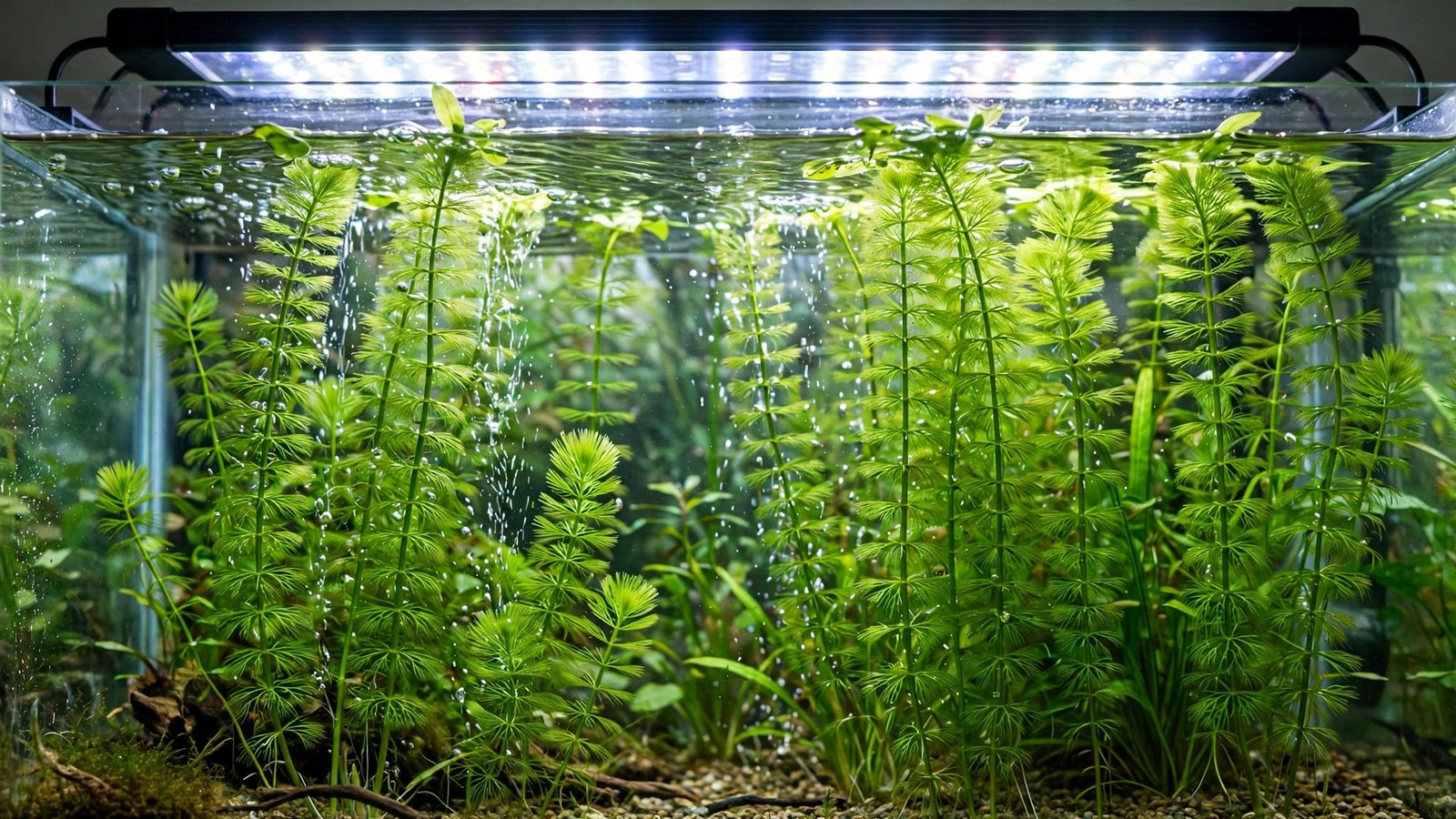
That melting carpet in your tank probably is not cursed — it is underlit. The costliest beginner mistake is picking the wrong light for aquarium plants: a dim kit hood that leaves the substrate in darkness, or a blazing fixture with no CO2 to balance it, which grows algae instead of leaves. This guide covers which light type fits your tank, how much PAR your plants need at the substrate, and how to read a spectrum chart. For product picks, see our roundup of the best aquarium lights for planted tanks — here is the science and the buying logic.
Why Plants Stall Under the Wrong Light
Light is fuel: every photon sets the maximum speed of photosynthesis — growth, color, and algae all scale with it. Most kit lights are built for viewing fish, not feeding plants: they look bright to your eyes but deliver almost nothing usable at the substrate 18 inches below. The opposite failure is just as common: a powerful LED at 100% for ten hours a day, and within two weeks the glass is coated in green dust. That is an energy imbalance — plants can only use strong light if CO2 and nutrients keep pace. Decide your path first: low light with no CO2 versus high light with CO2 is the biggest fork in the hobby, and your light choice should follow it. Settle your CO2 plan before spending a cent.
Picking the right light for aquarium plants: LED, T5, and the rest
In 2026 the contest is effectively over: modern LEDs beat everything else. They sip power, last 50,000+ hours, and — critically — the good ones are dimmable, so you can tune intensity down for a new tank and ramp up as plants fill in. T5 tubes still grow plants fine and cost less upfront, but tubes need replacing every 9–12 months and most fixtures cannot dim. Our T5 vs LED breakdown covers the debate; on a nano tank a quality clip-on LED often beats a big fixture.
| Light type | Spectrum | PAR at 12" above substrate | Best for | Typical cost |
|---|---|---|---|---|
| Full-spectrum LED | ~6500K white + red/blue diodes | 30–120 (dimmable) | Almost every planted tank | $40–$200 |
| RGB LED | Red/green/blue diode mix | 40–130 (dimmable) | Vivid reds and greens for aquascapers | $60–$300 |
| T5HO fluorescent | 6500K + pink "plant" tubes | 40–100 (fixed) | Deep tanks on a budget | $30–$80 + tubes |
| Clip-on LED | ~6500K white | 20–70 (often dimmable) | Bettas, cubes, shrimp tanks under 10 gal | $25–$90 |
| Metal halide | 6500–10000K | 150+ (fixed) | Rare now; large deep tanks | $150+ plus heat |
Spectrum and Kelvin: What the Numbers Actually Mean
Here is the liberating truth: plants are far less picky about spectrum than marketing suggests. A plain 6500K "daylight" LED grows plants just as well as a fixture with six exotic diode channels — intensity matters far more. The 2Hr Aquarist's planted-tank lighting guide puts it bluntly: tune spectrum for how your tank looks; the growth difference is marginal compared to getting CO2 and nutrients right.
Kelvin describes the tint: 6500K is neutral daylight, under 5000K looks warm, over 8000K looks icy blue. Most keepers land between 6000K and 7500K, which renders greens naturally and flatters fish. Plant lights add red (660nm) and blue (450nm) diodes because chlorophyll absorbs strongest there — a small efficiency gain and better pop for red plants. Skip fixtures with a heavy purple tint; they are holdovers from the "blurple" grow-light era. One real caution: blue-heavy light is a known bloom trigger, so keep blue in check while a new tank cycles.
PAR at the Substrate: Forget Watts per Gallon
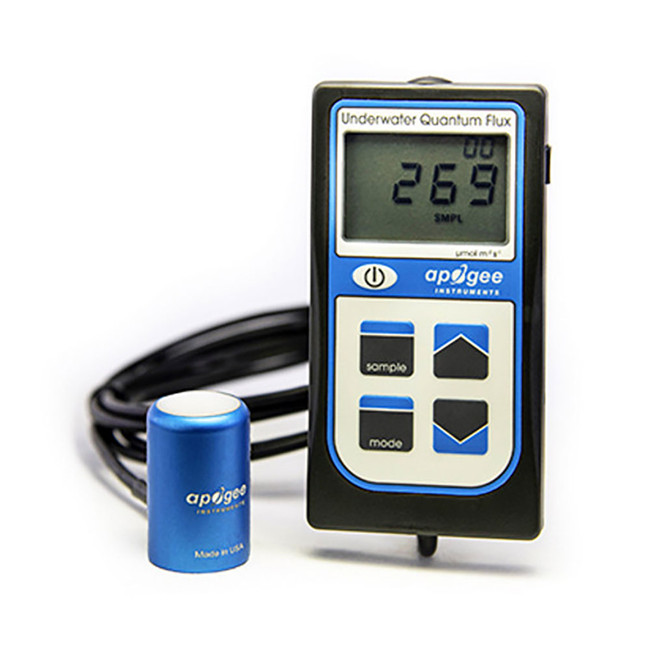
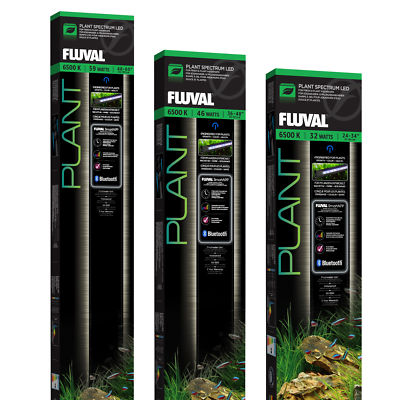
Watts per gallon was useful in the T8 era and is garbage now: a 20-watt LED can deliver triple the usable light of a 20-watt tube. The metric that matters is PAR — micromoles of photons hitting each square meter of leaf per second (µmol/m²/s). Reputable brands publish PAR charts; the Fluval Plant 3.0 specifications, for example, list full diode layouts by fixture size. Apply two corrections: PAR drops with distance (70 PAR at 12 inches may be ~55 at 16 inches of water), and water absorbs roughly 10–15% versus in-air ratings. When in doubt, a PAR meter settles it in thirty seconds — several fish clubs lend them.
Shop by these substrate targets: 20–40 PAR for Anubias, Java fern, mosses, crypts; 40–90 for most stems, swords, and moderate carpets; 90–150 only for demanding reds and dwarf-baby-tears carpets — and only with CO2, or you are building an algae farm. Our how much light plants need guide maps exact plants to each tier.
 ★4.4
Apogee MQ-510 Underwater PAR Meter
Check Price on Amazon ★4.4Low-Tech vs High-Tech: Match the Light to Your Setup
Low-tech (no CO2): keep it modest — 20–40 PAR, 7–8 hours a day, on a timer you never touch. That is where plants grow steadily but algae cannot outpace them. Our best LED lights for low-tech tanks are all chosen here: dimmable, efficient, boring in the best way.
High-tech (pressurized CO2): with CO2 at 25–30 ppm and real fertilization, 50–90 PAR for 8 hours makes stems pearl and carpets spread in weeks. But the balance is unforgiving: high light without matching CO2 grows algae spectacularly, so start CO2 1–2 hours before the lights. On duration: shorter photoperiods suit new or algae-prone tanks; only stable CO2-fed systems earn longer days.
 ★4.3
Fluval Plant 3.0 LED Aquarium Light
Check Price on Amazon ★4.3Frequently Asked Questions
Can any LED grow aquarium plants?
Nearly any white LED near 6500K grows easy plants if it delivers 20+ PAR at the substrate. Usually output fails, not technology — cheap kit hoods are too dim at depth. Judge by the PAR chart and buy dimmable.
What Kelvin is best for aquarium plants?
6000K–7500K suits almost everyone: it looks like natural daylight, renders greens accurately, and flatters fish. Plants cope fine from 4000K to 10000K, so choose Kelvin for looks. Plant fixtures add red/blue diodes over a 6500K base for color pop and a small efficiency gain.
How many hours of light do planted tanks need?
Start at 6 hours daily for a new tank, 7–8 for a stable low-tech tank, and 8–9 for a stable high-tech tank with CO2. Extra hours past the daily light budget do not add plant growth — they mostly feed algae. A timer keeping the schedule consistent beats the exact hour count.
Is more light always better for plant growth?
No — more light only helps if CO2 and nutrients scale with it. Unused photons go straight to algae, which is why a dimmer, balanced tank often outgrows a blazing one. Raise intensity in 10% weekly steps and back off at the first algae.
Do I need a PAR meter to choose a light?
Not strictly, but it removes guesswork. Brand PAR charts are close enough for buying — just subtract 10–15% for water and match the chart distance to your substrate depth. Measure several spots: evenness matters as much as the center reading.
When should I upgrade my aquarium light?
Upgrade when plants tell you to: leggy stems, tiny new leaves, or carpets that refuse to spread all signal too little PAR. T5 tubes fade after 9–12 months and need replacing; LEDs hold output for years — if a dimmable LED at 100% still misses your targets, the tank has outgrown it.
The Short Version
Any modern dimmable LED near 6500K is the right light for aquarium plants — choose by PAR at your substrate depth (20–40 low-tech, 50–90 with CO2), start dim and short, and ramp up only as fast as healthy growth allows. The numbers are simple; the discipline is the hard part.