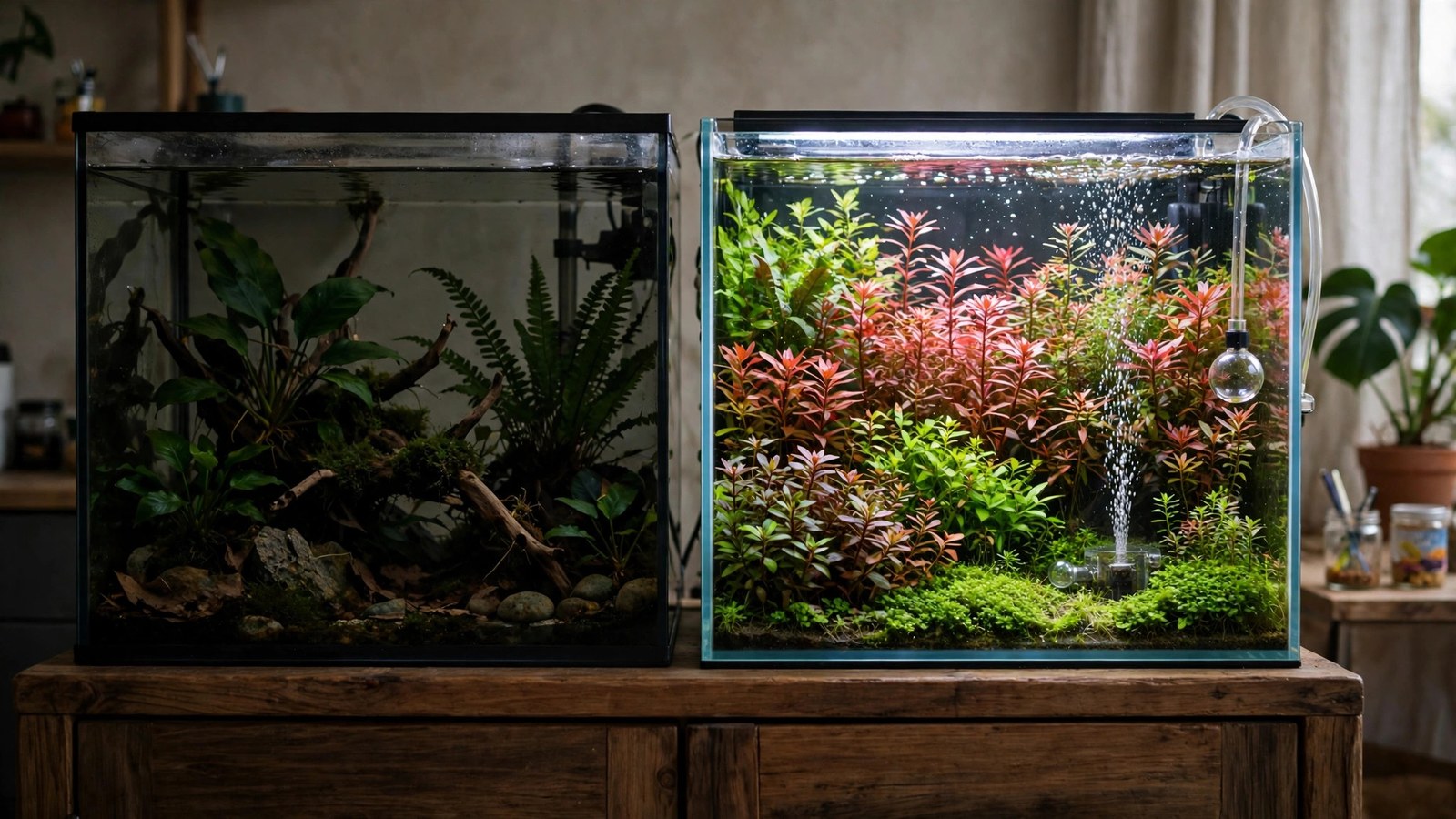
Every planted-tank aquarist eventually faces the fork in the road: the low-light, no-CO2 path or the high-light, CO2-injected path. They're not just different equipment lists — they're different philosophies of aquarium keeping, with different rhythms, costs, plant palettes, and failure modes. This guide lays out both honestly so you can choose your path deliberately instead of drifting into one by accident.
The Two Paths at a Glance
| Factor | Low Light + No CO2 | High Light + CO2 |
|---|---|---|
| Growth speed | Slow (weeks to notice) | Fast (days to notice) |
| Equipment cost | $ (light + basics) | $$–$$$ (light + full CO2 system) |
| Daily/weekly effort | Minimal | Moderate (tuning, trimming, testing) |
| Trimming frequency | Monthly or less | Weekly for stem plants |
| Plant palette | Easy species; limited carpets/reds | Nearly everything, incl. demanding species |
| Algae risk profile | Low but slow to correct | Higher stakes, faster feedback |
| Forgiveness of mistakes | High (slow = time to fix) | Lower (fast = problems compound fast) |
| Livestock safety margin | Wide | Narrower (CO2 management) |
Path 1: Low Light + No CO2 (Low-Tech)
How it works
Light is the throttle of the whole system. With modest light (roughly 20–40 PAR at substrate) and no injected carbon, photosynthesis runs at a gentle pace limited by available CO2 from fish respiration, decomposition, and atmospheric exchange. Everything slows down — growth, nutrient uptake, and crucially, the speed at which problems develop.
What thrives
The low-tech hall of fame: anubias, java fern, bucephalandra, crypts, vallisneria, java moss and other mosses, Amazon swords, water sprite, floating plants. These grow steadily and look lush with time. What's limited: dense dwarf hairgrass/HC Cuba carpets (possible but slow and patchy), intense red coloration in stem plants, and the fastest-growing Dutch-style stem displays.
The routine
Delightfully boring: weekly water changes, occasional all-in-one fertilizer dosing (leaner than high-tech — see growing without CO2), trimming every few weeks, and an 8-hour photoperiod on a simple timer. No bubble counting, no drop checker anxiety, no cylinder refills. The 2Hr Aquarist low-tech checklist covers the same five keys — shallower tanks, medium light around 30–50 PAR, aquasoil, easy plants, and patience. Many low-tech keepers describe their tanks as "the aquarium that takes care of itself."
Where it struggles
- Patience required — a low-tech carpet takes months, not weeks. If you want a showpiece now, this path frustrates.
- Algae is slower to fix — problems develop slowly, but so do recoveries. A low-tech tank with a real imbalance can take a month to turn around.
- Plant choices are bounded — you'll eventually see a plant you can't grow well, and that's the deal you made.
- "Just a bit more light" trap — nudging light up without adding CO2 is the #1 low-tech mistake; it raises demand the carbon supply can't meet, and algae moves in. See signs of too much light.
Who it's for
Beginners (learn the hobby without gas chemistry), busy people, shrimp-focused keepers (shrimp adore stable low-tech tanks), anyone who values a calm, low-maintenance aquarium over maximum growth velocity, and — honestly — most living-room display tanks.
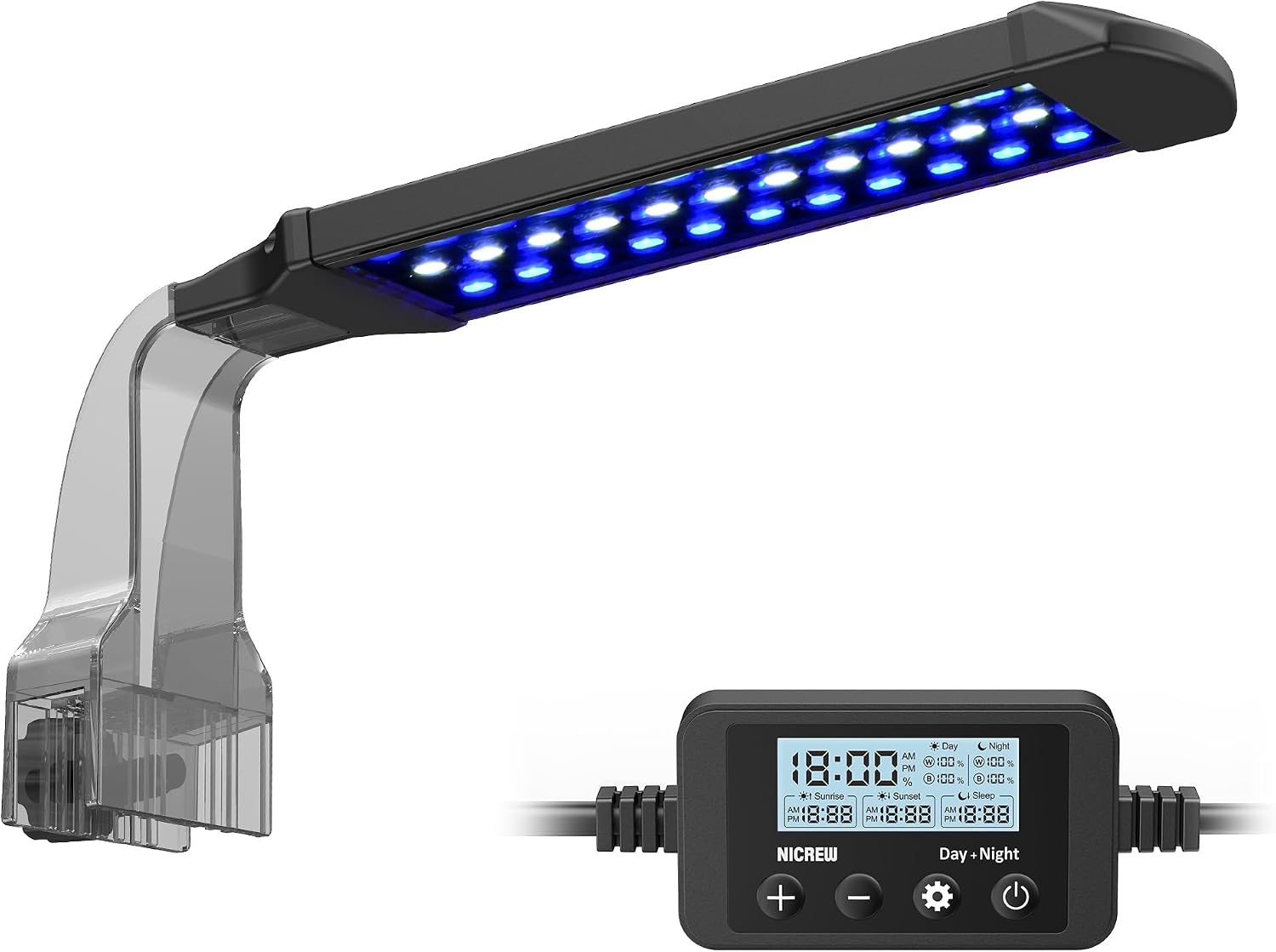
A reliable pick here is NICREW ClassicLED Plus.
 ★4.6
NICREW ClassicLED Plus planted aquarium light
Check Price on Amazon ★4.6Path 2: High Light + CO2 (High-Tech)
How it works
Strong light (60–100+ PAR at substrate) plus injected CO2 at 25–30 ppm removes both major growth limits simultaneously. Photosynthesis runs near maximum; plants pearl visibly, carpets close in weeks, and stem plants need weekly haircuts. Fertilization must be complete and consistent (the EI method or similar) because fast growth strips nutrients quickly.
What thrives
Everything the low-tech path grows, plus: HC Cuba and dwarf hairgrass carpets, Rotala and Ludwigia species in full red coloration, Pogostemon, Eriocaulon, and the demanding species that define contest aquascapes. If the plant exists in the hobby, high-tech can grow it.
The routine
Engaged but rewarding: daily glance at the drop checker, weekly water changes (often 50% to reset nutrients), regular fertilizer dosing, weekly trimming sessions, periodic leak checks and cylinder refills every few months, and CO2 timing managed by solenoid and timer. It's a hobby within the hobby — many high-tech keepers love exactly this involvement.
Where it struggles
- Cost — quality light + full CO2 system (see regulators and cylinders) is a real investment, typically several hundred dollars before plants.
- Unforgiving of neglect — skip maintenance for a month and a high-tech tank punishes you with algae blooms that a low-tech tank would never produce. The speed that grows plants grows problems too.
- Livestock risk — CO2 mismanagement can harm fish (see fish safety); the safety margin is narrower and demands respect.
- Complexity — more variables interacting means more troubleshooting when something's off. Beginners can start high-tech, but the learning curve is steeper.
Who it's for
Aquascapers chasing specific visions, growth-speed enthusiasts, anyone who finds the technical side genuinely fun, and keepers who want the full plant palette including demanding species.
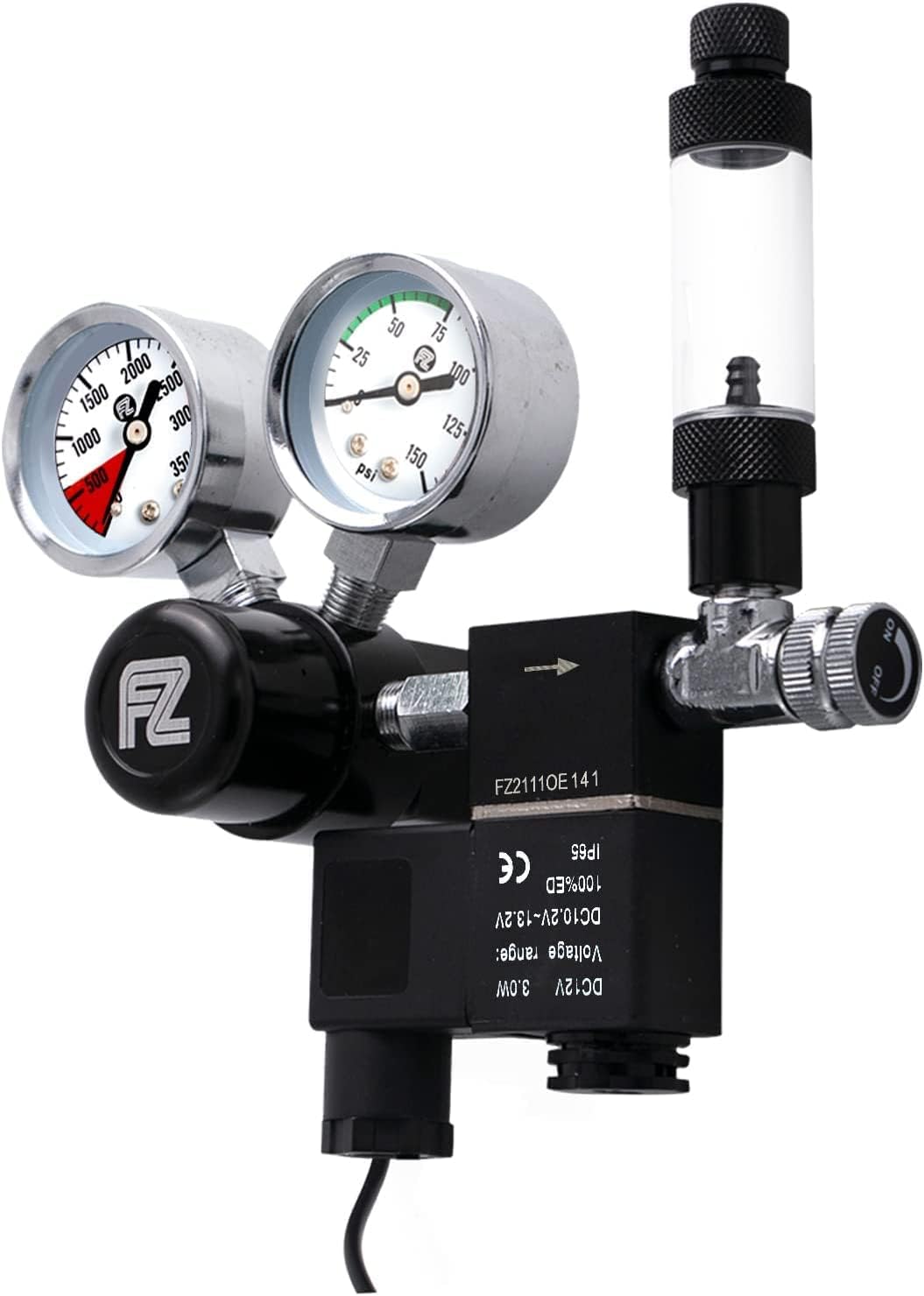
A reliable pick here is Fzone Pro Series regulator.
 ★4.2
Fzone Pro Series Dual Stage CO2 Regulator
Check Price on Amazon ★4.2The Middle Path: Medium-Tech
The fork isn't binary. A large and happy middle ground exists: moderate light (40–60 PAR) with liquid carbon or DIY CO2, or moderate light with pressurized CO2 run conservatively. Medium-tech grows most plants well — including many carpets, with patience — at lower cost and with wider safety margins than full high-tech.
Honest assessment: medium-tech is where many experienced hobbyists end up after trying both extremes. It captures maybe 70% of high-tech results at 30% of the fuss. If the fork paralyzes you, start here — you can always push light and gas up later (see raising light intensity safely).
Can You Switch Paths Later?
Yes, in both directions, with caveats:
- Low → high: add the CO2 system first, stabilize it for 2–3 weeks, then raise light intensity gradually. Doing both at once is an algae bomb. Existing low-tech plants will accelerate — be ready to trim and increase fertilization.
- High → low: reduce light first, then taper CO2 down over a week or two (don't cold-stop gas on a tank full of CO2-adapted plants — the sudden carbon crash melts growth). Expect a transition period of slower, sometimes ragged growth as plants adapt; some demanding species won't make the transition and should be rehomed.
- Either direction: change one variable at a time, give each change 2–3 weeks, and watch the drop checker and algae response. Patience during transitions prevents most problems.
Decision Framework: Five Questions
- How much weekly maintenance will you actually do? Under 30 minutes → low-tech. An hour+ and you enjoy it → high-tech.
- What's your budget for equipment? A good light alone → low-tech. Light + full CO2 system → high-tech.
- Which plants are non-negotiable? Anubias/crypts/swords/mosses → low-tech handles them beautifully. HC Cuba carpets, vivid red stems → high-tech required.
- How do you feel about livestock risk? If CO2 management anxiety would ruin the hobby for you, low-tech's wide safety margins are a feature, not a limitation.
- Do you travel or have irregular schedules? Low-tech tanks shrug off a missed week; high-tech tanks notice. Automation (timers, dosers) closes the gap but adds cost.
There's no wrong answer — only a mismatch between the path and the keeper. The most beautiful tanks in the hobby exist on both paths; they just got there at different speeds.
Frequently Asked Questions
Is high-tech always better-looking than low-tech?
No. A mature, well-scaped low-tech tank with lush anubias, crypts, and moss-covered hardscape is genuinely stunning — it just took a year to get there instead of three months. High-tech enables different aesthetics (dense carpets, red stems, Dutch streets) faster, not universally better ones. Judge by scaping skill, not equipment.
Can I run high light without CO2?
You can, but it's the hardest mode in the hobby: light drives demand that only ambient CO2 must supply, and the gap is where algae lives. It requires immaculate maintenance, lean dosing, and usually floating plants to shade and compete. For 95% of keepers, high light without CO2 produces algae, not growth. Either lower the light or add the gas.
How much does a high-tech setup really cost?
Roughly: a quality planted-tank LED ($80–250 depending on tank size), plus a complete CO2 system — regulator with solenoid ($80–200), cylinder ($60–120), diffuser, drop checker, timer ($50–100 all in). Budget $250–500 total for a medium tank. Ongoing: refills ($15–30 every few months) and fertilizer. Start with budget CO2 approaches if the number stings.
Will my low-tech tank ever get algae?
Yes — low-tech isn't algae-proof, just algae-resistant and slow-moving. The usual causes: too much light for the carbon available, inconsistent fertilization, or old bulbs/dirty fixtures reducing effective light unevenly. The fixes work, they just take weeks to show. Patience is the low-tech superpower — in both directions.
Can I keep shrimp in a high-tech tank?
Yes, with care: target the low end of CO2 (20–25 ppm), ensure strong surface agitation, and introduce changes gradually. Many breeders run high-tech shrimp tanks successfully. But if shrimp are the point of the tank, low-tech's stability and zero gas risk make life simpler.
Which path is better for a beginner?
Low-tech, without hesitation — with one exception: a beginner who is genuinely excited by the technical side and willing to learn CO2 properly can start high-tech successfully. What fails is the accidental high-tech tank: strong light bought for "better growth" with no CO2 plan. If you buy high light, commit to the gas; if you won't commit to the gas, buy moderate light.
Choose Deliberately, Then Commit
The unhappiest tanks are the ones caught between paths — high light with no CO2, or a CO2 system on a tank whose keeper resents maintaining it. Pick the path that fits your budget, schedule, and temperament; set it up properly for that path; and give it time. A committed low-tech tank beats a half-hearted high-tech tank every time — and vice versa. The fork isn't a test. It's an invitation to build the aquarium you'll actually enjoy keeping.