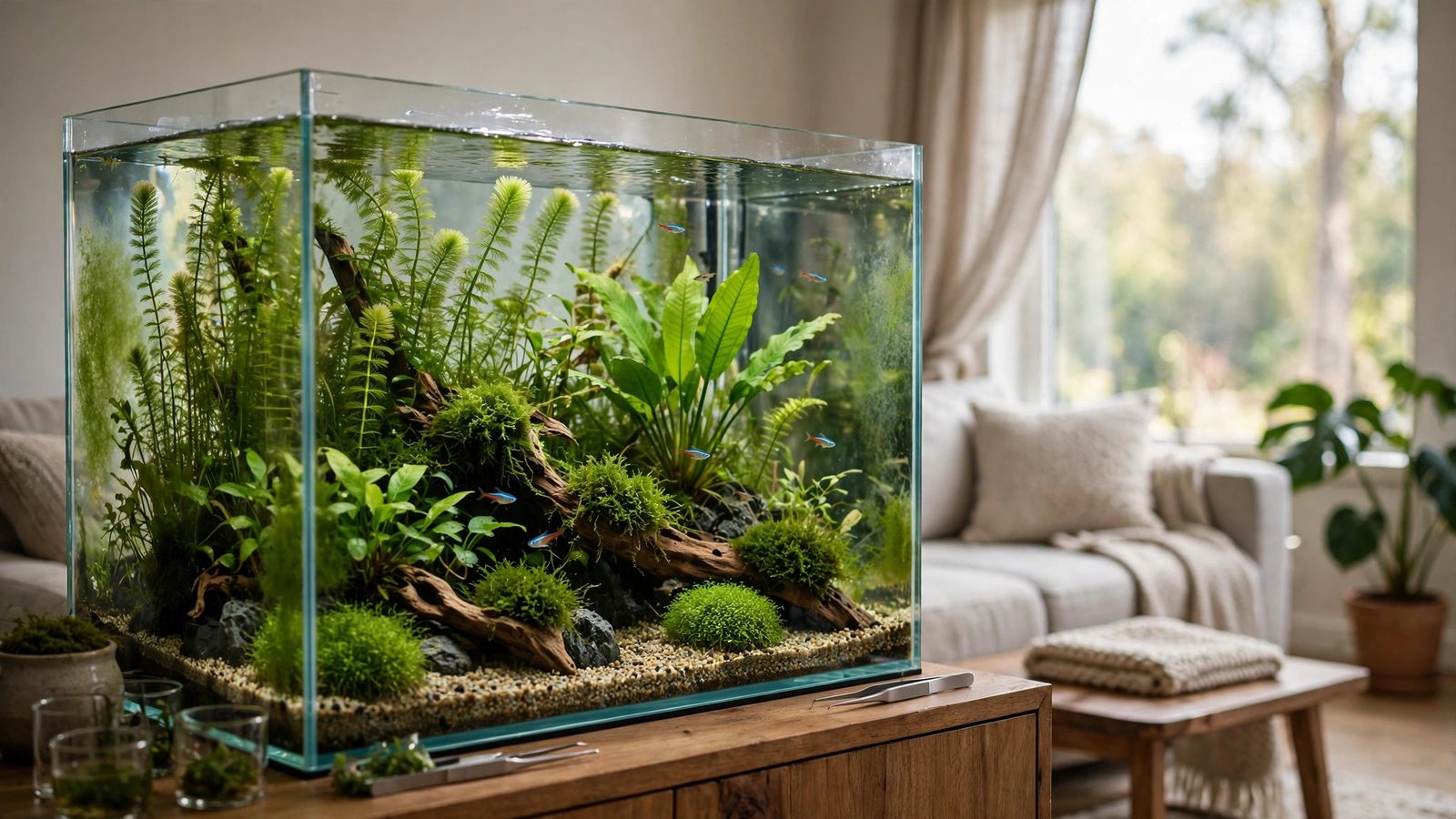
Your aquarium light runs a disciplined 8 hours — but the tank sits in a bright living room for 14. Does that ambient room light count? Is the sunshine from the window a friend feeding your plants, or just fuel for the algae on your glass? Ambient light is the unmeasured, unscheduled illumination every tank receives, and understanding it separates the aquarists who fight mystery algae from those who don't.
What Counts as Ambient Light
- Daylight from windows — the big one. Direct sun through glass is intense (thousands of lux); indirect daylight is moderate but lasts all day.
- Room lighting — ceiling lights, lamps, TV glow. Generally dim at the tank (tens of lux), but present for many evening hours.
- Reflected light — light bouncing off walls and ceilings into the tank. Diffuse, weak, but real.
The key question for each: does it reach photosynthetic significance at the substrate? Rough thresholds: under ~50 lux at the tank, ambient light is biologically negligible for plants and algae alike. A few hundred lux of indirect daylight for hours does count — it's a real (if weak) photoperiod extension.
Friend: When Ambient Light Helps
Gentle indirect daylight
A tank near (not in) a bright window receiving indirect daylight gets a free supplement to its photoperiod — often 2–4 hours of weak-to-moderate light morning and evening around the main schedule. For low-tech tanks, this is genuinely beneficial: extra photons the plants can use, at zero cost and zero equipment. Many of the lushest low-tech tanks in the hobby sit near windows for exactly this reason.
Viewing and circadian cues
Soft ambient light during the day gives fish a natural-feeling environment and lets you enjoy the tank outside the main photoperiod without extending it artificially. A tank that's gently visible in daylight and dark at night matches fish circadian needs better than one in a windowless room lit only 8 hours.
Algae-free rooms
In rooms with only modest ambient light (no direct sun, normal ceiling lighting), ambient contribution is negligible — you can effectively ignore it. Most tanks in most rooms fall here. Don't invent a problem you don't have.
Foe: When Ambient Light Feeds Algae
Direct sunlight on the tank
This is the classic disaster: a tank catching 2–3 hours of direct sun daily. Direct sun delivers enormous intensity — far beyond what the tank's CO2 and nutrient balance is tuned for — and it's uncontrolled: you can't dim the sun, and its hours shift seasonally. The result is predictable: green water, hair algae explosions, and temperature swings (sun-heated water stresses everything).
Fixes, in order of preference: reposition the tank out of the sun path; apply a background or window film to block the direct beam while keeping indirect light; add floating plants as a living sunshade (they love the extra light and shade everything below); or run blinds/curtains during the sun hours. What doesn't work: "balancing" direct sun with more fertilizer — you can't out-fertilize the sun.
Bright indirect light + long photoperiod
The subtler trap: a tank in a very bright room (sunroom, wall of windows) getting 6+ hours of strong indirect daylight a full 8-hour artificial photoperiod. The total effective day is 12–14 hours — deep in too-much-light territory — even though the timer says 8. If your bright-room tank grows algae despite a "correct" schedule, shorten the artificial photoperiod to compensate: 6 hours of fixture light + strong ambient can equal 8–9 hours of fixture light alone. See photoperiod duration for the dose logic.
Evening room light extending the day
Less dramatic but real: a tank in the main living space with bright overhead lights on until midnight gets a dim-but-long evening extension. At typical room-light levels this rarely drives algae alone, but combined with other imbalances it contributes. If your main fixture runs on a consistent timer schedule, treat bright room-light hours as a soft extension when judging total dose — the same honest accounting you'd apply to long sunrise/sunset ramps. The 2Hr Aquarist low-tech guide suggests 30–50 PAR as a starting point for low-tech setups — a useful benchmark when deciding whether your room's free light lets you shorten the fixture's day.
Measuring Your Ambient Light
You don't need a PAR meter for this — a phone lux-meter app is adequate for ambient assessment (you're measuring rough magnitude, not precision):
- Lights off, daytime: hold the phone at the substrate facing up. Note the lux from ambient alone, morning/midday/evening.
- Interpret: under ~100 lux — negligible, ignore it. 100–500 lux — meaningful supplement; factor it into photoperiod thinking. 1000+ lux (near windows, direct sun patches) — significant; manage it actively.
- Check seasonally: sun angles change through the year. A tank that's fine in winter can catch direct sun in summer. Reassess when you notice the light in the room changing.
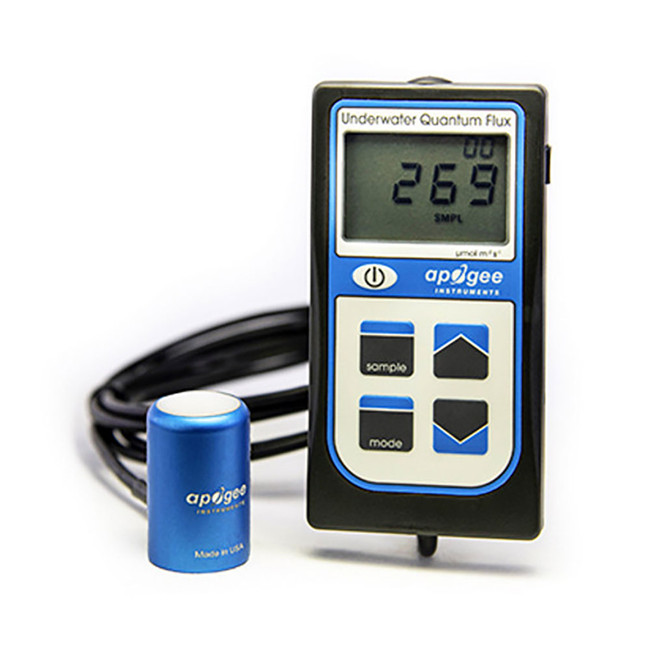
A reliable pick here is Apogee MQ-510 PAR meter.
 ★4.4
Apogee MQ-510 Underwater PAR Meter
Check Price on Amazon ★4.4Placement Strategy: Choosing the Tank's Spot
If you're placing a new tank, ambient light should be part of the decision:
- Ideal: a bright room with indirect daylight, no direct sun on the glass. Free supplemental light, no algae bomb, pleasant viewing.
- Acceptable: an interior room with normal lighting — fully controlled photoperiod, zero ambient complications. The "lab conditions" choice.
- Avoid: direct sun path (especially afternoon sun, the hottest and most algae-productive), and spots where you can't control the light (e.g., a conservatory).
- The north-window trick: in the northern hemisphere, a north-facing window gives bright indirect light all day with almost no direct sun — arguably the best free ambient light available. (Southern hemisphere: south-facing.)
Working With What You Have: Mitigation Tactics
- Backgrounds: a dark background on the sun-side glass blocks the direct beam's worst effects while keeping the tank viewable.
- Floating plants: frogbit, salvinia, or red root floaters under strong ambient light form a self-regulating shade — they consume the excess photons and nutrients, starving algae below. Thin them weekly so they don't shade everything.
- Shorten the artificial photoperiod to compensate for strong ambient — treat total light as the budget, however it's composed.
- Window film: frosted or UV-filtering film on the relevant window cuts intensity dramatically while keeping the room bright. Cheap, renter-friendly, reversible.
- Algae crew: in sun-assisted tanks, a solid cleanup crew (otocinclus, amano shrimp, nerite snails) handles the baseline algae pressure that extra light creates. They're the maintenance margin.
Frequently Asked Questions
Does ambient room light count toward my photoperiod?
Dim room lighting (under ~100 lux at the tank) is negligible — don't count it. Bright indirect daylight (several hundred lux for hours) does contribute meaningfully; mentally add a fraction of those hours to your photoperiod, or shorten the artificial schedule to compensate. Direct sun counts fully and excessively — manage it as a problem, not a supplement.
Can I grow plants with only window light and no aquarium light?
In a bright spot with several hours of strong indirect (or gentle direct morning) sun, yes — low-tech plants (anubias, java fern, crypts, mosses) can thrive on window light alone. It's uncontrolled and seasonal, so results vary through the year, but as a low-cost approach it genuinely works. Most window-only tanks do best with floating plants to modulate the intensity.
Why does my tank get algae only in summer?
Seasonal sun-angle change is the prime suspect: the sun's path shifts, and a tank that missed direct sun all winter starts catching it daily. Check the tank at different times of day across seasons. The fix is shading the sun-side (background, film, blinds during those hours) rather than changing your whole fertilization regime for a lighting problem.
Should I cover my tank at night in a bright living room?
Usually unnecessary — typical evening room light is too dim to matter biologically. The exception is a tank directly under a bright reading lamp or next to a TV throwing significant light until late. If the tank is clearly illuminated by room lights all evening, either dim that light or accept a slightly longer effective day in your tuning. A tank cover for darkness alone is overkill for most setups.
Is sunlight good for red plants?
Sunlight's full spectrum and high intensity can intensify red coloration — many growers report their reddest plants in sun-assisted setups. But the same intensity demands matching CO2 and nutrients, or you get red plants plus red-tinted algae. Sunlight is powerful medicine: effective in the right dose, harmful in excess, like everything else in this hobby.
My tank is in a windowless room — any downside?
No — it's the most controllable setup possible. Your fixture is 100% of the light, so photoperiod and intensity tuning are exact. The only "cost" is aesthetic (no natural daylight ambiance) and the lack of free supplemental photons. Many high-tech show tanks live in windowless rooms precisely for the control.
Know Your Room's Light
Ambient light isn't good or bad — it's an unmeasured input, and unmeasured inputs cause mystery problems. Spend five minutes with a phone lux meter, learn what your room actually delivers, and fold it into your lighting plan: shorten the artificial day in bright rooms, welcome the free photons near north windows, and block the direct sunbeam before it blocks your enjoyment. The best light schedule accounts for all the light, not just the fixture's.