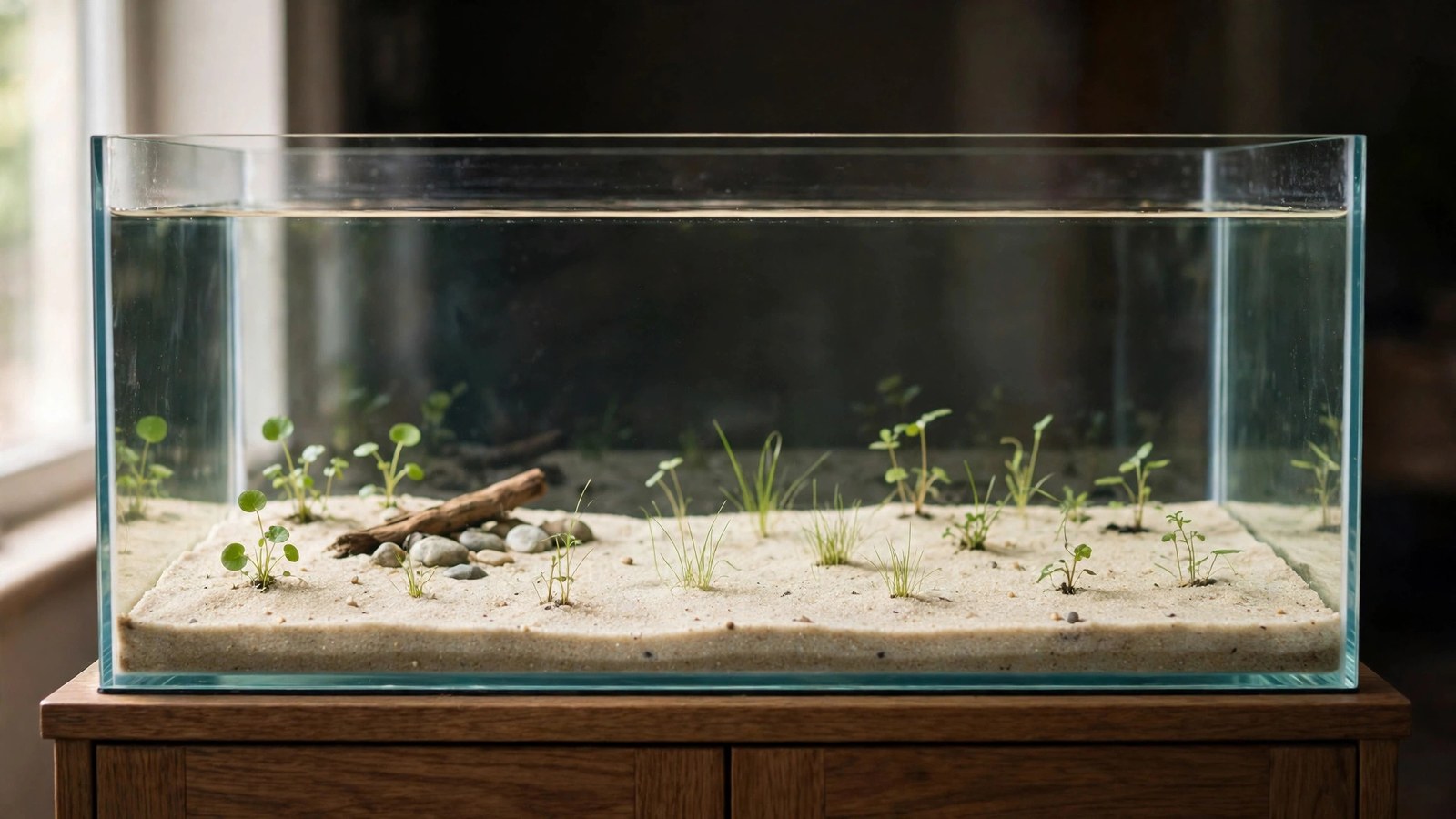
New tank, new light, full blast from day one — and within two weeks, the glass is green, the plants are melting, and you're wondering what went wrong. What went wrong was the light: a brand-new setup blasted at full intensity is the single most common cause of new-tank algae. Light acclimation — starting dim and short, then ramping up as the tank matures — is the cheapest, most effective algae prevention in the hobby.
Why New Tanks Need Gentle Light
A fresh setup is biologically unstable in ways that matter for lighting:
- Plants are transitioning. Most new plants are adapting from emersed nursery growth to submersed life (see transplant acclimation) — they're shedding old leaves and building new ones, not photosynthesizing at full capacity. Blast-level light on transitioning plants grows algae on their stressed tissue, not recovery.
- Biofilms are immature. Beneficial bacterial colonies are still establishing; nutrient processing is erratic. Excess light + erratic nutrients = algae opportunity.
- Plant mass is low. A newly scaped tank has a fraction of its eventual plant mass — fewer leaves consuming photons and nutrients, more surplus for algae.
- CO2 isn't dialed in yet. In injected tanks, the first weeks are for tuning CO2 timing and bubble rate. Running full light during tuning means every CO2 wobble becomes an algae event.
Light acclimation doesn't slow the tank's maturation — it protects it. Plants establish faster in conditions they can handle than in conditions that stress them.
The Standard Acclimation Schedule
Weeks 1–2: The gentle start
- Intensity: 40–50% of target (dimmer setting, or raised fixture if no dimmer).
- Photoperiod: 6 hours.
- CO2: running and stable at target levels (in injected tanks) — stable gas matters from day one even at low light.
- Expect: some melting of emersed leaves (normal), slow but visible new growth, minimal algae. A little diatom (brown) algae is normal in new tanks and passes on its own.
Weeks 3–4: First ramp
- Intensity: 60–70% of target.
- Photoperiod: 7 hours.
- Check: new submersed growth appearing? Algae limited to easily-managed spots? If yes, proceed. If significant algae, hold at this level another week — don't ramp into an algae bloom.
Weeks 5–6: Second ramp
- Intensity: 80–90% of target.
- Photoperiod: 8 hours.
- Check: plants growing steadily, carpeting plants spreading, algae minimal. This is where most tanks stabilize.
Week 7+: Full target
- Intensity: 100% of your planned long-term level.
- Photoperiod: 8 hours (or your chosen long-term schedule — see photoperiod duration).
- From here, the tank is on its normal program. Further adjustments follow normal tuning logic, not acclimation logic.
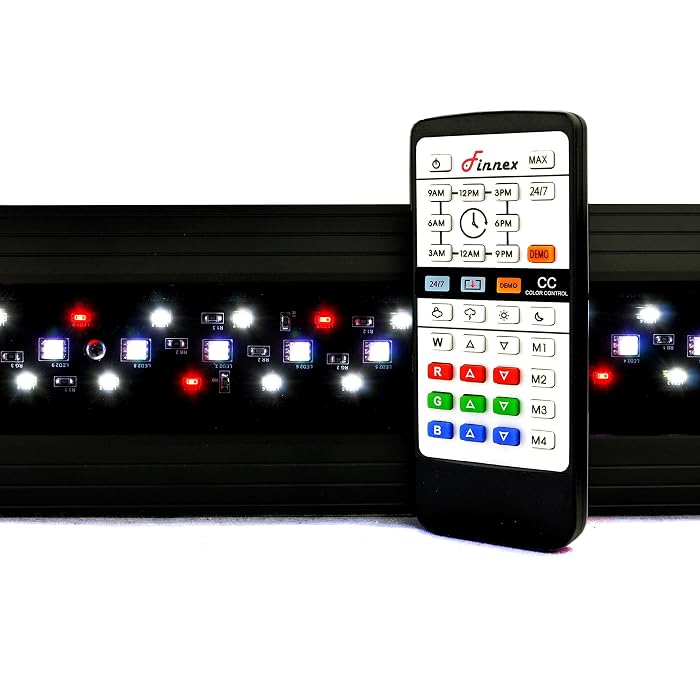
A reliable pick here is Finnex Planted+ 24/7 HLC.
 ★4.5
Finnex Planted+ 24/7 HLC LED Light
Check Price on Amazon ★4.5Adjusting the Schedule to Your Situation
Low-tech tanks
The same principle, gentler numbers: start at ~50% intensity (or 6 hours if no dimmer), ramp to full over 3–4 weeks. Low-tech tanks are more forgiving, but new-tank algae still strikes — diatoms and hair algae love fresh setups regardless of tech level. Soil-based setups deserve extra caution: fresh aquasoil releases an early nutrient surge, so hold the dim phase a full 3–4 weeks before ramping. The 2Hr Aquarist low-tech checklist is a good companion read for balancing light against that early instability. Don't skip acclimation just because there's no CO2.
High-tech tanks
Follow the full schedule strictly — high light makes the acclimation period most critical. Get CO2 stable before ramping intensity: the rule is "gas first, light second." Ramping light into an untuned CO2 system is the classic high-tech algae bomb.
Heavily planted from day one
If you plant densely from the start (the best algae prevention — high plant mass from day one consumes the photon/nutrient surplus), you can ramp slightly faster: 2-week stages instead of 3. Dense planting doesn't eliminate the need for acclimation, but it shortens it.
Dry-start (DSM) tanks transitioning to flooded
Flooding day is day one of acclimation, even though plants are established: the transition from humid air to submerged life stresses plants similarly to new planting. Start at 50–60% intensity, 6 hours, and ramp over 3–4 weeks. The established root systems make this faster than a from-scratch setup, but don't skip it.
What "Hold" Looks Like: When Not to Ramp
The schedule above assumes a healthy progression. Hold at the current level (don't ramp up) if you see:
- Spreading hair/thread algae or the first spots of black beard algae — address the cause (usually CO2 or organics), then resume ramping once it's receding.
- Plants melting faster than they're regrowing — the tank needs stability, not more light.
- Green water developing — cut back to 6 hours immediately and address the bloom before any ramp.
- Persistent cloudy water beyond week 2 — bacterial bloom indicating the biofilter isn't ready; more light won't help.
Holding is not failing — it's the schedule working as designed. The ramp is conditional on health, not calendrical.
Common Acclimation Mistakes
- "My light isn't that strong." Even moderate fixtures overwhelm a fresh tank. Acclimate regardless of fixture size — it's about the tank's readiness, not the light's reputation.
- Ramping on schedule despite algae. The calendar is advisory; the tank is authoritative. Algae means hold.
- Changing multiple variables at once. Ramp light or adjust CO2 or change fertilization in a given week — never all three. Otherwise you can't tell what worked.
- Forgetting the dimmer exists. Many aquarists buy dimmable lights and run them at 100% from day one out of excitement. The dimmer's first job is acclimation; its second job is daily tuning.
- No dimmer, no plan. Fixture without dimming? Use hanging height (start high, lower weekly), or floating plants as a living dimmer, or window-screen mesh layers under the light — each layer cuts ~30% intensity and peels off weekly.
- Blasting to "help plants grow faster." The most well-intentioned mistake. More light on unready plants doesn't accelerate establishment — it feeds the algae colonizing their stressed leaves. Patience grows plants; intensity grows problems.
Acclimating New Plants Into an Established Tank
Adding new plants to a mature, full-light tank is a smaller version of the same problem: the newcomers are transitioning while the tank runs hot. Options: plant them in a slightly shaded spot for 2 weeks, float them at the surface (shaded by floaters) until new growth appears, or temporarily reduce the photoperiod by an hour for a week after major plantings. Established tanks are resilient — this is a courtesy, not a crisis protocol.
Frequently Asked Questions
How long should light acclimation take?
Typically 6–8 weeks from setup to full intensity, in 2–3 ramp stages. Dense initial planting or dry-start transitions can shorten it to 3–4 weeks; problem tanks (algae outbreaks, heavy melting) extend it — hold at each stage until healthy, regardless of calendar. There's no prize for finishing early.
Can I skip acclimation if I use algae treatments?
No — treatments (blackouts, chemicals, UV) fight algae symptoms; acclimation prevents the conditions that cause them. A tank can be simultaneously "treated" and still fundamentally over-lit for its maturity. Do the acclimation; keep treatments as the emergency toolkit, not the plan.
Should I reduce fertilizer during acclimation too?
Yes, moderately — half-strength dosing for the first 2–3 weeks is standard, ramping to full as plant mass and growth rate increase. New plants with damaged or transitioning leaves can't use full dosing, and the excess feeds algae. Match fertilizer to actual growth, not to the calendar.
What if I bought a used established tank — do I still acclimate?
Largely no — an established tank with mature plants, biofilm, and stable parameters is already acclimated to its light. Keep the existing light schedule. The exception: if you change the fixture (especially upgrading intensity), acclimate to the new light over 2–3 weeks even though the tank is mature — see raising intensity safely.
Is 6 hours enough light for plants to establish?
Yes — 6 hours at moderate intensity is plenty for establishment; plants in nature root and grow under far less predictable light. What matters in the acclimation phase is stability and appropriateness, not maximum dose. The ramp to 8 hours comes once the tank proves it can handle more.
My tank is 3 months old and I never acclimated — is it too late?
It's never too late to fix the light, but at 3 months the tank is past the acclimation window — what you have now is a tuning question, not an acclimation one. If it's thriving, change nothing. If it has chronic algae, diagnose properly (intensity, photoperiod, CO2, maintenance) rather than retroactively "acclimating." Acclimation is for new tanks; tuning is for established ones.
Start Dim, Earn the Bright
Light acclimation is the closest thing to a free lunch in the hobby: a few weeks of restraint at the start buys you a tank that skips the new-tank algae phase most aquarists consider inevitable. It's not inevitable — it's just what happens when full light meets an unready ecosystem. Start at half, ramp on the tank's schedule, hold when health says hold, and arrive at full intensity with plants established, algae minimal, and the whole system ready for the light it's getting.