The cruelest trick in aquascaping is this: the simpler a tank looks, the harder it is to keep looking that way. Three rocks on a carpet of dwarf hairgrass looks like the easiest scape on the planet — and it will punish a beginner harder than any overgrown jungle tank ever could. Pick the wrong style for your first tank and your hobby becomes a part-time job you resent. Pick the right one, and the tank mostly takes care of itself while you learn.
How This Ranking Works
Every style below is scored on the four things that actually decide whether a beginner succeeds or quits:
- Forgiveness of mistakes. Can a badly placed plant, a cloudy week, or a missed water change hide inside the design — or does it ruin the whole composition?
- Equipment demands. Does the style require pressurized CO2 and high-output lighting, or will it thrive on a basic LED and patience?
- Weekly maintenance. How much trimming, replanting, and algae patrol the style needs once it's established.
- Composition skill. Does the style have rules you must get right on day one (rock placement, golden ratio), or can you plant freely and adjust?
A style is just a set of constraints, and constraints are what make a tank possible. Lock one in before you shop, and it tells you exactly what hardscape to buy, which plants will survive, and what your Sunday mornings will look like for the next year. If you want the build process after you choose, our first aquascape design guide walks through it step by step.
The 7 Styles, Ranked for a First Tank
| Style | Difficulty | CO2 needed | Weekly upkeep | Mistake forgiveness | First-tank verdict |
|---|---|---|---|---|---|
| Jungle | Easy | No | ~20 min | Very high | Best overall first choice |
| Walstad | Easy | No | ~15 min | High | Cheapest, most self-sustaining |
| Nature (low-tech) | Easy–medium | No | ~25 min | Medium–high | Great if you want the Amano look |
| Island | Easy–medium | No | ~15 min | High | Ideal for nano tanks (5–10 gal) |
| Loose biotope | Medium | Depends | ~20 min | Medium | Good if you enjoy research |
| Simplified Dutch | Medium | Recommended | ~45 min | Low | Only if you like weekly trimming |
| Iwagumi | Hard | Yes | 60+ min | Very low | Save for your 3rd or 4th tank |
1. Jungle Style — The Most Forgiving
Jungle is the consensus pick across the hobby for one reason: the design is organized chaos. Tall, fast-growing plants — Amazon swords, vallisneria, water sprite, cryptocorynes — grow dense and interwoven, with little visible hardscape and no neat trimming lines. A plant that lands in the "wrong" spot just looks like part of the wilderness. Floating plants like frogbit dapple the light and mimic a forest canopy while starving algae of light.
Setup is straightforward: a 2–3 inch nutrient-rich substrate bed, moderate light (30–50 PAR at the substrate is plenty), no CO2, and a starter plant list of hardy species. Swords and crypts are heavy root feeders, so a deep bed of a nutrient-rich aquasoil like Fluval Stratum ★4.7 gives their root systems the foundation they need from day one. Then plant heavily — aim to cover 70–80% of the substrate on day one, which is the single best algae prevention a beginner has.
The honest trade-off: a mature jungle tank needs a haircut every 2–3 weeks, and "wild" still needs boundaries — leave open swimming space in the front third or your fish vanish into the foliage. But no other style survives beginner mistakes this gracefully.
2. Walstad Style — Soil Does the Work
The Walstad method, named for ecologist Diana Walstad, builds the ecosystem around organic potting soil capped with an inch or two of gravel or sand. The soil feeds the plants, the plants clean the water, and you skip the CO2 system, the liquid fertilizer schedule, and much of the testing. It is the lowest-cost, lowest-equipment entry into a genuinely beautiful planted tank.
The discipline in Walstad is all in the setup: the soil layer must be capped completely — any soil poking through the cap will cloud the water and fuel algae — and the tank must be planted very densely from day one. Expect the soil to release ammonia for the first few weeks; plant heavily, stock lightly and late, and let the plants absorb it. After the first month, a Walstad tank settles into the most self-sustaining rhythm of any style here: monthly water changes and the occasional trim.
3. Nature Aquarium — The Low-Tech Version
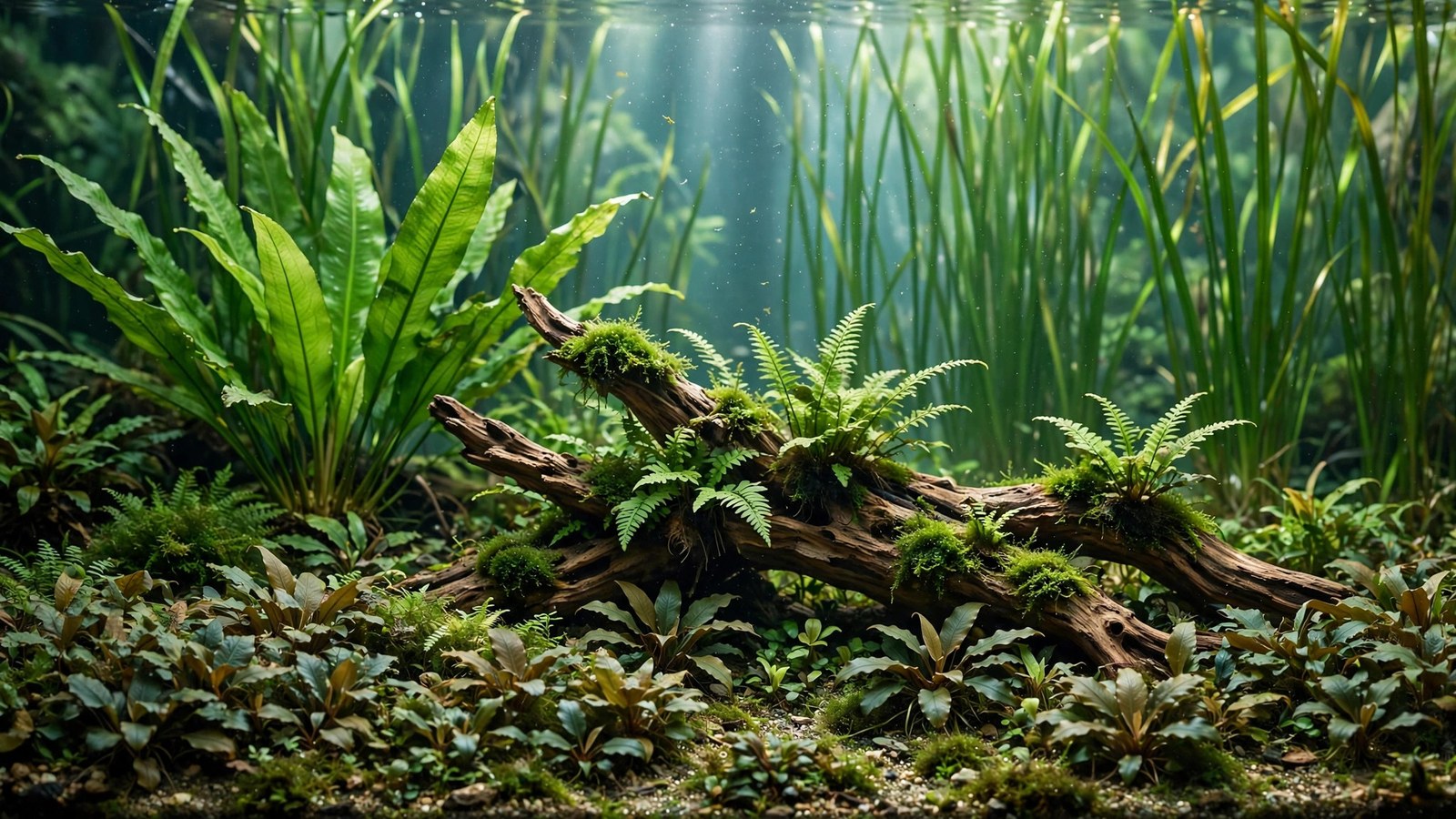
Takashi Amano's Nature Aquarium style — driftwood and stone arranged with deliberate negative space to evoke forests, mountains, and river valleys — is genuinely beginner-friendly if you build the low-tech version. The trick: skip the demanding carpet plants and high-tech stems, and build the scape on epiphytes. Anubias, java fern, and mosses tied to driftwood need no rich substrate, no CO2, and low-to-moderate light.
You still get to practice the style's core skills — a clear focal point, the rule of thirds, open negative space — without the equipment bill. Because epiphytes feed from the water column rather than the substrate, a lean liquid fertilizer keeps them supplied; a comprehensive liquid like Seachem Flourish ★4.7 dosed lightly once or twice a week is the standard low-tech routine. Growth is slow, which is a feature for beginners: the scape changes little week to week, so there is less to get wrong.
Disclosure: the links above are Amazon affiliate links — if you buy through them, I earn a small commission at no extra cost to you, which keeps these guides free.
4. Island Style — The Nano-Tank Winner
Island style is one mound — a single rock or driftwood piece planted into a lush hill — surrounded by open sand. It uses the fewest plants of any style on this list, which makes it the natural pick for small first tanks (5–10 gallons), where a full jungle would swallow the whole footprint. Maintenance stays low because there is simply less to maintain: one island to trim, sand to siphon, done.
The island's small scale is also forgiving of composition mistakes: one mound is much easier to make look intentional than a full-tank layout, and the surrounding open sand gives the eye a rest. If your first tank is a betta setup, this pairs beautifully with our island-style setup guide.
5. Loose Biotope — For the Curious
A biotope recreates a real habitat: say, a slow Southeast Asian stream with cryptocorynes, java fern, leaf litter, and dim, tannin-tinted water. The "loose" part matters for beginners — you are not matching GPS coordinates, just honoring one region's look and water chemistry. It ranks medium difficulty only because of the upfront research: you need to learn what grows together in that habitat and what water parameters it needs.
Once built, loose biotopes are wonderfully low-maintenance. Many classic biotope plants are slow growers, leaf litter does the decorating for you, and the dimmer light keeps algae pressure down. If you enjoy the research side of the hobby, this style turns homework into the scape itself. See our biotope aquascaping guide for region-by-region plant lists.
6. Simplified Dutch — Only If You Like Trimming
Classic Dutch is an underwater flower garden: no visible hardscape, plants arranged in terraces and "streets" of color and texture contrast. It is the most trimming-intensive style in the hobby, and the full version is not a first-tank project. But a simplified Dutch — six to eight easy stem species in defined groups, moderate light, optional CO2 — is achievable with patience.
Be honest with yourself here: the look lives or dies on weekly trimming and replanting tops. If that sounds meditative, Dutch will teach you more about plant growth habits in six months than any other style. If it sounds like a chore, it will become one. Read the full Dutch style guide before committing, and budget for a good pair of aquascaping scissors.
7. Iwagumi — The Beginner Trap (Avoid It First)
Iwagumi — "rock garden" in Japanese — is three to seven stones on a uniform carpet of dwarf hairgrass or Monte Carlo. It looks like the simplest scape imaginable. It is the hardest style on this list, and it is not close.
There is nothing wrong with Iwagumi as a goal. It is a magnificent second or third project, once you can read algae, dial in CO2, and keep a carpet alive. For your first tank, let the jungle forgive you instead.
Which Style Should You Pick?
Run through these four questions honestly:
- What size is your tank? 20 gallons or more → Jungle or low-tech Nature. 5–10 gallons → Island or a small Jungle.
- What is your budget? Under $100 all-in → Walstad (soil + basic light). Mid-range → Jungle or low-tech Nature with aquasoil. See our budget aquascaping guide for a full cost breakdown.
- Do you want fish, shrimp, or plants as the star? Fish-forward → Jungle or Island (open swimming space). Plant-forward → low-tech Nature or simplified Dutch.
- Will you actually trim every week? Yes → simplified Dutch is on the table. "Probably not" → Jungle, Walstad, or low-tech Nature, where slow growth and wild aesthetics cover for you.
Frequently Asked Questions
What is the absolute easiest aquascaping style for a complete beginner?
Jungle style. It needs no CO2, runs on moderate light, and its wild, overgrown aesthetic absorbs beginner mistakes — a plant in the "wrong" place just looks like part of the jungle. Walstad is a close second and costs less to start.
Can I aquascape without CO2?
Yes. Jungle, Walstad, Island, and low-tech Nature styles all thrive on ambient CO2 with the right plant choices — hardy species like anubias, java fern, cryptocorynes, vallisneria, and Amazon swords. Only Dutch and Iwagumi truly benefit from injected CO2.
Is Dutch style good for beginners?
Classic Dutch is not beginner-friendly — it demands weekly trimming, strong light, and fertilization discipline. A simplified Dutch with easy stems and optional CO2 is doable for a patient beginner who enjoys gardening. Most first-timers do better starting Jungle and trying Dutch on a later tank.
What tank size is best for a first aquascape?
10 to 20 gallons is the sweet spot. Larger water volumes buffer beginner mistakes in dosing and water changes, while staying small enough to plant affordably. Nano tanks under 5 gallons swing parameters fast and punish inattention — beautiful, but a harder first project.
How long does a beginner aquascape take to look good?
Plan on 2–4 months for plants to fill in. Jungle styles fill fastest thanks to fast-growing stems and swords; low-tech Nature and Island styles take longer because epiphytes and mosses grow slowly. A tank that looks sparse at week three is normal, not failing.
What is the hardest aquascaping style for beginners?
Iwagumi, by a wide margin. Its minimalist composition exposes every flaw, its carpet plants need high light and pressurized CO2, and the bare-substrate startup phase is extremely algae-prone. It is an excellent third-tank project, not a first.